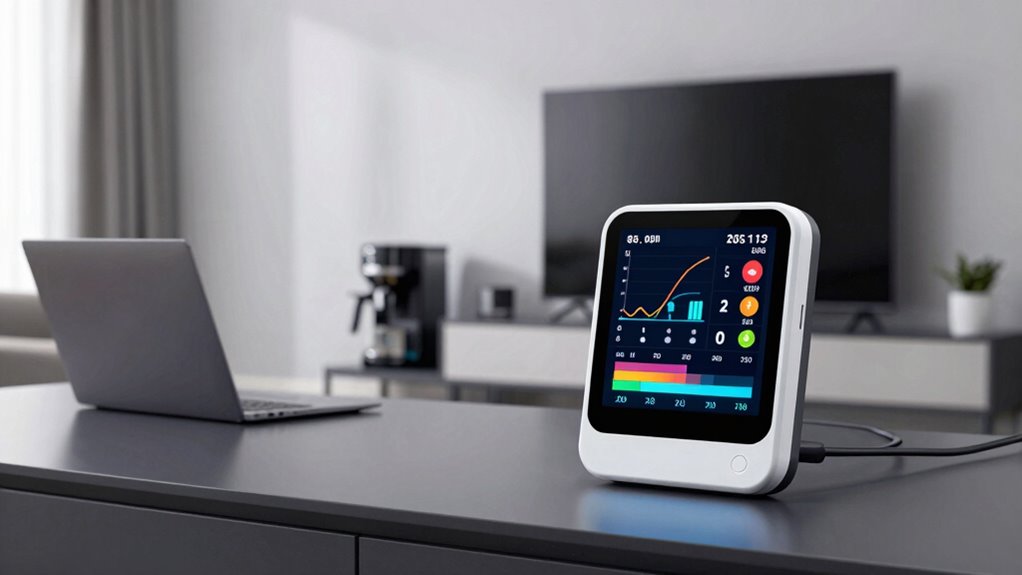

Understanding your device’s energy use helps you estimate electricity costs effectively. Start by checking its wattage, then convert that to kilowatts by dividing by 1,000. Multiply the kilowatts by your daily usage hours to get daily energy consumption in kWh. Next, multiply that by your local electricity rate to find the daily cost, and scale up for monthly expenses. Keep going, and you’ll find simple ways to cut those costs and save energy long-term.

Prime made for students and young adults
- Fast, free delivery for dorm and study essentials
- Prime Video and Amazon Music included
- Member-only deals
Key Takeaways
- Convert device wattage to kilowatts by dividing by 1,000 to standardize energy measurement.
- Multiply the device’s kW rating by daily usage hours to find daily energy consumption in kWh.
- Use local electricity rates to calculate the cost by multiplying daily kWh consumption with the rate.
- Estimate monthly costs by multiplying daily energy use by days in a month and the electricity rate.
- Comparing energy-efficient devices can reduce overall costs and lower environmental impact.

Have you ever wondered how the energy you use every day powers your life? From the moment you turn on your lights to the devices you rely on for work and entertainment, understanding power consumption is key to managing your energy costs. Every device has a specific amount of power it consumes, usually measured in watts (W). The higher the wattage, the more energy the device draws when in use. But knowing just the wattage isn’t enough; you also need to reflect on how long you use the device daily. For example, a 100-watt bulb running for 10 hours consumes a different amount of energy than a 60-watt bulb used for five hours. This is where efficiency ratings come into play. Devices with higher efficiency ratings operate using less energy to perform the same task, helping you save money on your electricity bill. When shopping for appliances or electronics, always check their efficiency ratings, such as ENERGY STAR labels, which indicate better energy performance. Higher-rated devices may cost more upfront, but they typically lower your power consumption over time.
To estimate how much a device costs to run, you need to combine its power consumption with your local electricity rates. First, convert the wattage into kilowatts (kW) by dividing the wattage by 1,000. So, a 100-watt device equals 0.1 kW. Next, multiply this by the number of hours you use the device each day to find the daily energy consumption in kilowatt-hours (kWh). For instance, if you use that 100-watt bulb for 10 hours daily, it consumes 1 kWh per day. Then, multiply the daily kWh by your electricity rate, which varies depending on where you live—say, $0.12 per kWh. In this case, running that bulb costs about $0.12 daily. Over a month, it adds up to roughly $3.60. This simple calculation can help you identify which devices are major energy consumers and find ways to cut back, like switching to more efficient models or reducing usage time.
Understanding the relationship between power consumption and efficiency ratings enables you to make smarter choices about your energy use. By selecting appliances with better efficiency ratings and being mindful of how long you run devices, you can markedly reduce your electricity costs. It’s not just about saving money; it’s also about lowering your environmental impact by consuming less energy overall. Analyzing your device usage with energy-efficient technology can further optimize your consumption. So next time you consider purchasing a new device, check its power consumption and efficiency rating. Small adjustments in your habits and choices can have a big effect on your bills and the planet. Being aware of how your devices use energy gives you the control to optimize your consumption, save money, and contribute to a more sustainable future.
Frequently Asked Questions
How Do I Estimate the Cost of Running a Device Over a Year?
To estimate the cost of running a device over a year, first find its power consumption in watts, which shows its energy efficiency. Multiply this by the number of hours you use it daily, then convert to kilowatt-hours by dividing by 1,000. Next, multiply the kilowatt-hours by your electricity rate. This gives you an annual cost, helping you understand how energy efficiency impacts expenses.
What Factors Influence a Device’s Energy Consumption?
You’re unknowingly battling a silent energy thief every day! Device efficiency and standby power are the biggest factors influencing energy consumption. If your device isn’t efficient, it wastes power, skyrocketing your bills. Even in standby mode, some devices drain power, adding up fast. Small differences in efficiency or standby power can turn your monthly costs into a shocking expense, so choose energy-efficient devices and unplug when not in use!
How Can I Reduce My Household Electricity Bills Effectively?
To cut your household electricity bills effectively, start by switching to energy-efficient appliances, which use less power and save you money over time. Consider integrating alternative energy sources like solar panels to reduce reliance on grid electricity. Also, unplug devices when not in use, adjust your thermostat, and use smart technology to monitor and control your energy consumption. These steps can considerably lower your bills and boost energy savings.
Are Smart Meters More Accurate for Measuring Energy Use?
Smart meters are more accurate than traditional analog meters, like a sharp shooter hitting the target every time. They provide real-time data, reducing errors caused by manual readings. Compared to digital vs analog meters, smart meters are designed to measure energy use precisely, offering detailed insights into your consumption. This makes them a reliable choice for tracking electricity use and potentially lowering your bills through better management.
What Is the Environmental Impact of High Electricity Consumption?
High electricity consumption increases your carbon footprint, which contributes to climate change and environmental harm. It often relies on non-renewable energy sources like coal and natural gas, leading to higher greenhouse gas emissions. To reduce this impact, you can switch to renewable energy options such as solar or wind power. Lowering your consumption helps protect the environment and promotes a sustainable future for everyone.
Conclusion
Understanding how to estimate your device’s electricity cost is like having a map in unfamiliar territory. Imagine you’re on a road trip, and knowing your fuel efficiency helps you budget your gas. Just like that, calculating energy use lets you see exactly how much your gadgets cost to run. With this knowledge, you can make smarter choices, save money, and keep your energy bills in check—turning a confusing maze into a clear, manageable journey.
Fall Picks
fall essentials
As an affiliate, we earn on qualifying purchases.