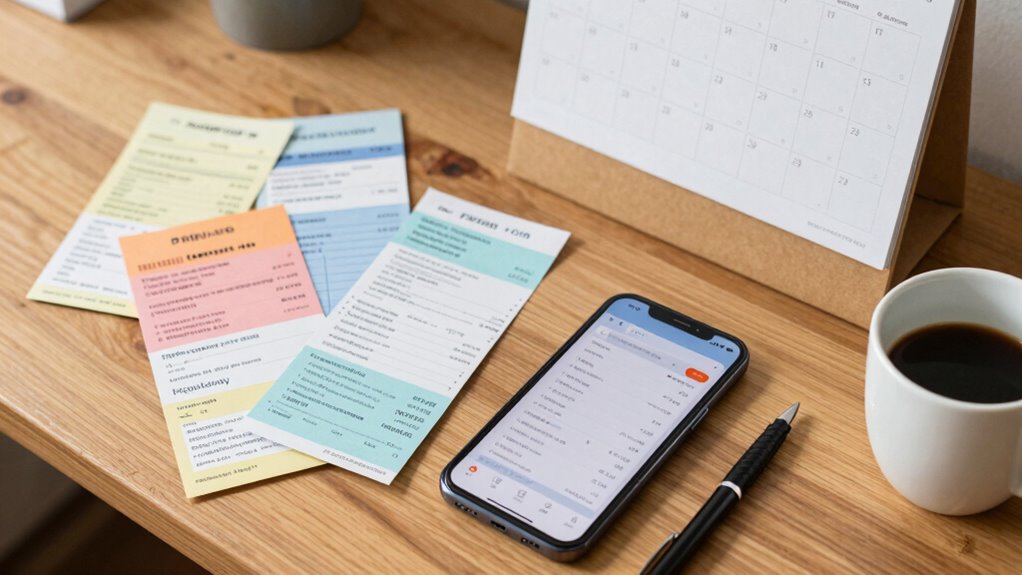

Tracking your variable spending over a week helps you see where your money goes and identifies spending patterns. Use daily logs or apps to note expenses, then review week’s end to find areas where you can cut back or manage better. Setting flexible budgets based on these insights reduces stress and keeps you in control. Keep going, and you’ll discover practical tips to make this process work for your lifestyle.
Open a free Amazon Business account
Business pricing, bulk buying and tax-exempt orders.
As an affiliate, we earn on qualifying purchases.
Key Takeaways
- Conduct daily expense tracking over a week to identify spending patterns and fluctuations.
- Use flexible budgets with ranges to accommodate variable costs without stress.
- Review your weekly spending to spot overspending and adjust habits proactively.
- Incorporate mindful practices like sound healing to reduce financial stress and improve decision-making.
- Regularly reflect on your 7-day expense data to refine your budget and maintain financial balance.

Variable spending refers to expenses that fluctuate based on your habits, needs, or circumstances rather than fixed costs. These are the expenses that can surprise you at the end of the month, making it tricky to stick to a set budget. To manage this effectively, you need to embrace budget flexibility. Recognizing that not all expenses are predictable allows you to adapt your financial plan rather than feel restricted by rigid numbers. The key is learning how to track your expenses diligently so you can identify patterns and adjust accordingly.
Variable spending fluctuates with your habits and needs, requiring flexible budgeting and diligent expense tracking to stay on course.
When you practice expense tracking, you gain insight into where your money goes each week. This isn’t about monitoring every penny obsessively but about developing awareness of your spending habits. For example, you might notice that dining out or entertainment costs spike on weekends, or that grocery bills fluctuate based on weekly sales and meal choices. By keeping a record—whether through an app, a simple spreadsheet, or a notebook—you can see the real picture of your variable spending. This awareness allows you to plan better, allocating funds where you tend to overspend and finding areas to cut back when necessary.
Understanding your spending patterns also helps you build more flexible budgets. Instead of setting strict limits that feel restrictive, you can create ranges for different categories. For instance, you might allocate $200–$300 for dining out each month, knowing that some weeks will be more expensive than others. When you see you’re approaching your upper limit, you can scale back or shift funds from other categories. This approach reduces stress and gives you room to enjoy your lifestyle without guilt or fear of overspending.
Another important aspect of managing variable spending is reviewing your expense tracking regularly. Weekly check-ins help you stay on top of your fluctuating costs, identify any unnecessary expenses, and adjust your spending habits proactively. If you notice a pattern of overspending in certain categories, you can strategize ways to curb those expenses or find alternative options. The goal isn’t to eliminate all variability but to understand it and incorporate it into your overall financial plan.
Additionally, understanding the science behind sound vibrations and their impact can help you develop a more mindful approach to spending, encouraging a calmer and more intentional relationship with money. The goal isn’t to eliminate all variability but to understand it and incorporate it into your overall financial plan. The key is to recognize that sound healing and other mindful practices can reduce stress, making it easier to stick to your budget and make informed decisions.
In the end, managing variable spending effectively hinges on your ability to be flexible and aware. By prioritizing expense tracking and allowing for budget flexibility, you create a financial environment where surprises don’t throw you off course. Instead, you become proactive, making informed decisions that align with your changing circumstances. This approach not only helps you stay within your means but also fosters a healthier, less stressful relationship with your money.
As an affiliate, we earn on qualifying purchases.
Frequently Asked Questions
How Can I Track Daily Spending Effectively?
To track your daily spending effectively, start by using a spending diary to jot down every expense. Incorporate a cash envelope system to limit your cash on hand for categories like groceries or entertainment. Each day, review your diary and cash envelopes, noting how much you’ve spent. This method helps you stay aware of your habits, control impulsive buys, and make adjustments to stay within your budget.
What Tools Assist With Real-Time Budget Adjustments?
Imagine you’re shopping and realize you’re overspending. Budgeting apps like Mint or YNAB help you adjust instantly by syncing with your bank. Expense trackers provide real-time updates, so you see your spending right away. These tools enable you to make quick decisions, stay within your limits, and keep your finances on track without waiting for monthly reviews. They’re perfect for immediate, effective budget adjustments.
How Do I Handle Unexpected Expenses During the Week?
When unexpected expenses hit, tap into your emergency fund first to cover urgent costs. Then, practice expense prioritization by reviewing your weekly budget and cutting back on non-essential spending. This quick adjustment helps you stay afloat without derailing your finances. Remember, regularly contributing to your emergency fund guarantees you’re better prepared for surprises, making it easier to handle sudden expenses confidently and maintain your financial stability.
What Are Common Mistakes When Practicing Variable Spending?
Did you know that 65% of people struggle with cash flow because of poor spending habits? One common mistake when practicing variable spending is not tracking your expenses daily, leading to overspending. Avoid this by sticking to a budget, being mindful of your spending habits, and reviewing your cash flow regularly. This helps you stay in control and prevents unexpected shortfalls, making your financial journey smoother.
How Does Variable Spending Impact Long-Term Savings Goals?
Variable spending can positively impact your long-term savings goals by allowing flexible budgeting, so you can adapt to changing expenses without sacrificing savings. When you track your spending regularly, you can identify areas to cut back and boost your savings strategies. This proactive approach helps you stay on course, making it easier to reach your financial targets over time, even with fluctuating expenses.
As an affiliate, we earn on qualifying purchases.
Conclusion
By embracing variable spending, you turn your budget into a flexible garden, thriving amidst changing seasons. This 7-day reality check helps you stay rooted in reality while adapting to life’s surprises. Remember, you’re the captain steering your financial ship through calm and stormy waters alike. Keep a close eye on your habits, and watch your financial confidence grow stronger than ever, anchoring you firmly in a healthier, more adaptable money mindset.
As an affiliate, we earn on qualifying purchases.
As an affiliate, we earn on qualifying purchases.
Flea & tick season Picks
flea and tick prevention
As an affiliate, we earn on qualifying purchases.