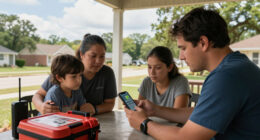
To make a big decision without total certainty, accept that uncertainty is a natural part of the process. Focus on identifying potential risks and evaluating what could go wrong, while trusting your intuition to sense what feels right. Balance logical analysis with internal cues to navigate complexities. Remember, you don’t need perfect answers—building confidence in managing risks is key. Continue exploring these strategies to make more informed, confident choices despite the unknown.
Listen free for 30 days with Audible
Thousands of audiobooks and originals — cancel anytime.
As an affiliate, we earn on qualifying purchases.
Key Takeaways
- Accept that complete certainty is unattainable and focus on understanding potential risks and outcomes.
- Conduct a thorough risk assessment to identify challenges and prepare mitigation strategies.
- Develop your risk management skills to make confident decisions amid uncertainty.
- Trust your intuition by reflecting on past experiences and sensing what feels right.
- Balance logical analysis with internal cues for a well-rounded approach to decision-making.

Making a big decision often feels intimidating because certainty is rarely guaranteed. You might find yourself stuck, waiting for perfect information or a clear sign that everything will turn out okay. But the truth is, you won’t always have all the answers, and that’s okay. Instead of aiming for certainty, focus on understanding and managing the risks involved. Conducting a thorough risk assessment can help you identify potential pitfalls and prepare for them. Think about what could go wrong, how likely those outcomes are, and what steps you can take to mitigate negative effects. This process doesn’t eliminate doubt, but it gives you a clearer picture of what you’re facing. When you’re aware of the risks, you can make more informed choices and feel more confident in your decision, even if you don’t have total certainty. Developing your risk assessment skills can further empower you to make better decisions under uncertainty. Alongside risk assessment, developing your intuition can be a powerful tool. Intuition isn’t about making impulsive decisions; it’s about honing your ability to sense what feels right based on your experiences and subconscious cues. To nurture this skill, pay attention to your gut feelings and reflect on past decisions—what worked and what didn’t. Over time, you’ll learn to trust your instincts to guide you in complex situations. Combining intuition with a logical risk assessment creates a balanced approach. You’re not only relying on data but also on your internal sense of alignment and confidence. This dual perspective helps you navigate uncertainty more comfortably and reduces the mental burden of overanalyzing. Recognizing that uncertainty is an inherent part of decision-making can also help you accept and adapt to the unpredictability of outcomes.
risk assessment decision making tools
As an affiliate, we earn on qualifying purchases.
As an affiliate, we earn on qualifying purchases.
Frequently Asked Questions
How Do I Handle Fear of Making the Wrong Choice?
You handle fear of making the wrong choice by doing a risk assessment to understand potential outcomes and their impact. Build emotional resilience by trusting your ability to adapt and learn from mistakes. Remind yourself that no decision is perfect, and growth often comes from uncertainty. Embracing this mindset helps you move forward confidently, even when you’re unsure, reducing fear and empowering you to make the best decision possible.
What Tools Can Help Me Evaluate Uncertain Options?
You can use risk assessment and probability analysis tools to evaluate uncertain options effectively. Start by identifying potential risks and estimating their likelihood and impact. Use decision trees or matrices to visualize outcomes and compare options objectively. These tools help you weigh the pros and cons based on data, making it easier to move forward confidently. Remember, embracing calculated risks can lead to growth without needing absolute certainty.
How Long Should I Deliberate Before Deciding?
Like a wise old knight in a game of chess, you should set a decision timeline—usually a few days to a week. During this period, conduct a risk assessment, weighing potential outcomes and uncertainties. Don’t let analysis paralysis stall you; instead, gather enough info to feel confident. Once your timeline ends, trust your gut and make the decision. Overthinking can turn a good choice into a missed opportunity.
Can I Change My Decision Later if Needed?
Yes, you can change your decision later if needed. Trust your risk assessment skills and emotional resilience to adapt as new information or feelings emerge. Recognize that decisions aren’t set in stone; flexibility is key. By staying open-minded and willing to reevaluate, you guarantee your choices align with your evolving understanding and circumstances, making it easier to navigate uncertainties without fear of making mistakes.
How Do I Build Confidence Despite Uncertainty?
Remember, “fortune favors the brave.” To build confidence despite uncertainty, trust your intuition development—listen to your gut and recognize patterns in your feelings. Practice risk management by weighing pros and cons and setting small, manageable steps. As you gain experience and see positive outcomes, your confidence grows. Embrace uncertainty as part of growth, and you’ll find yourself more resilient and decisive, even when the path isn’t crystal clear.
As an affiliate, we earn on qualifying purchases.
Conclusion
Remember, every decision is like planting a seed—you may not see the full bloom right away, but with patience and faith, growth will follow. Sometimes, you need to trust your compass even when the path ahead is foggy. Embrace the uncertainty as part of your journey, knowing that each step you take is a brushstroke on your masterpiece. Keep moving forward—you’re crafting a life rich with possibility, even without total certainty.
decision-making risk analysis software
As an affiliate, we earn on qualifying purchases.
As an affiliate, we earn on qualifying purchases.
confidence building decision guides
As an affiliate, we earn on qualifying purchases.
As an affiliate, we earn on qualifying purchases.
Back to school Picks
back to school
As an affiliate, we earn on qualifying purchases.