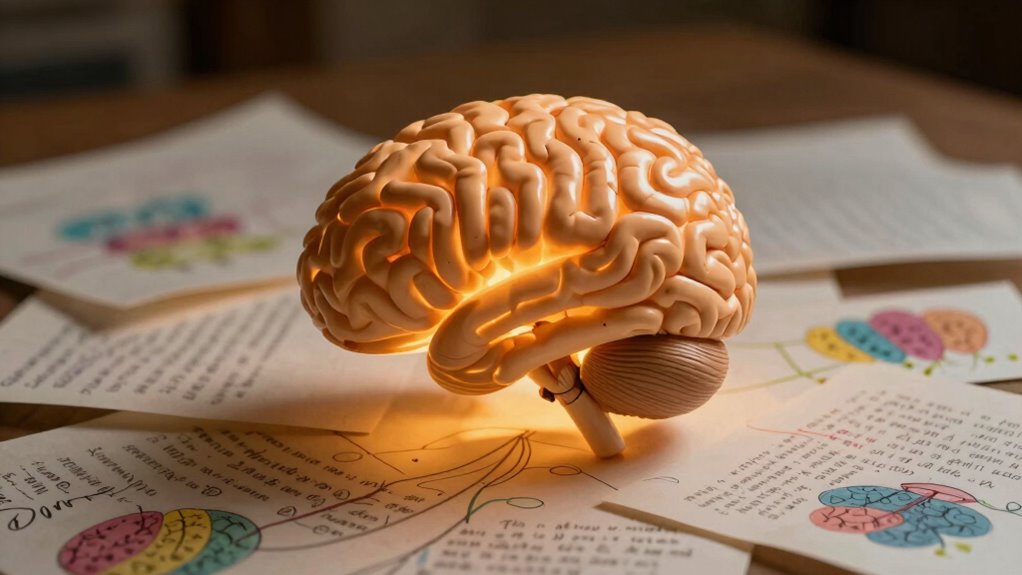

Your brain loves stories more than facts because stories activate multiple regions involved in emotion, language, and memory, making information more vivid and memorable. When you hear or imagine a story, your brain visualizes scenes, predicts outcomes, and forms emotional bonds, creating rich neural pathways. This multisensory engagement turns facts into experiences, helping you recall details more easily and long-term. If you want to discover how stories deeply influence your mind, keep exploring this fascinating connection.
Open a free Amazon Business account
Business pricing, bulk buying and tax-exempt orders.
As an affiliate, we earn on qualifying purchases.
Key Takeaways
- Stories evoke emotions, releasing chemicals like oxytocin that deepen engagement and memory retention.
- Neural activation during storytelling creates multisensory experiences that make information more memorable.
- Narrative coherence organizes facts into meaningful sequences, aiding long-term recall.
- The brain naturally prioritizes stories, processing them as experiences that strengthen neural pathways.
- Emotional and contextual ties within stories enhance memory by linking details to a larger, memorable framework.

Have you ever noticed how a good story sticks with you long after the facts fade? That’s because your brain is wired to connect with stories on a deep emotional level. Unlike raw data or disconnected facts, stories evoke feelings, making the information more meaningful and memorable. When you hear a compelling story, your brain releases chemicals like oxytocin, which boost emotional engagement. This emotional pull is what makes stories so powerful — they create a bond between you and the narrative, making it easier for you to relate and remember. Facts, on the other hand, tend to be dry and impersonal, often overlooked unless they’re presented within a context that stirs your feelings.
Stories create emotional bonds that make facts more memorable and meaningful.
Your brain naturally prioritizes stories because they activate multiple regions involved in emotion, language, and memory. When you listen to or read a story, your brain doesn’t just process the words; it visualizes scenes, predicts what might happen next, and even empathizes with the characters. This multisensory engagement enhances memory by creating rich, interconnected neural pathways. Basically, stories turn information into an experience, making it stick in your mind longer and more vividly. That’s why you’re more likely to recall a story’s plot, characters, and emotional nuances than a list of facts or statistics.
Moreover, stories tap into your innate desire for narrative coherence and purpose. They help your brain organize information in a way that makes sense, linking events and ideas into a meaningful whole. This process, known as memory enhancement, is considerably more effective with stories because the emotional context provides a framework that anchors the details. When you remember a story, you’re not just recalling isolated facts; you’re recalling a sequence of events, feelings, and images that are interconnected. This interconnectedness makes it easier for your brain to retrieve those memories later, especially when triggered by similar emotions or situations. Additionally, neural pathways are strengthened through storytelling, making the retention process even more effective over time. This strengthening of connections is aligned with how our brains are wired for neuroplasticity, which allows us to adapt and reinforce these pathways through repeated exposure to meaningful stories.
storytelling books for memory enhancement
As an affiliate, we earn on qualifying purchases.
As an affiliate, we earn on qualifying purchases.
Frequently Asked Questions
How Do Stories Activate Emotional Responses in the Brain?
Stories activate emotional responses in your brain by triggering neural pathways linked to empathy and personal experience. As you follow a narrative, your brain becomes emotionally engaged, making you feel connected to characters and events. This engagement increases the release of neurochemicals like oxytocin, deepening your emotional response. By creating vivid imagery and relatable situations, stories effectively tap into your emotions, making the experience memorable and impactful.
Can Storytelling Improve Memory Retention Better Than Facts Alone?
Storytelling definitely improves memory retention more than facts alone. Imagine your memory as a tangled ball of yarn—narrative structure acts like a guiding thread, making it easier to unravel and remember. When you use storytelling, you enhance memory encoding by connecting facts through a meaningful story, creating emotional links that stick. This approach transforms dry data into memorable experiences, making recall more effortless and lasting.
Why Are Some Stories More Memorable Than Others?
Some stories are more memorable because they effectively use memory encoding and have a strong narrative structure. When a story has clear, vivid details and a logical flow, your brain encodes it more easily, making it stick longer. Engaging narratives with emotional peaks or surprises also boost recall. You remember these stories because they create connections, evoke feelings, and follow a structure that your brain naturally seeks out for better retention.
How Does Storytelling Influence Decision-Making Processes?
Storytelling influences your decision-making by engaging neural pathways and boosting cognitive engagement. When you hear a compelling story, your brain actively processes emotions, memories, and perspectives, making information more relatable and memorable. This heightened engagement influences your choices by creating emotional connections, shaping perceptions, and guiding your reasoning. As a result, you’re more likely to be persuaded or motivated to act based on the story’s content and emotional impact.
Are There Psychological Reasons Why Facts Can Be Less Engaging?
You feel facts are less engaging because your brain struggles with memory encoding, making facts seem dull and hard to remember. You’re also influenced by cognitive biases that favor stories, as they connect emotionally and create mental images. Stories activate multiple brain regions, making information stick better. Facts, on the other hand, lack emotional resonance and vivid context, causing your mind to tune out and find them less compelling.
neuroscience of storytelling audiobook
As an affiliate, we earn on qualifying purchases.
As an affiliate, we earn on qualifying purchases.
Conclusion
So, next time you find yourself hooked on a story, remember—your brain isn’t just listening; it’s performing a full-scale, adrenaline-pumping, emotion-riding circus. Stories hijack your mind so completely that facts fade into the background, powerless and dull. Your brain craves stories like a starving lion craves prey, and once it’s hooked, good luck pulling it away! Embrace the power of storytelling—it’s the ultimate brain hack that keeps you captivated, convinced, and craving more.
emotional engagement storytelling course
As an affiliate, we earn on qualifying purchases.
As an affiliate, we earn on qualifying purchases.
visual storytelling tools for learning
As an affiliate, we earn on qualifying purchases.
As an affiliate, we earn on qualifying purchases.
College move-in / dorm season Picks
dorm essentials
As an affiliate, we earn on qualifying purchases.