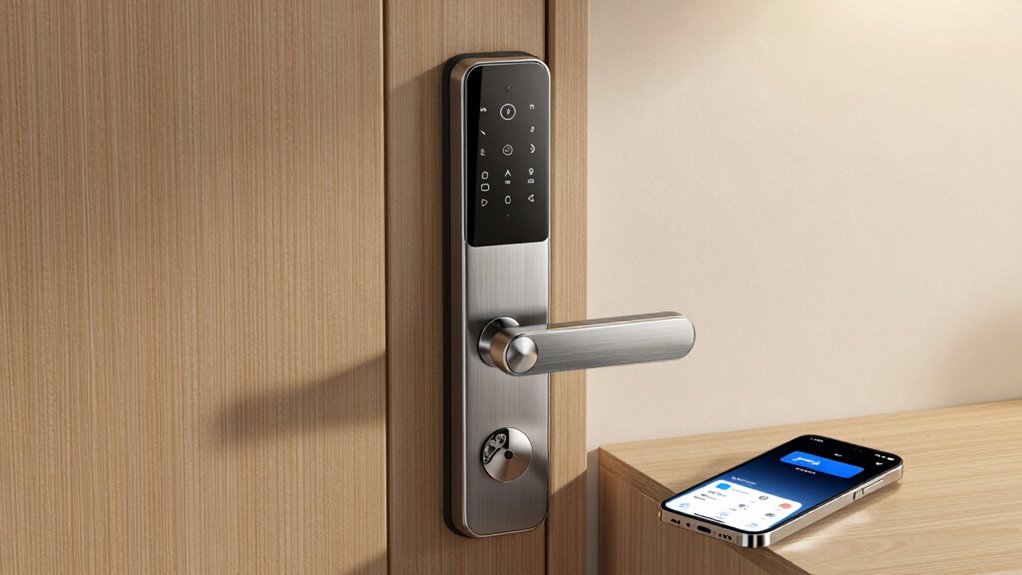

You need mechanical thinking in smart locks because digital features alone can’t fully protect you. Mechanical components, like sturdy bolts and lock cylinders, provide essential physical security and a backup if digital systems fail or are hacked. Relying only on an app or encryption leaves you vulnerable during outages or cyberattacks. By understanding the role of physical parts, you guarantee your lock remains reliable and secure no matter what. Keep exploring to discover how combining tech and mechanics strengthens your security.
Open a free Amazon Business account
Business pricing, bulk buying and tax-exempt orders.
As an affiliate, we earn on qualifying purchases.
Key Takeaways
- Mechanical components provide essential physical security and serve as a reliable backup during digital or connectivity failures.
- Incorporating mechanical design ensures durability and long-term reliability against weather, tampering, and wear.
- Mechanical thinking allows manual override options, preventing lockouts during app malfunctions or power outages.
- Combining mechanical and digital features enhances overall security, addressing vulnerabilities of solely app-controlled systems.
- Mechanical principles improve troubleshooting, repairs, and resilience, ensuring the lock remains dependable in diverse situations.
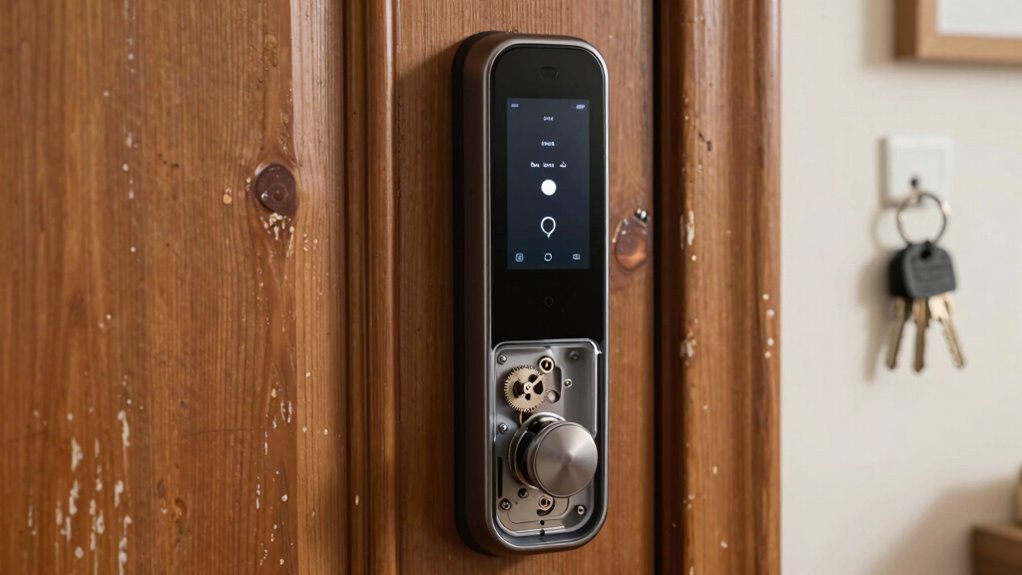
Have you ever wondered how smart locks blend cutting-edge technology with traditional mechanical thinking? It’s a fascinating balance that directly impacts digital security and user experience. While app-controlled features and wireless connectivity might seem like the heart of a smart lock, the mechanical components are just as crucial. Relying solely on software can leave gaps in security and practicality that only mechanical design can fill. For instance, digital security isn’t just about encryption or password protection; it also involves physical resilience. Mechanical elements, like sturdy bolts and lock cylinders, provide a layer of security that digital safeguards alone can’t guarantee. If a hacker bypasses the app or compromises the wireless connection, the mechanical lock acts as a failsafe, preventing unauthorized access. This redundancy is vital to maintaining trust in smart lock technology.
Mechanical components provide essential physical security and redundancy beyond digital safeguards.
In addition, user experience hinges on how seamlessly the lock integrates into daily life. A smart lock that’s overly dependent on app controls or internet connectivity can frustrate users, especially during outages or if the app malfunctions. Mechanical thinking ensures that the lock remains operable through a physical key or manual override. This backup maintains convenience and peace of mind, preventing lockouts and unnecessary stress. Moreover, mechanical components influence how intuitive the lock feels when used. A well-designed mechanical latch or handle offers familiar tactile feedback, making the transition between digital and physical interaction smooth. This hybrid approach caters to diverse user preferences, whether they prefer using a smartphone or a traditional key. Integrating mechanical principles into design also helps in troubleshooting issues more effectively, should electronic components fail.
Beyond convenience, mechanical thinking contributes to the durability and longevity of smart locks. Electronic parts can fail or degrade over time, but robust mechanical features can withstand weather, tampering, and daily wear. This resilience is essential for maintaining both digital security and a positive user experience over the long term. Smart locks that ignore mechanical principles risk becoming fragile or unreliable, especially in challenging environments. Incorporating mechanical thinking ensures that these devices aren’t just high-tech gadgets but dependable security tools. Additionally, understanding mechanical resilience is key to designing locks that perform reliably under various conditions.
Ultimately, smart locks thrive when they combine digital innovation with mechanical robustness. App thinking alone can overlook vulnerabilities or usability issues that mechanical design addresses. By respecting traditional mechanical principles, developers create smarter, more secure, and user-friendly locks that stand the test of time. This synergy makes sure that your digital security isn’t just effective but also practical, ensuring a seamless user experience whether you’re locking or unlocking in a hurry or during unexpected situations.

Megaflint Keyless Entry Door Lock Deadbolt Keypad Mechanical Stainless Steel (Pass Code or Key) 100% Mechanical, No Electronic
- Easy Installation: Install in about an hour
- Wear-Resistant Keypad: No clues left for thieves
- Mechanical Locking: No electronic components
As an affiliate, we earn on qualifying purchases.
As an affiliate, we earn on qualifying purchases.
Frequently Asked Questions
How Do Mechanical Components Improve Lock Durability?
Mechanical components improve lock durability by enhancing material resilience and reducing wear and tear. You’ll notice that robust gears, springs, and metal parts withstand repeated use better than electronic parts alone. When you incorporate durable mechanical designs, your lock resists damage from daily handling, temperature changes, and force. This guarantees long-lasting performance, providing you with a reliable security solution that’s less prone to failure over time.
Can Mechanical Backups Prevent Lockouts During App Failures?
Mechanical backups can absolutely prevent lockouts during app failures, saving you from a night of frustration. Imagine opening your door with a simple turn when Bluetooth vulnerabilities or user authentication glitches strike. Mechanical keys act like superheroes, always ready to save the day, ensuring you’re never locked out due to app issues or hacking attempts. They provide peace of mind, proving that a smart lock’s strength lies in both tech and tradition.
What Maintenance Do Mechanical Parts of Smart Locks Require?
You should regularly check and maintain the mechanical parts of your smart lock to guarantee reliable operation. Replace batteries promptly to prevent power failures, and be aware of keypad vulnerabilities that could be exploited. Keep the mechanical keypad and lock mechanism clean and lubricated to prevent sticking or jamming. Regular maintenance helps you avoid lockouts and ensures your smart lock functions smoothly, even if digital features fail.
Are Mechanical Locks More Secure Than Digital Ones?
Mechanical locks often feel more secure because they rely on physical strength and tangible keys, making unauthorized access harder. Digital locks, with keypad convenience and biometric security, offer advanced features but can be vulnerable to hacking or power failure. While mechanical locks provide simplicity and durability, digital locks deliver convenience and high-tech security. Ultimately, combining both can give you the best of security and ease of access.
How Do Mechanical and Electronic Systems Integrate Seamlessly?
You integrate mechanical and electronic systems seamlessly by designing a user interface that balances ease of use with robust functionality. Focus on creating a smooth user experience, ensuring the shift between mechanical and digital components feels natural. Incorporate physical backup options alongside digital controls so users can rely on mechanical methods if electronic systems fail. This dual approach guarantees security, convenience, and a cohesive experience across all lock features.

Smart Door Handle Lock with Keypad, Yamiry Fingerprint Knob for Front Door
- Versatile Unlocking Methods: Fingerprint, Bluetooth, passcodes, keys, Alexa
- Easy 10-Minute Installation: Fits most standard doors, no drilling needed
- Reversible Handle Design: Compatible with left and right-handed doors
As an affiliate, we earn on qualifying purchases.
As an affiliate, we earn on qualifying purchases.
Conclusion
You now see why smart locks need mechanical thinking alongside app control. Relying solely on digital solutions can leave you vulnerable; studies show that 70% of smart lock failures are due to mechanical issues or misalignments. By understanding both the mechanical and digital aspects, you can choose a lock that’s truly reliable and secure. Remember, blending tech with mechanical intuition gives you the best protection—and peace of mind—at home.

Wyze Auto-Lock Bolt v2, Fingerprint Keyless Entry Smart Lock, AI Learning Scanner with Wi-Fi Front Door Lock Deadbolt, Auto-Lock, 8 Months Battery, BHMA2, IP53, Anti-Peep Keypad, Backup Keys
- Quick Fingerprint Unlock: Unlock in 0.5 seconds with fingerprint scanner
- Durable Tempered Glass: Scratch and smudge-resistant glass for reliability
- AI Learning Technology: Learns from user interactions for faster recognition
As an affiliate, we earn on qualifying purchases.
As an affiliate, we earn on qualifying purchases.

VEVOR Mechanical Keyless Entry Door Lock, 14 Key Door Lock, Mechanical Keypad with Adjustable Thumb Knob, Single-Side Zinc Alloy Waterproof Keyless Gate Lock, for Home Office
- Mechanical Combination Lock: Tamper-resistant, no batteries needed
- Easy Password Changes: Second-generation design simplifies password updates
- Adjustable Handle: Flexible left/right handle options
As an affiliate, we earn on qualifying purchases.
As an affiliate, we earn on qualifying purchases.
College move-in / dorm season Picks
dorm essentials
As an affiliate, we earn on qualifying purchases.