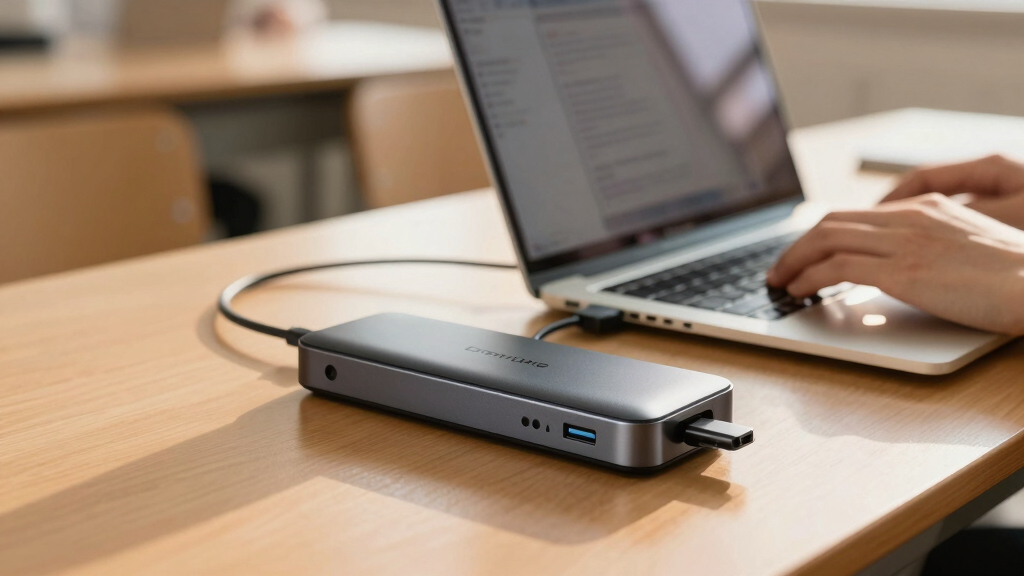

If you’re searching for the best USB-C docking station for MacBook with DisplayLink, you’re likely balancing performance, compatibility, and ease of setup. The ACASIS USB C to Dual HDMI DisplayLink Adapter stands out for its reliable dual 4K output and solid build, making it a strong overall choice. The Anker Prime Docking Station offers a comprehensive port selection with smart features, ideal for power users. However, many options in this category trade off between price, complexity, and port variety. Keep reading for a detailed breakdown of the top contenders to find the best fit for your needs.
Play games included with Prime
Start a Prime free trial and play with Amazon Luna on your devices.
Start playingAs an affiliate, we earn on qualifying purchases.
Key Takeaways
- The best docking stations balance multiple 4K outputs with reliable power delivery and MacBook compatibility.
- Top models often include a mix of HDMI, DisplayPort, USB-A, and USB-C ports, but the more ports, the higher the price typically.
- DisplayLink technology enables multiple monitors but can introduce compatibility and driver complexity, especially with macOS.
- Higher-priced options tend to offer better build quality, cooling, and more advanced features like Ethernet and SD card readers.
- Choosing a dock depends heavily on your specific monitor setup, power needs, and whether you prioritize portability or maximum connectivity.


More Details on Our Top Picks
ACASIS USB C to Dual HDMI DisplayLink Adapter, 4K@60Hz, 2 HDMI & 3 USB-A Ports, 100W PD Charging, USB C Docking Station for Mac and Windows
This adapter excels in delivering dual 4K monitors at 60Hz, making it a strong choice for users prioritizing high-quality extended displays without sacrificing portability. Compared with the TobenONE, which supports four monitors but requires a larger setup, the ACASIS is more compact and easier to carry around. Its inclusion of 3 USB-A ports and 100W PD ensures you stay connected and powered, yet it does require driver installation and isn’t suited for gaming or HDCP content. Its sleek aluminum design makes it ideal for on-the-go professionals who need reliable display expansion.
Pros:- Supports dual 4K monitors at 60Hz for crisp, high-quality extended displays
- Includes 3 USB-A ports for peripherals and accessories
- Provides 100W PD charging to keep MacBooks and laptops powered
Cons:- Requires driver installation, which may complicate setup for some users
- Not suitable for gaming or HDCP-protected content
Best for: Traveling professionals or remote workers who need a dependable, portable dual-monitor solution for MacBook or Windows
Not ideal for: Heavy gamers or content creators working with protected HDCP content, due to driver and compatibility limitations
- Display Resolution:4K@60Hz
- Number of HDMI Ports:2
- USB-A Ports:3
- Power Delivery:100W
- Compatibility:Mac M1/M2/M3/M4/M5/Neo, Windows PCs
- Material:Aluminum
Bottom line: This pick is perfect for users seeking a portable, high-resolution dual-monitor setup with reliable power delivery.
TobenONE DisplayLink Docking Station – 4 Monitors, 20-in-1 Quad 4K@60Hz HDMI, USB-C, Ethernet, SD/Micro SD, 150W Power Supply
Compared with the ACASIS, which supports only two monitors, the TobenONE stands out with support for up to four 4K displays at 60Hz, making it ideal for extensive multitasking. Its array of ports—including HDMI, DisplayPort, Ethernet, and SD slots—caters to professionals who need a comprehensive connectivity hub. The 150W power supply ensures fast charging across multiple devices, but it requires driver installation and doesn’t support HDCP content. The large size and complex setup may be less suitable for those with limited desk space or less technical familiarity.
Pros:- Supports up to four 4K monitors at 60Hz for extensive multitasking
- Includes a wide range of ports, including Ethernet and SD card slots
- Powerful 150W supply supports fast charging for multiple devices
Cons:- Requires driver installation, which may delay initial setup
- Does not support HDCP content, limiting streaming options
Best for: Designers, video editors, or data analysts who require four monitors for detailed workflows
Not ideal for: Casual users or those with limited desk space, due to its size and setup complexity
- Number of Monitors Supported:4
- Resolution:4K@60Hz
- Ports:4 HDMI, 4 DisplayPort, Ethernet, SD/micro SD
- Power Supply:150W
- Compatibility:Windows 10+, macOS 11+, Chrome OS, Android
- Driver Requirement:DisplayLink
Bottom line: Ideal for power users needing multiple high-res displays and extensive peripheral connectivity in one station.
WAVLINK USB-C Triple Monitor Docking Station for MacBook M1-M5 and Windows – 100W PD, 3 HDMI, 2 DisplayPort, 6 USB Ports, Gigabit Ethernet
Compared to the Plugable, which offers a more straightforward setup, the WAVLINK station supports up to three monitors with a mix of HDMI and DisplayPort outputs, ideal for users who want flexibility in display choices. Its 6 USB ports and Gigabit Ethernet provide robust connectivity, while the 130W power output supports most laptops, including M1/M2 MacBooks, with some limitations on high-power devices. It relies on DisplayLink drivers for Mac compatibility, which can be a minor hurdle for some. This dock is best suited for users who need a reliable multi-monitor setup with diverse port options but are okay with driver dependencies.
Pros:- Supports three monitors with mixed HDMI and DisplayPort outputs
- Includes 6 USB ports and Gigabit Ethernet for comprehensive connectivity
- Supports MacBook M1-M5 with DisplayLink driver
Cons:- Requires DisplayLink driver, which can be a barrier for some users
- Does not support HDCP content for protected streaming
Best for: Home office users or professionals needing flexible display options and multiple USB connections
Not ideal for: Gamers or streamers requiring HDCP support or high refresh rate gaming capabilities
- HDMI Ports:3
- DisplayPort:2
- USB Ports:6
- Power Wattage:130W
- Compatibility:Mac M1-M5, Windows
- Driver Requirement:DisplayLink
Bottom line: A versatile choice for users who need multiple displays and diverse connectivity options, with driver reliance as a minor caveat.
Anker Prime Docking Station (DL7400), 14-Port Triple Display with DisplayLink, 140W Max, Smart Display, Triple 4K 60Hz, Cooling Fan, for macOS and Windows
The Anker Prime offers a comprehensive 14-port setup, supporting triple 4K display output including 8K, which surpasses most competitors like the Plugable. Its 140W charging capacity and built-in cooling fan are designed for intensive use, making it suitable for demanding multitasking environments. While its extensive port selection adds convenience, the setup can be complex and requires the latest DisplayLink drivers for full functionality. Its size and weight might be less ideal for users with limited space or those seeking a lightweight portable dock.
Pros:- Supports triple 4K displays up to 60Hz, including 8K support
- High 140W charging supports multiple devices simultaneously
- Features a cooling fan to maintain device stability during intensive use
Cons:- Setup can be complex, requiring familiarity with multi-port systems
- Requires latest DisplayLink driver, which might be a barrier for some
Best for: Creative professionals or power users who need maximum display and device support in a single station
Not ideal for: Casual users or those with small desks, due to its size and complexity
- Total Ports:14
- Maximum Power Output:140W
- Supported Resolutions:Triple 4K 60Hz, 8K
- Display Support:Triple
- Cooling:Built-in fan
- Compatibility:macOS, Windows
Bottom line: Best suited for creative pros or heavy multitaskers needing maximum display output and device support in a single dock.
Plugable USB-C Triple Monitor Docking Station: 13-in-1 Laptop Dock with 100W Charging for Mac, Windows, ChromeOS
Compared with the WAVLINK, which offers a similar triple monitor setup, the Plugable station emphasizes broad system support including ChromeOS, making it more versatile for mixed-device environments. Its 13 ports include three HDMI outputs, supporting up to three monitors at 4K 30Hz or 1920×1200 at 60Hz, suitable for most productivity tasks. The 100W charging is sufficient for most laptops, and its size makes it suitable for standard desks. However, it requires DisplayLink driver installation on Mac, and its video support isn’t designed for high-end gaming or protected HDCP streaming. Ideal for users seeking a comprehensive, multi-platform docking solution.
Pros:- Supports up to three HDMI displays for increased multitasking
- Offers 100W charging, compatible with most laptops
- Works across Windows, Mac, and ChromeOS systems
Cons:- Requires DisplayLink driver, which may complicate setup on Mac
- Limited to 4K 30Hz on primary display, less ideal for high-refresh-rate tasks
Best for: Users with diverse systems needing multiple HDMI displays and reliable charging in a single station
Not ideal for: High-end gamers or streamers requiring HDCP content support or higher refresh rates
- Hardware Interface:Thunderbolt 4, USB-C, USB4
- Total HDMI Ports:3
- Wattage:100W
- Supported Systems:Windows 10/11, macOS 11+, ChromeOS
- Display Support:Up to 3 HDMI, 4K 30Hz
- Included:Dock, USB-C cable, power adapter
Bottom line: A solid, multi-platform solution for users needing multiple HDMI outputs and broad device compatibility with reliable power delivery.
TobenONE DisplayLink Triple Monitor Docking Station with 120W Power Adapter, Supports Triple 4K Display for MacBook Pro/Air, Thunderbolt 4/3, USB-C, Windows
This TobenONE docking station stands out for its ability to support up to three or four 4K monitors, making it ideal for users who need a highly extended visual workspace. Compared with the Plugable USB-C Triple Monitor Docking Station, it offers more monitor outputs and a higher wattage power supply, which benefits professionals engaged in content creation or detailed multitasking. However, its reliance on driver installation and limited support on Linux/Unix systems can introduce setup complexity. The inclusion of 18 ports, including SD/TF slots and Gigabit Ethernet, provides excellent peripheral expansion, but the need for driver downloads can be a drawback for quick, plug-and-play use. This pick makes the most sense for power users with demanding multi-screen workflows who value maximum connectivity and performance over simplicity.
Pros:- Supports triple or quad 4K monitors at 60Hz for expansive workspace
- High 120W power adapter efficiently charges laptops
- Versatile with 18 ports including SD/TF card slots and Ethernet
- Wide OS compatibility, including Windows and macOS
Cons:- Requires driver installation, adding setup time
- Limited support for Linux/Unix systems
- On macOS, limited to three monitors
Best for: Professionals needing multiple 4K displays and extensive peripheral connections, such as content creators or financial analysts.
Not ideal for: Casual users or those with Linux systems, as it lacks Linux support and requires driver downloads.
- Ports:3x HDMI, 3x DisplayPort, 2x USB-C, 4x USB 3.2, SD/TF card slots, Gigabit Ethernet
- Power Adapter:120W
- Laptop Charging Power:up to 100W
- Display Support:Triple or Quad 4K@60Hz
- Data Transfer Speed:up to 10Gbps
- Compatibility:Thunderbolt 3/4, USB4, macOS 11+, Windows 10+, Chrome OS, Ubuntu, Android
Bottom line: This station is best suited for power users who need maximum display and peripheral support, accepting some setup complexity.
Anker 10-in-1 USB-C Docking Station with Dual HDMI and DisplayPort
The Anker 10-in-1 dock makes a compelling choice for users who want a versatile setup without excessive bulk. Its support for two 4K monitors at 30Hz, compared to the 60Hz offered by higher-end docks like the WAVLINK Triple Monitor Dock, slightly limits refresh rates but keeps the device compact and portable. It provides 100W charging, making it suitable for most MacBook models, with multiple USB ports and Ethernet for comprehensive connectivity. The main tradeoff is the need for DisplayLink software, which can complicate setup and may cause occasional stability issues. Compared to the UGREEN Dual 4K Dock, it offers more ports but fewer simultaneous high-refresh-rate displays. This product is ideal for users who need a good balance between portability and multiple display support in a mid-range price point.
Pros:- Supports dual 4K monitors at 30Hz, suitable for most productivity tasks
- Includes 10 ports, covering HDMI, DisplayPort, USB, Ethernet
- 100W Power Delivery efficiently charges MacBooks
- Compact design for portability
Cons:- Requires DisplayLink driver installation, adding setup steps
- Limited to 30Hz refresh on some outputs, not ideal for fast-paced tasks
- Bulkier than minimal portable docks
Best for: MacBook users who want a portable, multi-display setup with ample ports for everyday multitasking.
Not ideal for: Power users requiring high refresh rates or extensive multi-monitor configurations—its 30Hz limit on some outputs may hinder smooth workflows.
- Ports:2 HDMI, 1 DisplayPort, 1 Ethernet, 1 USB-C 3.2, 1 USB-A 3.2, 2 USB-A 2.0, AUX
- Power Delivery:100W
- Display Resolution:up to 4K@30Hz on main, 1920×1080@60Hz on others
- Data Transfer Speed:up to 5 Gbps
- Compatibility:Windows and macOS
Bottom line: This dock offers a solid mix of ports and portability for everyday users who do not demand high refresh rate displays.
UGREEN USB C Docking Station, DisplayLink 9-in-1 Dual 4K Monitor Dock for MacBook & Windows
The UGREEN 9-in-1 dock excels at delivering dual 4K monitors at 60Hz, making it ideal for users seeking crisp visuals and reliable performance. Its support for multiple HDMI and DisplayPort outputs surpasses the Anker 10-in-1 in display quality, but it requires driver installation, which can be a hurdle for quick setup. While its port selection covers most needs, the absence of SD card readers reduces versatility somewhat. Compared to the Plugable 13-in-1, this model is more streamlined but offers fewer ports overall. This dock is well-suited for professional workflows that prioritize high-resolution displays with stable performance, especially on macOS and Windows systems.
Pros:- Supports dual 4K@60Hz monitors for sharp, smooth visuals
- Multiple HDMI and DisplayPort outputs for flexible display arrangements
- 100W Power Delivery for fast charging
- Stable DisplayLink operation on macOS and Windows
Cons:- Driver installation required, which may cause initial setup delays
- No SD card reader or audio ports, limiting versatility
- Potential driver conflicts on some macOS versions
Best for: Professionals who need dual 4K displays with dependable connection stability and high image quality.
Not ideal for: Users requiring more diverse ports like SD cards or extensive peripheral options—its port set is more focused on video and Ethernet.
- Display Support:Dual 4K@60Hz
- Ports:2 HDMI 4K, 2 DisplayPort 4K, 2 USB-A 3.2, 1 USB-C 3.2, Gigabit Ethernet
- Power Delivery:100W
- Data Transfer Speed:up to 10Gbps
- Compatibility:macOS and Windows
Bottom line: This dock provides high-quality dual 4K output with stable connectivity, ideal for professional users focused on visual clarity.
Minisopuru DisplayLink Triple Display Docking Station for MacBook & Windows – 2 HDMI & 2 DisplayPort, 100W Charging, USB-C Data, Ethernet, Audio, 4 USB-A Ports
The Minisopuru docking station offers a flexible triple display setup, supporting three monitors for MacBook and Windows users who need expansive visual real estate. Its support for triple displays on macOS depends on the DisplayLink driver, similar to other options like the UGREEN Dock, but it stands out with the inclusion of two HDMI and two DisplayPort outputs. Its 100W charging capability and multiple USB ports make it suitable for professional workflows. However, the need for driver installation introduces an extra step, and simultaneous use of HDMI and DisplayPort on the same display cannot be achieved. This station is best for users who prioritize multi-monitor configurations over ultra-high refresh rates or ultra-portability.
Pros:- Supports triple display configurations, including HDMI and DisplayPort
- 100W charging supports MacBook power needs
- Multiple USB-A ports for peripherals
- Compatible with multiple operating systems
Cons:- Requires DisplayLink driver, adding setup complexity
- Cannot use HDMI and DisplayPort simultaneously on the same display
- Some macOS versions may face driver compatibility issues
Best for: MacBook users who need triple display support with a variety of connection options and high power delivery.
Not ideal for: Users requiring plug-and-play simplicity or high-refresh-rate monitors, due to driver dependencies and display limitations.
- Hardware Interface:DisplayPort, HDMI, Ethernet, USB 3.2, USB Type C
- Ports:2 HDMI, 2 DisplayPort, Ethernet, 4 USB-A
- Wattage:100W
- Total USB Ports:7
- Compatibility:MacBook, Windows, MacBook M1/M2/M3
Bottom line: Ideal for users needing flexible multi-monitor setups with multiple connection types and robust power delivery, accepting driver installation.
Plugable USB-C Laptop Docking Station, Dual 4K 60Hz, 14-in-1 with HDMI, DisplayPort, 100W Charging for MacBook and Windows Laptops
The Plugable docking station is designed for those who want a comprehensive port array with dual 4K support. Its 14-in-1 configuration includes HDMI and DisplayPort outputs, along with SD card readers, Ethernet, and multiple USB ports. While it offers excellent expandability, it depends on DisplayLink drivers for dual monitor functionality, which may introduce setup time and occasional stability concerns. Compared to the WAVLINK model, it provides a more extensive port set but at the expense of a slightly larger footprint. This dock is well-suited for professionals who need a full complement of ports and dual 4K displays for demanding multitasking, especially on macOS and Windows platforms.
Pros:- Supports dual 4K@60Hz displays for sharp multitasking
- Includes SD card readers, Ethernet, and extensive USB ports
- 100W Power Delivery for fast charging
- Full-featured with a broad port selection
Cons:- Requires DisplayLink driver installation for dual monitor support
- Setup can be complex for new users
- Size and weight may be less portable
Best for: Power users seeking maximum connectivity and dual 4K displays, with a focus on versatility and expandability.
Not ideal for: Users looking for a simple, driver-free experience or those with limited desk space, as it is somewhat bulky.
- Hardware Interface:HDMI, DisplayPort, Ethernet, USB
- Number of Ports:15
- HDMI Ports:2
- DisplayPort Ports:2
- Wattage:100W
Bottom line: This dock balances extensive port options with dual 4K support, perfect for high-demand professional setups that can accommodate driver installation.
Plugable USB-C Triple Display Docking Station with 100W Power Delivery
This docking station stands out for its ability to support three HDMI monitors, including 4K at 30Hz, making it ideal for users who need a comprehensive multi-display setup. Compared with the WAVLINK USB-C Triple Monitor Docking Station, it offers similar multi-monitor support but with a slightly lower refresh rate at 4K. Its support for 100W power delivery ensures your MacBook remains charged during intensive work sessions, a key advantage over less powerful docks. However, it lacks HDCP support and isn’t compatible with Linux, which could limit its flexibility for some users. The inclusion of multiple USB 3.0 ports and Gigabit Ethernet caters well to enterprise environments. Overall, this pick suits professionals who prioritize multiple high-resolution displays and universal compatibility, but those on Linux or needing HDCP will need to look elsewhere.
Pros:- Supports triple HDMI monitors with 4K at 30Hz and 1080p at 60Hz
- Provides 100W power delivery for uninterrupted charging
- Compatible with Windows, macOS, and ChromeOS, covering most laptops
Cons:- Not compatible with Linux systems, limiting flexibility
- Requires driver installation on macOS, adding setup complexity
- Lacks HDCP support, which may restrict some media playback
Best for: Professionals who need a reliable, multi-monitor setup with enterprise-grade connectivity and full power delivery.
Not ideal for: Linux users or those requiring HDCP support for protected content, as this dock doesn’t support Linux and HDCP.
- Hardware Interface:USB Type C
- Supports:USB-C, USB4, Thunderbolt
- Total USB Ports:6
- Total HDMI Ports:3
- Wattage:100W
- Item Dimensions:7.87″L x 3.3″W x 1.2″H
Bottom line: This dock is best suited for professionals needing a multi-monitor setup with robust connectivity and power delivery, but Linux users should consider alternatives.

How We Picked
Our selection process prioritized docks that leverage DisplayLink technology to support multiple monitors via USB-C, with a focus on compatibility with MacBook models. We evaluated each product based on performance, build quality, port selection, and user experience, especially on macOS. Reliability and driver stability were key, given DisplayLink’s known quirks. We also considered value for money, ensuring each option offers a solid feature set at different price points, and included a range of budget-friendly to premium picks. Ultimately, the rankings reflect a balance between versatility, performance, and user-friendliness for MacBook users.
Factors to Consider When Choosing Best USB-C Docking Station For MacBook With DisplayLink
When choosing a USB-C docking station with DisplayLink for your MacBook, it’s important to consider several factors beyond just port count. Compatibility with macOS, especially regarding DisplayLink drivers, can impact your experience. Power delivery (PD) capacity determines if the dock can charge your MacBook effectively. Additionally, monitor support and resolution are critical for productivity, while build quality and size influence portability and durability. Understanding these factors can help you select a dock that truly fits your workflow and setup.Compatibility and Driver Support
macOS compatibility remains a key consideration because DisplayLink drivers can sometimes be finicky or require frequent updates. Confirm that the dock explicitly states support for MacBook models and macOS versions you use. Look for docks with recent driver updates and good user reviews specifically from Mac users to minimize setup headaches. Some docks are optimized for Windows but may have limited macOS support, so check manufacturer documentation thoroughly.
Power Delivery and Charging
Power delivery ensures your MacBook stays charged while connected. Docks with higher PD ratings, such as 100W or more, are better suited for MacBook Pro and newer Air models that demand substantial power. Be cautious of docks with lower PD ratings if you rely on the dock for charging; it might lead to slow charging or power drops during intensive tasks. It’s also worth verifying if the dock’s charging port can handle your specific MacBook model’s wattage needs.
Monitor Support and Resolution
DisplayLink docks vary in how many monitors they support and at what resolutions. If you work with multiple 4K displays or high-refresh-rate monitors, ensure the dock can handle these outputs reliably. Some docks might support dual 4K at 60Hz, while others are limited to 30Hz or lower resolutions. Compatibility with your existing monitor setup is essential to prevent performance bottlenecks and visual artifacts.
Port Selection and Expansion
Beyond video outputs, consider what additional ports you need—USB-A, SD card readers, Ethernet, audio jacks, etc. More ports increase versatility but can also add to the size and cost of the dock. Think about your most frequent connections and prioritize docks that include those, rather than overpaying for rarely used ports. A well-balanced port selection simplifies your workspace and reduces cable clutter.
Build Quality and Size
The durability and design of the dock matter, especially if you plan to move it between locations. Metal enclosures tend to last longer and dissipate heat better, while plastic models might be more susceptible to wear. Size and weight influence portability; compact designs suit travelers or those with limited desk space, but may sacrifice port variety or cooling capacity. Assess your workspace environment to pick a dock that matches your mobility and durability needs.
Frequently Asked Questions
Will all DisplayLink docks work seamlessly with macOS?
While many DisplayLink docks are compatible with macOS, their performance can vary depending on driver support and macOS version. Some users experience issues with flickering or connectivity drops, especially on older macOS versions. It’s advisable to check recent user reviews for your macOS version and ensure you download the latest DisplayLink drivers. In some cases, additional configuration or updates might be necessary to achieve stable multi-monitor setups.
Can I charge my MacBook while using a DisplayLink dock?
Most modern DisplayLink docks support charging, but the effectiveness depends on the dock’s PD rating. A dock with at least 85W or 100W power delivery is recommended for MacBook Pro and newer Air models to ensure full charging during use. Keep in mind that if you’re running multiple high-resolution monitors, some power may be diverted to data transfer or video processing, potentially affecting charging speed. Always verify the dock’s PD capacity matches your MacBook’s wattage requirements.
Is DisplayLink technology suitable for professional or gaming use?
DisplayLink is primarily designed for productivity and multi-monitor setups rather than gaming or high-end professional graphics. While it can handle multiple 4K displays for work tasks, it may introduce latency or visual artifacts unsuitable for gaming or professional video editing. For such intensive use cases, dedicated GPU solutions or Thunderbolt-native docks might be more appropriate. However, for general work and multiple display support, DisplayLink remains a flexible and cost-effective option.
How often do I need to update DisplayLink drivers on a Mac?
Driver updates for DisplayLink can be released periodically, often aligning with macOS updates. It’s advisable to check for updates whenever you upgrade your operating system or experience display issues. Regularly updating ensures compatibility and stability, especially since macOS updates sometimes introduce new security or system changes that affect DisplayLink functionality. Keeping drivers current minimizes disruptions and improves multi-monitor performance.
Are there any common pitfalls to avoid when choosing a DisplayLink dock for MacBook?
One common mistake is selecting a dock without verifying macOS compatibility or driver support, which can lead to unstable setups. Another is undervaluing power delivery needs, resulting in slow or no charging while working. Overlooking port requirements—such as missing SD card slots or Ethernet—can limit your workflow. Also, ignoring build quality may result in a less durable product that wears quickly, especially if you move your dock frequently. Careful research ensures you avoid these pitfalls.
Conclusion
For users seeking the best overall performance and reliability, the Anker Prime Docking Station offers a balanced mix of ports, build quality, and macOS support. Those on a tighter budget aiming for solid multi-monitor support might prefer the ACASIS USB C to Dual HDMI DisplayLink Adapter, which provides excellent value. Professionals needing maximum connectivity and durability should consider higher-end options like the Ugreen USB C Docking Station or the Plugable Triple Display Dock. Beginners or casual users can start with simpler, more affordable docks, while power users and creative professionals will benefit from premium models offering extensive ports and reliable driver support. Your choice should align with your specific monitor setup, power needs, and portability preferences.
Fall Picks
fall essentials
As an affiliate, we earn on qualifying purchases.