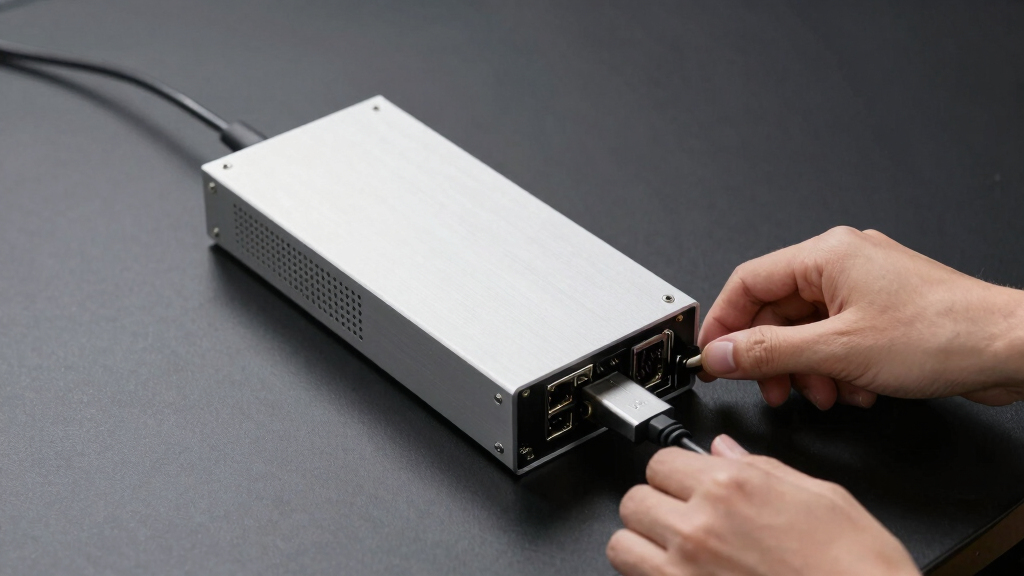

When searching for the best RAID enclosure Thunderbolt, the key considerations are speed, expandability, and compatibility. The OWC ThunderBay 4 stands out as the overall best choice for its robust performance and reliability. For those prioritizing high-speed transfers with NVMe SSDs, options like the ACASIS Dual-Bay and JEYI 4-Bay deliver impressive features at different price points. The main tradeoffs in this category often involve balancing maximum throughput against ease of setup or cost. Keep reading to see how these options compare and which one might suit your needs best.
Key Takeaways
- The highest performance RAID enclosures tend to support Thunderbolt 4/5 and multiple drive bays, but they often come with a higher price tag.
- Many top models now include cooling features or tool-free design for easier maintenance and longevity.
- Compatibility with NVMe SSDs can significantly boost speed but requires careful attention to supported drive types and configurations.
- Daisy chaining and multi-drive support are common in high-end enclosures, but they may add complexity for less experienced users.
- Value varies widely; some enclosures sacrifice features for lower prices, but this can impact reliability or future expandability.



More Details on Our Top Picks
OWC Express 4M2 Four-Slot USB4 RAID Storage Enclosure for NVMe M.2 SSDs
The OWC Express 4M2 stands out for its exceptional speed, offering up to 3200MB/s transfer rates that surpass many Thunderbolt enclosures like the ThunderBay 4. Its support for multiple RAID configurations, including RAID 0, 1, 4, 5, and 10, makes it versatile for creative professionals who need tailored data protection or performance. Compared with the TERRAMASTER D4 SSD NVMe Enclosure, which supports four drives but relies on software RAID, the OWC’s hardware RAID provides more reliable, plug-and-play setup. However, this power comes with a higher price and the necessity for compatible NVMe SSDs, plus a steeper learning curve for RAID configuration. This enclosure is best suited for users needing maximum speed and flexible RAID options, willing to handle technical setup.
Pros:- High-speed data transfer up to 3200MB/s
- Supports multiple RAID configurations including RAID 0, 1, 4, 5, and 10
- Excellent heat dissipation with aircraft-grade aluminum
- Compatible with both Mac and Windows systems
Cons:- Enclosure only; requires compatible NVMe SSDs
- More expensive than simpler enclosures
- Requires technical knowledge to set up RAID configurations
Best for: Creative professionals or data-heavy workflows requiring fast, customizable RAID setups
Not ideal for: Users seeking a simple, plug-and-play solution without RAID configuration or those on a tight budget
- Hard Disk Interface:PCIE x 4
- Connectivity Technology:USB-C, Thunderbolt
- Additional Features:Smart Adaptive Cooling
- Hard Disk Form Factor:3.5 Inches
- Supported Devices:Mac, Windows
- Read Speed:3200 Megabytes Per Second
Bottom line: This pick is ideal for tech-savvy users seeking maximum speed and flexible RAID options for demanding projects.
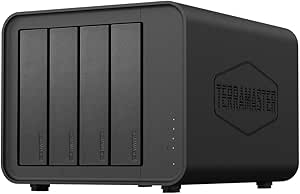
TERRAMASTER D4 SSD NVMe Enclosure – 40Gbps 4-Bay USB-C, Supports 4x M.2 NVMe 2280 SSDs, Compatible with USB 4/3.2/3.1/3.0, Thunderbolt 5/4/3, Includes Mobile Backup App
The TERRAMASTER D4 SSD NVMe Enclosure is designed for users who need blazing-fast transfer speeds up to 40Gbps, significantly outperforming the OWC Express 4M2 in raw throughput. Its support for four NVMe SSDs up to 8TB each provides extensive storage capacity, making it ideal for 4K video editing or massive data sets. Unlike the ACASIS Dual-Bay, which supports only two drives and lacks RAID support, the D4 offers flexible configurations via third-party software, though it doesn’t include native hardware RAID. Its reliance on an external power supply and potentially complex setup might be a barrier for less technical users. This enclosure makes the most sense for professionals focused on raw speed and large storage capacity, accepting some complexity in setup.
Pros:- Ultra-fast transfer speeds up to 40Gbps
- Supports four high-capacity NVMe SSDs for large storage needs
- Active cooling with temperature sensors and fans
- Compatible with multiple device interfaces and OS
Cons:- No built-in hardware RAID support; relies on third-party software
- Requires external power supply
- Setup can be complex for non-technical users
Best for: Video editors and data scientists needing maximum throughput and vast storage capacity
Not ideal for: Users preferring an all-in-one, easy-to-use RAID system or those with limited technical skills
- Max Speed:40Gbps
- Supported SSDs:4x M.2 NVMe 2280 SSDs (up to 8TB each)
- Total Storage Capacity:Up to 32TB
- Cooling:Active cooling with sensors and fans
- Compatibility:Mac mini, Windows, Linux
- Included Apps:TDAS Mobile App, TPC Backupper
Bottom line: This is best suited for power users prioritizing speed and capacity, ready to handle some setup complexity.
OWC ThunderBay 4 0TB Four-Bay Thunderbolt 40Gb/s RAID Storage Enclosure
The OWC ThunderBay 4 delivers impressive sustained performance up to 1527MB/s, making it a solid choice for creative professionals demanding Thunderbolt 4 speeds. Its four drive bays support no-fuss RAID configurations like RAID 0, 1, 4, 5, and 10, with no need for adapters or complicated setup, unlike some multi-bay enclosures. Compared to the ORICO 5-Bay Thunderbolt, it offers a more straightforward RAID setup and better performance consistency. Its aluminum chassis ensures excellent heat dissipation and quiet operation. A downside is that, with 0TB included, it’s a blank slate, requiring users to add drives themselves, which could be a barrier for beginners. This enclosure is ideal for professionals who want reliable, high-speed Thunderbolt RAID storage without fuss.
Pros:- Sustained performance up to 1527MB/s
- Supports RAID 0, 1, 4, 5, and 10 configurations
- Quiet, heat-dissipating aluminum chassis
- Dual Thunderbolt 3 ports for daisy chaining
Cons:- Requires user-installed drives; no pre-installed drives
- Higher price point due to Thunderbolt 4 support
- No included drives, so additional investment needed
Best for: Creative professionals needing reliable Thunderbolt 4 RAID with straightforward setup
Not ideal for: Beginners or users seeking an all-in-one ready-to-use system without drive installation
Bottom line: Best suited for professionals who want high-speed, reliable Thunderbolt RAID with flexible drive options and straightforward operation.
ACASIS Dual-Bay 40Gbps M.2 NVMe RAID SSD Enclosure with Cooling Fan, USB4/40Gbps Compatibility, Tool-Free Aluminum Dock for M1/M2/Windows
The ACASIS TBU405 Pro Max excels for users needing a dual NVMe enclosure that supports 40Gbps speeds and software RAID options, matching the performance of the ORICO 5-Bay but with a more compact dual-drive setup. Its built-in fans and aluminum shell tackle heat dissipation more effectively, making it ideal for extended high-speed workloads like editing 4K footage. However, it’s limited to specific drive sizes (2230-2280) and requires identical drives for optimal RAID 0 performance, which could restrict flexibility. Its incompatibility with non-40Gbps host devices means it’s not universal. This enclosure appeals to high-speed enthusiasts who want efficient cooling and RAID flexibility in a compact form.
Pros:- Supports transfer speeds up to 40Gbps
- Effective cooling with built-in fans and aluminum body
- Flexible RAID options including RAID 0, 1, JBOD
- Compatible with USB4/40Gbps host devices
Cons:- Requires drives of identical size for optimal RAID 0
- Limited to specific drive sizes (2230-2280)
- Incompatible with non-40Gbps host devices
Best for: High-performance users with matching NVMe drives seeking efficient cooling and flexible RAID options
Not ideal for: Users with mixed drive sizes or non-40Gbps host devices, or those seeking a plug-and-play experience
- Max Transfer Speed:40Gbps
- Supported Drives:2x M.2 NVMe SSDs
- RAID Support:RAID 0, RAID 1, JBOD
- Cooling:Built-in fans and aluminum
- Compatibility:USB4/40Gbps, M1/M2/Windows
Bottom line: Ideal for demanding users who prioritize high-speed RAID with efficient cooling on compatible devices.
ORICO External 5-Bay Hard Drive Enclosure for Thunderbolt 3/4, Type-C Hub with 40Gbps Transfer, Daisy Chaining, and 4K/8K Video Output
The ORICO 5-Bay Thunderbolt Enclosure offers massive capacity, supporting up to 330TB via daisy chaining, making it perfect for media professionals managing large projects. Its 40Gbps transfer speeds match those of the Terramaster D4, but with added capabilities like 4K and 8K video output for editing directly from the storage array. Unlike the other enclosures, it supports SATA drives, not NVMe, and does not support RAID, limiting flexibility in data protection. Its aluminum build and integrated cooling fan help maintain performance during long editing sessions. Its main limitation is compatibility, as it’s primarily designed for Thunderbolt 3/4, making it unsuitable for older interfaces. This enclosure is best for users needing massive storage with high-speed data transfer and video output capabilities.
Pros:- Supports up to 330TB storage via daisy chaining
- High-speed transfer up to 40Gbps
- Multiple video output options for 4K/8K editing
- Durable aluminum construction with cooling fan
Cons:- Does not support RAID configurations
- Limited to SATA drives, not NVMe
- Requires Thunderbolt 3/4 compatibility
Best for: Professional video editors and storage-heavy workflows needing large capacity and high-speed daisy chaining
Not ideal for: Users seeking NVMe SSD performance or RAID configurations, or those with non-Thunderbolt interfaces
Bottom line: This enclosure is ideal for media professionals with large SATA drives and high-speed daisy chaining needs, not for NVMe enthusiasts or RAID users.
Dual Bay RAID SSD Enclosure with Clone Mode, RAID 0/1, JBOD, 20Gbps, M.2 2280 NVMe, External Power
This dual bay SSD enclosure stands out for its flexible RAID options, including RAID 0, RAID 1, JBOD, and clone mode, making it ideal for users who need multi-purpose SSD storage. Compared with the JEYI 4-Bay NVMe enclosure, it offers simpler setup with fewer RAID modes but excels in straightforward high-speed SSD management. The 20Gbps transfer rate is reliable for most professional workflows, and its tool-free design simplifies swapping drives. However, it requires an external power supply and is limited to M.2 2280 NVMe SSDs, which could be a restriction for users with other drive types or seeking a purely portable solution. This enclosure makes the most sense for professionals focused on fast, flexible SSD configurations without complex cooling needs.
Pros:- Supports multiple RAID modes including RAID 0, RAID 1, JBOD, and clone mode
- High-speed data transfer up to 20Gbps
- Tool-free installation for quick SSD swaps
- Durable aluminum construction with good heat dissipation
Cons:- Requires external power supply for high-capacity SSDs
- Limited to M.2 2280 NVMe SSDs
Best for: Content creators or professionals needing high-speed, flexible SSD RAID configurations in a compact, reliable enclosure.
Not ideal for: Users seeking larger capacity HDD options or a portable, battery-powered solution—this is best suited for stationary setups with power access.
- Hardware Interface:PCI Express 3.0
- Hardware Platform:PC
- Memory Storage Capacity:16 TB
- Supported Devices:M.2 2280 NVMe SSD
- Data Transfer Rate:20 Gigabits Per Second
- Enclosure Material:Metal
Bottom line: This enclosure is ideal for users who want flexible, high-speed SSD RAID options in a durable, easy-to-use device.
JEYI 4-Bay NVMe RAID Enclosure with Turbo Fan, Thunderbolt 4/3, Max 32TB
The JEYI 4-Bay NVMe enclosure makes a compelling choice for demanding workflows, supporting data transfer speeds up to 40Gbps with Thunderbolt 4/3 and USB4. It surpasses the TerraMaster D4-320 in raw speed and expands capacity to 32TB, which benefits users handling large media files or extensive datasets. Its turbo cooling fan ensures efficient heat management during prolonged heavy workloads, a feature absent in many simpler enclosures. The tradeoff is its complexity—compatibility issues may arise on some AMD systems, and RAID configuration can be daunting for less technical users. Overall, this model is best suited for high-end professionals who prioritize maximum throughput and capacity but are comfortable with setup complexity.
Pros:- Supports ultra-fast transfer speeds up to 40Gbps
- Multiple RAID modes including RAID 0, 1, 5, and JBOD
- Effective cooling with turbo fan and thermal pads
- Large capacity up to 32TB for extensive storage needs
Cons:- Potential compatibility issues on some AMD systems
- RAID configuration may be complex for non-technical users
Best for: Video editors and data scientists needing ultra-fast, large-capacity NVMe RAID storage with robust cooling.
Not ideal for: Casual users or those with limited technical experience, as RAID setup and compatibility considerations can be challenging.
- Memory Storage Capacity:32TB
- Supported Interfaces:Thunderbolt 4/3, USB4
- Max Transfer Rate:40Gbps
- Cooling:Turbo fan, thermal pads
- Power Supply:12V/3A
- Enclosure Material:Aluminum
Bottom line: This enclosure is best for tech-savvy professionals seeking maximum speed and capacity for demanding NVMe RAID setups.
ACASIS 40Gbps 4-Bay Hard Drive Enclosure with RAID, USB4, Thunderbolt 3/4/5 Compatibility
The ACASIS 4-Bay enclosure offers a versatile platform supporting both SATA HDDs and NVMe SSDs, making it suitable for users who need a combination of large capacity and high speed. With transfer speeds up to 40Gbps and support for 8K video output, it is tailored for high-end video editing and large data projects. Compared to the TerraMaster D4-320, it provides broader drive compatibility and includes advanced features like 8K video output, but setup can be more complex, especially for RAID configurations. The active cooling system enhances long-term stability during intensive operations. This model is best for professionals who require flexible, high-performance storage with advanced output options but are comfortable managing more complex configurations.
Pros:- Supports high-speed data transfer up to 40Gbps
- Flexible RAID options for speed, security, or capacity
- Supports 8K video output for professional editing
- Active cooling fan for thermal management
Cons:- RAID setup and configuration can be complex
- Full 40Gbps performance depends on compatible ports and drives
Best for: Professional video editors and content creators needing flexible, high-speed storage with video output capabilities.
Not ideal for: Basic users or those needing a simple, plug-and-play solution without high-end video output or RAID complexity.
- Max HDD Capacity:30TB per bay
- Max NVMe SSD Capacity:8TB per bay
- Transfer Speed:Up to 40Gbps
- Video Output:8K@60Hz
- Interface:USB4, Thunderbolt 3/4/5
- Cooling:Active cooling fan
Bottom line: This enclosure is ideal for professionals demanding flexible, high-speed storage with advanced multimedia capabilities.
TerraMaster D4-320 External Hard Drive Enclosure – 4 Bay USB 3.2 Gen2, Type-C, Hot Swappable, Plug and Play (Diskless)
The TerraMaster D4-320 offers a straightforward, diskless 4-bay enclosure supporting up to 10Gbps transfer speeds via USB 3.2 Gen2. It excels in providing large volume storage with support for up to 120TB total capacity, making it a solid choice for users who prioritize capacity over RAID flexibility. Compared with the D2-320, it offers more bays but lacks RAID functionality, limiting it to individual drives. Its hot-swappable, tool-free design simplifies drive management, yet its plastic enclosure may feel less durable compared to metal options. This model suits those who need simple, large-capacity storage without the complexity of RAID or high-end features.
Pros:- Supports high-capacity drives up to 120TB total
- Hot-swappable, tool-free drive installation
- Plug-and-play setup across multiple OS
- Supports multiple operating systems
Cons:- No RAID support, only individual disk access
- Plastic enclosure may be less durable
Best for: Home users or small businesses needing large, flexible storage with easy drive management and no RAID complexity.
Not ideal for: Professionals requiring RAID redundancy or high-speed data transfer beyond 10Gbps, as it focuses on capacity and simplicity.
- Hardware Interface:SATA 6.0 Gb/s, USB 3.2 Gen 2
- Supported Devices:Windows, Mac, Linux
- Hard Disk Form Factor:3.5 Inches
- Supported Devices Quantity:4
- Data Transfer Rate:10 Gigabits Per Second
- Maximum Supported Drive Capacity:30TB per drive
Bottom line: This enclosure provides large storage capacity in a simple, easy-to-use package for users who don’t need RAID or ultra-fast transfer speeds.
TERRAMASTER D2-320 USB RAID Enclosure – 2 Bay, USB 3.2 Gen 2, Supports RAID 0, 1, JBOD, Single, Diskless
The TERRAMASTER D2-320 offers a reliable, 2-bay RAID enclosure supporting RAID 0, RAID 1, JBOD, and single disk modes, making it a versatile choice for users needing flexible data protection. Its 10Gbps transfer speed is adequate for most high-speed external storage needs but falls short of Thunderbolt-level performance. Its tool-free drive installation and automatic locking simplify setup, while its heat dissipation ensures stable operation. Compared with the larger TerraMaster D4-320, it is more compact and ideal for users with limited space or simpler backup needs. The main tradeoff is its lower maximum capacity—up to 44TB total—and slower speeds compared to Thunderbolt options, but it provides straightforward RAID security at a lower cost.
Pros:- Supports multiple RAID modes for data security
- High-speed transfer up to 10Gbps
- Tool-free, secure drive installation
- Supports up to 44TB total storage
Cons:- Limited to 10Gbps speeds, below Thunderbolt levels
- Performance depends on drive types used
Best for: Small office or home office users needing reliable RAID protection with straightforward setup and moderate speed.
Not ideal for: Power users needing ultra-fast transfer speeds or large-capacity setups—this is best for basic, secure external storage.
- Interface:USB 3.2 Gen 2
- Transfer Speed:Up to 10Gbps
- Supported RAID:RAID 0, RAID 1, JBOD, Single
- Maximum Drive Capacity:22TB per drive
- Number of Bays:2
- Supported Drive Types:2.5″ and 3.5″ SATA HDD/SSD
Bottom line: This enclosure suits users needing simple, secure RAID storage with decent speed for everyday external data management.

How We Picked
The products in this roundup were selected based on a combination of performance, build quality, versatility, and user-friendly features. Priority was given to enclosures supporting Thunderbolt 3, 4, or 5 for maximum speed potential. We evaluated each model’s compatibility with different drive types, cooling solutions, and RAID configurations, alongside ease of setup and maintenance. Price was also a factor, helping identify options that offer the best value without sacrificing core features. This approach ensures the list includes options suited to different budgets and technical needs, with clear distinctions in capabilities and tradeoffs.Factors to Consider When Choosing Best RAID Enclosure Thunderbolt
Choosing the ideal RAID enclosure Thunderbolt requires understanding your specific needs and balancing performance with ease of use. Consider how much speed you require, whether you need multiple drive bays, and if your setup demands particular compatibility features. Beyond specs, think about future expandability, noise levels, and your technical comfort level. This guide highlights key factors to help you make an informed decision, avoiding common pitfalls like overspending on unnecessary features or underestimating cooling needs.Performance and Speed
Look for enclosures supporting Thunderbolt 4 or 5 if maximum data transfer speeds are critical, especially for large file workflows like video editing or backups. NVMe SSD support can boost speeds further, but ensure your drives are compatible. Keep in mind that real-world transfer rates are affected by other factors, including your host computer and connected drives. For most users, a Thunderbolt 3 enclosure may suffice, but high-end workflows benefit from the latest Thunderbolt standards.
Drive Compatibility and Expandability
Decide whether you need multiple bays for RAID configurations or simple drive expansion. Enclosures supporting RAID 0, 1, or JBOD offer flexibility, but each setup has tradeoffs in speed or redundancy. Compatibility with NVMe SSDs versus traditional HDDs impacts both performance and cost. Consider future needs—if you anticipate upgrading drives, choose enclosures with easy access and hot-swappable bays.
Cooling and Noise
High-performance drives generate heat, especially NVMe SSDs in enclosed spaces. Cooling fans or passive heat sinks extend drive lifespan and maintain stable speeds. Be aware that active cooling introduces more noise, which might be problematic in quiet environments. Balance cooling features with noise levels suitable for your workspace, especially if you plan to run the enclosure continuously.
Build Quality and Ease of Use
Durable materials like aluminum improve heat dissipation and longevity. Tool-free designs make upgrades and maintenance simpler, especially for non-technical users. Check for features like status indicators and straightforward setup procedures, which can save time and reduce frustration. The enclosure’s size and weight also matter if portability is a concern.
Price and Future-Proofing
Premium enclosures support cutting-edge standards and larger drive capacities but come at a higher cost. Budget options may lack features like multiple RAID modes or advanced cooling but can still serve well in less demanding setups. Consider your projected storage needs and whether investing in a more capable enclosure now will save money later, especially if you plan to upgrade drives or expand your storage array.
Frequently Asked Questions
Can I use a Thunderbolt RAID enclosure with USB-C devices?
Most Thunderbolt enclosures are backward compatible with USB-C, but performance may be limited to USB standards rather than Thunderbolt speeds. Check the specific enclosure’s compatibility; some models support USB 3.2 or USB 4, allowing use with non-Thunderbolt ports. However, to enjoy the full high-speed benefits, connecting via Thunderbolt remains the best option.
Is it better to get a multi-bay RAID enclosure or a single-drive setup?
Multi-bay RAID enclosures offer greater flexibility, redundancy, and performance options, making them ideal for professional workflows or large data sets. Single-drive enclosures are simpler, more affordable, and sufficient for basic backup or storage needs. Your choice depends on whether you prioritize speed and redundancy or simplicity and cost.
How important is cooling in a RAID enclosure?
Cooling is vital in high-performance RAID enclosures, especially when using NVMe SSDs or operating in extended sessions. Proper cooling prevents thermal throttling, maintains consistent speeds, and prolongs drive lifespan. If noise is a concern, look for models with passive cooling options or quiet fans designed for your environment.
Can I upgrade drives in a RAID enclosure later?
Many enclosures support hot-swappable drives or easy access for upgrades, but compatibility varies. Check if your enclosure explicitly supports drive replacement or expansion without disassembly. Planning for future upgrades can save time and prevent compatibility issues, especially when considering larger capacities or newer drive types.
Is it worth investing in the latest Thunderbolt standard for storage?
Yes, supporting Thunderbolt 4 or 5 offers the highest possible transfer rates and future-proofing, especially for demanding professional tasks like 4K editing or large backups. However, ensure your host computer is compatible with these standards to maximize benefits. For less intensive use, Thunderbolt 3 may still provide ample performance at a lower cost.
Conclusion
The best overall choice for most users remains the OWC ThunderBay 4 due to its balance of speed, reliability, and expandability. If you’re seeking the best value, models like the TerraMaster D4-320 offer solid performance without breaking the bank. For professionals who demand top-tier speed and features, the ACASIS Dual-Bay or JEYI 4-Bay are excellent premium options. Beginners or casual users might prefer simpler, diskless models like the TERRA D4-320. Ultimately, your choice should align with your workflow needs, budget, and future plans.