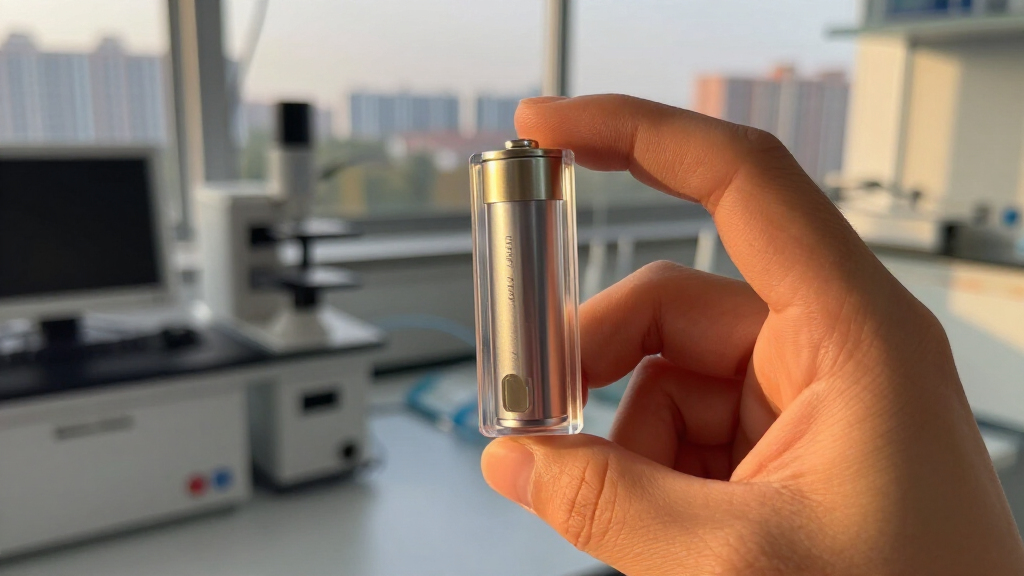

TL;DR
Many tech and auto companies are investing heavily in solid-state battery technology due to its potential for higher energy density and safety. While promising prototypes exist, commercial viability and scalability are still under development, making this a key area of innovation and competition.
Major automakers and tech firms are rapidly advancing solid-state battery technology, aiming to replace current lithium-ion batteries with safer, more efficient alternatives. This surge reflects a strategic push to improve electric vehicle range, safety, and charging times, making solid-state batteries a key focus of the energy storage industry.

Prime made for students and young adults
- Fast, free delivery for dorm and study essentials
- Prime Video and Amazon Music included
- Member-only deals
Industry analysts note that the push toward solid-state batteries is driven by the increasing demand for electric vehicles (EVs), as automakers seek batteries that can extend driving range, shorten charging times, and reduce fire risks. Governments and investors are also supporting this shift, seeing it as critical to achieving climate and energy goals. However, critics caution that technical hurdles and high manufacturing costs could delay commercial deployment, making the timeline uncertain.
Potential Impact on Electric Vehicle Industry
The development of solid-state batteries could significantly transform the electric vehicle (EV) market by enabling longer driving ranges, faster charging, and improved safety. This would address key consumer concerns about EV adoption and could accelerate the transition away from fossil fuels. For manufacturers, successful commercialization could provide a competitive edge in a rapidly growing industry, while for consumers, it promises more reliable and safer electric options.
Popular right now

Dyson Cyclone V10 Origin Cordless Vacuum

De'Longhi Stilosa Compact Manual Espresso Machine with Manual Milk Frother

Sony BRAVIA 5 85-Inch Mini LED 4K HDR Smart Google TV (K-85XR50)
As an affiliate, we earn on qualifying purchases.
Recent Advances and Industry Investment in Solid-State Tech
Over the past few years, major automakers and tech companies have announced substantial investments in solid-state battery research. Toyota, for example, has set a target to commercialize solid-state batteries by the mid-2020s, citing advantages in energy density and safety. QuantumScape, a startup backed by Volkswagen and Bill Gates, has reported breakthroughs in battery prototype performance, though mass production remains a challenge. Similarly, Samsung and LG are also investing heavily in developing solid electrolytes and scalable manufacturing processes.
Despite these efforts, the technology is still in the prototype and testing phase. Industry experts note that transitioning from lab-scale prototypes to mass-market products involves overcoming significant technical and economic hurdles, including manufacturing costs, material stability, and long-term durability.
“Solid-state batteries have the potential to revolutionize energy storage, but there are still critical technical challenges that need to be addressed before they can be widely adopted.”
— Dr. Lisa Chen, Battery Research Expert
Key Technical and Commercial Challenges Remaining
While prototypes demonstrate promising performance, it is still unclear when solid-state batteries will become commercially available at scale. Challenges include manufacturing scalability, material stability over many charge cycles, and cost reduction strategies. Experts caution that these hurdles could delay mass-market deployment by several years, and ongoing research is needed to confirm long-term reliability.
Next Milestones in Solid-State Battery Development
Industry players are expected to continue scaling up prototypes, conduct long-term durability testing, and refine manufacturing processes. Major automakers aim to introduce pilot production lines within the next few years, with some targeting commercial launch by 2025-2026. Continued investment and technological breakthroughs will determine whether these batteries can meet the demands of mass-market applications.
Key Questions
What are the main advantages of solid-state batteries?
Solid-state batteries offer higher energy density, improved safety due to less flammable materials, and faster charging capabilities compared to traditional lithium-ion batteries.
Why are solid-state batteries considered difficult to produce at scale?
Manufacturing challenges include producing stable, defect-free solid electrolytes, scaling up production processes, and reducing costs to competitive levels.
When might we see solid-state batteries in commercial products?
Most industry experts expect initial commercial deployment in electric vehicles around 2025-2026, but widespread availability could take longer due to technical hurdles.
Are all companies equally close to commercializing this technology?
No, different companies are at varying stages; some have demonstrated promising prototypes, while others are still in early research phases.
Source: hn