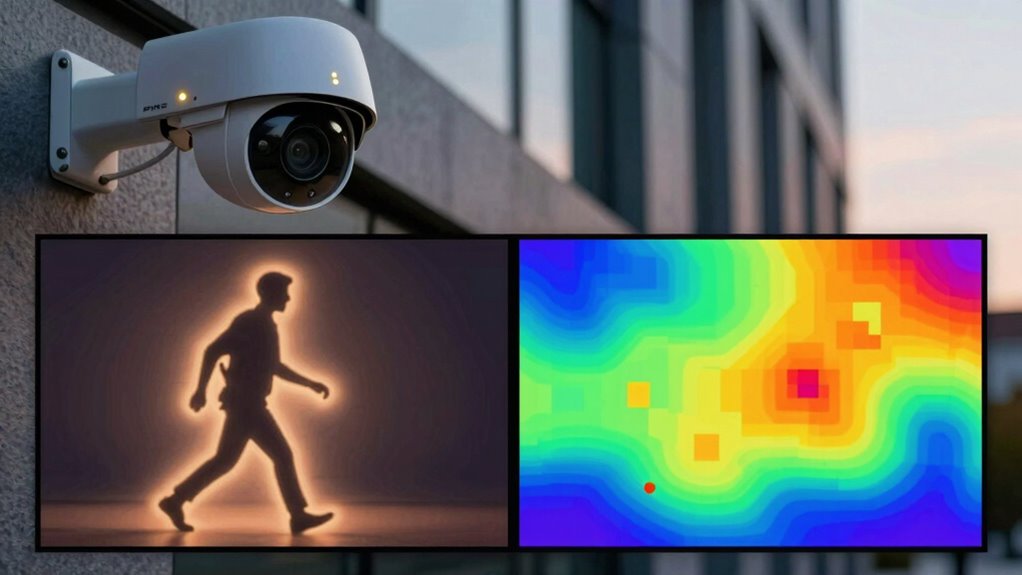

When comparing PIR and pixel-based motion detection, you’ll find that PIR sensors detect heat signatures from living beings or animals, making them ideal for outdoor use with fewer false alarms from passing cars or shadows. Pixel-based systems analyze image changes, allowing for detection of subtle movements but are more prone to false alarms from lighting or reflections. Understanding these differences helps you choose the right setup; exploring further reveals how placement can enhance accuracy and reduce unnecessary alerts.

Prime made for students and young adults
- Fast, free delivery for dorm and study essentials
- Prime Video and Amazon Music included
- Member-only deals
Key Takeaways
- PIR sensors detect heat signatures from warm objects, ideal for outdoor use and reducing false alarms from non-living movement.
- Pixel-based systems analyze image changes, capable of detecting subtle movements but more prone to false alarms from lighting variations.
- PIR sensors require unobstructed line of sight and are less sensitive to small or distant objects compared to pixel-based detection.
- Pixel-based alerts are more flexible in detecting varied movement but need stable lighting conditions to minimize false triggers.
- Proper camera placement tailored to each technology enhances detection accuracy and reduces false alarms in security systems.
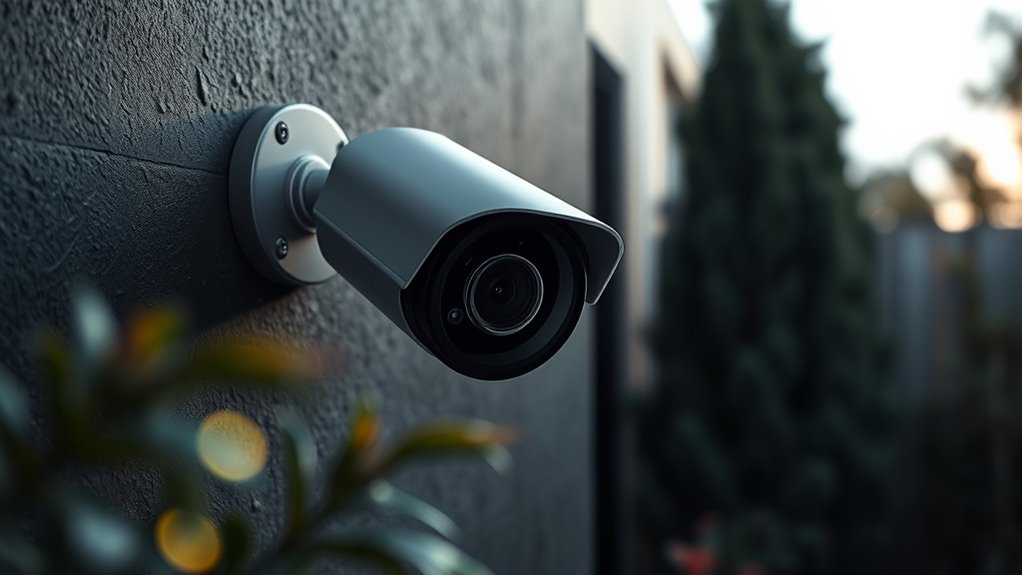
Have you ever wondered how security cameras automatically spot movement and alert you instantly? It’s a fascinating process that relies heavily on the technology behind motion detection systems. When setting up a security camera, one of the most important steps is proper camera placement. You want to position your camera where it can cover the most critical areas without being overwhelmed by unnecessary movement. For example, placing a camera near busy streets or trees might lead to frequent false alarms, which can become annoying and reduce your trust in the system. To avoid this, you need to focus on strategic placement—aiming cameras at entry points, driveways, or windows—so they only pick up relevant activity. Well-thought-out camera placement minimizes false alarms and guarantees that alerts are meaningful and prompt. Understanding the different types of motion detection technology, such as PIR and pixel-based systems, can further enhance your security setup. When it comes to how cameras detect motion, there are mainly two types: PIR (Passive Infrared) sensors and pixel-based alerts. PIR sensors are excellent at detecting heat signatures from bodies and animals. They work by sensing infrared radiation emitted by warm objects, making them ideal for outdoor security where you want to avoid false alarms triggered by passing cars or moving shadows. However, PIR sensors usually require specific placement; they need a clear line of sight to the area you want to monitor and are less flexible with object size and distance. Conversely, pixel-based cameras analyze changes in the image itself, comparing successive frames to identify movement. This method can detect even subtle movements, but it’s more susceptible to false alarms caused by changing lighting conditions, reflections, or moving foliage. Proper camera placement is vital here; placing a pixel-based camera where it’s shielded from direct sunlight or reflections helps reduce false alarms and guarantees more accurate alerts. Additionally, considering the detection technology can help you choose the best system for your environment. Both systems have their strengths and weaknesses, but understanding how to position your camera correctly can make all the difference. For PIR sensors, avoid placing the camera where heat sources or direct sunlight could interfere with detection. For pixel-based alerts, focus on stable, consistent lighting conditions, and avoid areas with frequent movement from natural elements. The goal is to strike a balance: position your cameras so they cover the intended area without being overly sensitive to irrelevant motion. When set up properly, these systems can alert you immediately to genuine threats while minimizing false alarms. So, whether you choose PIR or pixel-based detection, paying close attention to camera placement will help you get the most reliable, effective security coverage.
PIR motion sensor outdoor security camera
As an affiliate, we earn on qualifying purchases.
As an affiliate, we earn on qualifying purchases.
Frequently Asked Questions
Which Motion Detection Method Consumes More Energy?
You’ll find that pixel-based alerts generally consume more power than PIR sensors because they constantly analyze video data, requiring more processing and energy. PIR sensors are more energy-efficient since they detect motion through infrared changes without heavy data processing. If you want to optimize power consumption and improve energy efficiency, choosing PIR sensors for motion detection is the smarter option, especially for battery-powered or energy-conscious setups.
How Do PIR and Pixel-Based Systems Perform in Extreme Weather?
You’ll find that PIR systems perform better in extreme weather because they utilize thermal imaging and often meet weatherproofing standards, guaranteeing reliable operation. In contrast, pixel-based systems can struggle with heavy rain, snow, or fog, as their sensors are more affected by environmental conditions. To assure peak performance, choose a system designed with weatherproofing standards and capable of handling thermal variations in harsh climates.
Can These Systems Be Integrated With Smart Home Devices?
Yes, these systems can be integrated with your smart home devices. Most modern motion detection systems offer smart home compatibility, allowing you to connect them through various device integration options like Wi-Fi, Zigbee, or Z-Wave. This means you can automate actions, receive alerts on your phone, or sync with other smart devices, making your home more secure and convenient. Just verify your system supports your specific smart home platform.
What Is the Typical Lifespan of PIR Sensors Versus Pixel Cameras?
You can expect PIR sensors to last around 5 to 10 years with proper sensor maintenance, as their detection accuracy tends to decline slowly over time. Pixel cameras generally have a shorter lifespan, around 3 to 5 years, since their electronic components may degrade faster. Regularly maintaining your sensors and cameras helps guarantee peak detection accuracy and extends their operational life.
Are There Privacy Concerns Associated With Pixel-Based Alerts?
Are you aware of the privacy implications with pixel-based alerts? These systems capture detailed images or videos, raising concerns about data security and potential misuse. As you rely on them for security, consider how your data might be stored or shared. It’s crucial to understand their privacy policies and ensure proper security measures are in place, so your personal information remains protected and doesn’t inadvertently compromise your privacy.
pixel-based motion detection security camera
As an affiliate, we earn on qualifying purchases.
As an affiliate, we earn on qualifying purchases.
Conclusion
In the battle between PIR and pixel-based alerts, you hold the power to choose what best fits your needs. PIR sensors are reliable but can miss subtle movements, while pixel-based alerts are like having a detective watching every pixel. Remember, your security system’s effectiveness can be as crucial as a fortress—so pick the right alert type that keeps your peace of mind intact. Don’t settle for less; your safety deserves the best!
infrared motion sensor for security system
As an affiliate, we earn on qualifying purchases.
As an affiliate, we earn on qualifying purchases.
wireless security camera with motion alerts
As an affiliate, we earn on qualifying purchases.
As an affiliate, we earn on qualifying purchases.
Fall Picks
fall essentials
As an affiliate, we earn on qualifying purchases.