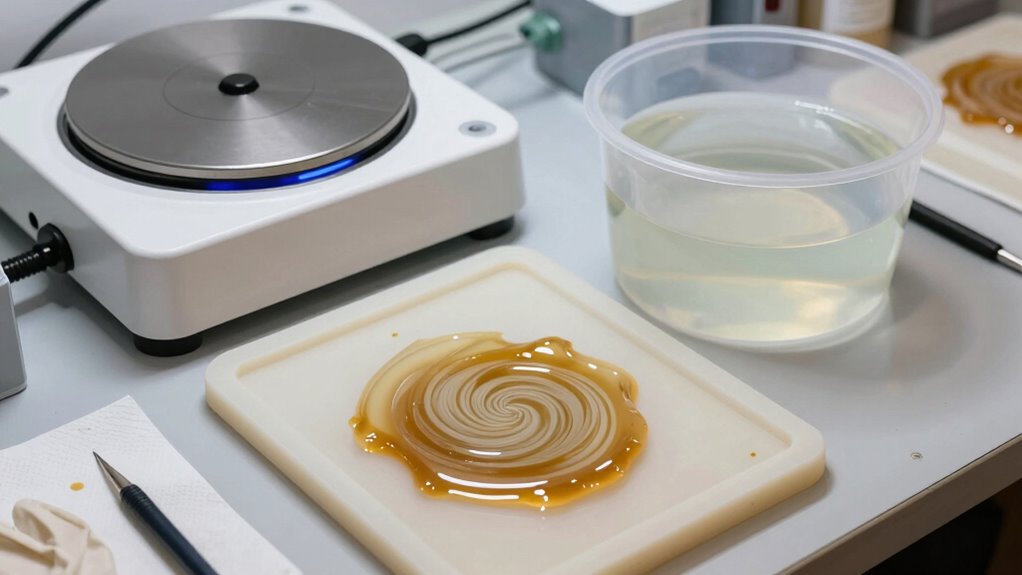
When resin printing, you should carefully wash your models with Isopropyl alcohol (IPA) to remove uncured resin, using gloves and gentle agitation to protect delicate details. After washing, cure your prints under UV light or sunlight for the recommended time to improve strength and surface quality. Manage mess by covering your workspace, cleaning spills immediately, and disposing of waste properly—curing excess resin first. Keep safety in mind to guarantee high-quality results and a clean environment as you master each step.

Prime made for students and young adults
- Fast, free delivery for dorm and study essentials
- Prime Video and Amazon Music included
- Member-only deals
Key Takeaways
- Use isopropyl alcohol (IPA) and gentle agitation to effectively wash residual resin from printed models.
- Cure printed models under UV light or sunlight for recommended durations to enhance strength and surface quality.
- Always wear gloves, goggles, and masks when handling resin and IPA to ensure safety and prevent irritation.
- Cover your work area and clean spills immediately to control mess and prevent hazardous resin exposure.
- Properly dispose of uncured resin waste as hazardous material after curing to maintain a safe environment.
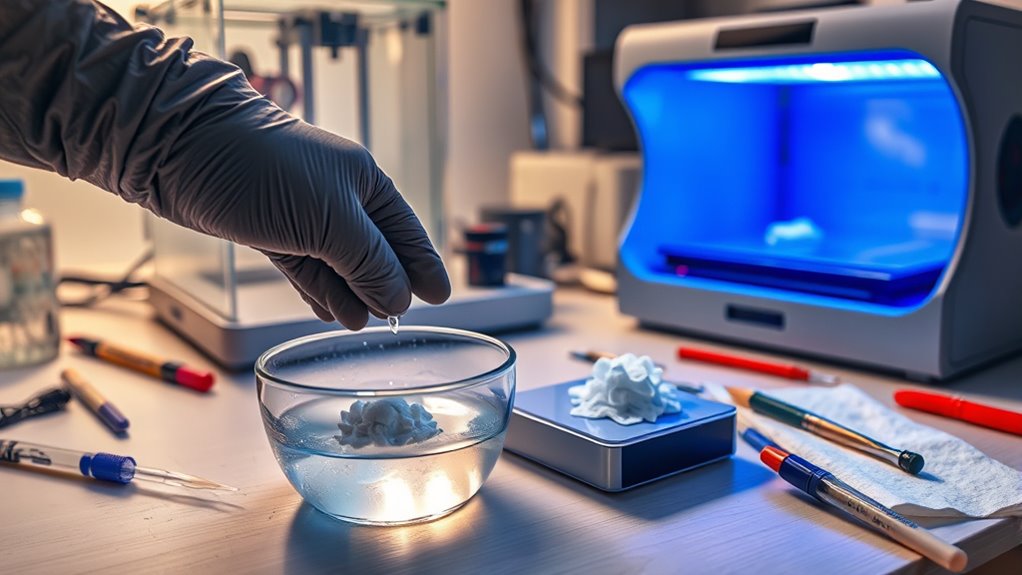
Have you ever wondered how resin 3D printing works? It’s a fascinating process that involves curing liquid resin layer by layer with UV light to create detailed models. But once your print is finished, the real work begins. Proper post processing techniques are essential to achieve a clean, high-quality result and to guarantee your safety during the process. Resin safety should always come first, as uncured resin can be toxic and irritating to your skin and eyes. Always wear gloves, safety goggles, and a mask when handling resin, and work in a well-ventilated area to minimize inhalation of fumes. Once your print is complete, you’ll need to wash it thoroughly to remove any residual resin that might be stuck to the surface. Isopropyl alcohol (IPA) is commonly used for this step, but it’s important to handle it carefully—use gloves, avoid spills, and dispose of used alcohol properly. Submerging your print in IPA and gently agitating it with a soft brush helps remove uncured resin, but it’s essential not to scrub too hard, as this could damage delicate details. After washing, a rinse with clean water can help remove any remaining alcohol and resin residues, further preparing your print for curing. Additionally, understanding the energy-efficient nature of modern resin printers can help you optimize your workflow and reduce environmental impact during your printing process.
Curing is the next critical step to solidify your model completely. Once washed, you’ll need to expose it to UV light, either through sunlight or a dedicated curing station. Proper curing not only enhances the strength and durability of your print but also reduces the risk of resin remaining in an uncured state, which can be toxic. Make sure to follow the recommended curing time for your specific resin type—usually a few minutes to an hour—and keep the print in a stable, dust-free environment during this process. Proper curing also helps improve surface finish and detail accuracy, making your model look more professional.
Mess control during resin printing isn’t just about keeping your workspace tidy; it’s a safety measure. Resin spills and drips can be difficult to clean and pose health hazards if not handled quickly. Cover your work area with a protective sheet or newspaper, and always clean tools and spills immediately. After finishing, dispose of resin waste responsibly—uncured resin should never be poured down the drain. Instead, cure excess resin in a well-ventilated area until it hardens, then discard it as hazardous waste. Following these steps ensures you maintain a safe environment while achieving the best results from your resin 3D prints.
As an affiliate, we earn on qualifying purchases.
Frequently Asked Questions
How Do I Prevent Resin Spills During Printing?
To prevent resin spills during printing, focus on resin containment and spill prevention strategies. Use a well-fitting, covered resin vat to contain any accidental splashes. Place your printer on a stable, level surface with a barrier around it to catch drips. Always handle resin with care, avoiding overfilling the vat, and clean up any spills immediately to keep your workspace safe and mess-free.
What Safety Gear Is Recommended When Handling Resin?
Did you know resin exposure can cause skin irritation and respiratory issues? When handling resin, always wear protective gloves to prevent skin contact, and don a respirator mask to avoid inhaling harmful fumes. These safety gear essentials help keep you safe during your printing process. Make sure to work in well-ventilated areas and follow safety guidelines to protect your health while enjoying your resin printing projects.
How Can I Reduce Odor During Resin Printing?
To reduce odor during resin printing, guarantee proper air filtration in your workspace, like a dedicated vent or exhaust fan, to remove fumes effectively. You can also use odor neutralizers such as activated charcoal or commercial air purifiers with carbon filters. Keep your printing area well-ventilated, and avoid trapping fumes indoors. These steps help minimize smell, making your resin printing experience more pleasant and safer.
What’s the Best Way to Store Leftover Resin?
To store leftover resin, you should keep it in an airtight, opaque container to prevent exposure to light and air, which can degrade its quality. Always seal the container tightly after use, and store it in a cool, dark place away from sunlight and heat sources. Proper resin storage extends its shelf life and maintains its properties, so you can reuse leftover resin safely for future prints.
How Do I Troubleshoot Common Resin Print Failures?
Remember, a stitch in time saves nine. To troubleshoot common resin print failures, start by checking your UV curing process to guarantee proper exposure. Then, examine the resin viscosity; if it’s too thick, prints might fail. Adjust your print settings or resin mix accordingly. Also, verify your build platform adhesion and layer exposure times. These steps help you identify and fix issues before they become big problems.
UV curing station for resin prints
As an affiliate, we earn on qualifying purchases.
As an affiliate, we earn on qualifying purchases.
Conclusion
Now that you know the essentials of resin printing—washing, curing, and mess control—you’re better equipped to tackle your projects with confidence. Remember, patience is a virtue in this game; rushing can lead to mistakes or messes. Keep your workspace tidy and follow the steps carefully, and you’ll turn out impressive prints every time. With a little practice, you’ll be reaping the benefits of resin printing in no time, proving that practice makes perfect.
isopropyl alcohol for 3D printing
As an affiliate, we earn on qualifying purchases.
As an affiliate, we earn on qualifying purchases.
As an affiliate, we earn on qualifying purchases.
Fall Picks
fall essentials
As an affiliate, we earn on qualifying purchases.