
A password’s complexity alone doesn’t guarantee your accounts are safe because tricky patterns like “Password123” or common words are still easy for hackers to guess. To truly protect yourself, you need strong, unpredictable passwords that are long and unique for each account. Using tools like password managers and enabling two-factor authentication can vastly improve your security. Continue exploring to discover how you can strengthen your password strategy even further.
Listen free for 30 days with Audible
Thousands of audiobooks and originals — cancel anytime.
As an affiliate, we earn on qualifying purchases.
Key Takeaways
- Complex passwords can still be predictable if they follow common patterns or use easily guessable info.
- Human vulnerabilities, like social engineering, can bypass technical password strength measures.
- High complexity does not address risks from reused passwords across multiple accounts.
- Relying solely on complexity ignores the importance of layered security practices, such as 2FA.
- Combining length, unpredictability, and unique passphrases enhances overall password safety beyond mere complexity.

Knowledge Encyclopedia Science!, 2nd Edition
As an affiliate, we earn on qualifying purchases.
Why Password Complexity Isn’t Enough to Keep You Safe

While creating a complex password might seem like a strong security measure, it doesn’t guarantee safety on its own. Cybercriminals often exploit predictable password patterns, making it easier for them to crack your accounts. Even if your password includes a mix of letters, numbers, and symbols, using common patterns like “Password123” or “Qwerty” can be risky. Additionally, social engineering tactics target your human vulnerabilities rather than technical ones. Attackers may trick you into revealing your passwords or reset codes, bypassing technical defenses altogether. Relying solely on complexity overlooks how easily social engineering can compromise your security. To truly protect yourself, you need a layered approach that combines strong passwords with awareness of common scams and tactics used by cybercriminals. Incorporating vetted wave and wind security practices enhances your overall protection, especially considering the performance and design aspects of various security measures. Being aware of cookie categories and managing your cookie preferences adds an extra layer of protection against potential online threats. Moreover, understanding the importance of multi-factor authentication significantly boosts your defense against unauthorized access. Incorporating security best practices such as regular password updates and monitoring account activity further fortifies your defenses.

Science Book, The: Everything You Need to Know About the World and How It Works
As an affiliate, we earn on qualifying purchases.
What Makes a Password Strong and Secure
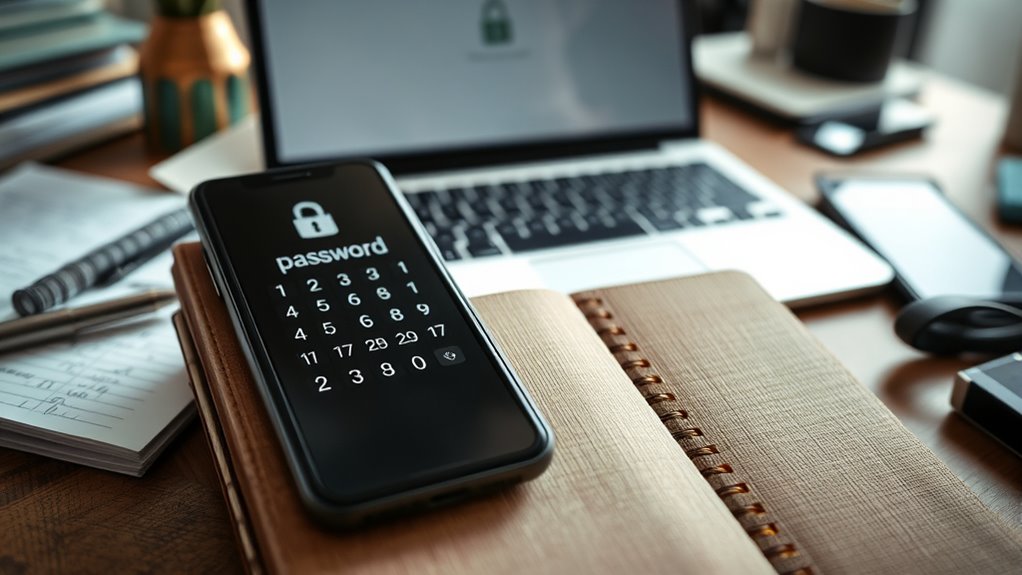
A strong and secure password combines unpredictability with sufficient length to resist common hacking techniques. High password entropy means your password is hard to guess because it’s random and complex. Avoid common patterns or easily guessable info, like birthdays or simple words. Instead, aim for a mix of uppercase and lowercase letters, numbers, and symbols. Length matters—longer passwords contribute to greater security. Be cautious about password reuse; using the same password across multiple sites puts all your accounts at risk if one gets compromised. A unique, lengthy password for each account considerably boosts your security. Remember, strength isn’t just about complexity but also about avoiding predictable patterns and ensuring each password is unique and sufficiently long to withstand attacks. Incorporating contrast ratio principles into your password management can help you better understand the importance of strong, distinct credentials.
![Science Essentials: Science Made Easy Boxed Set [Box Set of 6 Books] / Illustrated Science Book for Kids / Simplified Concepts of Science / Kids’ Book](https://m.media-amazon.com/images/I/51b7iYH-Q2L._SL500_.jpg)
Science Essentials: Science Made Easy Boxed Set [Box Set of 6 Books] / Illustrated Science Book for Kids / Simplified Concepts of Science / Kids’ Book
As an affiliate, we earn on qualifying purchases.
Common Mistakes People Make With Passwords
One of the most common mistakes people make with passwords is reusing the same password across multiple accounts. This makes it easier for hackers to exploit password reuse, especially during data breaches. Additionally, many rely on simple or common passwords that are vulnerable to dictionary attacks. To avoid these pitfalls:
Avoid reusing passwords and choose unique, complex ones to protect your accounts from hackers.
- Don’t use the same password for everything—diversify your login credentials.
- Steer clear of common words or phrases that dictionary attacks can easily guess.
- Regularly update your passwords to minimize risks from potential breaches.
- Understanding credential security is essential for protecting your online identity.

First Science Encyclopedia (DK First Reference)
As an affiliate, we earn on qualifying purchases.
Best Practices for Creating and Managing Secure Passwords
Creating and managing secure passwords requires a strategic approach that balances complexity with memorability. Avoid password reuse across multiple accounts; using the same password everywhere increases vulnerability if one account is compromised. Instead, create unique passwords for each site or service. Incorporate a mix of letters, numbers, and symbols, but don’t sacrifice memorability entirely—consider using passphrases or abbreviations. Physical security also plays a critical role; keep your passwords private and avoid writing them down in obvious places. Protect your devices with strong screen locks and be cautious when sharing passwords in person or over insecure channels. Regularly update your passwords, especially if you suspect a breach. Studies on Floating on Water highlight the importance of secure environments, which can be likened to protecting your digital space from threats. Following these best practices helps you stay ahead of potential threats and maintain a strong security posture.
How to Use Password Managers and Enable Two-Factor Authentication
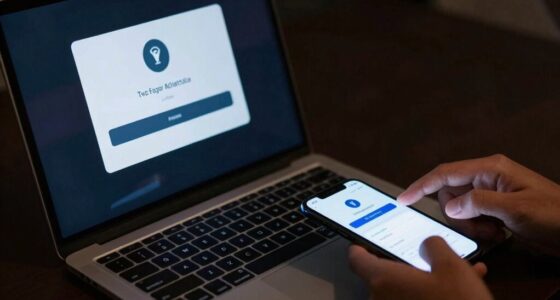
Using a password manager simplifies the process of creating, storing, and retrieving strong, unique passwords for every account. To enhance security, enable two-factor authentication (2FA), which adds an extra layer beyond passwords. Here’s how you can do it:
- Use biometric authentication, like fingerprint or facial recognition, to access your password manager quickly and securely.
- Regularly review and update your passwords, following password expiration policies to prevent long-term vulnerabilities.
- Confirm your password manager itself is protected with a strong master password and 2FA, so even if someone gains access, they’re limited in what they can do.
- Selecting a reputable vetted password manager ensures you benefit from robust security features and reliable performance. Incorporating security best practices can further protect your digital information from potential threats. Additionally, understanding load calculations and safe installation practices can help you choose secure, efficient solutions for your home systems. Proper automotive repair techniques and awareness of industry trends can also serve as a reminder of the importance of thorough security measures in all technical fields.
Frequently Asked Questions
How Often Should I Change My Passwords for Maximum Security?
You should change your passwords every three to six months to maintain ideal security. Regular password renewal aligns with security protocols, reducing the risk of unauthorized access if a breach occurs. Even strong, complex passwords benefit from periodic updates, especially for sensitive accounts. Stay vigilant by setting reminders and using password managers to streamline the process. Consistently updating passwords keeps your digital assets safer and helps you stay ahead of potential cyber threats.
Are Passphrases More Secure Than Traditional Passwords?
Coincidentally, passphrases often outperform traditional passwords because their complexity relies on length, making them harder to crack. You’ll find that longer, memorable phrases with varied words boost passphrase complexity without sacrificing usability. Unlike short, complex passwords, passphrases leverage length for security, so you can create secure, easy-to-remember combinations. This approach guarantees your accounts stay safer, as attackers need more time to decipher the increased password length.
Can Password Managers Be Hacked or Compromised?
Yes, password managers can be hacked or compromised. While they use strong encryption to protect your data, vulnerabilities like software bugs or phishing attacks can expose your passwords. You need to stay vigilant, keep your password manager updated, and choose one with proven encryption strength. Regularly review security settings and enable two-factor authentication to minimize risks, ensuring your stored passwords stay safe even if threats evolve.
What Are the Risks of Reusing Passwords Across Multiple Sites?
Reusing passwords poses serious security setbacks. When you recycle credentials across sites, hackers can easily exploit this by launching credential stuffing attacks, gaining access to multiple accounts with a single breach. This pattern of password reuse amplifies the risk of data leaks and identity theft. To protect yourself, avoid recycling passwords and instead use unique, strong passwords for each service, keeping your digital details safe from malicious mischiefs.
How Do Biometric Authentication Methods Compare to Passwords?
Biometric authentication methods often offer higher biometric accuracy than passwords, making them more convenient and secure. However, you should be aware of privacy concerns, since your biometric data is unique and, if compromised, difficult to change. Unlike passwords, which you can reset, biometric data requires careful handling to protect your privacy. Overall, biometrics improve security but require trust in how your data is stored and managed.
Conclusion
Remember, a complex password alone doesn’t guarantee safety. For example, if you use “Password123!” and reuse it across sites, hackers can still access your accounts. Instead, combine length, randomness, and unique passwords for each service. Use a password manager to keep track and enable two-factor authentication whenever possible. These steps make it much harder for attackers to breach your accounts, keeping your personal information safe in today’s digital world.
Baby shower & registry season Picks
baby registry must-haves
As an affiliate, we earn on qualifying purchases.