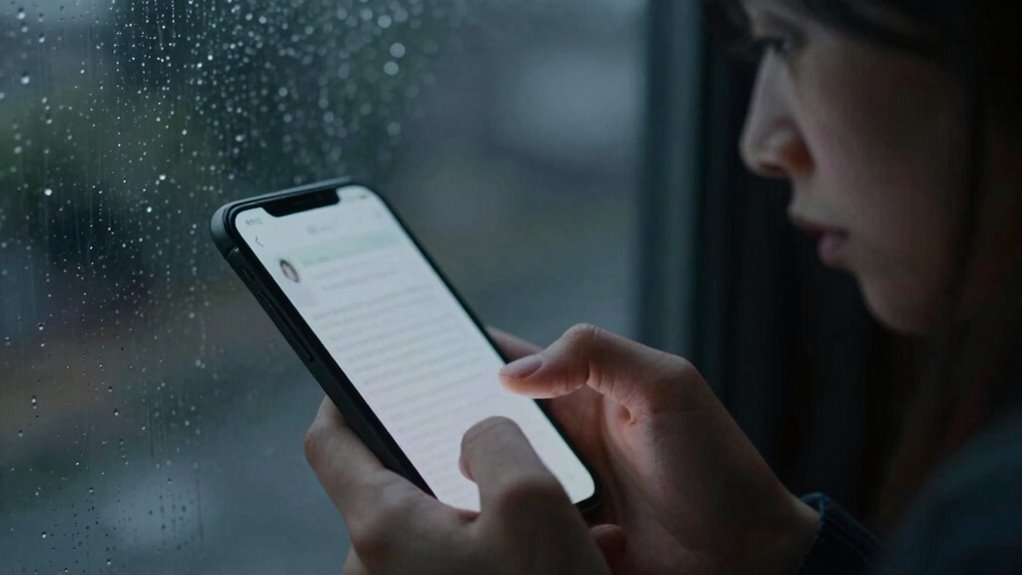

Texting often fails to convey emotion and intent because it removes vocal tone, facial expressions, and body language, making messages emotionally ambiguous. Simple replies can be misinterpreted as dismissive or overly enthusiastic, leading to misunderstandings. Without non-verbal cues, sarcasm, humor, or support can fall flat or be misunderstood, affecting trust and relationship clarity. Recognizing these limitations can help you communicate more effectively—if you want to explore how to improve your digital interactions, keep going.
Key Takeaways
- Texting removes vocal tone, facial expressions, and body language, making emotional cues ambiguous.
- Lack of non-verbal cues leads to misinterpretations of feelings or intentions.
- Messages like “Okay” can be perceived as dismissive or indifferent, causing misunderstandings.
- Sarcasm, humor, or support are difficult to convey accurately without vocal or facial cues.
- Relying solely on text can erode trust and hinder genuine emotional connection.
Texting has become the primary way people communicate, but it often falls short when it comes to expressing emotion and intent. This gap can lead to digital miscommunication, where messages are misunderstood or misinterpreted. Unlike face-to-face conversations, texting strips away vocal tone, facial expressions, and body language, which are essential for conveying true emotion. Without those cues, your words can become emotionally ambiguous, leaving the recipient unsure of your feelings or intentions. You might think you’re being clear, but the lack of context can make your message seem cold, sarcastic, or even hostile.
Texting often lacks tone and expression, making messages feel cold, sarcastic, or misunderstood.
Because of this emotional ambiguity, misunderstandings happen more often than you’d like. For example, a simple “Okay” might be interpreted as dismissive or indifferent, even if that wasn’t your intention. Conversely, a quick reply might seem overly *enthusiastic* or aggressive. When you rely solely on text, your true emotional state can be hidden, making it difficult for others to grasp your genuine tone. This ambiguity can cause unnecessary tension or conflict, especially if the other person fills in the gaps with assumptions or negative interpretations. As a result, your message might not only be misunderstood but also lead to feelings of frustration or hurt. Recognizing the limitations of text-based communication is crucial for maintaining clear and authentic connections. Additionally, understanding non-verbal cues can be challenging in digital interactions, further complicating emotional clarity. Being aware of these communication barriers can help you choose more effective ways to express yourself.
Furthermore, digital miscommunication isn’t just about misreading tone; it also affects how well your intentions are understood. You might intend to be humorous, supportive, or assertive, but without vocal inflections or facial expressions, those intentions can get lost. For instance, sarcasm often relies heavily on tone, which is nearly impossible to detect in plain text. This can cause your jokes or comments to fall flat or be taken the wrong way. Over time, such miscommunications can erode trust or alter how others perceive you. You may find yourself constantly clarifying or apologizing for messages that were never meant to offend. The importance of emotional cues in communication highlights why relying solely on text can be problematic when trying to build genuine connections. Moreover, adopting alternative methods like video calls or voice messages can help bridge this emotional gap and foster more authentic interactions. Recognizing the impact of digital cues is essential for improving your overall communication skills in a digital age.
As an affiliate, we earn on qualifying purchases.
Frequently Asked Questions
Can Emojis Improve Emotional Clarity in Texts?
Yes, emojis can improve emotional clarity in texts by providing visual cues that help express feelings more clearly. They reduce emoji ambiguity, making intentions easier to interpret. However, you should still be cautious, as emojis can sometimes be misread or misunderstood. Using them thoughtfully adds context and warmth, but don’t rely solely on emojis to convey complex emotions—words are still essential for clear communication.
How Does Tone Affect Message Interpretation?
Tone greatly influences how you interpret messages because contextual cues and language nuances shape meaning. When you notice sarcasm, humor, or seriousness, you understand the sender’s intent more clearly. Without these cues, your brain fills gaps, which can lead to misunderstandings. Emojis can help, but they’re just one part of the puzzle. Paying attention to word choice, punctuation, and context helps you better grasp the true emotion behind the message.
Are There Better Ways to Express Complex Feelings via Text?
Yes, to express complex feelings better via text, you should use clear language and emojis to convey tone and intent. Avoid ambiguity by adding context or clarifying your message. Be mindful of tone mismatch, as words can be misunderstood without vocal cues. Sometimes, a quick call or face-to-face chat works best for nuanced emotions, ensuring your message reaches the other person with the right intention and feeling.
Do Cultural Differences Influence Texting Misunderstandings?
Yes, cultural nuances and language barriers profoundly influence texting misunderstandings. When you communicate across cultures, you might misinterpret tone or intent because different backgrounds have unique ways of expressing emotions. Language barriers can cause confusion, making your message seem colder or more aggressive than intended. To avoid this, you should be mindful of cultural differences and clarify your intentions, ensuring your message is understood as you mean it.
How Can One Prevent Miscommunication in Digital Messages?
To prevent miscommunication, you should focus on adding contextual cues and timing your messages well. Studies show 70% of misunderstandings stem from lack of tone or context. Use clear language, emojis, or punctuation to express emotion. Also, consider message timing; sending a message at the right moment shows respect and guarantees your intent is understood. These steps help bridge communication gaps in digital conversations effectively.
As an affiliate, we earn on qualifying purchases.
Conclusion
So, next time you send a text, remember—what you say might not be what they hear. Words can hide more than they reveal, and behind every message lies a potential misunderstanding waiting to happen. Are you truly getting your message across, or are you risking a misfire that could change everything? The truth is, in the world of texting, the real story often stays hidden—until it’s too late. Will your words stand the test, or fall silent in the shadows?
As an affiliate, we earn on qualifying purchases.
As an affiliate, we earn on qualifying purchases.