

Start by focusing on key sections like scope of services, payment terms, and cancellation policies, since these reveal your responsibilities and rights. Carefully interpret any legal jargon or complex language, using research or questions for clarification. Highlight parts that seem confusing or unfair, and look for red flags. Take your time to understand termination and dispute clauses to avoid surprises later. If you keep exploring further, you’ll gain deeper insights into how to navigate agreements confidently.

Prime made for students and young adults
- Fast, free delivery for dorm and study essentials
- Prime Video and Amazon Music included
- Member-only deals
Key Takeaways
- Focus on key sections like scope of services, payment terms, and cancellation policies first.
- Highlight confusing clauses and research or ask for clarification to ensure understanding.
- Look up legal terminology and recognize important clauses such as liabilities and dispute resolution.
- Pay close attention to termination conditions and dispute resolution procedures to avoid surprises.
- Review the entire agreement carefully, taking your time to understand obligations and legal implications.
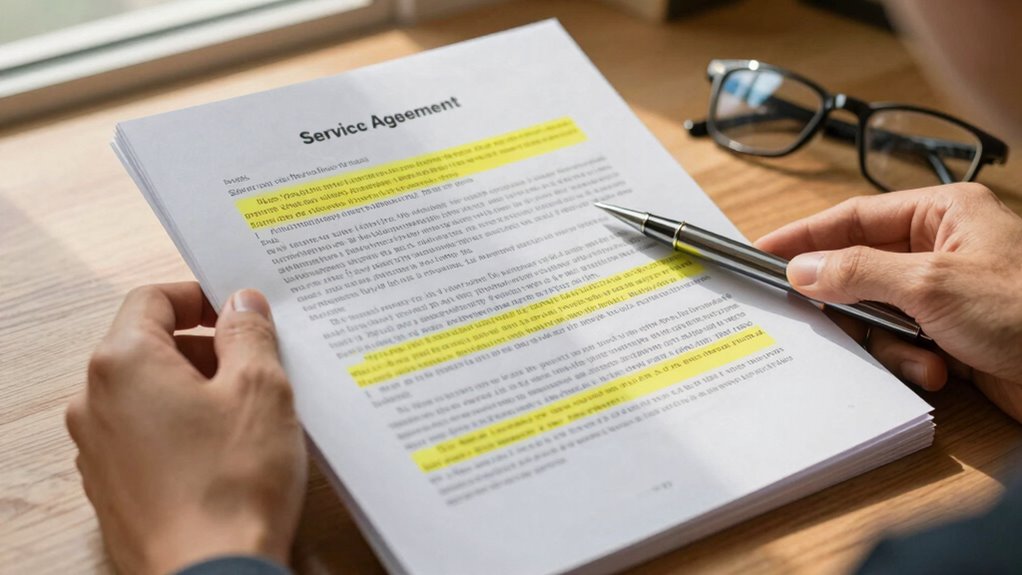
Have you ever skimmed a service agreement and signed it without fully understanding what you’re agreeing to? If so, you’re not alone. Service agreements are often filled with complex contract language and legal terminology that can make even the most diligent person feel overwhelmed. But understanding what you’re committing to is vital to protect your rights and avoid surprises down the line. To start, don’t rush through the document. Take your time to read it carefully, and remember that a service agreement isn’t just a formality—it’s a legal document that outlines your rights and obligations.
Always read service agreements carefully to understand your rights and obligations before signing.
Begin by focusing on the key sections, such as scope of services, payment terms, and cancellation policies. These parts tell you what services you’ll receive, how much you’ll pay, and under what conditions you can end the agreement. If you encounter contract language or legal terminology that confuses you, don’t hesitate to look up definitions or ask for clarification. Many agreements include clauses with legal jargon that might seem obscure but are essential for understanding your commitments. Knowing the meaning of these terms helps you grasp the full scope of your responsibilities and the provider’s obligations.
Pay close attention to any clauses related to liabilities, warranties, and dispute resolution. These sections can markedly impact your rights if issues arise. For example, some agreements include arbitration clauses that require you to settle disputes outside of court, which might not be immediately obvious without reading carefully. When you come across a term or condition you don’t understand, don’t skip over it. Instead, highlight it and research or consult with a legal professional if needed. Clarifying these points ensures you’re making an informed decision, rather than signing away rights unknowingly. Additionally, understanding the contract language used in these agreements can help you identify potential red flags or unfair terms. Recognizing common contract terms also prepares you to evaluate whether the agreement is reasonable or biased. Being aware of the legal implications can further assist in understanding how the agreement might affect your rights long-term. Moreover, familiarizing yourself with typical service contract structures can streamline your review process and help you spot discrepancies more easily.
It’s also a good idea to review the termination clauses. These specify how you or the service provider can end the relationship, including any penalties or notice periods. Understanding these details can save you trouble later if you decide to cancel or if either party breaches the agreement. Remember, the goal isn’t to find fault but to make sure you’re aware of what you’re agreeing to. If any part of the agreement seems unfair or unclear, consider negotiating or seeking legal advice before signing. Reading a service agreement thoroughly helps you avoid misunderstandings and protects your interests, making sure you’re fully informed about the contract’s terms before you commit. Being aware of contract obligations and your rights can prevent potential legal complications down the road.
service agreement review checklist
As an affiliate, we earn on qualifying purchases.
As an affiliate, we earn on qualifying purchases.
Frequently Asked Questions
What Are Common Hidden Fees in Service Agreements?
Hidden fees often include additional charges not clearly disclosed upfront, like late payment fees, setup fees, or cancellation charges. Always scrutinize the fee disclosure section carefully. Keep an eye out for clauses on contract confidentiality, which might limit your ability to discuss costs publicly, potentially hiding extra expenses. Being vigilant helps you spot these sneaky fees, ensuring you don’t get caught off guard by unexpected costs later on.
How Can I Negotiate Better Terms?
You can negotiate better terms by understanding common pricing strategies and analyzing contract language carefully. Start by researching industry standards to strengthen your position. Use clear, concise language to communicate your needs and ask for specific adjustments. Don’t hesitate to propose alternative pricing options or discounts. Remember, a well-informed and confident approach often leads to more favorable terms, ensuring the agreement aligns with your budget and expectations.
What Should I Do if I Don’t Understand a Clause?
Did you know nearly 60% of contract disputes stem from misunderstandings? If you don’t understand a clause, stop and ask clarification questions. Understanding clauses is essential, so don’t hesitate to seek expert advice or request simpler explanations. Clarification questions help you grasp the terms, ensuring you’re comfortable before signing. Remember, it’s your right to fully understand what you’re agreeing to—never ignore unclear language.
Are There Legal Risks in Signing a Service Agreement?
Yes, signing a service agreement carries legal risks, especially if you’re unaware of your legal obligations or the contract’s terms. You might face penalties or difficulties if you need to terminate the contract early. Carefully review clauses related to contract termination and your responsibilities to avoid surprises. Understanding these risks helps you decide if you’re comfortable with the agreement and reduces potential legal issues later.
How Often Should I Review My Service Agreement?
Think of your service agreement as a garden that needs regular tending. You should review it at least once a year or whenever there’s a contract renewal. This helps you stay aware of any changes in the service scope or terms that might affect you. Regular reviews guarantee you’re not caught off guard and can negotiate updates, keeping your interests protected and your service aligned with your needs.
legal jargon dictionary for contracts
As an affiliate, we earn on qualifying purchases.
As an affiliate, we earn on qualifying purchases.
Conclusion
By carefully reviewing each section and asking questions, you can navigate a service agreement confidently. Remember, nearly 60% of consumers admit they don’t fully understand the terms before signing, highlighting the importance of vigilance. Taking your time and seeking clarification guarantees you’re protected and well-informed. So, don’t rush through it—reading thoroughly empowers you to make smarter decisions and avoid surprises down the line. Your awareness makes all the difference.
As an affiliate, we earn on qualifying purchases.
As an affiliate, we earn on qualifying purchases.
Halloween Picks
halloween
As an affiliate, we earn on qualifying purchases.