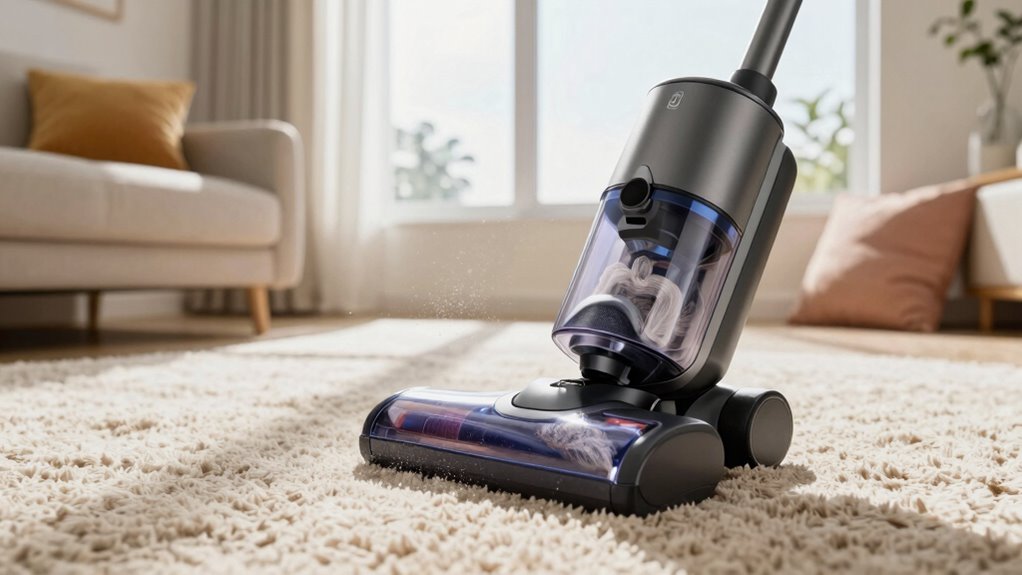
Using a HEPA vacuum is highly effective for allergy relief because it traps 99.97% of tiny particles like dust mites, pollen, pet dander, and mold spores that trigger symptoms. Regularly cleaning with a sealed HEPA vacuum prevents allergens from spreading and stirring up dust. For better results, combine it with an air purifier that continuously filters airborne irritants. To learn more about creating a healthier indoor environment, keep exploring these strategies.

Prime made for students and young adults
- Fast, free delivery for dorm and study essentials
- Prime Video and Amazon Music included
- Member-only deals
Key Takeaways
- HEPA vacuums trap 99.97% of tiny allergens, reducing dust mites, pet dander, pollen, and mold spores indoors.
- Traditional vacuums often re-release allergens, worsening allergy symptoms; HEPA filters prevent this.
- Combining a HEPA vacuum with an air purifier enhances indoor air quality and allergen removal.
- Regular maintenance and sealed filtration in vacuums prevent allergen escape during cleaning.
- Using both HEPA vacuum and air purifier provides a comprehensive approach to allergy relief indoors.
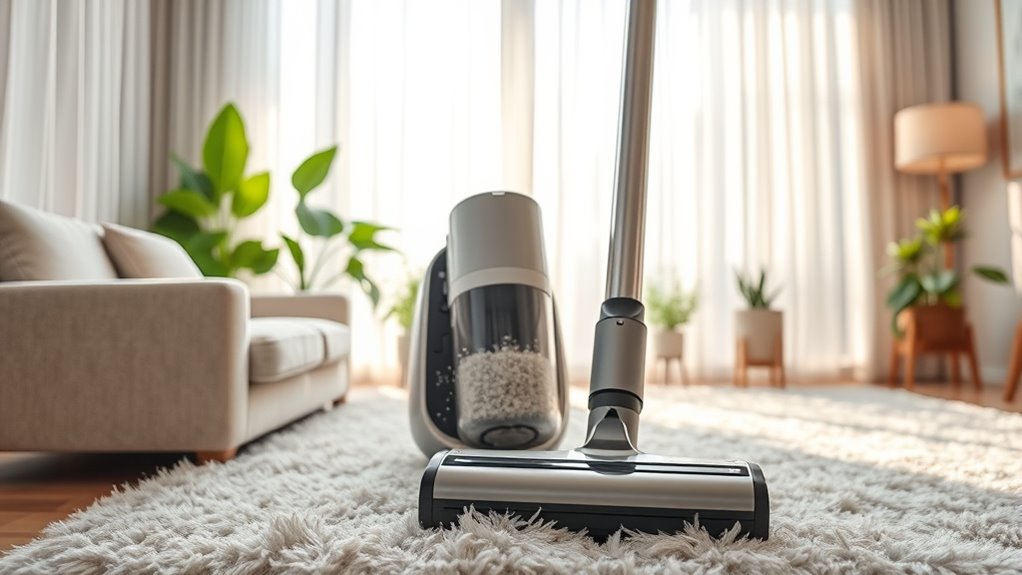
If you suffer from allergies, choosing the right vacuum can make a significant difference. One of the most effective tools for improving indoor air quality is a HEPA vacuum, which is designed to trap tiny particles that trigger allergy symptoms. When considering air purifier effectiveness, a HEPA filter is vital because it captures 99.97% of particles as small as 0.3 microns, including dust mites, pet dander, pollen, and mold spores. These allergens are often the culprits behind sneezing, itchy eyes, and congestion, so using a HEPA vacuum can directly contribute to allergy symptom relief.
You might wonder if your current vacuum is enough. Many traditional vacuums, especially those without HEPA filters, simply redistribute allergens into the air instead of trapping them. This can worsen allergy symptoms because you’re essentially stirring up dust and dander rather than removing it. When you upgrade to a HEPA vacuum, you guarantee that allergens are captured inside the machine rather than released back into your living space. This not only improves air quality during cleaning but also reduces the overall allergen load in your home over time.
Another factor to consider is how the vacuum’s filtration system works in conjunction with air purifier effectiveness. A HEPA vacuum combined with an air purifier equipped with a HEPA filter creates a thorough approach to allergy management. While the vacuum removes particles from surfaces, the air purifier continuously filters the air, catching any allergens that become airborne during cleaning or everyday activities. This synergy enhances allergy symptom relief because you’re actively reducing the presence of irritants both on surfaces and in the air you breathe.
Moreover, the design and maintenance of the vacuum play vital roles. A vacuum with sealed filtration prevents allergens from escaping through gaps, ensuring that every bit of dust and dander is contained. Regularly replacing or cleaning filters maintains peak performance, so you’re consistently removing allergens rather than redistributing them. By choosing a HEPA vacuum and maintaining it properly, you maximize air purifier effectiveness and create a healthier indoor environment.
HEPA vacuum cleaner for allergies
As an affiliate, we earn on qualifying purchases.
As an affiliate, we earn on qualifying purchases.
Frequently Asked Questions
Do HEPA Vacuums Remove All Types of Indoor Allergens Effectively?
HEPA vacuums are highly effective at allergen removal thanks to HEPA filtration, which traps tiny particles like dust mites, pet dander, and pollen. However, they might not remove all types of indoor allergens completely, especially those settled in carpets or hidden in furniture. To maximize allergen removal, use the vacuum regularly, maintain it properly, and combine it with other cleaning methods like dusting and air purifiers.
How Often Should I Replace Filters in My HEPA Vacuum?
Think of your HEPA vacuum filter like a fine-tuned engine — it needs regular care to run smoothly. You should replace filters every 6 to 12 months, depending on usage and filter lifespan. For heavy use or pets, consider more frequent replacements. Skipping this can reduce cleaning efficiency and indoor air quality, so stay attentive to signs like decreased suction or visible dirt buildup to keep your vacuum performing at its best.
Can HEPA Vacuums Help With Pet Dander Allergies?
Yes, HEPA vacuums can help with pet dander allergies by effectively trapping pet hair and dander, preventing them from recirculating in your home. When you vacuum regularly, you improve air circulation and reduce allergen buildup. Make sure to use the vacuum with a clean, properly maintained filter, and consider vacuuming furniture and carpets often to minimize pet hair and dander, improving your overall indoor air quality.
Are There Specific HEPA Vacuum Models Recommended for Asthma Sufferers?
Yes, as an asthma sufferer, you should choose HEPA vacuum models with proven filtration efficiency, like the Dyson Ball Animal 2 or Miele Complete C3. Regular HEPA filter maintenance is essential—change or clean filters as recommended—and vacuuming frequently helps reduce airborne allergens. By sticking to these practices, you’ll improve indoor air quality and lessen asthma symptoms effectively.
Do HEPA Vacuums Eliminate Viruses and Bacteria Indoors?
Yes, HEPA vacuums can help reduce viruses and bacteria indoors, but they don’t eliminate them completely. You need excellent air purification and regular filter maintenance to keep indoor air safer. While HEPA filters trap many germs, maintaining and replacing filters guarantees they stay effective. Keep in mind, combining vacuuming with good ventilation and air purifiers offers the best defense against airborne pathogens.
As an affiliate, we earn on qualifying purchases.
Conclusion
So, next time you’re choosing a vacuum, ask yourself: are you really doing everything you can to reduce allergies? HEPA vacuums are a fantastic tool, capturing tiny particles that cause discomfort. But remember, staying consistent with cleaning routines and controlling indoor humidity also make a big difference. Isn’t it worth taking every step to breathe easier at home? With the right tools and habits, you can turn your space into a healthier, allergy-free zone.
As an affiliate, we earn on qualifying purchases.
allergy relief vacuum and air purifier set
As an affiliate, we earn on qualifying purchases.
As an affiliate, we earn on qualifying purchases.
Halloween Picks
halloween
As an affiliate, we earn on qualifying purchases.