TL;DR

Prime made for students and young adults
- Fast, free delivery for dorm and study essentials
- Prime Video and Amazon Music included
- Member-only deals
NASA’s Curiosity rover observed distinctive disc-shaped mineral formations on Mars during sols 5016–5021. The team plans to drill at a promising site to analyze mineral composition, advancing understanding of Martian geology.
NASA’s Curiosity rover identified unexpected mineral formations—specifically, small disc-shaped lumps—during its recent exploration on Mars, marking a significant discovery in the mission’s ongoing study of Martian geology.
This development involves the detection of mineral features that could shed light on past environmental conditions and mineral formation processes on Mars, making it a key milestone for planetary science.
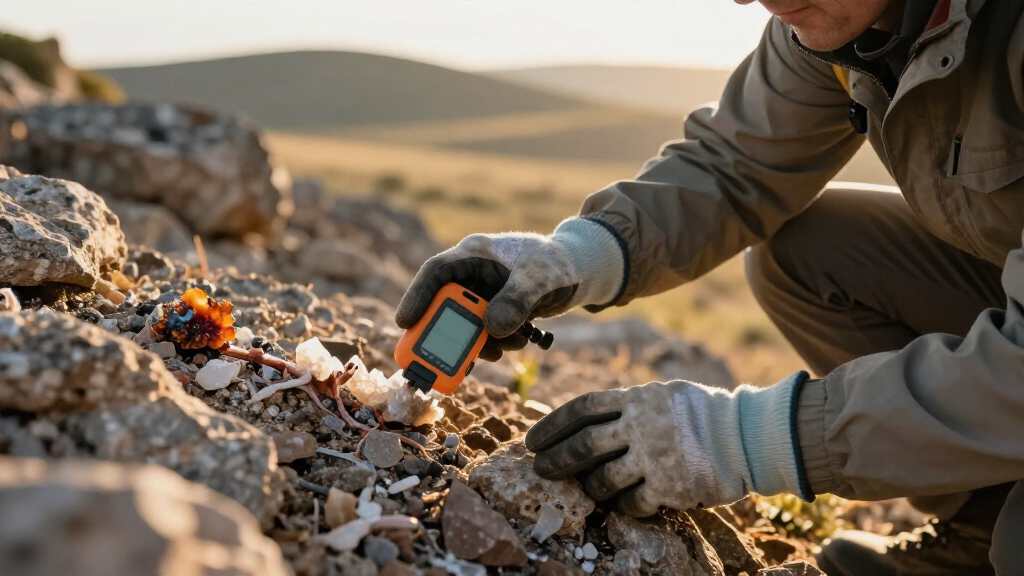
Between sols 5016 and 5021, Curiosity observed a change in rock texture at its exploration site, revealing blocks covered with small, disc-shaped mineral features. These features resemble mineral growth habits seen in evaporative settings on Earth and earlier in the mission near Pahrump Hills in the Murray mudstones.
The team conducted detailed imaging and spectroscopic analyses using Mastcam, MAHLI, LIBS, and APXS to investigate the composition of these features, tentatively identified as mineral deposits possibly formed from evaporating fluids.
In addition, Curiosity continued long-distance imaging of the surrounding stratigraphy and erosional deposits to better understand sedimentary processes and the formation of Valle Grande. The rover has driven over a kilometer since its last drill site at Campo Marte, positioning itself near a promising new drilling location.
Preparations are underway for a drill campaign at this site, which will include contact science, preload testing, and sample collection aimed at analyzing mineralogy in detail. The team plans to execute the first drill above the erosional supersurface, a key step in understanding the planet’s geochemical history.
Potential Insights into Mars’ Past Environment
This discovery is significant because the mineral features might indicate past presence of liquid water and evaporative processes, which are crucial for understanding Mars’ climate history and habitability potential. Analyzing the mineral composition could reveal conditions that supported microbial life or influenced geological evolution.
The planned drilling will provide direct samples for laboratory analysis, potentially confirming mineral types and formation mechanisms. Such findings could refine models of Martian paleo-environments and guide future exploration strategies.
As an affiliate, we earn on qualifying purchases.
Recent Discoveries and Mission Progress
Curiosity has been exploring Gale Crater since 2012, with recent focus on the sulfate-rich units and erosional features. Earlier in the mission, similar disc-shaped mineral features were observed near Pahrump Hills, associated with evaporative mineral deposits.
The current observations build on these findings, suggesting ongoing mineralogical diversity and complex geological history. The rover’s recent drive over a kilometer marks a strategic move to access new drill sites and expand the mineralogical survey of the area.
Past data from ChemCam, CheMin, and other instruments have identified clay minerals, sulfates, and other evaporite deposits, supporting the hypothesis that Mars experienced aqueous activity capable of forming diverse mineral assemblages.
planetary geology educational model
As an affiliate, we earn on qualifying purchases.
As an affiliate, we earn on qualifying purchases.
Unconfirmed Nature of Mineral Formation Processes
While the mineral features resemble evaporative deposits, it is not yet confirmed whether they formed through aqueous processes or represent other geological phenomena. The exact mineral composition and formation history remain under investigation.
The team is awaiting the results from the upcoming drill samples to clarify these uncertainties, but the analysis is still in progress.
As an affiliate, we earn on qualifying purchases.
Upcoming Drill Campaign and Mineral Analysis
The next steps involve executing a planned drilling operation at the selected site, followed by detailed laboratory analysis of the samples to determine mineralogy and geochemistry. These results are expected to clarify the formation mechanisms and environmental conditions of the detected features.
Further imaging and analysis will continue to refine the geological context, with the goal of building a comprehensive understanding of the area’s history and its implications for Mars’ habitability.
As an affiliate, we earn on qualifying purchases.
Key Questions
What are the disc-shaped mineral features observed by Curiosity?
They are small, disc-shaped mineral deposits that may have formed through evaporative processes, similar to mineral growth habits seen on Earth in evaporating lakes or ponds.
Why is the upcoming drilling important?
Drilling will provide direct samples for laboratory analysis, allowing scientists to confirm mineral types and formation conditions, which are crucial for understanding Mars’ geological history.
Could these minerals indicate past water activity?
Yes, the features resemble evaporite deposits, which typically form in the presence of liquid water, suggesting Mars may have experienced wetter conditions in its past.
When will the drilling take place?
The team plans to execute the drilling campaign shortly after completing site preparations, with specific timing dependent on operational conditions and analysis results.
What are the broader implications of this discovery?
If confirmed, these minerals could provide evidence of past habitable environments, guiding future exploration and sample return missions.
Source: primary
Fall Picks
fall essentials
As an affiliate, we earn on qualifying purchases.