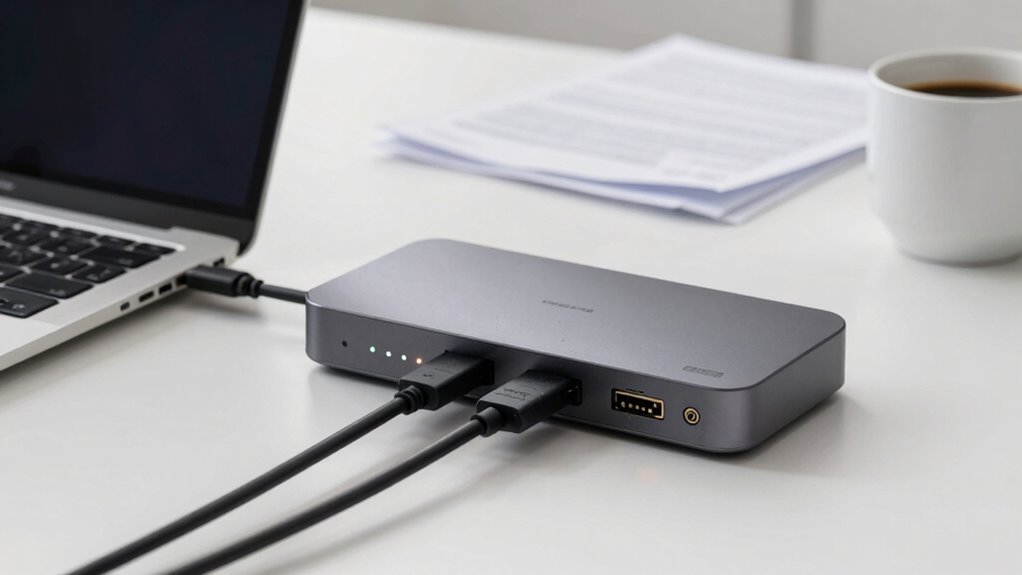

Even if your docking station’s specs look perfect, real-world issues can still cause failures. Interference from other wireless devices, environmental obstacles like walls, and placement can disrupt signals. Hardware quality, antenna design, and power delivery also affect performance. Compatibility issues and outdated firmware may cause instability despite good specs. To guarantee reliable operation, you’ll need to take these hidden factors—continue exploring to uncover how to get the most from your dock.
Prime for Young Adults — start your free trial
Fast free delivery, streaming and member deals for eligible 18–24 year olds.
As an affiliate, we earn on qualifying purchases.
Key Takeaways
- Environmental interference and device placement can disrupt wireless connections despite good specifications.
- Hardware quality and antenna design significantly influence real-world wireless performance.
- Compatibility issues and outdated firmware may cause instability despite matching specs.
- Power delivery can be unreliable due to internal circuitry and power regulation quality.
- Real-world conditions often reduce performance, making specs alone an insufficient reliability indicator.
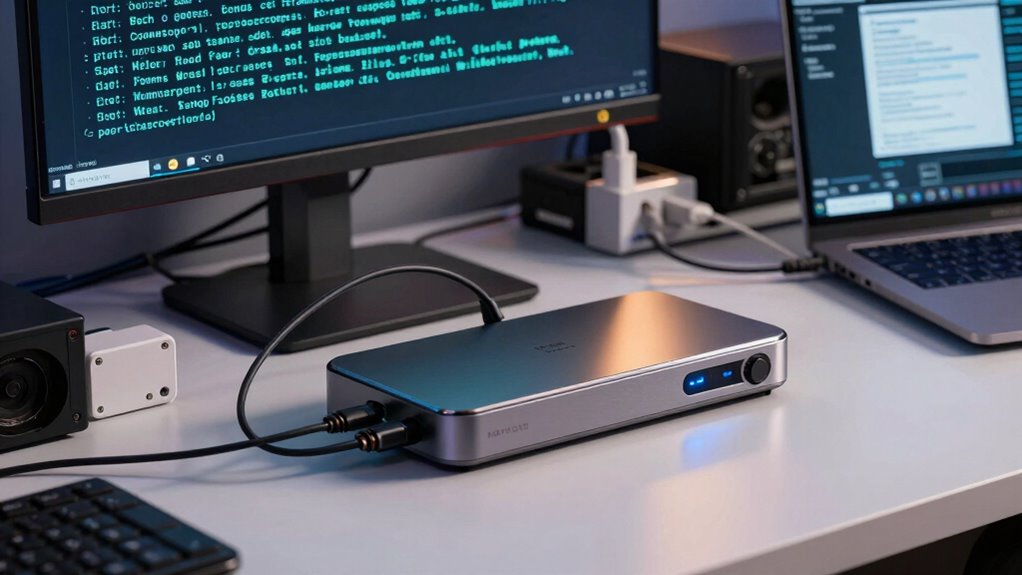
Many users assume that if a docking station meets all the specified technical requirements, it should work flawlessly. You might think that once a device ticks all the boxes—like supporting the right number of ports, the correct resolution, and the necessary data transfer speeds—it’ll seamlessly connect your laptop to all peripherals. But in reality, the real-world experience often falls short, especially when it comes to wireless connectivity and power delivery. Despite what the specs say, issues can creep in, causing frustration and downtime.
Wireless connectivity is a common stumbling block. Even if a docking station boasts Wi-Fi or Bluetooth standards that match or surpass industry norms, it doesn’t guarantee a stable connection. Interference from other wireless devices, thick walls, or crowded networks can all interfere with your signal. The specs may list impressive ranges or speeds, but in practice, you might experience lag, dropouts, or sluggish performance. These issues often stem from environmental factors or hardware incompatibilities that aren’t immediately obvious on paper. It’s easy to assume that because a device supports the latest wireless standards, your connection will be perfect, but the reality depends heavily on your environment and device placement. Environmental interference can significantly impact wireless performance and is often overlooked when evaluating specs. Additionally, the quality of the internal components and antenna design can greatly influence actual performance. Sometimes, even a slight change in placement or the presence of other electronic devices can disrupt the signal. Moreover, hardware quality plays a crucial role in maintaining stable wireless connections.
Power delivery is another area where specs can be misleading. Many docking stations advertise high wattage outputs—say, 85W or 100W—to ensure your laptop charges quickly and peripherals run smoothly. Yet, if the power delivery isn’t consistent or properly managed, your device might not charge as expected, or worse, it could experience power fluctuations. Sometimes, the docking station’s power circuitry isn’t optimized for your specific laptop model, leading to slow charging or power interruptions. Just because a dock claims to support fast charging doesn’t mean it will do so reliably in every scenario. The supply chain, internal components, and how the dock handles power regulation all influence whether it truly delivers the power your device needs. Power regulation is a critical aspect often overlooked when assessing docking station reliability.
Furthermore, even when these technical specs look perfect, other factors like compatibility issues, driver problems, or firmware outdatedness can cause failures. You might have the right hardware, but if the drivers aren’t up to date, or if the firmware isn’t compatible with your operating system, the entire setup can become unstable. Sometimes, the simplest-looking specs don’t account for these subtle but critical details, which is why a device that looks perfect on paper might still fail in real-world conditions. Device compatibility plays a significant role in ensuring consistent performance and avoiding unexpected failures. Regular updates and thorough testing across different systems can often prevent many of these issues.
wireless docking station interference filter
As an affiliate, we earn on qualifying purchases.
As an affiliate, we earn on qualifying purchases.
Frequently Asked Questions
How Do I Troubleshoot a Docking Station That Isn’T Working Properly?
To troubleshoot a docking station that isn’t working properly, first check your Bluetooth connectivity if you’re using wireless peripherals, ensuring devices are paired correctly. Next, inspect your cable management—loose or damaged cables can cause issues. Restart your computer and reconnect the docking station. Update drivers and firmware, and test the dock on another system if possible. These steps often resolve common connection and performance problems efficiently.
Can Software Updates Fix Docking Station Compatibility Issues?
You might feel frustrated, thinking software updates can’t fix hardware issues, but they often do. Firmware updates and driver compatibility are essential for resolving docking station problems. Updating firmware ensures your device communicates correctly, while compatible drivers prevent conflicts. Regularly checking for updates can revive your docking station, prevent future issues, and improve performance, making your setup more reliable and hassle-free. So, yes—software updates can definitely fix compatibility issues.
What Are Common Signs My Docking Station Is Failing?
You’ll notice your docking station is failing if you experience compatibility issues or frequent connection stability problems. Signs include devices disconnecting unexpectedly, slow data transfer, or peripherals not functioning properly. You might also see error messages or the docking station not recognizing your laptop. If these issues persist despite updates, it’s likely a hardware failure or compatibility problem, signaling that your docking station may need repair or replacement.
Do All Laptops Support Docking Station Features Equally?
Sure, all laptops claim to support docking stations equally—until you hit Compatibility issues or hardware limitations. Some models are picky, needing specific ports or drivers, while others just pretend to support universal docks. So, don’t assume your laptop’s a perfect match; check compatibility carefully. Otherwise, you’ll find yourself frustrated, fighting with cables and drivers, all because your laptop decided to be “special” when it comes to docking.
How Important Is Power Supply for Docking Station Performance?
Power supply is essential for your docking station’s performance. If your power source isn’t stable, your device may experience connectivity issues or slow performance. Make sure you use a high-quality cable, as poor cable quality can lead to power fluctuations, affecting stability. A reliable power supply guarantees your docking station functions smoothly, supports all connected devices, and prevents potential hardware failures caused by inconsistent power delivery.
high quality USB-C docking station with stable power delivery
As an affiliate, we earn on qualifying purchases.
As an affiliate, we earn on qualifying purchases.
Conclusion
Even when the specs shine on paper like a polished gemstone, docking stations can still falter in the real world, much like a grand ship that sinks despite its gleaming hull. Remember, it’s the unseen currents—compatibility quirks, hardware nuances, and software gremlins—that can pull your setup under. So, don’t just chase the sparkle of specs; dive deeper, test thoroughly, and make certain your docking station’s true worth isn’t just a mirage on the horizon.
antenna extension for wireless docking stations
As an affiliate, we earn on qualifying purchases.
As an affiliate, we earn on qualifying purchases.
As an affiliate, we earn on qualifying purchases.
Fall Picks
fall essentials
As an affiliate, we earn on qualifying purchases.