To master drone footage, focus on stabilization, managing wind, and capturing real-world results. Use gimbals and fly in calm conditions to keep your shots steady, especially when wind picks up. Planning your angles and understanding external factors help improve footage quality. Proper editing — like color correction and smooth *progressions* — elevates your videos further. Keep experimenting with techniques, and you’ll discover how to produce professional results that truly stand out.

Get school and study supplies delivered free — and shop member deals
- Fast, free delivery on millions of items
- Access to Prime Big Deal Days deals on October 6–7
- Prime Video, Amazon Music and more included
Key Takeaways
- Proper stabilization with gimbals and understanding drone systems are crucial for smooth footage, especially in windy conditions.
- Planning shots during calm weather and early mornings reduces wind-related disturbances and enhances video quality.
- Selecting suitable camera angles (low-angle, high-angle) and dynamic movements improves visual engagement.
- Post-production editing, including stabilization, color correction, and seamless transitions, refines raw footage into professional results.
- Anticipating external factors like wind and adjusting flight paths help maintain stability and achieve consistent, high-quality footage.
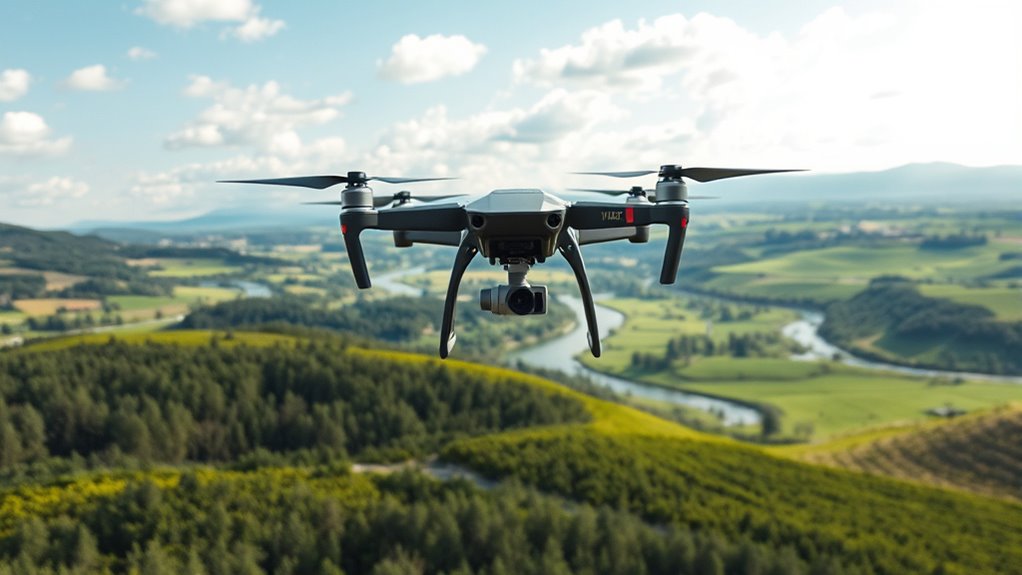
Have you ever wondered how drone footage captures stunning aerial views with such ease? It all comes down to a combination of skillful camera work and smart editing techniques. When you’re flying a drone, choosing the right camera angles makes a huge difference in how your footage turns out. Low-angle shots from just above the ground can make landscapes seem grander, while high-angle shots from directly above give viewers a sense of scale and vastness. Moving the camera smoothly through dynamic angles adds excitement and drama to your footage. Good camera angles also help tell a story or highlight specific features, like a winding river or a mountain peak, making your shots more engaging.
But capturing these perfect shots isn’t just about where you point the camera; it’s also about how you handle the footage afterward. Editing techniques come into play here, allowing you to refine your raw footage into a polished final product. You can stabilize shaky clips caused by wind or sudden movements, ensuring the video looks professional and smooth. Color correction and grading are also essential tools—adjusting brightness, contrast, and saturation can make your footage pop and match your desired aesthetic. Additionally, editing allows you to cut out distracting parts or combine various shots for a cohesive story. Seamless transitions, speed ramps, and overlays help create a smooth flow that keeps viewers engaged from start to finish.
Speaking of wind, it’s one of the biggest challenges when filming drone footage. Even a gentle breeze can cause your drone to drift or shake, which can ruin a shot or make stabilization more difficult. To counteract this, you need to understand your drone’s stabilization system, including gimbals, which keep the camera steady during flight. Flying in ideal weather conditions is essential—early mornings or late afternoons tend to have calmer air, resulting in smoother footage. It’s also worth learning how to anticipate wind gusts and adjusting your flight path accordingly. When you combine proper camera angles, effective stabilization, and thoughtful editing techniques, your drone footage will look professional and engaging, giving viewers breathtaking perspectives they can’t easily get otherwise. Additionally, understanding the impact of contrast ratio and how it affects image quality can help you plan better shots and post-production adjustments.
In the end, mastering drone footage involves more than just flying; it’s about planning your shots, controlling external factors like wind, and knowing how to enhance your footage through editing. Each element plays a role in creating stunning visuals that showcase the world from a fresh perspective. With practice, you’ll find it easier to select the best angles, stabilize your shots, and produce results that truly stand out.
As an affiliate, we earn on qualifying purchases.
Frequently Asked Questions
How Do Different Weather Conditions Affect Drone Footage Quality?
Weather conditions have a significant impact on your drone footage quality. For example, wind causes atmospheric interference, making your shots shaky and less clear. Rain or fog can reduce visibility and introduce moisture, which might damage your drone or blur your footage. Hot or cold temperatures also affect battery performance. Always check weather forecasts before flying to guarantee ideal conditions and avoid atmospheric interference that could compromise your footage.
What Are the Best Practices for Capturing Smooth Cinematic Shots?
To capture smooth cinematic shots, focus on controlled camera movement and thoughtful shot composition. Use gentle, deliberate movements like slow pans and tilts, avoiding sudden jerks. Plan your shots beforehand, considering framing and angles that tell your story effectively. Keep your drone steady, and practice smooth shiftings to enhance visual flow. By combining precise camera movement with strong shot composition, you’ll achieve professional-looking footage that captivates viewers.
How Does Camera Sensor Size Influence Drone Footage Clarity?
You’ll notice that larger camera sensors substantially enhance drone footage clarity by improving sensor performance and capturing more light. This results in higher image resolution, making your videos sharper and more detailed. Smaller sensors may struggle in low-light conditions, reducing clarity. By choosing a drone with a bigger sensor, you guarantee your shots are crisper, with better color accuracy and overall image quality, giving your footage a professional look.
What Post-Processing Techniques Enhance Stabilized Drone Videos?
Sure, because perfect footage just happens, right? You can enhance stabilized drone videos with simple post-processing like color grading to boost vibrancy and mood. Ironically, noise reduction is key when stabilization isn’t perfect, smoothing out grainy areas that distract viewers. These techniques transform decent footage into stunning visuals, proving that even in a high-tech world, a little human touch makes all the difference in your drone videos.
Are There Specific Drone Models Better Suited for Challenging Wind Conditions?
Yes, certain drone models are better for challenging wind conditions. Look for drones with weatherproof designs and wind-resistant motors, which help them maintain stability in gusty weather. These features guarantee your drone can handle stronger winds without losing control or footage quality. Brands like DJI often offer models with advanced stabilization and wind resistance, making them ideal choices when flying in tough wind conditions.
best drone for aerial videography
As an affiliate, we earn on qualifying purchases.
As an affiliate, we earn on qualifying purchases.
Conclusion
Now that you know the essentials of drone footage, remember that even small adjustments can make a big difference. Did you know that proper stabilization can reduce shaky footage by up to 90%? That’s a game-changer for professional-looking shots. Whether you’re battling wind or fine-tuning your camera settings, applying these basics will elevate your footage. Keep practicing, stay patient, and soon you’ll capture stunning, smooth aerial videos that impress every time.
drone wind resistance accessories
As an affiliate, we earn on qualifying purchases.
As an affiliate, we earn on qualifying purchases.
As an affiliate, we earn on qualifying purchases.
Fall Picks
fall essentials
As an affiliate, we earn on qualifying purchases.