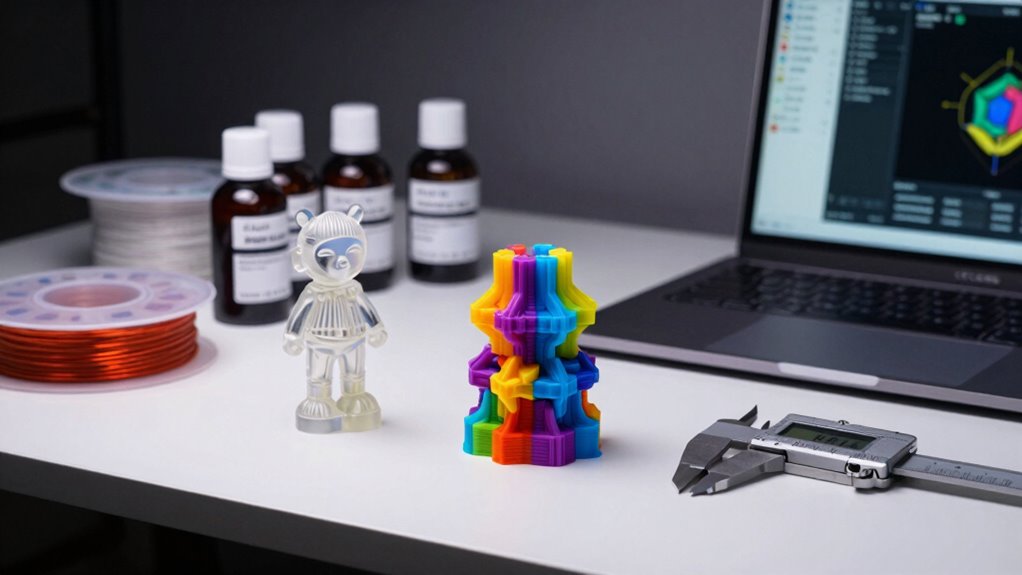

FDM and resin 3D printing serve different needs. FDM uses melted filament to build larger, durable parts with visible layer lines, making it good for prototypes and functional projects. Resin printing uses liquid resin to produce highly detailed, smooth models perfect for miniatures or jewelry. If you want to learn more about the strengths and best uses of each method, there’s plenty to discover in the details ahead.
Key Takeaways
- FDM uses melted filament extrusion for larger, durable parts, while resin printing offers high-detail, smooth surface finishes for intricate models.
- FDM offers a wide range of filament materials suitable for functional, load-bearing applications; resin is ideal for detailed miniatures and prototypes.
- Resin prints have a superior surface quality with minimal post-processing, whereas FDM parts often require sanding or smoothing for a polished look.
- FDM is generally more affordable and better for larger, less detailed objects; resin printing is more precise but typically more expensive.
- Both methods involve specific post-processing techniques: FDM may need smoothing, and resin requires washing and curing for optimal results.
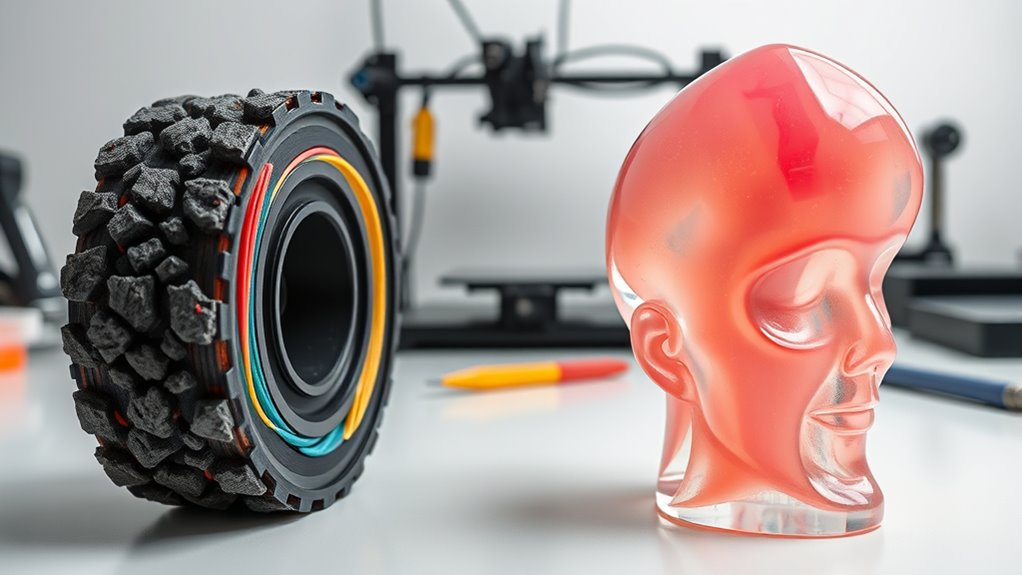
When choosing a 3D printing method, understanding the differences between FDM and resin printing is essential, as each offers unique advantages suited to different projects. FDM, or Fused Deposition Modeling, works by extruding melted filament layer by layer, creating objects through the deposition of thermoplastic materials. Resin printing, on the other hand, uses a liquid photopolymer that hardens when exposed to a UV light source, resulting in highly detailed models. This fundamental difference impacts not only the final output but also the material differences and finishing techniques you’ll need to contemplate.
With FDM, the material choices are broad, including PLA, ABS, PETG, and more specialized filaments like nylon or TPU. These filament types vary in strength, flexibility, and temperature resistance, giving you versatility for functional prototypes or larger, more durable parts. Resin printing uses liquid resins, which come in different formulations such as standard, tough, flexible, or castable resins. These materials are designed to produce highly detailed, smooth surfaces, but they tend to be more delicate and less suitable for load-bearing applications. The material differences directly influence your project’s requirements, whether you prioritize strength or fine detail.
FDM offers a wide range of durable filament options, while resin provides highly detailed, smooth surfaces ideal for intricate models.
Finishing techniques differ considerably between the two methods. FDM prints often have visible layer lines, which can be smoothed using sanding, acetone vapor smoothing (for ABS), or applying filler primers. Post-processing for FDM parts is generally straightforward, but achieving a perfectly smooth surface requires effort and sometimes additional tools. Resin prints, on the other hand, tend to have a smoother, almost glass-like finish straight off the build platform. Their surface detail is superior, but they can still benefit from washing, curing, and gentle sanding to remove residual resin or layer lines, especially for high-precision applications. Additionally, the layer resolution of resin printers can be significantly higher than FDM, allowing for more intricate details to be captured in the final product.
Another key difference lies in the complexity of finishing. FDM parts may require more extensive surface treatment to achieve a refined look, especially if you’re aiming for intricate details or a polished appearance. Resin models come out of the printer with a high level of detail already, making them ideal for miniatures, jewelry, or highly detailed prototypes. However, resin parts are more fragile during handling and require careful cleaning and curing to ensure durability. Both methods demand specific finishing techniques, but resin printing generally offers a cleaner and more detailed surface with less post-processing needed to achieve a professional look.

SUNLU PLA 3D Printer Filament PLA Filament 1.75mm, Neatly Wound 3D Printing Filament 1.75mm, Dimensional Accuracy +/- 0.02 mm, Fit Most FDM 3D Printers, 1kg Spool (2.2lbs), Black
①【SUNLU PLA 3D Printer Filament】PLA material is the perfect choice for 3D printing enthusiasts! SUNLU PLA filament is…
As an affiliate, we earn on qualifying purchases.
As an affiliate, we earn on qualifying purchases.
Frequently Asked Questions
How Durable Are FDM and Resin Prints Over Time?
FDM prints generally have good material longevity and surface durability, especially with quality filament and proper settings, but they can wear down over time with exposure to elements or mechanical stress. Resin prints tend to be highly detailed and durable on the surface, yet they may become brittle or crack after prolonged use or UV exposure. Regular care and choosing the right material help maximize both types’ durability over time.
What Safety Precautions Are Necessary When Using Resin Printers?
When using resin printers, you need to prioritize safety. Always wear gloves and safety goggles to protect against resin handling, which can be toxic or cause skin irritation. Work in a well-ventilated area to avoid inhaling fumes. Keep your workspace clean, and dispose of resin waste properly. These precautions help prevent health issues and make certain of safe, enjoyable resin printing experiences.
Can FDM and Resin Printers Print With Flexible Materials?
You can definitely print with flexible materials using both FDM and resin printers. Flexible filaments like TPU or TPE work well with FDM, allowing you to create rubber-like parts. Resin printers, especially those with resin flexibility, can produce highly detailed flexible objects, but their flexibility isn’t as pronounced as FDM. Exploring flexible filaments and resin flexibility proves that both methods can handle a range of flexible applications.
How Much Does Maintenance Differ Between FDM and Resin Printers?
Maintenance costs and repair frequency differ between FDM and resin printers. FDM printers generally require lower maintenance costs and less frequent repairs since they have simpler parts like extruders and belts. Resin printers, however, often need more attention due to delicate components, resin handling, and potential issues with UV curing. You should expect resin printers to have higher repair frequency and maintenance costs over time, especially with cleaning and replacing parts.
Are There Environmental Impacts Associated With Each Printing Method?
You should know that both FDM and resin printing have environmental impacts, but they differ. FDM uses plastic filament, which can be recycled or sourced sustainably, reducing its environmental footprint. Resin printing involves chemicals that may release volatile organic compounds (VOCs) and generate waste that’s harder to recycle. To minimize environmental impact, consider material sustainability options and proper disposal methods for both printing methods.

52 Pcs Resin 3D Printing Tool Kit with 304 Stainless Steel Resin Filter Funnel,Silicone Pad, Scraper,Tweezers & Cleaning Tools | Accessories for Model Removal, Resin Recycling & Post-Processing
【Premium Stainless Steel Funnel & Filters 】 Our durable 304 stainless steel funnel ensures smooth resin pouring with…
As an affiliate, we earn on qualifying purchases.
As an affiliate, we earn on qualifying purchases.
Conclusion
Did you know that FDM printers make up over 80% of the 3D printing market? Whether you’re looking for affordability and strength, or precision and detail, understanding the differences helps you choose the right technology. FDM is great for functional prototypes, while resin shines for tiny, intricate designs. So, pick what suits your project best, and start creating amazing things today! Your perfect 3D printing journey is just a decision away.

3D Printer Tools Kit, Quality 3D Printing Tool Kit for Model Finishing/Deburring/Drilling, 3D Printer Accessories for All FDM/SLA Printers Removing Support, Cutting Filament, Cleaning Nozzle
Comprehensive 3D Printing Tool Kit: With 56 essential tools, including a deburring tool with 5 extra blades, wire…
As an affiliate, we earn on qualifying purchases.
As an affiliate, we earn on qualifying purchases.

FUNGDO 3D Printer Resin Curing Station DIY Curing Enclosure with UV Light UV Lamp Solar Turntable for 405nm UV Resin SLA DLP LCD 3D Printer Solidify Model
1: Big Curing SizeUpdate to 8.27"x8.67"x10.24"(21*22*26CM), enough for model from 10.1 inch or small LCD Printer to use.
As an affiliate, we earn on qualifying purchases.
As an affiliate, we earn on qualifying purchases.