HDMI 2.1 boosts your home theater with higher resolutions like 4K at 120Hz and 8K support, and it offers smoother visuals, faster refresh rates, and richer audio through eARC. It also enhances gaming with features like VRR and ALLM. However, these benefits only work if your devices are compatible. Keep in mind that HDMI 2.1 alone doesn’t upgrade existing content or hardware. If you want to learn more about activating these features, continue on.

Prime made for students and young adults
- Fast, free delivery for dorm and study essentials
- Prime Video and Amazon Music included
- Member-only deals
Key Takeaways
- HDMI 2.1 supports higher resolutions (up to 8K) and refresh rates (4K at 120Hz), enhancing visual quality in home theaters.
- It enables advanced audio formats via eARC, delivering immersive, uncompressed surround sound.
- Features like VRR and ALLM improve gaming and reduce latency for a smoother experience.
- Full benefits require compatible hardware and content; an HDMI 2.1 cable alone does not guarantee feature support.
- Not all features are necessary for casual viewing or standard HD content, and some capabilities depend on content availability.
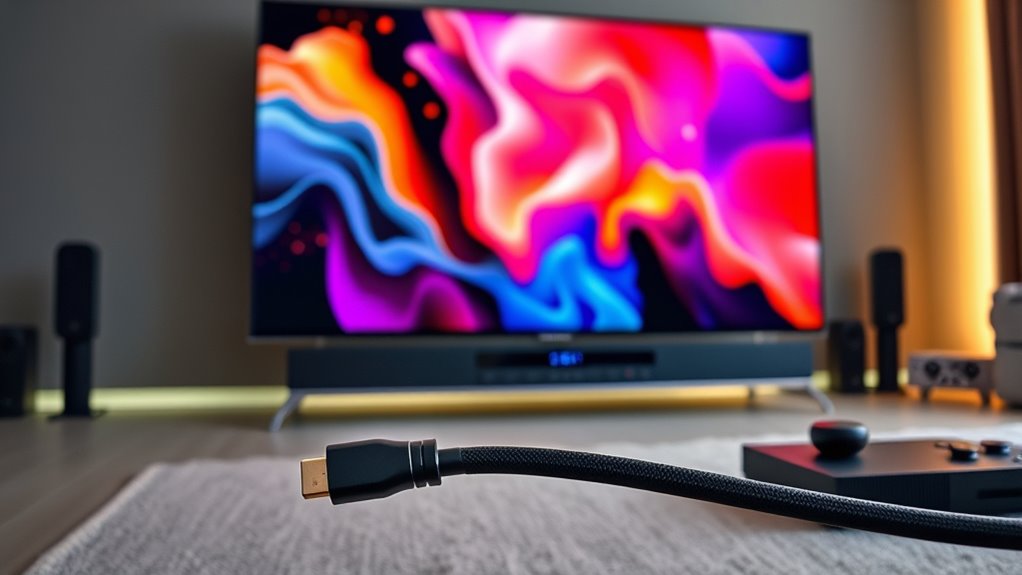
If you’re looking to upgrade your home theater setup, HDMI 2.1 offers considerable improvements that can elevate your viewing experience. This latest standard is designed to handle higher resolutions, faster refresh rates, and richer audio, all of which contribute to a more immersive entertainment environment. One of the key benefits of HDMI 2.1 is its impact on gaming enhancements. With support for features like Variable Refresh Rate (VRR) and Auto Low Latency Mode (ALLM), your gaming sessions become smoother and more responsive. These features help eliminate screen tearing and reduce input lag, giving you a competitive edge and making fast-paced games much more enjoyable. If you’re a gamer, HDMI 2.1’s ability to support 4K at 120Hz or even 8K at 60Hz means you can experience ultra-smooth gameplay with razor-sharp visuals. This is particularly noticeable on high-end gaming monitors and TVs, where fluid motion really enhances the experience. Additionally, HDMI 2.1’s increased bandwidth aligns with innovative European cloud servers, emphasizing the importance of supporting advanced, high-capacity technology in modern entertainment systems.
Audio improvements are also a major selling point for HDMI 2.1. It supports eARC (enhanced Audio Return Channel), which allows for higher-quality audio transmission between your TV and sound system. This means you can enjoy uncompressed surround sound formats like Dolby Atmos and DTS:X without needing additional cables or complicated setups. If you’re serious about your home theater, these audio enhancements translate into richer, more detailed soundscapes that draw you deeper into your movies and shows. You’ll notice that dialogue, music, and effects are more distinct, creating a more cinematic experience.
However, it’s important to recognize what HDMI 2.1 doesn’t do. While it significantly boosts bandwidth and capabilities, it doesn’t automatically upgrade your existing devices or content. Your TV, gaming console, or sound system must also support HDMI 2.1 to take full advantage of its features. Simply having an HDMI 2.1 cable isn’t enough; your hardware needs to be compatible as well. Additionally, some features like 8K support are still limited by content availability and hardware capabilities, meaning you might not see the full benefits right away. Also, not all HDMI 2.1 features are necessary for every user. If you mainly watch 1080p content or stream from apps without high refresh rate needs, the advantages may be less noticeable.
Frequently Asked Questions
Can All HDMI 2.1 Devices Interconnect Seamlessly?
Not all HDMI 2.1 devices interconnect seamlessly, as device compatibility varies. To guarantee smooth communication, you need to check if your devices support the same features and get firmware updates when available. Firmware updates can improve compatibility and fix bugs, so regularly updating your devices is essential. Keep in mind that even with HDMI 2.1, some devices might still face interoperability issues due to differing manufacturer implementations.
Does HDMI 2.1 Support Wireless Connection Options?
Yes, HDMI 2.1 supports wireless connectivity options, like Wireless HDMI transmitters, allowing you to connect devices without cables. However, you might face compatibility challenges, as not all HDMI 2.1 devices are equipped with wireless features. To guarantee smooth operation, check if your devices explicitly support wireless connectivity, and be prepared for potential setup complexities or signal interference that could affect performance.
Are There Any Compatibility Issues With Older HDMI Versions?
You might encounter some compatibility issues with older HDMI versions, especially since HDMI 2.1 introduces new features that legacy devices may not support. To minimize problems, check for firmware updates from your device manufacturers, as these can improve legacy compatibility. Keep in mind that while HDMI 2.1 offers advanced capabilities, older cables and ports might limit performance or cause connection issues.
How Does HDMI 2.1 Impact Home Theater Setup Costs?
HDMI 2.1 can increase your home theater setup costs due to upgrade expenses. You might need new cables and compatible devices, which adds to your overall budget. While it offers better features like higher resolution and faster refresh rates, these improvements come at a price. If you’re aiming for the latest tech, expect to invest more upfront, but you’ll enjoy enhanced picture and sound quality over time.
What Are the Best Practices for Cable Installation With HDMI 2.1?
You should prioritize good cable management by neatly routing your HDMI 2.1 cables to avoid tangles and damage. Use high-quality connectors to guarantee ideal signal transfer and durability. Keep cables away from power sources and heat to prevent interference, and avoid excessive bending or stretching. Label your cables for easy troubleshooting, and secure them properly to maintain a clean setup. Proper installation enhances performance and prolongs your cables’ lifespan.
Conclusion
While HDMI 2.1 release stunning visuals and smoother gameplay, it’s not a magic fix for every home theater issue. You’ll enjoy breathtaking detail, yet still need the right source devices and cables. It’s like having a top-tier engine in your car—powerful, but only as good as the roads you take. Embrace the technology’s potential, but don’t forget the basics; together, they create your ultimate viewing experience.
Halloween Picks
halloween
As an affiliate, we earn on qualifying purchases.