
When choosing between IPS, VA, and OLED panels, consider what matters most to you. IPS offers accurate colors and wide viewing angles but has slower response times. VA panels provide high contrast and deep blacks, ideal for dark room use, but have narrower angles. OLED delivers stunning colors, near-infinite contrast, and fast response times, though at a higher cost. To find out which suits your needs best, keep exploring these panel differences in detail.
Key Takeaways
- OLED offers near-infinite contrast and true blacks, surpassing both IPS and VA in dark scene performance.
- IPS panels provide the best color accuracy and consistent viewing angles, ideal for creative work.
- VA panels excel in high contrast and deep blacks, making them suitable for movies and gaming in low-light settings.
- Response times are fastest in OLED, reducing motion blur; IPS panels tend to have slower response times.
- Cost, durability, and potential burn-in are significant factors, with OLED generally being more expensive and prone to static image retention.
Are you trying to decide between IPS, VA, and OLED display technologies? Choosing the right panel depends on what matters most to you, whether it’s color accuracy, response times, or overall picture quality. Each panel type has its strengths and weaknesses, so understanding these differences helps you make an informed choice.
IPS (In-Plane Switching) panels are widely praised for their excellent color accuracy. If you want vibrant, true-to-life colors that stay consistent across viewing angles, IPS is a solid pick. This makes them ideal for photo editing, content creation, or any activity where color fidelity is essential. However, IPS panels tend to have slower response times compared to other options, which can be noticeable during fast-paced gaming or high-speed video playback. You might see some motion blur or ghosting effects because of this. Despite that, IPS displays generally offer good viewing angles and decent refresh rates, balancing color precision with responsiveness.
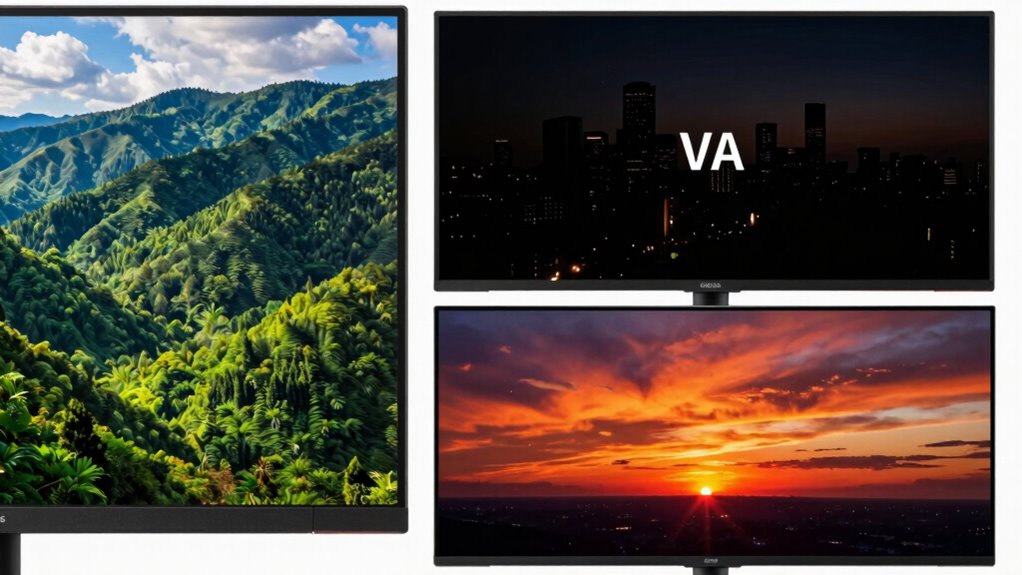
VA (Vertical Alignment) panels are known for their high contrast ratios. If you prioritize deep blacks and richer dark scenes, VA might be your best choice. While their color accuracy isn’t quite as precise as IPS panels, they still deliver vibrant images, especially in darker environments. Response times on VA panels are typically slower than IPS, which can lead to motion blur in fast-moving videos or games. But their superior contrast makes them excellent for watching movies or gaming in low-light settings. Keep in mind, though, that the viewing angles on VA panels aren’t as wide as IPS, so colors and contrast may shift if you’re not sitting directly in front of the screen.
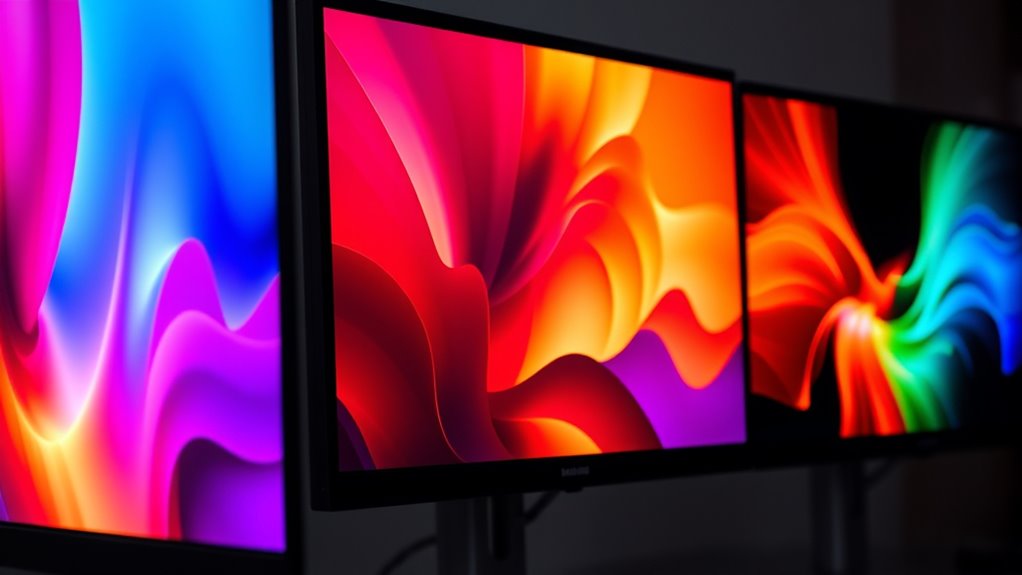
OLED technology stands apart because it offers stunning contrast and near-infinite black levels. Each pixel emits its own light, so when a pixel is off, it’s truly black. This results in incredible color depth and consistency, making OLED screens perfect for immersive viewing experiences. Response times are also faster on OLEDs, reducing motion blur and making fast action look smoother. If you’re after the best possible image quality, with vibrant colors and quick response times, OLED is hard to beat. The downside? OLED panels can be more expensive and may face issues like burn-in over time, especially if static images are displayed for long periods.
Frequently Asked Questions
Which Panel Type Offers the Best Gaming Response Times?
For the best gaming response times, you should go with an OLED panel. OLED screens deliver near-instant response times, reducing motion blur and ghosting, which improves gaming performance. Unlike IPS or VA panels, OLEDs have faster pixel response rates, giving you smoother visuals during fast-paced gameplay. If quick response times are your priority, OLED is the top choice, ensuring you get the most responsive gaming experience possible.
How Do Panel Types Impact Color Accuracy in Professional Work?
Think of your monitor as an artist’s palette. IPS panels excel in color accuracy, offering wider color gamuts and better color calibration, making them ideal for professional work. I once calibrated a professional photo editor’s IPS screen, and colors became vividly true to life. VA panels tend to have more limited color gamuts, while OLEDs deliver excellent contrast but can sometimes struggle with consistent color accuracy over time.
Are OLED Screens More Durable Than IPS or VA Panels?
OLED screens generally aren’t more durable than IPS or VA panels when it comes to screen longevity. You might notice that OLEDs are more susceptible to burn-in and image retention, which can affect durability over time. While OLEDs offer stunning contrast and vibrant colors, their durability comparison shows they can degrade faster under regular use. If long-term durability is your priority, IPS or VA panels tend to hold up better.
Can VA Panels Provide the Same Viewing Angles as IPS?
Surprisingly, VA panels don’t quite match IPS panels when it comes to viewing angles, despite their impressive contrast. You might think the deeper blacks and high contrast of VA screens would mean broader angles, but instead, you get more color shift and less consistent viewing experience. So, if wide viewing angles matter, IPS still holds the crown, even if VA panels excel in contrast performance.
How Do Panel Types Influence Power Consumption and Battery Life?
Panel types markedly influence power consumption and battery life. IPS and VA panels tend to have moderate power draw, balancing display quality and energy efficiency. OLED screens are more energy-efficient when displaying dark images because they turn off pixels completely, reducing power draw. Your choice impacts battery life, especially during extended use. If you prioritize longer battery life, OLED may be advantageous for energy efficiency, but VA and IPS panels still offer respectable performance.
Conclusion
Choosing between IPS, VA, and OLED panels depends on what matters most to you. Imagine crisp, vibrant colors on an OLED, but with potential burn-in issues. Or, picture the deep blacks and high contrast of a VA, yet miss out on some color accuracy. Meanwhile, IPS offers great color and wide viewing angles but might lack the contrast of VA. By weighing these differences, you can pick the panel that best fits your needs and creates your perfect viewing experience.