TL;DR

Get school and study supplies delivered free — and shop member deals
- Fast, free delivery on millions of items
- Access to Prime Big Deal Days deals on October 6–7
- Prime Video, Amazon Music and more included
Peter Sahlins’ new book examines how Neanderthals have been depicted in science and culture for 170 years. It traces the shift from racialized caricatures to genetic evidence of interbreeding. The review highlights the tension between biological determinism and cultural projection.
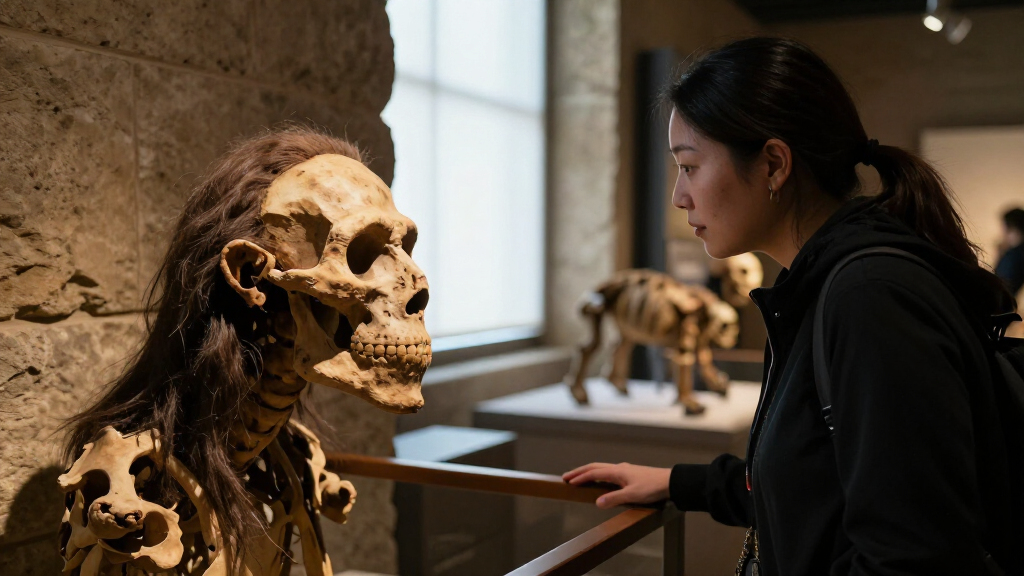
Peter Sahlins’ new book, Neanderthals Among Us, offers the first comprehensive history of how Neanderthals have been portrayed in science and popular culture since their discovery in 1856. The work traces a 170-year trajectory from early racial science to modern genetic findings, revealing how the figure of the Neanderthal has served as a shifting mirror for human anxieties about identity and ancestry. By juxtaposing scientific research with novels, films, and political rhetoric, Sahlins argues that the Neanderthal has never been a static biological entity but a cultural construct shaped by contemporary biases.
The book begins with the 1856 discovery in the Neander Valley, where quarrymen unearthed bones initially mistaken for a cave bear. Johann Carl Fuhlrott, a local schoolteacher, recognized the remains as belonging to a distinct human type, leading to the classification of Homo neanderthalensis. Sahlins details how these fossils were quickly absorbed into the racial hierarchies of the 19th century. Craniologists placed European skulls at the top of the evolutionary ladder, with Neanderthals positioned at the bottom as the “missing link” between apes and humans. This scientific framing reinforced colonial narratives that depicted indigenous peoples and great apes as lesser beings, creating a cultural foundation for the caricatures that followed.
Sahlins examines the persistent portrayal of Neanderthals as violent brutes in 20th-century media. The 1911 novel Quest for Fire and its 1981 film adaptation depicted Neanderthals as hairy, low-forehead cannibals, while Jean Auel’s Clan of the Cave Bear series, which sold 20 million copies by 1990, included scenes of sexual violence that led to library bans. The term “Neanderthal” became a political slur, used by progressive movements to label conservatives and reactionaries as backward-looking. Sahlins notes a spike in the English-language usage of the term during Donald Trump’s presidential campaigns, according to the News on the Web corpus, illustrating how the label remains a potent tool for political exclusion.
The narrative shifts with post-World War II archaeological finds, such as the Shanidar Cave discoveries in Iraq, which revealed Neanderthals who survived severe injuries and engaged in elaborate burials. These findings challenged the brutish stereotype. The 2010 mapping of the Neanderthal genome further complicated the picture, showing that non-African populations carry between 1 and 4 percent Neanderthal DNA. Sahlins highlights the 2026 discovery that interbreeding was predominantly between Neanderthal males and human females, a finding that upends previous assumptions about the dynamics of ancient human-Neanderthal interactions.
Rethinking Human Ancestry and Bias
Sahlins’ work is significant because it exposes the entanglement of biology and culture in the study of human origins. By demonstrating how scientific interpretations of Neanderthals have been influenced by racial science and popular prejudice, the book serves as a cautionary tale about biological determinism. It challenges readers to recognize that our understanding of ancient humans is never purely objective but is always filtered through contemporary social values. The book’s analysis of genetic ancestry reports, such as those offered by 23andMe before the company’s 2025 bankruptcy, underscores the modern commercialization of ancestry and the public’s desire to find meaning in fragmented DNA. Sahlins warns that the genome acts as a “Rorschach test”, onto which people project ideas about what it means to be human.
As an affiliate, we earn on qualifying purchases.
From Wild Men to Genetic Relatives
The cultural history of the Neanderthal extends back to antiquity, where the Western imagination was populated by satyrs and Wild Men—intermediate beings lacking reason and speech. Colonial explorers later mapped these folkloric figures onto indigenous peoples and great apes, creating the conditions for 18th-century racial sciences. The discovery of Neanderthal 1 provided a physical anchor for these pre-existing narratives. For decades, museums and media reinforced the image of the Neanderthal as a white-skinned but “dark” and hirsute brute, despite evidence that their skulls were on average larger than those of modern humans. The shift toward viewing Neanderthals as complex, caring beings began in the mid-20th century, driven by archaeological evidence of social cooperation and later by genomic data confirming deep biological ties between Neanderthals and modern humans.
“Neanderthal Man as an ever-shifting chimera.”
— Peter Sahlins
As an affiliate, we earn on qualifying purchases.
Limitations of Genetic Interpretation
While the book highlights the 2026 discovery regarding interbreeding patterns, the full implications of this finding for social structures in ancient populations remain under debate. Sahlins acknowledges that genetic data, while powerful, does not fully explain cultural behaviors or social hierarchies. The review notes that the exact nature of Neanderthal-human interactions—whether they were cooperative, coercive, or complex—is still being pieced together from fragmentary evidence. Furthermore, the bankruptcy of 23andMe in 2025 raises questions about the long-term accessibility and reliability of commercial genetic ancestry data, a field Sahlins critiques for its potential to reinforce biological essentialism.
As an affiliate, we earn on qualifying purchases.
Future Directions in Paleoanthropology
As archaeological sites in Europe and West Asia continue to yield new fossils and artifacts, the scientific understanding of Neanderthals will likely become more nuanced. Researchers are increasingly focusing on neuroscience and linguistics to determine the cognitive capabilities of Neanderthals, moving beyond skeletal analysis. Sahlins’ work suggests that future studies must remain vigilant against the political instrumentalization of genetic findings. The ongoing dialogue between science and popular culture will likely continue to shape public perception, with new discoveries potentially challenging or reinforcing existing stereotypes about human difference and similarity.
As an affiliate, we earn on qualifying purchases.
Key Questions
What is the main argument of ‘Neanderthals Among Us’?
The book argues that the depiction of Neanderthals in science and culture has been shaped by racial biases and political agendas, rather than purely objective scientific inquiry. It traces the evolution of the Neanderthal image from a racialized “missing link” to a genetic relative.
How did Neanderthal DNA influence modern humans?
Between 52,000 and 39,000 years ago, humans and Neanderthals interbred, leaving nearly a third of the Neanderthal genome as fragments in the DNA of non-African populations. Recent findings suggest this interbreeding was predominantly between Neanderthal males and human females.
Why were Neanderthal books banned in the past?
Jean Auel’s Clan of the Cave Bear novels were banned from some American public libraries in the 1990s due to depictions of sexual violence, reflecting the enduring cultural association of Neanderthals with brutishness and aggression.
What is the significance of the Shanidar Cave discovery?
The discovery of a Neanderthal with debilitating injuries who survived for years suggested that they cared for their sick and injured, challenging the stereotype of Neanderthals as uncaring brutes and indicating complex social behaviors.
Source: hn
Halloween Picks
halloween
As an affiliate, we earn on qualifying purchases.