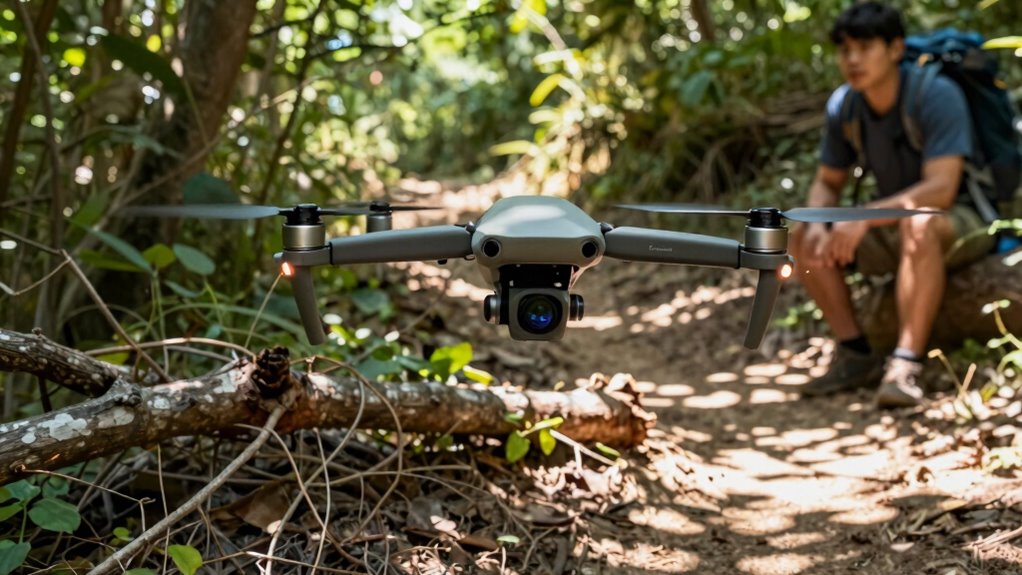

Obstacle avoidance is more important than fancy app features because it directly keeps you safe and prevents accidents. Reliable sensors and proper calibration guarantee your system detects obstacles accurately, reducing the risk of crashes. Regular updates maintain performance, so your safety systems stay trustworthy over time. Without a strong focus on these core functions, even the most advanced features won’t protect you effectively. Keep exploring to discover how maintaining these essentials makes your system truly reliable.

Prime made for students and young adults
- Fast, free delivery for dorm and study essentials
- Prime Video and Amazon Music included
- Member-only deals
Key Takeaways
- Obstacle avoidance ensures safety and prevents accidents, which is more critical than additional app features.
- Accurate sensor calibration is essential for reliable obstacle detection, directly impacting system safety.
- Regular software updates maintain core system performance, ensuring obstacle avoidance remains effective over time.
- Core safety features like obstacle detection take precedence over secondary features to protect lives and property.
- Proper system maintenance ensures sensors and software function correctly, safeguarding reliability in dynamic environments.

Have you ever wondered why obstacle avoidance is essential in various systems? It’s not just about having the newest features or sleek designs; it’s about safety, reliability, and efficiency. At the core of effective obstacle avoidance are properly calibrated sensors. Sensor calibration ensures that the system accurately perceives the environment, which is critical for detecting obstacles in real time. If sensors aren’t calibrated correctly, they might miss objects or give false alarms, making the system unreliable. This calibration process involves adjusting the sensors so that their readings match the actual distances and conditions, providing a trustworthy foundation for obstacle detection.
Proper sensor calibration is vital for accurate, reliable obstacle detection and overall system safety.
Beyond calibration, regular software updates play a fundamental role in maintaining and improving obstacle avoidance systems. These updates often include bug fixes, performance enhancements, and new features that adapt the system to changing environments or unexpected challenges. When you skip updates, your system risks becoming outdated, less accurate, or even vulnerable to new types of obstacles it can’t recognize. Software updates also optimize the algorithms that interpret sensor data, making obstacle detection faster and more precise. This continuous improvement ensures that the system remains effective, especially as it encounters different scenarios or as hardware components age. Additionally, sensor calibration is vital for ensuring that the system perceives obstacles accurately, especially in complex or changing environments. Proper calibration techniques help maintain the system’s accuracy over time, even as conditions fluctuate or hardware components wear.
While many products boast advanced features like voice control or entertainment options, these are secondary if the core obstacle avoidance doesn’t work properly. The real value lies in how well the system can prevent accidents and protect lives. You might have the most sophisticated app or the latest gadgets, but if the obstacle detection isn’t reliable due to poor sensor calibration or outdated software, all those fancy features become irrelevant. Safety should always be the priority. Proper sensor calibration and timely software updates are the backbone of a dependable obstacle avoidance system, guaranteeing it responds accurately and quickly when it matters most. Moreover, regular maintenance of the system ensures that sensors and software remain in optimal condition, preventing potential failures before they occur. Regular checks can also help identify wear and tear that might affect sensor performance, further supporting system reliability.
In essence, obstacle avoidance isn’t just a luxury—it’s a necessity that relies on solid technical foundations. Focusing on maintaining accurate sensors and keeping software current ensures your system performs as intended, preventing accidents before they happen. These core elements are what make obstacle avoidance truly effective, rather than just a flashy feature that looks good on paper. When you prioritize these fundamentals, you’re investing in a safer, more reliable technology that can adapt to new challenges and keep you protected. Ultimately, it’s these practical, behind-the-scenes aspects that define the effectiveness of obstacle avoidance systems far more than any fancy app feature ever could. Proper sensor calibration techniques are essential to keep your system functioning at peak performance amid changing conditions.
sensor calibration tool for obstacle detection
As an affiliate, we earn on qualifying purchases.
As an affiliate, we earn on qualifying purchases.
Frequently Asked Questions
How Does Obstacle Avoidance Impact Drone Flight Safety?
Obstacle avoidance directly impacts your drone flight safety by preventing collisions and crashes. Proper sensor calibration guarantees the obstacle detection system functions accurately, reducing risks. Additionally, effective user training helps you interpret sensor data and respond swiftly to obstacles. When you prioritize obstacle avoidance features, calibrate sensors correctly, and stay well-trained, your drone becomes much safer to operate, especially in complex environments.
Can Obstacle Avoidance Systems Reduce Drone Accident Rates?
You can markedly cut drone accident rates with obstacle avoidance systems, because they’re like a safety net. By combining advanced drone navigation with AI integration, these systems detect and respond to obstacles in real-time, preventing crashes before they happen. While no system is foolproof, this proactive approach keeps your drone safer, letting you focus on the mission rather than worrying about potential mishaps.
What Are the Limitations of Current Obstacle Avoidance Technology?
You should know that current obstacle avoidance technology has limitations, mainly due to sensor restrictions and environmental challenges. Sensors can struggle with small objects, transparent surfaces, or low-light conditions, reducing accuracy. Environmental factors like rain, fog, or strong winds can interfere with sensor performance. These issues mean your drone might not always detect obstacles reliably, highlighting the need for ongoing improvements to guarantee safer, more dependable obstacle avoidance systems.
How Does Obstacle Avoidance Affect Drone Battery Life?
Obstacle avoidance can impact your drone’s battery life by increasing power consumption, which affects battery efficiency. When the drone actively detects and navigates around obstacles, it uses more power, draining the battery faster. This means you might get less flight time than expected. To maximize your drone’s battery life, make certain obstacle avoidance systems are optimized and used wisely, especially during extended flights or in cluttered environments.
Is Obstacle Avoidance Necessary for All Types of Drones?
Obstacle avoidance isn’t necessary for all drones, but it’s essential if you face navigation challenges or operate in complex environments. It helps you prevent crashes caused by sensor limitations, especially when flying indoors or in tight spaces. If your drone flies in open areas with minimal obstacles, it might not need advanced avoidance. However, for safer, more reliable flights in tricky settings, obstacle avoidance becomes a valuable feature to have.
software update for obstacle avoidance systems
As an affiliate, we earn on qualifying purchases.
As an affiliate, we earn on qualifying purchases.
Conclusion
Think of obstacle avoidance like a trusty windshield wiper during a downpour—you might have the coolest car features, but without clear vision, you’re lost. Studies show that 70% of accidents happen because of unseen obstacles. When your device can anticipate and navigate around hurdles, it’s like having a vigilant co-pilot. Prioritizing obstacle avoidance guarantees your journey is safer and smoother, proving that sometimes, simple safety features outweigh the flashiest apps.
reliable obstacle detection sensors
As an affiliate, we earn on qualifying purchases.
As an affiliate, we earn on qualifying purchases.
vehicle obstacle avoidance system
As an affiliate, we earn on qualifying purchases.
As an affiliate, we earn on qualifying purchases.
Fall Picks
fall essentials
As an affiliate, we earn on qualifying purchases.



![Competitive Programmer's Handbook (2018) [Pdf]](https://haltmal.com/wp-content/uploads/2026/10/competitive-programmer-s-handbook-2018-pdf-featured-560x300.jpg)