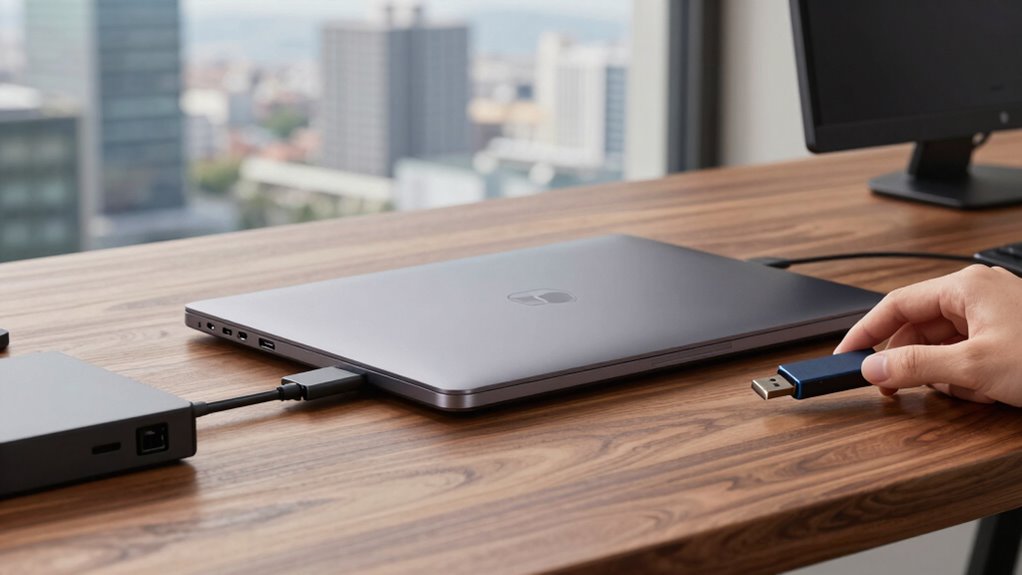

Ports and expandability still matter in 2026 because they give you fast, secure connections for high-demand tasks like media editing, gaming, and professional work. While wireless tech and cloud services grow, physical ports provide the speed and reliability that high-speed data transfer and specialized peripherals need. They also future-proof your device, allowing upgrades and expansions as technology evolves. Keep exploring how these essential features support your evolving needs and stay ahead.
Key Takeaways
- Ports enable high-speed data transfer and reliable connections for large files and professional content creation tasks.
- Expandability supports advanced peripherals like external GPUs, multiple displays, and specialized hardware.
- Physical ports ensure security and performance in environments with limited or no internet access.
- Evolving port technologies enhance speed, power delivery, and device compatibility for future-proofing.
- Ports complement wireless solutions, providing essential, versatile connectivity for diverse user needs in 2026.
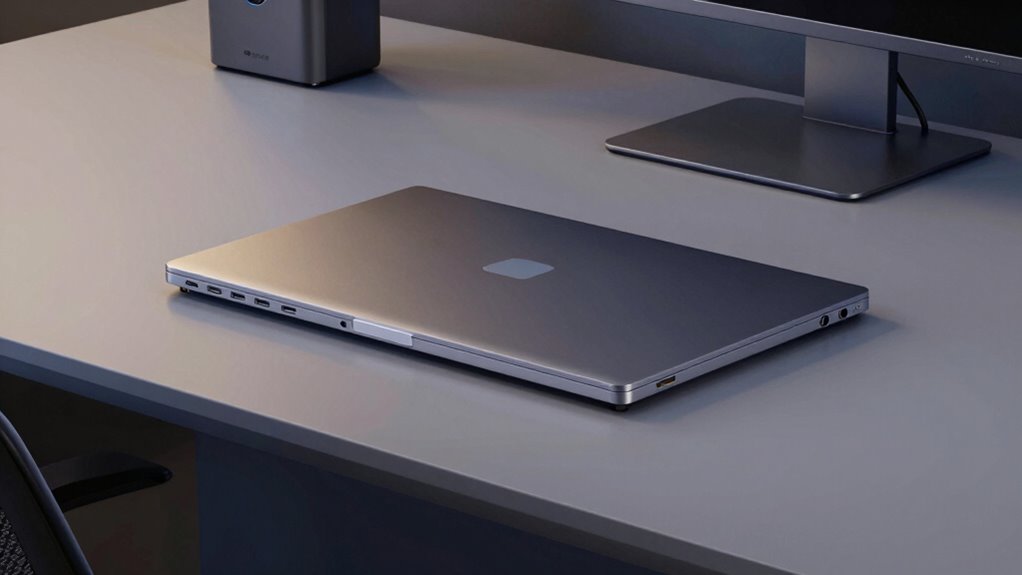
Have you ever wondered how ports and expandability will evolve by 2026? As technology advances, it’s tempting to think that ports might become obsolete, especially with wireless charging and cloud integration making connectivity seamless. However, these features highlight why ports and expandability will still matter in the coming years. While wireless charging eliminates the need for charging ports, it doesn’t replace the variety of other ports that facilitate data transfer, peripherals, and specialized equipment. For example, USB-C ports continue to serve as versatile hubs, supporting fast data transfer, video output, and even power delivery. These ports adapt to new standards, ensuring your devices can connect to a wide array of peripherals. Similarly, HDMI and SD card slots, though less common, remain relevant for content creators and professionals who need reliable, high-speed connections for editing or sharing media.
Ports like USB-C, HDMI, and SD cards remain essential for fast data transfer and professional media work.
Cloud integration also plays a significant role in this ongoing importance. It allows you to access files and applications from anywhere, reducing dependence on physical storage. But cloud services aren’t a complete substitute for local ports, especially when it comes to transferring large files or working in environments with limited internet access. Ports provide the immediate, high-speed connection that cloud solutions can’t always match. For instance, connecting an external hard drive or professional camera directly through a port often results in faster data transfer than cloud uploads. Plus, certain industries still rely heavily on physical connections for security reasons, avoiding potential vulnerabilities associated with cloud storage. physical connections are also critical for industries with strict security protocols, where direct hardware access minimizes risks. Additionally, some users prefer local data transfer methods for privacy and control, further emphasizing the ongoing relevance of ports. Moreover, upcoming advancements in port technology are expected to enhance speed and power delivery, reinforcing their importance in future devices. As the demand for high-speed data transfer increases, ports will continue to evolve to meet these needs.
Moreover, expandability remains essential because devices are evolving to serve more specialized functions. You might want to add an external GPU for gaming or creative work, connect multiple displays for productivity, or integrate specialized hardware like audio interfaces or capture cards. These expandability options often depend on ports and slots that can support high bandwidth and power requirements. Wireless charging is great for convenience, but it doesn’t support the transfer of large files or complex peripherals. Cloud integration complements this by offering remote access and storage, but it doesn’t replace the need for direct, high-speed connections for certain tasks. Additionally, ports and expandability are often crucial for future-proofing devices, allowing upgrades and adaptations as new technologies emerge. This ensures your device remains versatile and capable of supporting cutting-edge peripherals over time.
In essence, while wireless charging and cloud integration make connectivity more effortless, they don’t eliminate the need for ports and expandability. You’ll still rely on physical connections for speed, security, and specialized functions. By 2026, expect devices to integrate smarter, faster ports alongside wireless solutions, ensuring you have the right kind of connection whenever you need it. This combination guarantees that ports and expandability will remain indispensable tools in your tech arsenal.
As an affiliate, we earn on qualifying purchases.
Frequently Asked Questions
How Do Ports Impact Device Durability Over Time?
Ports substantially impact your device’s durability over time. When you handle cables carefully, you reduce wear and tear on ports, preventing damage that can lead to costly repairs. Regular port maintenance, like cleaning and avoiding excessive force, helps maintain cable durability and keeps connections secure. Proper care guarantees your device stays functional longer, making ports an essential factor in overall device longevity and performance.
Are Newer Ports Backward Compatible With Older Devices?
Think of newer ports like a universal translator—they’re generally backward compatible with older devices. You can often connect your older gadgets using adapters, ensuring Bluetooth compatibility and power delivery work seamlessly. However, not all ports support every feature, so it’s wise to check specifications. This compatibility keeps your tech ecosystem flexible, allowing you to upgrade without leaving behind your favorite accessories, just like a translator bridges languages effortlessly.
What Are the Security Concerns Related to Expandability?
Expandability can introduce security concerns like network vulnerabilities, as additional ports or devices might be exploited by hackers. You need to guarantee proper network segmentation and regularly update firmware to mitigate risks. Data encryption is vital for protecting sensitive information transmitted through expanded ports. By maintaining strict security protocols and monitoring connected devices, you can minimize potential threats and keep your system secure despite increased expandability.
How Does Expandability Influence Device Repairability?
Expandability directly impacts device repairability through modular design, making it easier for you to replace or upgrade individual components instead of the entire device. With a focus on upgrade potential, devices built with expandable ports allow you to extend their lifespan, saving money and reducing waste. This approach empowers you to maintain peak performance and adapt to future needs without needing complete replacements.
Will Wireless Alternatives Replace Ports Completely?
Wireless alternatives won’t completely replace ports anytime soon. Think of ports as the backbone of connectivity, providing reliable, high-speed links that wireless flexibility just can’t match yet. As technology evolves, port obsolescence may seem tempting, but devices still depend on ports for fast data transfer and charging. Until wireless tech matures, ports will remain essential, ensuring you stay connected without sacrificing speed or functionality.
As an affiliate, we earn on qualifying purchases.
Conclusion
Even in 2026, ports and expandability remain your trusty sidekicks, like a versatile toolbox ready for any task. They keep your devices flexible, letting you connect accessories, upgrade components, or adapt to new tech without missing a beat. As technology evolves, these features are the anchors that keep your setup rooted and functional. Don’t overlook their value—they’re the unsung heroes that guarantee your tech stays agile and ready for whatever the future holds.
SD card reader for professional cameras
As an affiliate, we earn on qualifying purchases.
As an affiliate, we earn on qualifying purchases.
As an affiliate, we earn on qualifying purchases.