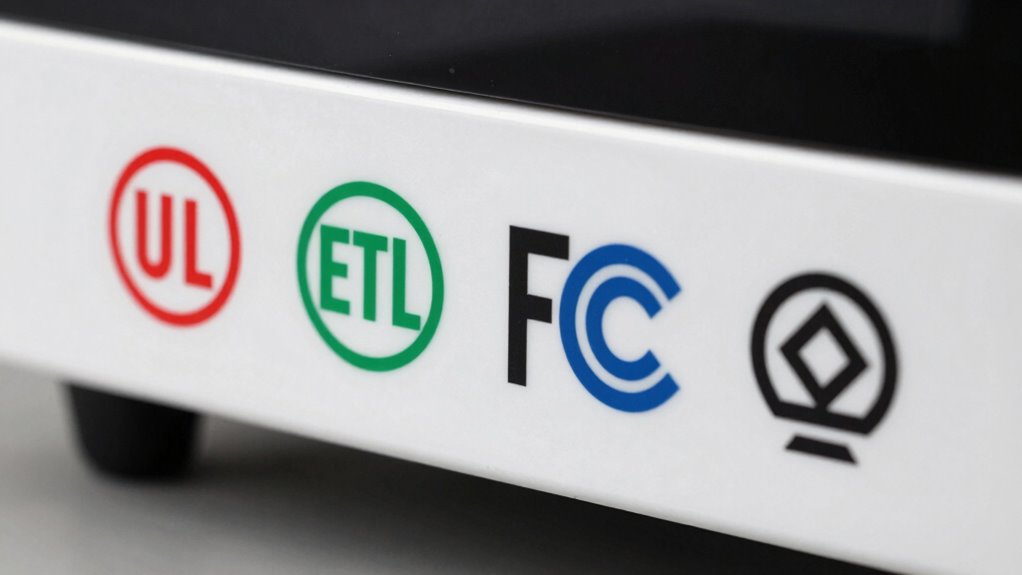

Safety certifications like UL, ETL, and FCC guarantee the products you use meet strict safety standards, helping prevent hazards like fires, shocks, or interference. UL and ETL verify electrical safety and durability through rigorous testing, while FCC confirms devices won’t disrupt radio signals. Recognizing these labels gives you confidence in a product’s reliability and compliance. Keep exploring to discover how these certifications protect you and why they matter when choosing quality, safe products.
Key Takeaways
- UL, ETL, FCC are safety certifications indicating products meet specific safety standards and undergo rigorous testing.
- These certifications help prevent electrical shocks, fires, and other hazards during normal product use.
- Certification labels ensure legal compliance and are often required by retailers and regulatory agencies.
- Recognized labels provide consumers with confidence in product safety, quality, and reliability.
- Understanding certifications helps buyers make informed decisions and avoid unsafe, non-compliant products.

Have you ever wondered what safety certifications really mean and why they matter? When you see labels like UL, ETL, or FCC on your electronic devices, it’s easy to overlook their significance. But these certifications are the result of rigorous product testing and certification processes designed to ensure that the products you use are safe and reliable. Understanding what these labels stand for can give you peace of mind, knowing that the items you bring into your home or workplace meet strict safety standards.
Product testing is the foundation of safety certification. Manufacturers submit their products to recognized testing laboratories, where experts evaluate them against specific safety criteria. During these tests, the product undergoes various assessments—such as electrical safety, fire resistance, mechanical durability, and electromagnetic compatibility—depending on its purpose. The goal is to identify potential hazards, such as electrical shocks or fire risks, and to confirm that the product performs safely under normal use. Only after passing these tests does a product receive certification, which verifies that it adheres to established safety standards.
Product testing verifies safety standards before certification and ensures reliable, hazard-free products.
The certification process itself involves more than just testing. Once a product passes the initial evaluations, the manufacturer must often maintain ongoing compliance through regular inspections and quality control checks. This continuous oversight ensures that every batch of the product remains safe and consistent over time. Certifications like UL (Underwriters Laboratories) or ETL (Intertek) are recognized globally and serve as symbols of quality, indicating that the product has undergone thorough testing and meets rigorous safety standards. Additionally, product standards help establish consistency and reliability across different brands and regions.
Why should you care about these certifications? First, they act as a safeguard for your safety. Certified products are less likely to malfunction, cause electrical fires, or pose health hazards. Second, many jurisdictions and retailers require certain certifications before allowing products to be sold or used, so having these labels ensures compliance with legal and safety regulations. Third, they often reflect quality and durability, meaning your investment is protected in the long run.
In essence, understanding the certification process helps you make informed choices. When you see a product with a reputable safety label, you can trust that it has been tested and certified by independent laboratories, reducing the risks associated with substandard or unsafe products. So, next time you’re shopping or setting up new tech, look for those certification marks—they’re more than just symbols; they’re a guarantee that safety and quality have been verified through thorough product testing and certification processes.
Frequently Asked Questions
Do Safety Certifications Guarantee Product Durability?
Safety certifications don’t guarantee product durability, but they guarantee the product meets safety standards. Certifications like UL or ETL focus on safety and compliance, not necessarily on how long the product lasts. Keep in mind, certification limitations mean a product can be safe yet still have limited durability. You should consider other factors like quality and brand reputation for a better idea of a product’s long-term durability.
How Often Do Certification Standards Change?
Certification standards typically change every few years, depending on regulatory updates and industry advances. You should stay informed about these changes because certifications often require renewal to remain valid. Regularly check for updates to guarantee your products meet current safety guidelines. Remember, failing to renew certification or adapt to new standards can impact your product’s marketability and compliance. Keep an eye on regulatory updates to stay ahead.
Can a Product Be Certified in One Country but Not Others?
Yes, a product can be certified in one country but not others because of differing international standards and regional compliance requirements. You need to verify your product meets each country’s specific safety certifications, such as UL for the US or CE for Europe. Failing to do so might limit your product’s market access or create legal issues. Always check regional compliance when expanding internationally to avoid costly delays or recalls.
Are There Any Costs Associated With Obtaining Certifications?
Are certification expenses worth the investment? Yes, there are costs involved with obtaining safety certifications, including certification expenses and other cost implications. These costs differ depending on the product, testing requirements, and certification body. While some companies absorb these expenses, others pass them to consumers. You should consider these costs early in your product development to ensure compliance and avoid unexpected expenses down the line.
Do Certifications Impact Product Warranty or Insurance?
Certifications can positively impact your product warranty and insurance by reducing product liability risks, showing your commitment to safety. When your product is certified, you build consumer trust, which can lead to fewer warranty claims and lower insurance premiums. Certified products demonstrate compliance with safety standards, making it easier to protect your business from legal issues and enhancing your reputation in the marketplace.
Conclusion
Understanding safety certifications like UL, ETL, and FCC helps you make informed decisions and stay protected. Some folks believe these labels are just marketing, but the truth is, they often signify your devices meet strict safety standards. Don’t assume all certifications are equal—doing your homework can prevent accidents and ensure your gadgets are safe. So next time you buy, check those labels—you might just save yourself from future hassles.