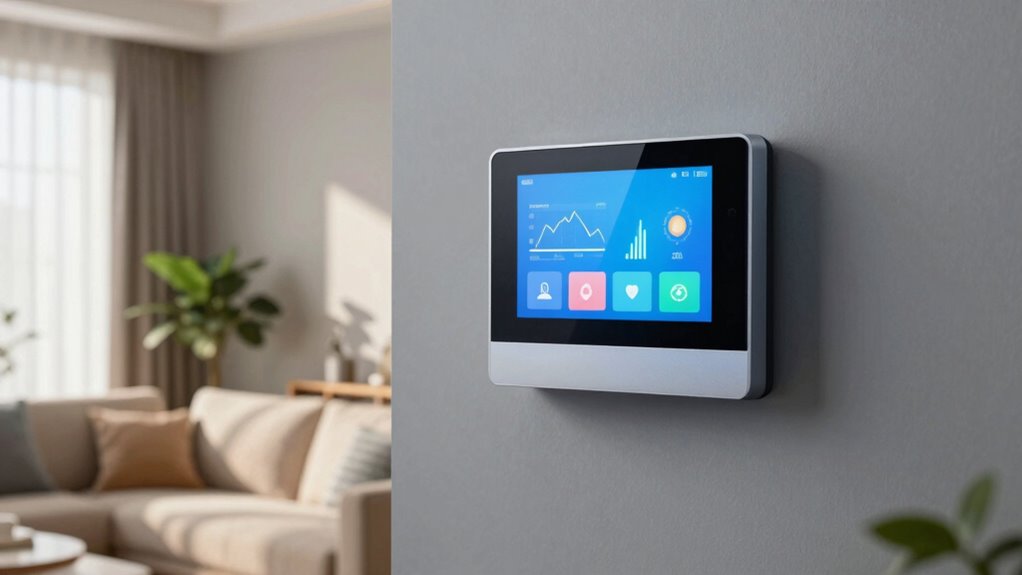

Smart thermostats learn your daily routines, such as wake-up times, work hours, and home occupancy, to optimize heating and cooling while saving energy. They analyze your energy patterns and adjust settings based on habits, but they can’t read your mind or know personal comfort preferences perfectly. They struggle to adapt instantly to weather changes or household shifts. If you keep exploring, you’ll discover how to get the most out of these devices and their limitations.

Prime made for students and young adults
- Fast, free delivery for dorm and study essentials
- Prime Video and Amazon Music included
- Member-only deals
Key Takeaways
- Smart thermostats learn user routines to optimize heating and cooling for energy savings.
- They analyze energy patterns but cannot read minds or fully understand personal comfort preferences.
- Devices adapt over time but may require manual adjustments for specific needs or sudden changes.
- They rely on Wi-Fi, and outages can hinder their learning capabilities and automated features.
- Privacy concerns involve data collection on habits, requiring users to review security measures and policies.
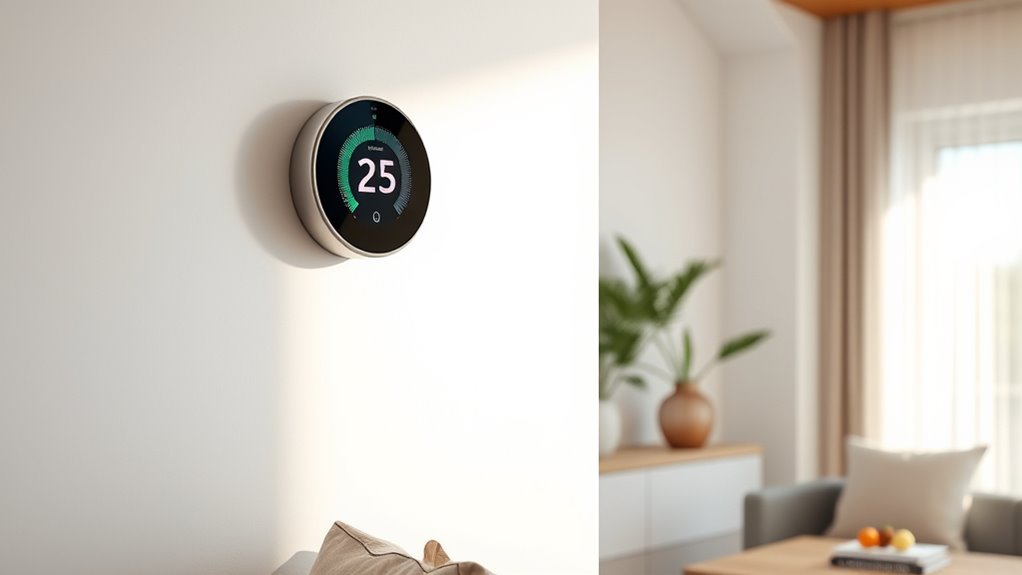
Have you ever wondered how to save money on energy bills while maintaining a comfortable home? Smart thermostats can help you do just that by learning your habits and adjusting heating and cooling accordingly. They analyze your energy consumption patterns, figuring out when you prefer a warmer or cooler environment, and then optimize your system to reduce unnecessary energy use. Over time, they build a profile of your routines, such as when you’re usually home or away, and adapt their settings to save energy without sacrificing comfort. This automation means you don’t have to manually adjust the thermostat constantly, which can lead to significant savings on your bills. Additionally, understanding the simple systems involved helps you set up and maintain these devices more confidently. However, as you rely more on these devices, it’s vital to understand what they learn and what they can’t. Smart thermostats gather a lot of data about your daily routines — when you wake up, leave for work, or come back home — and this data helps them fine-tune their performance. But this also raises questions about user privacy. Manufacturers collect and store this information, raising concerns over how your data is used or shared. While many companies implement robust security measures, no system is entirely immune to breaches. You should be aware of privacy policies and choose devices that prioritize data security, knowing that some information about your habits is shared to improve functionality. Despite their advanced learning capabilities, smart thermostats aren’t perfect. They can’t read your mind or fully understand the nuances of your comfort preferences. For example, if you like a slightly warmer room in the evening but prefer it cooler at night, the device might not always get it exactly right unless you manually make adjustments or program specific schedules. They also can’t adapt instantly to sudden changes in weather or household activity unless you set parameters or update routines manually. Additionally, some features require a stable Wi-Fi connection, so if your internet goes out, the thermostat might revert to a basic, non-learning mode, losing some of its adaptive benefits. In the end, smart thermostats are powerful tools for reducing energy consumption and increasing convenience, but they’re not magic solutions. They learn from your habits to optimize energy use, but they can’t fully replace personal preferences or account for every change in your daily life. Plus, balancing their benefits with considerations about user privacy is vital. By understanding what these devices learn and recognizing their limitations, you can make informed choices and enjoy a more efficient, comfortable, and secure home environment.
smart thermostat with energy savings
As an affiliate, we earn on qualifying purchases.
As an affiliate, we earn on qualifying purchases.
Frequently Asked Questions
Can Smart Thermostats Function During Power Outages?
During power outages, your smart thermostat may stop working unless it has a battery backup. Without one, it can’t maintain your home’s temperature or connect to Wi-Fi. To guarantee continuous operation, choose a thermostat with a battery backup and consider stabilizing your power supply for better power stability. This way, your thermostat can keep functioning and learning your preferences even when the power’s out.
Do Smart Thermostats Require Professional Installation?
Smart thermostats often require professional installation, primarily due to installation considerations and compatibility requirements. You might find it tempting to DIY, but proper setup guarantees ideal operation and safety. Professionals can quickly address wiring, system compatibility, and integration issues, preventing future problems. While some models offer easy installation, if your system’s complex or incompatible, expert assistance guarantees your thermostat functions flawlessly, providing comfort, convenience, and control.
How Secure Are Smart Thermostats From Hacking?
Smart thermostats have moderate cybersecurity risks, but they’re generally secure if you follow best practices. They use encryption protocols to protect your data, making hacking more difficult. However, you should regularly update your device’s firmware, change default passwords, and connect them to a secure Wi-Fi network. Doing so helps prevent unauthorized access and keeps your smart thermostat safe from potential hacking attempts.
Can Smart Thermostats Learn Preferences for Multiple Users?
Did you know that some smart thermostats can recognize and adapt to multiple users’ preferences? Yes, they learn preferences for multiple users by analyzing patterns over time, allowing each person’s comfort settings to be tailored individually. This feature helps optimize energy savings and comfort, making it easier for everyone in your household to enjoy personalized climate control without manual adjustments. So, your smart thermostat can indeed learn and accommodate everyone’s preferences seamlessly.
What Is the Lifespan of a Typical Smart Thermostat?
A typical smart thermostat lasts about 10 to 15 years, depending on usage and maintenance. During its lifespan, it promotes energy efficiency by learning your schedule and adjusting settings accordingly. However, you should stay mindful of user privacy, as these devices collect data. Regular updates and proper installation can extend its lifespan, ensuring you get the most out of your investment while keeping your data secure.
As an affiliate, we earn on qualifying purchases.
Conclusion
Remember, even the smartest thermostats can’t read your mind. They learn your habits over time, helping you save energy and money, but they still have limits. While technology advances, it’s wise to stay aware of their capabilities and shortcomings. As the saying goes, “A little knowledge is a dangerous thing,” so use smart thermostats as helpful tools, not foolproof solutions. Stay informed, and you’ll get the most out of your device without overestimating its abilities.
smart thermostat for home automation
As an affiliate, we earn on qualifying purchases.
As an affiliate, we earn on qualifying purchases.
best smart thermostats for energy efficiency
As an affiliate, we earn on qualifying purchases.
As an affiliate, we earn on qualifying purchases.
Halloween Picks
halloween
As an affiliate, we earn on qualifying purchases.