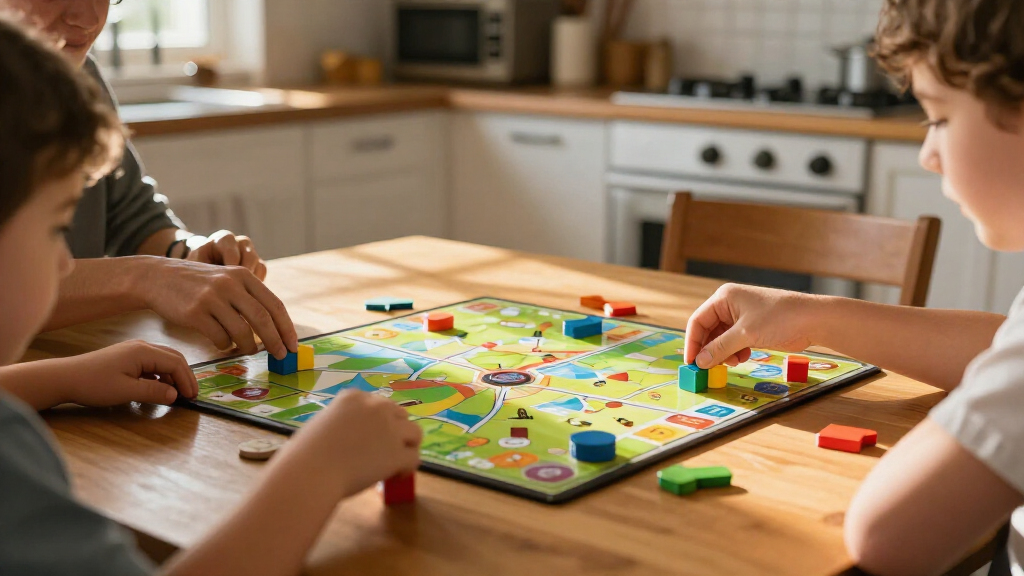
For families choosing educational board games for kids, Outfoxed! is my best overall pick: its cooperative mystery format gives children practice with observation, reasoning, and shared decision-making. Zingo! is a standout for early reading, while Number Hunter offers a more direct way to practice early math. The main tradeoff is between games that teach a focused skill and games that build broader thinking or social habits while keeping play light. Age fit, reading demands, and how much adult help a game needs can matter as much as its learning theme. Read on for the full breakdown and a pick matched to your child.

Prime made for students and young adults
- Fast, free delivery for dorm and study essentials
- Prime Video and Amazon Music included
- Member-only deals
Key Takeaways
- Outfoxed! earns the broadest appeal in this lineup because cooperation and clue-based reasoning make learning part of the shared goal rather than a separate drill.
- Zingo! and Scrabble Junior serve different reading stages: Zingo supports quick word and image matching, while Scrabble Junior gives early readers a gentler entry to spelling and letter placement.
- Number Hunter and Matheroni Pepperoni both focus on early arithmetic, so the better fit depends on which game format and level of number practice will hold a child’s attention.
- Junior Learning Social Skills Board Games is the unusual pick for families prioritizing conversation and social understanding over a single academic subject.
- Chutes and Ladders is the easiest entry point for very young players, but its learning depth is lighter than the games built around reading, math, geography, or strategy.
| Hasbro Gaming Operation Electronic Board Game |  | Best for Fine Motor Skills | Brand: Hasbro Gaming | Age range: 6 years and up | Players: 1 or more | VIEW LATEST PRICE | See Our Full Breakdown |
| Hasbro Gaming Scrabble Junior Board Game for Ages 5+ |  | Best for Growing Spellers | Brand: Hasbro Gaming | Age range: 5 years and up | Players: 2–4 | VIEW LATEST PRICE | See Our Full Breakdown |
| Skillmatics Sentence Search Educational Board Game |  | Best for Sentence Building | Brand: Skillmatics | Age range: 5–8 years | Included components: 120+ color-coded word tiles, 20 wooden sentence-builder tiles, 2 cloth bags, and instruction manual | VIEW LATEST PRICE | See Our Full Breakdown |
| Number Hunter Math Board Game for Kids Ages 5–7 |  | Best for Early Math Practice | Brand: Clever Fox Play | Players: 2–5 | Recommended age: 5 years and up | VIEW LATEST PRICE | See Our Full Breakdown |
| Hasbro Gaming Chutes and Ladders Board Game, 2-4 Players, Ages 3+ |  | Best for Pre-Readers | Brand: Hasbro Gaming | Players: 2–4 | Age range: 3 years (36 months) and up | VIEW LATEST PRICE | See Our Full Breakdown |
| ThinkFun Zingo! Bingo Preschool Reading Game for Ages 4 and Up |  | Best for Early Reading | Brand: ThinkFun | Model: 97700 | Recommended age: 4–10 years | VIEW LATEST PRICE | See Our Full Breakdown |
| Junior Learning Social Skills Board Games – 4 Games for Ages 5–8 |  | Best for Social-Emotional Learning | Brand: Junior Learning | Age range: 5 years and up | Recommended grades: 1–2 | VIEW LATEST PRICE | See Our Full Breakdown |
| Outfoxed! Cooperative Mystery Board Game |  | Best Cooperative Logic Game | Brand: Gamewright | Game type: Cooperative board game | Players: 4 | VIEW LATEST PRICE | See Our Full Breakdown |
| Scholastic Race Across the USA Geography Board Game for Kids, Ages 8+ |  | Best for U.S. Geography | Brand: University Games | Genre: Educational | Players: 2–4 | VIEW LATEST PRICE | See Our Full Breakdown |
| Jax Sequence for Kids Strategy Game, 2–4 Players |  | Best for Screen-Free Strategy Beginners | Brand: Jax | Game type: Strategy board game | Players: 2–4 | VIEW LATEST PRICE | See Our Full Breakdown |
| Matheroni Pepperoni Addition and Subtraction Math Board Game for Kids Ages 5–7 |  | Best for Hands-On Early Math | Brand: Pidoko Kids | Age range: 5 years and up | Players: 1–4 | VIEW LATEST PRICE | See Our Full Breakdown |
| educational board games for kid | Brand | Players | Included components | Age range |
|---|---|---|---|---|
| Hasbro Gaming Operation Electr | Hasbro Gaming | 1 or more | Gameboard with Cavity Sam, tweezers, 26 cards, 12 Funatomy parts, play money, rubber band, and instructions | 6 years and up |
| Hasbro Gaming Scrabble Junior | Hasbro Gaming | 2–4 | 1 gameboard, 4 tokens, 105 letter tiles, and game guide | 5 years and up |
| Skillmatics Sentence Search Ed | Skillmatics | — | 120+ color-coded word tiles, 20 wooden sentence-builder tiles, 2 cloth bags, and instruction manual | 5–8 years |
| Number Hunter Math Board Game | Clever Fox Play | 2–5 | Game board, 5 game pieces, 2 number dice, 1 operation die, 50 challenge cards, and game rules | — |
| Hasbro Gaming Chutes and Ladde | Hasbro Gaming | 2–4 | — | 3 years (36 months) and up |
| ThinkFun Zingo! Bingo Preschoo | ThinkFun | 2–6 | 6 double-sided Zingo! cards, 72 double-sided tiles, Zingo! Zinger with easy-cleanup unit, parent’s guide | — |
| Junior Learning Social Skills | Junior Learning | 2+ | 6 counters, spinner, die, answer sheet | 5 years and up |
| Outfoxed! Cooperative Mystery | Gamewright | 4 | Board game | — |
| Scholastic Race Across the USA | University Games | 2–4 | Game board, cards, airplane pawns | — |
| Jax Sequence for Kids Strategy | Jax | 2–4 | Folding game board, 42 playing cards, 84 playing chips, instructions | — |
| Matheroni Pepperoni Addition a | Pidoko Kids | 1–4 | 4 pizza slices, 1 spinner, 51 pepperonis | 5 years and up |
More Details on Our Top Picks
Hasbro Gaming Operation Electronic Board Game
Operation turns steady-hand practice into a playful challenge: players use tweezers to remove 12 small pieces without touching the metal edges, which triggers a buzzer and lights Cavity Sam’s nose. That immediate feedback gives children a reason to slow down and control their movements, while the cards and play money add a simple strategy layer. Unlike Chutes and Ladders, which focuses on counting and turn-taking, this game asks for precise hand control and can be played solo or with a group. The tradeoff is that the buzzer can make mistakes feel conspicuous, and the tweezers may frustrate younger players still developing coordination. It also needs two AA batteries, unlike the battery-free Scrabble Junior.
Pros:- Practices fine motor coordination through careful tweezer movements.
- Buzzer and light-up nose provide immediate feedback.
- Can be played solo or with multiple players.
- Cards and play money add simple strategy beyond the dexterity challenge.
Cons:- Requires two AA batteries.
- The steady-hand task can frustrate children who are still developing fine motor control.
Best for: Families looking for a hands-on game that practices fine motor coordination and offers a solo-play option.
Not ideal for: Children who find timed or precision-based tasks frustrating, or families who prefer games that need no batteries.
- Brand:Hasbro Gaming
- Age range:6 years and up
- Players:1 or more
- Skills:Fine motor coordination and strategy
- Included components:Gameboard with Cavity Sam, tweezers, 26 cards, 12 Funatomy parts, play money, rubber band, and instructions
- Batteries required:2 AA batteries
- Model number:4545
Our verdict“Choose Operation for playful precision practice, but pick a word or number game if your main goal is academic skill-building.”
Hasbro Gaming Scrabble Junior Board Game for Ages 5+
Scrabble Junior makes this lineup’s strongest fit for children ready to connect letters with words. Its picture-matching side offers a gentler starting point, then the reverse side lets players create words themselves, so the game can grow with a child’s reading skills. That progression gives it more language-learning range than Chutes and Ladders, which practices counting but requires no spelling. It also differs from Sentence Search: Scrabble Junior centers on letter placement and familiar words, while Sentence Search focuses on assembling sentences and grammar. The four-player format suits family play, and no batteries are needed. The tradeoff is that younger or emerging readers may need help, while older children seeking a challenging word game may outgrow it quickly.
Pros:- Two-sided board supports a step up from picture matching to making words.
- Practices spelling and vocabulary through letter placement.
- Supports play with two to four people.
- Runs without batteries.
Cons:- Children who are not yet comfortable with letters may need adult support.
- The junior format may feel too simple for older or more advanced word-game players.
Best for: Families with children beginning to recognize letters and spell familiar words, especially those who want a game with a gentler starting side.
Not ideal for: Older children who already want open-ended, challenging word play, or children who need a game with little reading involvement.
- Brand:Hasbro Gaming
- Age range:5 years and up
- Players:2–4
- Game type:Word-building
- Educational objectives:Spelling and vocabulary
- Gameboard:Double-sided
- Included components:1 gameboard, 4 tokens, 105 letter tiles, and game guide
- Batteries:Not required
Our verdict“Pick Scrabble Junior for a family-friendly path from matching letters to building words, rather than for advanced spelling practice.”
Skillmatics Sentence Search Educational Board Game
Sentence Search is the language-focused pick for children ready to move beyond identifying letters and words toward putting them together. Color-coded word tiles and wooden sentence-builder tiles support hands-on practice with sentence construction, vocabulary, reading, and basic grammar. Compared with Scrabble Junior, which builds from letter matching to word creation, this game puts sentence structure at the center; that makes it a better fit for language practice, but a narrower choice for families who want a broad word-game format. Its instruction guide can help adults set up play, though someone still needs to draw tiles and build sentences. The 5–8 age range also gives it less room to grow than a game with a wider recommended age span. It suits guided learning more than fully independent play.
Pros:- Practices sentence construction and basic grammar.
- Color-coded word tiles give children a visual way to work with language.
- Wooden sentence-builder tiles add a tactile component.
- Instruction manual supports guided play.
Cons:- Play requires someone to draw tiles and help build sentences.
- The recommended age range of 5–8 limits its appeal as children grow older.
Best for: Adults seeking a hands-on language activity for children ages 5–8 who are ready to practice forming sentences.
Not ideal for: Families wanting a game children can play independently, or older children who need material beyond basic sentence building.
- Brand:Skillmatics
- Age range:5–8 years
- Included components:120+ color-coded word tiles, 20 wooden sentence-builder tiles, 2 cloth bags, and instruction manual
- Word tile size:1.3 x 1 inches
- Model year:2024
- Model number:SKILL1134SS
- Unit count:1
Our verdict“Choose Sentence Search for guided sentence practice; choose Scrabble Junior for a broader progression from letters to words.”
Number Hunter Math Board Game for Kids Ages 5–7
Number Hunter gives early math practice a clear place in the game: children race along the board while working with addition, subtraction, and even and odd numbers. Two number dice, an operation die, and 50 challenge cards make it a more explicit arithmetic choice than Chutes and Ladders, where counting and number recognition are the main learning opportunities. Its two-to-five-player format also suits classrooms or family groups, and the stated playing time of about 20 minutes makes it a contained activity. Compared with Matheroni Pepperoni, another math-focused option in the roundup, Number Hunter’s described play centers on a race to the finish. That structure may be engaging, but it means children who prefer quiet, untimed problem-solving may not enjoy the pace. It also cannot be played solo.
Pros:- Practices addition, subtraction, and even and odd numbers.
- Challenge cards and multiple dice create varied prompts.
- Works for groups of two to five players.
- Screen-free play suits home or classroom use.
Cons:- Requires at least two players, so it does not support solo play.
- The race format may not suit children who prefer a slower, less competitive math activity.
Best for: Families or educators seeking a group game that gives children around ages 5–7 practice with basic arithmetic and number concepts.
Not ideal for: Children who need solo activities or prefer math exercises without a race-style board-game format.
- Brand:Clever Fox Play
- Players:2–5
- Recommended age:5 years and up
- Game type:Addition and subtraction
- Playing time:20 minutes
- Included components:Game board, 5 game pieces, 2 number dice, 1 operation die, 50 challenge cards, and game rules
- Language:English
- Package type:Reinforced box
Our verdict“Choose Number Hunter for group-based arithmetic practice, and look to a solo learning activity if your child usually plays alone.”
Hasbro Gaming Chutes and Ladders Board Game, 2-4 Players, Ages 3+
Chutes and Ladders is the easiest entry point in this group for children who are not reading yet. Players spin, move their pieces, and practice counting and number recognition without needing to read cards or form words. That makes it more accessible to preschoolers than Scrabble Junior or Sentence Search, both of which lean on literacy skills. Its simple turn structure also helps young players join a family game without learning a complicated set of rules. The educational scope is modest, though: compared with Number Hunter, it offers less direct practice with arithmetic and does not include challenge cards. Cardboard playing pieces may also wear with heavy use. Choose it for an uncomplicated first board game, not for children ready for more varied academic tasks.
Pros:- No reading is required, so pre-readers can participate.
- Spinning and moving pieces provide practice with counting and number recognition.
- Simple setup and straightforward turns suit young beginners.
- Designed for two to four players.
Cons:- Cardboard playing pieces may be fragile with heavy use.
- Learning focuses mainly on counting and number recognition rather than broader math skills.
Best for: Families introducing a preschool-age child to turn-taking, counting, and number recognition through a no-reading game.
Not ideal for: Older children who want math challenges beyond counting, or families seeking durable components for frequent, heavy play.
- Brand:Hasbro Gaming
- Players:2–4
- Age range:3 years (36 months) and up
- Minimum age recommendation:36 months
- Edition:Standard Edition
- Included items:Game board, cardboard playing pieces, and spinner
- Model number:4555 S5
- Package type:Standard Packaging
Our verdict“Choose Chutes and Ladders as a low-reading first game for preschoolers, but move to Number Hunter for more direct arithmetic practice.”
ThinkFun Zingo! Bingo Preschool Reading Game for Ages 4 and Up
Zingo! makes early word recognition the main event. Children match words and pictures on double-sided cards as the dispenser releases tiles, giving pre-readers a concrete way to practice language without needing to read every prompt independently. Its simple turn structure makes it easier to teach than Outfoxed!, which asks players to track clues and reason through a mystery. The Zinger also keeps tiles together between turns, a practical perk for families and classrooms.
The tradeoff is its narrow learning focus: it builds matching and early reading skills, but offers less variety in subject matter than Junior Learning Social Skills Board Games, which covers several interpersonal topics. Play is listed for two to six people, so it is not a fit for larger groups, and children who have moved beyond basic word recognition may outgrow the challenge.
Pros:- Double-sided cards and tiles support matching with different levels of reading familiarity.
- Fast, straightforward turns make it approachable for pre-readers.
- The Zinger dispenser includes an easy-cleanup unit to help manage tiles.
- Can accommodate two to six players.
Cons:- The reading and matching focus may feel too simple for children who already read fluently.
- The listed age range of 4–10 years limits its usefulness as children grow older.
- It does not accommodate groups larger than six.
Best for: Families and preschool teachers looking for a quick, hands-on word and picture matching game for early readers.
Not ideal for: Older or fluent readers seeking more complex strategy, or groups larger than six players.
- Brand:ThinkFun
- Model:97700
- Recommended age:4–10 years
- Players:2–6
- Included components:6 double-sided Zingo! cards, 72 double-sided tiles, Zingo! Zinger with easy-cleanup unit, parent’s guide
- Material:Plastic
- Language:English
- Game theme:Reading
- Skill level:Beginner
Our verdict“Choose Zingo! for a simple, tactile introduction to word recognition, but pick Outfoxed! if your child is ready for more involved reasoning.”
Junior Learning Social Skills Board Games – 4 Games for Ages 5–8
This set puts social-emotional learning ahead of academic drills. Its four games cover empathy, friendship, manners, and emotions, so families or teachers can choose a topic that fits the conversation they want to encourage. Action and sentence-building mechanics give children ways to practice expressing ideas, rather than focusing on the word matching found in ThinkFun Zingo! The set is designed for classroom or family play, and it needs no batteries.
Variety is its advantage, but not every game will suit every group. The set still calls for at least two players, and its age focus is relatively specific, so it is less useful for solo practice or older children looking for more demanding strategy. Compared with Outfoxed!, which builds deduction through one shared mystery, this set spreads its attention across four social topics, but may offer less depth in any single game.
Pros:- Four games address distinct social-emotional topics.
- Action and sentence-building mechanics offer varied ways to participate.
- Suitable for classroom and family settings.
- No batteries are required.
Cons:- At least two players are needed, so it cannot support solo play.
- The 5–8 age focus may limit its appeal to older children.
- Four topics spread the set across several learning goals rather than concentrating on one.
Best for: Parents and elementary teachers who want several guided games for practicing empathy, manners, friendship, and emotional understanding with children ages 5–8.
Not ideal for: Children who need a solo activity, families seeking a single deep strategy game, or groups outside the intended age range.
- Brand:Junior Learning
- Age range:5 years and up
- Recommended grades:1–2
- Number of games:4
- Players:2+
- Topics:Empathy, friendship, manners, and emotions
- Included components:6 counters, spinner, die, answer sheet
- Game mechanics:Action and chance
- Dimensions:11.8 x 1.25 x 8.5 inches
Our verdict“Pick this set when practicing social skills is the priority; choose Zingo! instead for a more focused early-reading activity.”
Outfoxed! Cooperative Mystery Board Game
Outfoxed! turns deduction into a shared challenge. Players gather clues and use an evidence decoder to rule out suspects before the fox escapes, which gives children a reason to discuss what they know and decide together. That cooperative format sets it apart from Jax Sequence for Kids, where players compete to make a row. At a stated playing time of about 20 minutes, it also offers a contained mystery rather than a longer commitment.
The learning payoff is strongest for teamwork, communication, and basic logic—not a specific school subject like the U.S. geography questions in Race Across the USA. Its listed player count is four, which makes it a poor fit for larger families or classroom groups, and children who enjoy direct competition may find the shared objective less compelling. The mystery format also works best when players are willing to reason aloud and follow clues.
Pros:- Cooperative play encourages discussion and shared decision-making.
- Clue gathering and suspect elimination practice logic and deduction.
- The roughly 20-minute play time suits shorter family game sessions.
- Simple rules make the mystery accessible to younger players.
Cons:- The listed player count is four, limiting use with larger groups.
- The cooperative objective may not satisfy children who prefer competition.
- Its learning is based on general reasoning rather than a specific academic subject.
Best for: Families with children aged five and up who want a short cooperative game that prompts clue-based reasoning and discussion.
Not ideal for: Large groups, or children who prefer competing directly against other players.
- Brand:Gamewright
- Game type:Cooperative board game
- Players:4
- Recommended age:5 years and up
- Estimated playing time:20 minutes
- Language:English
- Included components:Board game
- Edition:Standard Edition
- Model number:CSG-OUTF
Our verdict“Choose Outfoxed! for children who enjoy solving clues as a team; choose Sequence for Kids if friendly competition is a better fit.”
Scholastic Race Across the USA Geography Board Game for Kids, Ages 8+
Race Across the USA gives geography a clear purpose: answer questions to visit states and get back home. Grade-level questions make the format more accommodating for mixed-grade family or classroom groups than a game with one fixed question difficulty. That academic focus distinguishes it from Outfoxed!, which emphasizes clue-solving, and from ThinkFun Zingo!, which targets early word matching.
This is the strongest fit in this group for children ready to work with U.S. geography, but it is less welcoming to players who do not enjoy answering factual questions. The race structure gives correct answers a role in progress across the board, so knowledge gaps can affect the flow of play. It supports two to four players, making it more suitable for a small table than a full classroom group unless children take turns in smaller teams. The age recommendation of eight and up also puts it beyond the youngest learners here.
Pros:- State-to-state racing connects geography questions to a visible game goal.
- Grade-level questions support play among children at different school levels.
- Includes a board, cards, and airplane pawns for a map-based race.
- A stated playing time of 20 minutes fits a short game session.
Cons:- The two-to-four-player limit restricts use with larger groups.
- Players need to be willing to answer geography questions to enjoy the central mechanic.
- The recommended age of eight and up excludes younger children.
Best for: Families or teachers with children aged eight and up who want to practice U.S. geography across different grade levels.
Not ideal for: Preschoolers, large groups seeking one-table play, or children who dislike question-and-answer games.
- Brand:University Games
- Genre:Educational
- Players:2–4
- Recommended age:8+
- Playing time:20 minutes
- Language:English
- Included components:Game board, cards, airplane pawns
- Edition:Standard Edition
- UPC:794764007015
Our verdict“Choose Race Across the USA for older children who enjoy geography questions, but select Outfoxed! for younger players who prefer deduction over recall.”
Jax Sequence for Kids Strategy Game, 2–4 Players
Sequence for Kids introduces strategy without asking children to read. Players match animal cards to board spaces and try to line up four chips, so the goal is visible even for younger children. Unicorn and dragon wild cards add special moves, offering a little variety while keeping the core play approachable. Compared with ThinkFun Zingo!, which practices early word recognition, this game gives more attention to planning and matching patterns; it also works for children as young as three, according to its listed age range.
The tradeoff is that its educational value centers on logical thinking rather than a specific subject. It is limited to two to four players, and the listed small parts carry a choking hazard, making adult supervision important around younger children. The age guidance also varies across the product listing, so buyers should check the packaging and use their judgment about whether the pieces suit their child.
Pros:- No reading is required to follow the basic game.
- Matching animal cards to spaces supports pattern recognition and logical choices.
- Wild cards add variation to the core objective.
- Supports two to four players and requires no batteries.
Cons:- Small playing chips present a choking hazard for young children.
- The listing has inconsistent age guidance, so age suitability may need extra checking.
- It teaches general strategy rather than a specific academic subject.
Best for: Families with young children who want a reading-free introduction to planning, pattern matching, and simple competitive play.
Not ideal for: Households with children who may put small pieces in their mouths, or groups larger than four players.
- Brand:Jax
- Game type:Strategy board game
- Players:2–4
- Recommended age:3–6 years
- Included components:Folding game board, 42 playing cards, 84 playing chips, instructions
- Game objective:Get four chips in a row
- Batteries required:No
- Dimensions:10.5 x 2 inches
- Weight:1.5 pounds
Our verdict“Choose Sequence for Kids when a young child is ready for simple, reading-free strategy, but favor Zingo! if early literacy is the main goal.”
Matheroni Pepperoni Addition and Subtraction Math Board Game for Kids Ages 5–7
Matheroni Pepperoni makes early arithmetic tactile: children spin, solve addition or subtraction problems, then use pepperoni tokens to fill their pizza slices. That physical sequence gives counting practice a playful goal, while taking turns adds a simple social skill. Compared with Number Hunter, another math-focused option in this roundup, this game’s pizza-building theme may be a better fit for children who respond to familiar, concrete objects. Its scope is also narrower: the focus stays on basic addition and subtraction, rather than offering a path into more advanced math. The cardboard components keep the setup straightforward, but they may not suit families looking for a particularly durable game for frequent, rough handling. I’d choose it for short, guided practice at home or in a classroom, not as a broad math curriculum.
Pros:- Turns addition and subtraction practice into a concrete pizza-filling activity.
- Spinner and pepperoni tokens make counting and number recognition part of play.
- Supports turn-taking alongside early math skills.
- Can be used for solo play or with up to four players.
Cons:- The learning focus is limited to basic addition and subtraction.
- Cardboard components may be less suited to rough handling than sturdier materials.
- The pizza theme and token-based play may not hold the interest of children who prefer word or geography games.
Best for: Families and early-elementary educators seeking a hands-on way to practice basic addition, subtraction, counting, and turn-taking with children ages 5–7.
Not ideal for: Children ready for multiplication, larger-number problems, or more advanced math; buyers seeking highly durable components for rough or frequent play.
- Brand:Pidoko Kids
- Age range:5 years and up
- Players:1–4
- Educational objective:Basic addition and subtraction
- Included components:4 pizza slices, 1 spinner, 51 pepperonis
- Material:Cardboard
- Item weight:0.66 kg
- Model number:PKSK010
Our verdict“Choose Matheroni Pepperoni for playful, hands-on addition and subtraction practice with young learners, but skip it if the child needs more advanced math challenges.”
How We Picked
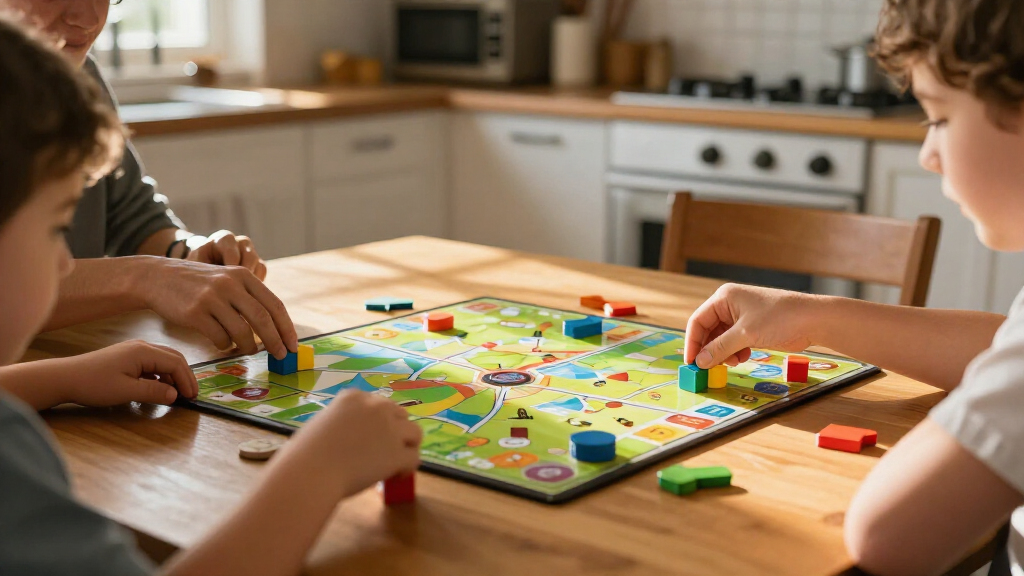
I ranked these educational board games for kids by how clearly their play supports a learnable skill, how well the format fits the stated age range, and whether children can participate without constant adult direction. I also weighed replay appeal, opportunities for interaction, and the tradeoff between a focused lesson and broader skills such as reasoning or cooperation. A game can be educational without feeling like a lesson; I favored options where the learning task is meaningfully connected to what players do.
The order reflects usefulness across common family needs, not a claim that every child will prefer the same game. Outfoxed! ranks first for combining reasoning with cooperative play, while targeted picks such as Zingo, Number Hunter, and Race Across the USA suit families seeking a particular subject. Simpler games remain valuable for younger beginners, though they rank lower when their learning content or challenge is narrower. Product names and stated age ranges inform this comparison; the best choice still depends on a child’s reading level, interests, and tolerance for competition.
Factors to Consider When Choosing Educational Board Games For Kids
Before choosing a game, match the kind of learning to the way your child likes to play. The right box is not always the one with the most obvious school subject; it is the one your child can understand, enjoy, and return to without the game becoming a worksheet in disguise.
Match the Learning Goal to the Child’s Current Skills
Start with what your child is ready to practice, not only the age printed on the box. A child who recognizes letters but is still building confidence may benefit from matching and short turns, while a fluent reader may want word-building or geography challenges. If the task is too familiar, the game can lose its learning value; if it is too advanced, an adult may end up doing most of the work. Look for ways to scale the challenge, such as letting younger players use hints or simplifying a scoring rule. A game that supports small steps can stay useful longer than one tied to a single skill level. When siblings play together, choose a format where different abilities can still contribute.
Decide Whether You Want Academic Practice or Broader Skills
Educational play can target school subjects, but it can also give children practice with cooperation, turn-taking, communication, and planning. Families looking for direct reinforcement should prioritize a game where the learning action repeats naturally during play, rather than relying on a theme alone. Broader-thinking games may not teach a worksheet-ready fact, yet they can give children useful practice explaining choices and listening to others. A common mistake is treating every game with counting or reading on the board as strong subject practice. Check what players actually do on most turns. If your goal is both academic and social learning, alternate focused games with cooperative or strategy-based choices.
Check Reading, Attention, and Adult Support Demands
A stated age range is only a starting point: reading fluency, attention span, and comfort with rules vary widely among children of the same age. Look at whether players must read cards independently, remember several steps, or wait through long turns. Younger children often do better with visible pieces, quick rounds, and simple choices; older children may welcome more rules if those rules create meaningful decisions. Consider whether an adult will need to explain vocabulary or manage disputes every session. That support can be enjoyable family time, but it may make a game less practical for independent play. Choosing a slightly simpler game can be a better fit than buying one a child cannot yet play with confidence.
Weigh Replay Value Against a Narrow Learning Focus
A focused game can make one skill easy to practice, but repeated turns may feel routine once a child has mastered it. Games with changing clues, varied challenges, or player interaction may invite more repeat sessions, even when their academic content is less direct. Think about whether your child enjoys repetition or needs novelty to stay involved. Also ask whether the game works with the number of players in your household; a good two-player option may see more use than a larger group game that is hard to gather everyone for. Avoid choosing based only on the number of included activities, since setup and rule changes can affect how often a family reaches for the box. The best balance is a learning target your child needs plus a play pattern they will willingly repeat.
Choose Competition, Cooperation, or a Mix
Competitive games can make progress and turn-taking clear, but losing may distract a child from the learning task. Cooperative play gives players a shared goal and can make it easier for adults or older siblings to support a younger player without taking over. Neither format is automatically better: some children thrive on a race, while others participate more freely when the group succeeds together. Consider how your child reacts when plans fail or another player wins. For mixed-age groups, cooperative play or games with multiple ways to contribute can soften skill gaps. If competition is part of the appeal, keep the focus on choices and practice rather than treating the outcome as a measure of ability.
Think About Household Fit Before Paying More
A higher-cost or more elaborate game makes sense when its range of play, durable components, or subject depth matches a need your family will use often. A simpler game may be a better choice for a first board game, a short attention span, or occasional family play. Check the number of players, typical session length, storage needs, and whether small pieces suit your home. If a child has a strong interest—such as maps, words, or numbers—a targeted game can earn more table time than a game with broader but less engaging content. For shared play, factor in whether adults will enjoy the format too; adult enthusiasm can help a child stick with a new game. Spend for a better fit and repeat use, not for complexity alone.
Frequently Asked Questions
Which educational board game is a good first choice for a child who is new to board games?
For a very young beginner, Chutes and Ladders has a simple path and familiar turn structure, while Zingo! is a better fit if you want early reading and matching in the same play session. The choice depends on whether your child is ready to identify words and images or mainly needs practice taking turns and following a basic game flow. Keep the first session short and model a turn before expecting independent play. A child who enjoys the format is more likely to come back to it than one pushed into a harder lesson. Move to more involved word, math, or strategy games as confidence grows.
Should I choose a game that teaches one school subject or one that builds general thinking skills?
Choose a focused subject game when your child wants practice with a specific skill, such as early arithmetic, spelling, or geography. A broader game such as Outfoxed! can be a stronger fit when you want children to reason together, discuss clues, and make shared choices. These goals are not interchangeable: a mystery game may encourage thinking without directly drilling school content. Many families benefit from having one focused game and one broader-play option rather than asking one box to do everything. Let your child’s current interests guide which kind is more likely to get played.
Are age labels enough to tell whether a game will suit my child?
No. Age labels offer a rough guide, but reading fluency, attention, familiarity with turn-based games, and comfort with competition can change the fit. A child may be within the listed age range yet need help with card text or multi-step rules. Before choosing, check what a player must do on a typical turn and whether the game offers visible cues or simple choices. If possible, explain the basic task before play so your child knows what the game asks of them. Picking for current ability usually leads to more confident play than choosing solely by age.
Which options in this roundup are better for siblings with different skill levels?
Cooperative play can help siblings contribute in different ways, which makes Outfoxed! a natural option when one child reads or reasons more quickly than another. A game with simple matching or clear visual prompts may also let a younger player take part without needing the same academic skills as an older sibling. With competitive games, an adult can sometimes adjust support or let children take turns choosing who gets help, though that changes the balance of play. Avoid making the older child the default rule reader or decision-maker every round. Choose a game where each sibling has meaningful turns, not merely a seat at the table.
How can I tell whether an educational game is worth buying if my child may lose interest quickly?
Look beyond the subject label and ask whether the core action is something your child already enjoys, such as spotting clues, matching, building words, or moving through a race. A narrow practice game can be useful when the target skill is a current priority, but it may see less use after the child masters that task. More varied interaction can support repeat play, though it may offer less direct academic practice. Consider player count, setup effort, and whether the game can be played in short sessions. For a child who tires of rules quickly, a straightforward game they ask to replay can be a better choice than a more elaborate one that stays on the shelf.
Conclusion
For the broadest mix of reasoning and family interaction, I recommend Outfoxed! as the best overall choice. For best value, I would start with Chutes and Ladders when the priority is an accessible first board game, though its learning depth is modest. Scholastic Race Across the USA is my best premium-style pick for families seeking a more focused geography experience and a challenge suited to older children. For beginners building early literacy, choose Zingo!; for specific needs, turn to Number Hunter or Matheroni Pepperoni for early math, Scrabble Junior for word practice, and Junior Learning Social Skills Board Games for guided social learning. If you want a single starting point, choose for the skill your child is most ready to practice—and the kind of play they will want to repeat.
Halloween Picks

DomKom 6-Foot Halloween Inflatable Ghosts Roasting Marshmallows

Halloween Inflatable Haunted House Maze – 20×20 ft with Removable Roof and Blower

11.2-Foot Halloween Inflatable Pumpkin with LED Lights
As an affiliate, we earn on qualifying purchases.