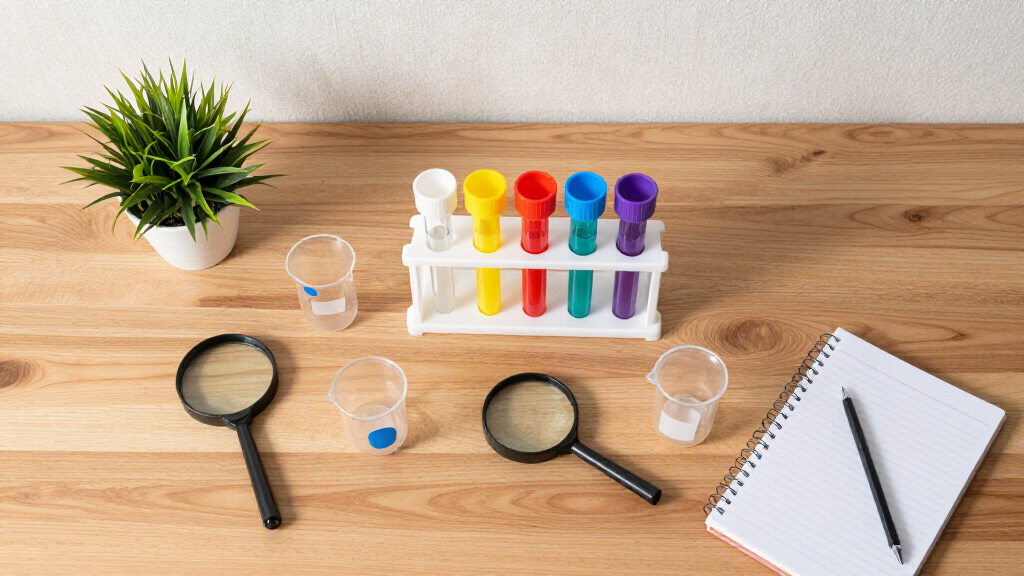

The best educational science kits for middle school balance real scientific method with enough variety to hold a tween’s attention, and the National Geographic Mega Science Lab is my best overall pick because its 75 experiments span chemistry, physics, and earth science in one box. For deeper single-subject focus, the Thames & Kosmos Chem C3000 is the strongest chemistry set in this lineup, while the Mark Twain Forensic Investigations Workbook delivers genuine middle-school science practice at the lowest price here. The main tradeoff is breadth versus depth: variety kits stay fun but shallow, while single-subject kits teach more but demand more patience. Age bands also matter, since several kits rated 8-12 skew younger than the full grades 6-8 range. Read on for the full breakdown of all 11 kits, who each one suits, and who should skip it.
Open a free Amazon Business account
Business pricing, bulk buying and tax-exempt orders.
Create a free accountAs an affiliate, we earn on qualifying purchases.
Key Takeaways
- The National Geographic Mega Science Lab earned the top spot because its 75 experiments cover more scientific disciplines than any other kit reviewed, making it the safest single purchase for grades 6-8.
- Thames & Kosmos dominates this roundup with five entries, and its kits consistently favor deep, manual-driven learning over quick spectacle — great for serious students, slower for kids who need instant payoff.
- Price and teaching value do not track together: the cheapest pick, the Mark Twain Forensic Investigations Workbook, builds more authentic middle-school science reasoning than kits costing three times as much.
- Age labels run young across this category — the Carson Dellosa STEM Challenges kit is rated 7-10, so it works as a bridge for incoming sixth graders but will bore most eighth graders within weeks.
- Single-subject kits like the Chem C3000 and Genetics & DNA Lab outlast variety kits by years, but they punish buyers whose kids have not yet picked a favorite branch of science.


More Details on Our Top Picks
Carson Dellosa STEM Challenges, Hands-On Science Kits for Kids Ages 7-10
My budget pick is also the youngest-skewing option here. The Carson Dellosa STEM Challenges set is a deck of 30 activity cards spanning earth, space, physical, and life sciences, each built around common household materials. That keeps the price low, but it shifts the supply run to you — unlike the National Geographic Mega Science Lab, which packs experiments and specimens in the box, nothing physical comes with this deck. The card format works well for station rotations, sub plans, and quick hands-on breaks, and the included divider keeps subjects sorted. The honest tradeoff is the ages 7-10 target: in a middle school roundup this suits sixth graders and younger homeschoolers, who will outgrow the prompts quickly. Compared with the Mark Twain Forensic Investigations Workbook, it’s more tactile but less analytical. I’d buy it as an affordable bridge into middle school science, not a core resource for older students.
Pros:- 30 ready-to-run challenges spanning four science domains
- Card format with subject divider suits stations and sub plans
- Runs on common household materials, so no specialized supplies
- Works in both classroom and homeschool settings
Cons:- Ages 7-10 band sits below most of middle school
- Every activity depends on materials the adult must supply
- No digital extension or media components
Best for: Teachers and homeschool parents of sixth graders who want low-cost, station-ready science activities
Not ideal for: Families with seventh or eighth graders — the 7-10 age band and simple prompts will feel too young
- Product Type:Activity card set
- Cards Included:30
- Card Size:7¾ x 5½ inches
- Age Range:7-10 years
- Subjects Covered:Earth, space, physical, and life sciences
- Subject Divider:Included
- Materials:Common household items required
- Setting:Classroom or homeschool
Our verdict“The Carson Dellosa deck is the right buy for budget-conscious adults running activities for younger middle schoolers, not a core kit for grades 7-8.”
National Geographic Mega Science Lab with 75 Experiments for Kids 8-12
This is the kit I’d hand most middle school families first. The National Geographic Mega Science Lab covers the widest ground in this lineup: 45 guided experiments across earth science, chemistry, and science magic, plus a bonus guide with 30 more activities using household items, and real rock and mineral specimens kids get to keep. Compared with the National Geographic Science Magic Kit, the tone here is lab work first, showmanship second — a better fit for students who want substance behind their projects. It also skews older than the Carson Dellosa STEM Challenges cards, with an 8-12 age range that maps cleanly onto the middle school years. The tradeoffs: some experiments need adult supervision, others are messy, and consumable materials eventually run out, so repeat value depends on the household-supply activities. For breadth, brand trust, and genuine specimens, no other option here matches it as an all-rounder.
Pros:- 75 total activities across earth science, chemistry, and science magic
- Includes real rock, mineral, and crystal specimens kids keep
- Bonus guide extends play with household-item experiments
- Age 8-12 range matches the middle school years
Cons:- Some experiments require adult supervision
- Messy projects and consumable materials limit reuse
- Safety guidance is thin in the product description
Best for: Middle school families wanting one kit that samples chemistry, earth science, and physics in a single purchase
Not ideal for: Parents who can’t supervise — several experiments need an adult nearby and make a genuine mess
- Product Type:Science experiment kit
- Core Experiments:45
- Total Activities:75 with bonus guide
- Age Range:8-12 years
- Subjects:Earth science, chemistry, science magic
- Specimens:Real rocks, minerals, and crystals included
- Bonus Guide:30 household-item activities
- Adult Supervision:Required for some experiments
Our verdict“For most middle school households, the Mega Science Lab is the safest first purchase thanks to its breadth, specimens, and well-matched age range.”
Thames & Kosmos Structural Engineering: Bridges & Skyscrapers Science & Engineering Kit
Where the National Geographic kits spread across many disciplines, Thames & Kosmos Structural Engineering: Bridges & Skyscrapers commits to a single discipline — and that focus is the point. Students assemble 20 models from 285+ interchangeable pieces while a 36-page illustrated manual builds real understanding of force, load, compression, and tension. For a middle schooler eyeing engineering or architecture, this teaches transferable physics that a volcano kit can’t. The Parents’ Choice Gold Award backs up the pedagogy. The tradeoffs are real, though: it’s rated intermediate, so true beginners will stall without an adult nearby, and once the 20 models are built, the open-ended replay value depends entirely on the student’s own ideas — there’s no experiment backlog like the Mega Science Lab’s 75 activities. Compared with the Thames & Kosmos Chem C3000 elsewhere in this roundup, it’s the friendlier entry point for engineering-minded kids.
Pros:- 20 structural models teach force, load, compression, and tension
- 285+ interchangeable pieces support open-ended builds
- 36-page illustrated manual explains concepts, not just steps
- Parents’ Choice Gold Award winner
Cons:- Intermediate skill rating frustrates true beginners without adult help
- Single-discipline focus — no chemistry or life science content
- Replay value drops once all 20 guided models are finished
Best for: Engineering-curious middle schoolers with some building experience who want depth over variety
Not ideal for: True beginners — the intermediate rating assumes prior model-building experience and frustrates kids without it
- Product Type:Engineering model-building kit
- Models:20
- Building Pieces:285+
- Manual:36-page illustrated manual
- Skill Level:Intermediate
- Core Concepts:Force, load, compression, tension
- Award:Parents’ Choice Gold Award
Our verdict“Buy Bridges & Skyscrapers for a middle schooler who already loves building and is ready to learn the physics behind it.”
National Geographic Science Magic Kit for Kids with 100+ Experiments and Tricks
Some middle schoolers decide science is boring before anyone hands them a beaker, and this kit is my answer to that. The National Geographic Science Magic Kit frames physics and chemistry as performance: 20 staged tricks with a magic wand and white gloves included, backed by 100+ experiments once you count the bonus guide’s 85+ household activities. The hook works because the science explains the illusion — kids learn the principle to earn the applause. Compared with the National Geographic Mega Science Lab, which contains a smaller magic section, this one commits fully to the show, and the Toy of the Year Award suggests the formula lands. The downside is staying power: the wand-and-gloves theater skews younger, and older middle schoolers may find it gimmicky next to the Mark Twain forensic workbook’s real-world cases. Materials also deplete with repeat performances, so long-term value leans on the bonus guide.
Pros:- Magic framing hooks kids who resist traditional science formats
- 100+ experiments including 85+ household bonus activities
- Wand, gloves, and trick materials included in the box
- Toy of the Year Award winner
Cons:- Theater angle can feel young for older middle schoolers
- Trick materials deplete and need replenishing after repeat use
- Age range is not clearly stated in the product materials
Best for: Reluctant or easily bored learners in grades 5-7 who need a performance hook to engage with science
Not ideal for: Serious-minded eighth graders — the magic theater framing can read as gimmicky at that age
- Product Type:Science magic kit
- Total Experiments:100+
- Magic Tricks:20 with included materials
- Bonus Experiments:85+ using household items
- Accessories:Magic wand and white gloves
- Subjects:Physics and chemistry
- Award:Toy of the Year Award
- Adult Supervision:Needed for some experiments
Our verdict“Choose the Science Magic Kit when the real goal is winning over a kid who has already decided science isn’t for them.”
Mark Twain Forensic Investigations Workbook: Using Science to Solve High Crimes for Middle School
The only title here built explicitly for middle schoolers, and the only one that’s a book rather than a box. The Mark Twain Forensic Investigations Workbook teaches science through casework — DNA analysis, handwriting examination, and related labs that push analysis over spectacle. Where the National Geographic kits wow kids with reactions, this one builds the slower skills: forming hypotheses, weighing evidence, writing conclusions. That makes it a strong companion to a hardware kit like the Thames & Kosmos Structural Engineering set rather than a replacement for one. The tradeoffs matter: with no included lab materials, some activities require supplies you must source yourself, and the published product data is thin — no page count or experiment tally to judge depth against the 75- and 100-experiment boxes. For homeschoolers and classroom teachers wanting structured, case-based critical thinking, though, nothing else in this roundup does what it does.
Pros:- Purpose-built for middle school reading and skill level
- Case-based labs build evidence analysis and argumentation
- Covers genuinely engaging forensic topics like DNA and handwriting
- Fits classroom or homeschool lesson plans
Cons:- No lab materials included — supplies must be sourced separately
- Published product data is thin, with no page or activity counts
- Reading-heavy format needs pairing with a hardware kit for real lab skills
Best for: Homeschoolers and classroom teachers who want structured, case-based critical thinking practice for grades 6-8
Not ideal for: Kids who want a box of gear — this is a workbook, and some labs require supplies you buy separately
- Product Type:Workbook
- Subject:Forensic science
- Grade Level:Middle school
- Featured Activities:DNA analysis, handwriting examination
- Skills Targeted:Critical thinking, problem-solving
- Setting:Classroom or homeschool
- Lab Materials:Not included; some labs need extra supplies
Our verdict“The Mark Twain workbook earns its spot as the thinking-skills companion to a hands-on kit, not as a standalone lab.”
Thames & Kosmos Chem C3000 Chemistry Set
The Thames & Kosmos Chem C3000 is the one kit here I’d treat as an investment rather than an activity box. Its 333 experiments run across inorganic, organic, and electrochemistry, so a student who works through it touches material no other pick in this roundup approaches — the Genetics & DNA Lab, by contrast, covers one subject well but a far narrower slice of science. The 192-page manual reads like an introductory course, which is the point: this kit rewards kids who already know they like chemistry. The tradeoffs are real. It costs well above basic sets, demands consistent adult supervision, and its 103 pieces can swamp a beginner who would have more fun with the National Geographic Gross Science Kit’s quick-payoff experiments. For a committed seventh or eighth grader, though, nothing else here goes this deep.
Pros:- 333 experiments covering inorganic, organic, and electrochemistry
- Authentic lab equipment and chemicals for genuine bench work
- 192-page manual structured like an introductory course
- EN 71-4 safety certification
Cons:- Costs well above entry-level chemistry sets
- Too advanced for kids new to chemistry
- Every session requires adult supervision
Best for: Committed seventh or eighth graders who already know they enjoy chemistry and want course-level depth at home
Not ideal for: Beginners or casual experimenters — the price, supervision demands, and 192-page manual will overwhelm kids who just want quick, fun reactions
- Brand:Thames & Kosmos
- Experiments:333
- Pieces:103
- Age Range:12+
- Topics:Inorganic, organic, and electrochemistry
- Manual:192 pages, illustrated
- Safety Standard:EN 71-4
- Supervision:Adult supervision required
Our verdict“Buy it for a motivated middle schooler who has outgrown starter chemistry sets and is ready for real lab work.”
National Geographic Gross Science Kit
This is the kit I’d hand to the kid who groans whenever the science book comes out. The National Geographic Gross Science Kit leads with glowing worms and test tube vomit, and that gross-out framing is a genuine teaching tool: every gag hides an actual lesson about polymers, pH, or chemical reactions. With 45 experiments, it offers more activities than the Genetics & DNA Lab’s 20, though the learning stays shallower — this is about sparking interest, not building rigor. Compared with the Chem C3000’s course-style manual, the instructions here are short, illustrated, and friendly to younger middle schoolers, since the kit is rated for ages 8 and up. The catches: experiments get messy, several rely on household items you supply yourself, and squeamish kids may find some activities off-putting rather than funny. Buy it to convert a skeptic, not to stretch an already-motivated student.
Pros:- Gross-out theme hooks kids who resist standard science lessons
- 45 experiments, more than most themed kits
- Short illustrated instructions suit younger middle schoolers
- Teaches polymer, pH, and reaction concepts behind the jokes
Cons:- Messy activities demand supervision and cleanup
- Several experiments need household supplies not included
- Graphic gags will put off squeamish kids
Best for: Reluctant learners ages 8-12 who need humor and gross-out hooks to engage with science at all
Not ideal for: Squeamish kids and parents who don’t want to supply extra household ingredients or clean up messy reactions
- Brand:Blue Marble (National Geographic)
- Experiments:45
- Age Range:8 years and up
- Focus:Polymers, chemical reactions, pH science
- Educational Objective:STEM
- Model Number:NGMEGAGRS
- Manufacturer:JMW Sales, Inc.
- Extras:Household-item experiments included
Our verdict“Buy it to win over a science skeptic aged 8-12; skip it if your kid is already self-motivated or easily grossed out.”
Thames & Kosmos Forces & Interactions: Middle School Classroom Kit
I’d call this the outlier of the lineup: the Forces & Interactions kit was built for groups, and that shapes everything about it. The 437 building pieces support up to four students at once, and each activity is timed to fit a 45-to-50-minute class period — a detail home kits like the Simple Machines set never bother with. Its NGSS alignment is the main selling point: lessons map onto actual middle school standards, so a teacher or co-op leader can slot it into a curriculum instead of improvising one. A teacher guide, lesson plans, and a storage bin come in the box. The downside is fit. Solo learners get a kit designed around shared building and discussion, setup demands actual prep time, and families wanting open-ended play will find the scripted lessons restrictive. For classroom physics, though, it’s the most practical option in this roundup.
Pros:- NGSS-aligned lessons map directly to middle school standards
- 437 durable pieces built for repeated group use
- Activities timed to fit a 45-50 minute class period
- Ships with teacher guide, lesson plans, and storage bin
Cons:- Designed for groups, so solo learners get less from it
- Requires meaningful setup and adult facilitation
- Structured lessons limit open-ended exploration
Best for: Middle school teachers and homeschool co-op leaders who need standards-aligned physics lessons for groups of up to four
Not ideal for: Solo learners at home — the group-based activities, prep time, and lesson-plan structure are built for facilitated classrooms
- Brand:Thames & Kosmos
- Building Pieces:437
- Group Size:Up to 4 students
- Activity Length:45-50 minutes per activity
- Standards:NGSS-aligned
- Included:Teacher guide, lesson plans, storage bin
- Environment:Classroom or homeschool co-op
Our verdict“Buy it for a classroom or co-op that needs ready-made, standards-aligned physics units — home families should look elsewhere.”
Thames & Kosmos Genetics & DNA Lab
Biology gets shortchanged in most middle school kits, which lean toward chemistry or physics — the Chem C3000 and Forces & Interactions kits here prove it. That’s why I’d flag the Genetics & DNA Lab as the gap-filler. Its signature moment is extracting real DNA from a tomato, the kind of visible, slightly magical result that makes abstract inheritance ideas stick. Across 20 experiments, students build DNA models, work through mutation puzzles, and handle actual labware like test tubes, a petri dish, and agar instead of toy approximations. The full-color manual keeps each step clear. Where it falls short: the age 10+ rating suits younger middle schoolers better than eighth graders, some glass components are fragile, and the content stays introductory — a student who finishes it hungry for more would need to graduate to something like the Chem C3000.
Pros:- Extracting tomato DNA gives an unforgettable hands-on result
- Uses real labware including test tubes, petri dish, and agar
- Covers inheritance and mutations most kits ignore
- Full-color manual walks through all 20 experiments
Cons:- Aimed at ages 10+, so older middle schoolers may outgrow it quickly
- Glass components can break with rough handling
- Stays at introductory level with no advanced follow-on
Best for: Younger middle schoolers (ages 10-13) with a budding interest in biology who learn best by doing
Not ideal for: Eighth graders ready for advanced material — the content tops out at introductory genetics with no room to grow
- Brand:Thames & Kosmos
- Experiments:20
- Age Range:10 years and up
- Key Activities:Tomato DNA isolation, DNA model building, inheritance and mutation lessons
- Included Components:Test tubes, petri dish, agar, glass bottle, DNA model, manual
- Manual:Full-color experiment guide
- Subject:Genetics and DNA structure
Our verdict“Buy it for a biology-curious kid aged 10-13 who wants a memorable first look at DNA.”
Thames & Kosmos Simple Machines Science Experiment & Model Building Kit
If the Forces & Interactions kit is physics for a classroom, I’d say the Simple Machines kit is physics for a kitchen table. It builds 26 working models across all six classic machines — levers, pulleys, wheels and axles, inclined planes, screws, and wedges — and includes a spring scale so students measure the force each machine saves rather than just reading about it. That measuring step turns model-building into genuine experiments, something the Gross Science Kit’s quick demonstrations don’t attempt. The modular parts are durable and compatible with other Thames & Kosmos kits, so it grows with a kid’s interest instead of ending up as a one-and-done box. The tradeoffs: some builds are fiddly enough to frustrate beginners, younger kids need an adult nearby, and there’s no structured curriculum, so self-directed learners get far more from it than kids who need step-by-step lessons.
Pros:- 26 models covering all six classic simple machines
- Included spring scale turns builds into measurable experiments
- Durable modular parts work with other Thames & Kosmos kits
- Strong fit for self-directed learners who like building
Cons:- Some models are complex enough to frustrate beginners
- No structured curriculum or lesson plans
- Younger kids need adult help with trickier builds
Best for: Hands-on builders who want to understand mechanical physics through models they can measure and rebuild
Not ideal for: Kids who need structured lessons or get frustrated by fiddly multi-step builds without adult help
- Brand:Thames & Kosmos
- Models:26
- Machines Covered:Levers, pulleys, wheels and axles, inclined planes, screws, wedges
- Included:Spring scale, illustrated manual
- Compatibility:Works with other Thames & Kosmos construction and physics kits
- Subject:Mechanical physics and engineering
- Supervision:Adult help recommended for younger kids
Our verdict“Buy it for a young builder who learns physics best by constructing and measuring working models.”
EXBEPE 406 Pcs Chemistry Molecular Model Kit, Organic & Inorganic Molecule Building Set for STEM Education
Where the Thames & Kosmos Chem C3000 teaches chemistry through beakers and reactions, this EXBEPE kit teaches it through structure — literally. I see it as the strongest pick in this roundup for kids who think in shapes, because snapping atoms and bonds together makes abstract ideas like hybridization and electron clouds visible in a way no experiment manual can match. With 163 atoms and 218 bonds, the set scales from simple middle school molecules to college-level organic structures, so it won’t be outgrown by eighth grade. The tradeoff is depth versus breadth: unlike the National Geographic Mega Science Lab, there are no experiments here at all, and less patient builders may find the small pieces fiddly without an adult nearby. For pure molecular understanding, though, nothing else in this lineup comes close.
Pros:- 163 atoms and 218 bonds cover everything from simple molecules to organic structures
- Makes abstract concepts like electron clouds and hybridization physically tangible
- Grows with the student from middle school through college-level chemistry
- Ships with a wrench and portable plastic box for tidy storage
Cons:- No experiments included — it’s a modeling tool, not a lab kit
- Small pieces and complex assemblies can frustrate younger kids without adult supervision
- Limited to educational modeling; not suitable for professional chemistry work
Best for: Visual learners in grades 6-10 who need to hold molecular geometry in their hands before it clicks, and families wanting one kit that lasts into high school chemistry
Not ideal for: Kids chasing dramatic reactions and experiments — this builds static models, so anyone expecting a lab-style experience should look at the Thames & Kosmos Chem C3000 instead
- Total pieces:406
- Number of atoms:163 pcs
- Number of bonds:218 pcs
- Electronic cloud pieces:18 pcs
- Hybridization model components:7 pcs
- Includes:Wrench, portable plastic box
- Material:Non-toxic, child-safe plastic
- Recommended range:Middle school through college
Our verdict“The right buy for a middle schooler who learns spatially and wants chemistry they can build, not just read about.”

How We Picked
I ranked these kits on four criteria that matter to middle school buyers: curriculum relevance (does it teach what grades 6-8 actually cover), depth per dollar (how long the kit stays useful before a kid outgrows it), instruction quality (manuals that explain the why, not just the steps), and engagement design (whether a 12-year-old returns to it without prompting). Kits that only entertain ranked below kits that teach, even when the entertaining ones deliver more short-term fun.
The ordering logic is straightforward: generalist kits with broad experiment counts placed highest because most buyers in this category have not narrowed down to one subject, while specialist kits were judged on how well they serve their niche. The Chem C3000 sits below the Mega Science Lab not because it is worse — it is arguably the deepest product here — but because it only fits kids already committed to chemistry. Workbook-based options like the Mark Twain forensic book were scored on a value curve: a ten-dollar resource cannot beat a hundred-dollar kit on materials, but it can beat it on teaching per dollar.
Factors to Consider When Choosing Educational Science Kits For Middle School
The reviews above rank each kit on its own merits, but the right choice depends on factors most product pages will not spell out. These six points cover the mistakes buyers make most often in this category, and the questions worth answering before any box hits the cart.
Match the Kit to the Real Grade Level, Not the Box Label
Age labels on science kits run younger than most buyers expect. A kit marked ages 8-12 is aimed at the elementary end of that band, which means an eighth grader may already be past its ceiling. Instead of trusting the label, look at what the experiments actually ask for: if the manual says to mix two things and watch, it skews young no matter what the box claims. For grades 7-8, prioritize kits that require measurements, predictions, and written conclusions, because that is what middle school science class demands. There is one exception worth knowing — a slightly young kit can rebuild confidence in an incoming sixth grader who struggled in elementary science. But buying young on purpose for an older kid almost always backfires within a month.
Breadth Versus Depth Is the Biggest Buying Decision
Variety kits advertise 45 to 100-plus experiments, but those counts include quick five-minute activities padded with minor variations. Single-subject kits offer fewer activities and build knowledge cumulatively instead, so experiment ten assumes you finished experiment nine. Variety suits kids without a declared interest; depth suits kids who already say they like chemistry or building things. The most common mistake here is buying a giant variety kit for a kid already deep into one subject — they burn through the relevant chapter and ignore the rest of the box. Once a real interest exists, price per meaningful hour favors the deep kits by a wide margin. Until then, breadth is the safer bet.
Check for Consumables and Refill Costs Before You Commit
Chemistry sets run on consumable reagents, and once the powders are gone, the kit becomes a box of glassware. Some brands sell refill packs; others quietly do not, and a dead kit with no refill path is one of the most common complaints in this category. Engineering kits, model kits, and physics builds are fully reusable by contrast — bridges get rebuilt, molecules get rearranged, and nothing runs out. When two kits sit at similar prices, check whether the materials are consumable or permanent before deciding which is the better value. Kits built around household ingredients stretch the furthest, since baking soda and vinegar cost pennies to replace. Factor the refill math into the sticker price, especially for a kid who does experiments in batches.
Be Honest About Supervision and Safety Requirements
Serious chemistry sets assume an adult is nearby: real reagents, safety goggles, and proper disposal are part of the deal. Marketing language can blur this — some kits labeled 12+ really mean 12 with a parent in the room, not 12 alone after school. If the kit will mostly be used solo, pick one built around household-safe materials and simple builds. Space matters too, because structural engineering and physics kits need table room and somewhere to store half-finished projects between sessions. A kit that requires a parent for every experiment only works if a parent genuinely has that time. Matching the supervision load to your household reality prevents the most common fate for ambitious kits: opened once, shelved forever.
Manual Quality Separates Teaching Kits From Toy Kits
The manual is where the education actually happens, and it is the hardest thing to judge from a product listing. Good manuals explain why each result occurred, connect it to a real-world application, and pose a follow-up question or two. Thin manuals list steps with zero science behind them — the experiment works and nothing gets learned. Before buying, check page counts and sample pages in the product images, because a 100-experiment kit with a 16-page booklet is a warning sign. Brands like Thames & Kosmos lean toward textbook-style manuals with real theory, while mass-market brands favor colorful, lighter instructions that read fast. Neither approach is wrong, but one of them matches your kid better than the other.
When a Workbook Beats a Box of Gear
Not every buyer needs equipment. Workbook-style resources teach scientific reasoning — evidence analysis, logic, lab vocabulary — for a fraction of the price, and they never run out of supplies. They work well as a supplement to a physical kit, a homeschool spine, or a screen-free option for travel and waiting rooms. The tradeoff is obvious: no hands-on wow factor, so a reluctant learner may never open it without prompting. Pairing a cheap workbook with one mid-priced physical kit often beats spending the whole budget on a single premium set. Buyers on tight budgets should start here, confirm the interest is real, and upgrade to the bigger kits later.
Frequently Asked Questions
What age range actually counts as middle school for science kits?
Middle school covers grades 6-8, roughly ages 11-14, but science kit labels rarely line up with that cleanly. Most popular kits in this category are marked ages 8-12, which serves sixth grade well but runs out of steam by eighth. Kits marked 12 and up, like the Chem C3000, are the ones that genuinely span the full middle school range. When a box says 8-12, treat the upper number as the age where interest fades rather than where difficulty peaks. For seventh and eighth graders, lean toward kits labeled 12+ or open-ended engineering builds that scale with the kid’s ambition.
Is a premium chemistry set worth it for a kid with no chemistry background?
Usually not as a first purchase. A set like the Chem C3000 assumes the user can follow multi-step procedures, handle real reagents, and stick with experiments that run 30 minutes or longer, and a kid with no background often stalls in the opening chapters. The smarter path is a mid-priced general kit with a chemistry section, which reveals whether the interest is real before the big spend. If the kid burns through that and asks for more, the premium set becomes an excellent second purchase. The exception is a kid already asking chemistry questions or excelling in science class, who will grow into the larger set rather than out of it. Paying more only makes sense once the interest is proven.
Can these kits work for homeschooling or classroom teaching?
Some are built for exactly that, and the difference shows in the structure. The Thames & Kosmos Forces & Interactions kit is designed around middle school classroom standards, with experiments sequenced like lesson units instead of random activities. Workbook options like the Mark Twain forensic book slot into a curriculum as written practice alongside any hands-on kit. General variety kits work for homeschool too, but the parent has to impose the sequence and tie experiments to learning goals. For co-ops and group settings, check whether a kit includes enough materials for more than one child, since most home kits assume a single user. Classroom-oriented kits cost more upfront but include the structure group teaching demands.
How many experiments should a good middle school kit have?
Raw counts mislead more than they help. A kit advertising 100 experiments often counts every minor variation separately, so the number of distinct activities may be a third of that figure. What matters more is experiment length and depth: ten experiments that each take an hour and build on one another teach more than fifty five-minute tricks. For middle schoolers, look for a mix of substantial core projects plus quick wins that keep momentum going. Also check whether experiments are repeatable, because rebuildable engineering kits effectively have unlimited runs while chemistry kits stop when the reagents run out. A lower count with reusability often outlasts the bigger number printed on the box.
What should I buy for a kid who thinks science is boring?
Disguise the science. Kits framed around magic tricks or gross-out experiments — the National Geographic Science Magic and Gross Science kits in this roundup — lead with spectacle and smuggle the chemistry and physics in behind it. The manuals still explain the real science once the kid is hooked by the effect. Forensic-themed materials work the same way for kids who like mysteries, turning evidence analysis into applied science without the textbook feel. Skip deep single-subject kits for this buyer, since a reluctant learner will not push through the slow early chapters of a serious chemistry set. Start with the hook, then move up to the heavier kits once the resistance drops.
Conclusion
Every buyer in this category is really choosing between breadth, depth, and price. For most families, the National Geographic Mega Science Lab is the best overall pick, since 75 experiments across multiple disciplines fit nearly any middle schooler and survive months of use. Budget buyers should grab the Mark Twain Forensic Investigations Workbook, which builds authentic scientific reasoning for less than a pizza night, or the Carson Dellosa STEM Challenges kit for hands-on work at the younger end. Buyers ready to invest should go straight to the Thames & Kosmos Chem C3000, the deepest kit here and the only one that carries a student toward high school chemistry. Beginners and younger middle schoolers do best with the Thames & Kosmos Simple Machines kit, where the builds are forgiving and the physics lands without frustration. For specific needs: the Structural Engineering kit suits future builders, the Genetics & DNA Lab suits biology fans, the Science Magic and Gross Science kits suit reluctant learners, the Forces & Interactions kit suits homeschoolers and classrooms, and the EXBEPE molecular model kit suits any student who needs to see molecules in 3D for chemistry to click. Match the kit to the kid you have, not the kid on the box, and any pick on this list will earn its shelf space.
Labor Day sales Picks
labor day deals
As an affiliate, we earn on qualifying purchases.