
For most students, Gray’s Anatomy for Students Flash Cards with Student Consult Online Access is my best overall pick because it pairs a recognized student text with physical cards and online study access. Netter’s Anatomy Flash Cards stand out for students who want detailed anatomical illustrations, while the TribeRN Anatomy and Physiology Flash Cards offer a broader study set for learners covering both subjects. The main tradeoff is between focused, course-aligned content and wider coverage, with portability and online extras also shaping the choice. A compact set may be easy to carry but cover less ground than a larger deck. Read on for the full breakdown of all 12 options and a guide to choosing cards that fit your course and study habits.

Prime made for students and young adults
- Fast, free delivery for dorm and study essentials
- Prime Video and Amazon Music included
- Member-only deals
Key Takeaways
- Gray’s with Student Consult access is the strongest all-around choice here for students who want a familiar textbook companion plus digital study access.
- Netter’s cards are the clearest fit for learners who prioritize detailed visual anatomy; the versions with online access add a digital component.
- TribeRN’s 320-resource set emphasizes breadth across anatomy and physiology, while focused decks such as Musculoskeletal Anatomy Flash Cards target a narrower course need.
- The 30-piece pocket set favors portability, but its small card count makes it a supplement rather than a full-course resource for many students.
- QuickStudy and Latin nomenclature decks suit targeted reference or terminology practice; they are less suitable as a sole resource when a course requires broad, image-rich coverage.
| Musculoskeletal Anatomy Flash Cards |  | Best for Focused Musculoskeletal Review | Subject focus: Musculoskeletal anatomy | Product type: Flash cards | Title: Musculoskeletal Anatomy Flash Cards | VIEW LATEST PRICE | See Our Full Breakdown |
| Anatomy Flash Cards: Latin Nomenclature — Anatomy on the Go |  | Best for Learning Latin Terminology | Subject: Anatomy | Nomenclature: Latin anatomical nomenclature | Format: Flash cards | VIEW LATEST PRICE | See Our Full Breakdown |
| Gray’s Anatomy for Students Flash Cards with Student Consult Online Access |  | Best for Textbook-Aligned Study | Textbook alignment: Gray’s Anatomy for Students | Online access: Student Consult access with interactive study tools | Study resources: Digital quizzes and additional resources | VIEW LATEST PRICE | See Our Full Breakdown |
| Anatomy Flashcards: 300 Anatomically Precise Cards with Detailed Descriptions |  | Best for High-Volume Visual Review | Number of flash cards: 300 | Illustrations: Anatomically precise drawings | Descriptions: Detailed descriptions | VIEW LATEST PRICE | See Our Full Breakdown |
| TribeRN Anatomy and Physiology Flash Cards – 320 Study Resources for Students – Human Anatomy & Physiology Study Tools – Medical, Nursing School Essentials – Durable & Easy to Use Flashcards |  | Best for Nursing and A&P Students | Brand: Tribe RN | Number of items: 320 | Included components: 320 cards | VIEW LATEST PRICE | See Our Full Breakdown |
| Human Anatomy Flashcards, 30-Piece Pocket-Sized Study Set |  | Best Compact Pick | Card count: 30 | Card size: 2.52 × 3.5 inches (6.4 × 8.9 cm) | Material: Paper | VIEW LATEST PRICE | See Our Full Breakdown |
| Anatomy Flash Cards |  | Best Test-Prep Series Pick | Format: Flash cards | Series: Barron’s Test Prep | Subject: Anatomy | VIEW LATEST PRICE | See Our Full Breakdown |
| Gray’s Anatomy for Students Flash Cards |  | Best Textbook Companion | Format: Flash cards | Associated textbook: Gray’s Anatomy for Students | Study focus: Review and memorization of key anatomy concepts | VIEW LATEST PRICE | See Our Full Breakdown |
| Netter’s Anatomy Flash Cards with Online Student Consult Access (Netter Basic Science) |  | Best for Print-and-Online Study | Format: Flash cards | Series: Netter Basic Science | Online access: Student Consult | VIEW LATEST PRICE | See Our Full Breakdown |
| Netter’s Anatomy Flash Cards |  | Best Netter Illustration Pick | Format: Flash cards | Subject: Anatomy | Illustrator: Frank H. Netter | VIEW LATEST PRICE | See Our Full Breakdown |
| Anatomy 2 Flash Cards: A QuickStudy Reference Tool |  | Best for Quick Reference | Product type: Anatomy flash cards | Series or line: QuickStudy | Stated purpose: Reference tool | VIEW LATEST PRICE | See Our Full Breakdown |
| Anatomy Flash Cards: QuickStudy Reference and Study Tool | 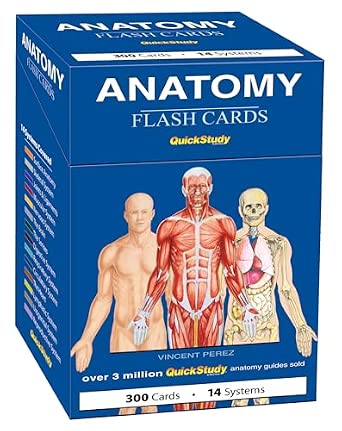 | Best for General Study Sessions | Product type: Anatomy flash cards | Series or line: QuickStudy | Stated purpose: Reference and study tool | VIEW LATEST PRICE | See Our Full Breakdown |
| anatomy flash cards for student | Card count | Subject | Format |
|---|---|---|---|
| Musculoskeletal Anatomy Flash | Not specified in supplied product data | — | — |
| Anatomy Flash Cards: Latin Nom | Not specified in supplied product data | Anatomy | Flash cards |
| Gray’s Anatomy for Students Fl | — | — | — |
| Anatomy Flashcards: 300 Anatom | — | — | — |
| TribeRN Anatomy and Physiology | — | — | — |
| Human Anatomy Flashcards | 30 | — | — |
| Anatomy Flash Cards | Not specified in the provided product data | Anatomy | Flash cards |
| Gray’s Anatomy for Students Fl | Not specified in the provided product data | — | Flash cards |
| Netter’s Anatomy Flash Cards w | Not specified in the provided product data | Anatomy | Flash cards |
| Netter’s Anatomy Flash Cards | Not specified in the provided product data | Anatomy | Flash cards |
| Anatomy 2 Flash Cards: A Quick | Not provided | Anatomy | — |
| Anatomy Flash Cards: QuickStud | Not provided | Anatomy | Flash cards |
More Details on Our Top Picks
Musculoskeletal Anatomy Flash Cards
A subject-specific option, this set makes the most sense for students who need repeated practice with the musculoskeletal system rather than broad coverage of the whole body. That focus can help keep review sessions centered on relevant material, unlike TribeRN Anatomy and Physiology Flash Cards, which spans major body systems and physiology. The tradeoff is that the supplied product information does not identify the card count, illustration style, or level of detail, so I would not choose it as a sole anatomy resource without checking the actual contents. It may suit a course block or targeted revision, but students needing a wider survey should favor a general set with a stated scope. Its value here is specialization, not documented breadth or extras.
Pros:- Concentrates on musculoskeletal anatomy rather than spreading coverage across unrelated systems
- Can support focused practice during a dedicated course unit
- Its narrow scope may make targeted review easier to organize
Cons:- Available product information does not specify card count or topic breakdown
- No stated digital tools, illustrations, or study features to compare
- Limited subject scope makes it a poor choice as a standalone general anatomy set
Best for: Students in a musculoskeletal anatomy unit who want a dedicated set for focused review alongside course materials
Not ideal for: Students seeking one set for all major body systems, or buyers who need confirmed card count, visual format, or content depth before choosing
- Subject focus:Musculoskeletal anatomy
- Product type:Flash cards
- Title:Musculoskeletal Anatomy Flash Cards
- ASIN:1718245726
- Card count:Not specified in supplied product data
- Dimensions:Not specified in supplied product data
Our verdict“Choose this for a musculoskeletal course block, but pick a broader set if you need whole-body coverage.”
Anatomy Flash Cards: Latin Nomenclature — Anatomy on the Go
Latin nomenclature is the defining feature here, making this a targeted choice for students who need to connect anatomical structures with their formal names. Its on-the-go format also suits short study sessions between classes. Compared with Gray’s Anatomy for Students Flash Cards with Student Consult Online Access, this set is described around portability and Latin terms rather than textbook alignment and digital quizzes. That difference matters: choose this for terminology practice, not for a documented online study package. The available details do not state card count, illustrations, or the range of anatomy covered, so students wanting a complete system-by-system resource should verify the contents before relying on it. The focused naming approach is useful, but its scope is less clear than broader sets such as TribeRN.
Pros:- Centers study on Latin anatomical nomenclature
- Designed for portable, on-the-go review
- Offers a distinct terminology focus compared with general anatomy and physiology sets
Cons:- Supplied information does not specify card count or subject coverage
- No digital companion or online tools are listed
- Illustration style and level of explanatory detail are not described
Best for: Anatomy students who want portable practice with Latin anatomical names and terminology
Not ideal for: Students who need a clearly documented card count, broad system coverage, or digital quizzes and supplemental online resources
- Subject:Anatomy
- Nomenclature:Latin anatomical nomenclature
- Format:Flash cards
- Intended use:Portable, on-the-go study
- Title:Anatomy Flash Cards: Latin Nomenclature — Anatomy on the Go
- ASIN:1684202221
- Card count:Not specified in supplied product data
Our verdict“Pick this for portable Latin terminology practice, but choose a broader or better-documented set for full-course coverage.”
Gray’s Anatomy for Students Flash Cards with Student Consult Online Access
Textbook alignment plus online practice gives this set a clear role for students already following Gray’s Anatomy for Students. The cards support quick review of essential concepts, while Student Consult access adds digital quizzes and other study resources. Compared with Netter’s Anatomy Flash Cards with Online Student Consult Access, the choice may come down to which textbook and visual teaching style your course uses; this product is specifically tied to Gray’s material. High-contrast printing and durable cards suit repeated handling, but the edition-specific content can limit its usefulness if your course uses another text. It also may not provide the advanced or clinical detail that higher-level learners want. I would treat it as a companion to the named textbook, not a standalone reference for every stage of study.
Pros:- Content is designed to complement Gray’s Anatomy for Students
- Student Consult access includes digital quizzes and additional resources
- Compact format supports quick review away from a desk
- Durable cards and high-contrast printing aid repeated study
Cons:- Content is limited to a specific textbook edition
- May not offer enough advanced or clinical detail for higher-level students
- Its value is reduced for students not using the Gray’s textbook
Best for: Students using Gray’s Anatomy for Students who want matching physical review cards and online quizzes
Not ideal for: Students whose courses use another core textbook, or advanced learners seeking extensive clinical detail
- Textbook alignment:Gray’s Anatomy for Students
- Online access:Student Consult access with interactive study tools
- Study resources:Digital quizzes and additional resources
- Card format:Compact, portable flash cards
- Printing:Clear, high-contrast printing
- Card material:Described as durable; material not specified
- ASIN:0323639178
Our verdict“Choose this as a companion to Gray’s Anatomy for Students, especially if you want both physical cards and online quizzes.”
Anatomy Flashcards: 300 Anatomically Precise Cards with Detailed Descriptions
Three hundred cards make this the clearest choice in this group for students who want a substantial physical stack for repeated practice. The product description also specifies anatomically precise drawings and detailed descriptions, giving visual learners more than names alone to work with. Compared with the focused Musculoskeletal Anatomy Flash Cards, this set appears broader, while TribeRN lists 320 cards and adds color-coded labels, mnemonics, and a ring for portability. The tradeoff is that the supplied details do not identify this set’s system coverage, card dimensions, or any digital companion. Its stated card count and visual approach are useful signals, but students should check the contents if they need a particular curriculum match or structured portability.
Pros:- Includes 300 flash cards
- Features anatomically precise drawings
- Detailed descriptions can add context beyond labels alone
- Offers a larger stated card set than the focused Musculoskeletal Anatomy Flash Cards
Cons:- Supplied information does not identify the body systems or topics covered
- Card size and portability features are not specified
- No digital companion or online resources are listed
Best for: Visual learners who want a large physical set with anatomical drawings and explanatory descriptions
Not ideal for: Students who need confirmed system-by-system coverage, a portable ring-bound format, or digital study tools
- Number of flash cards:300
- Illustrations:Anatomically precise drawings
- Descriptions:Detailed descriptions
- Product type:Anatomy flashcards
- Title:Anatomy Flashcards: 300 Anatomically Precise Cards with Detailed Descriptions
- ASIN:1506289711
Our verdict“Choose this for a substantial drawing-led card set, but confirm its topic coverage if you need a specific course match.”
TribeRN Anatomy and Physiology Flash Cards – 320 Study Resources for Students – Human Anatomy & Physiology Study Tools – Medical, Nursing School Essentials – Durable & Easy to Use Flashcards
Broad body-system coverage and 320 cards make TribeRN the most explicitly expansive anatomy-and-physiology option in this group. Color-coded labels and mnemonics translate complex topics into cues for quick recall, while the hole-punch ring and tear-resistant construction suit students who carry cards between classes or clinical study sessions. Compared with the 300-card Anatomy Flashcards set, TribeRN adds named portability features and physiology content; compared with Gray’s Anatomy for Students Flash Cards, it is not tied to one textbook edition and does not list online quizzes. Its nursing and medical curriculum alignment is useful, but the physical set may feel bulky, and there is no digital companion app. Choose it for broad, visual A&P review rather than textbook-specific depth.
Pros:- 320 cards cover major body systems and include physiology content
- Color-coded labels and mnemonics support visual recall
- Tear-resistant cards and a hole-punch ring support portable use
- Described as aligned with ATI, NCLEX, and medical curricula
Cons:- Physical cards only, with no digital companion app listed
- The set may feel bulky to students seeking a compact study tool
- Broad curriculum coverage may not match the detail of a textbook-specific card set
Best for: Nursing, pre-med, and medical students who want portable, visual review across anatomy and physiology topics
Not ideal for: Students who prefer a compact card stack or need an app, digital quizzes, or close alignment with a specific anatomy textbook
- Brand:Tribe RN
- Number of items:320
- Included components:320 cards
- Age range:Adult
- Material:Paper
- Dimensions:5.27 x 4.58 x 4 inches
- Model number:TRN-MED-FLASH-ANTMY
- Set name:TribeRN Anatomy and Physiology Flash Cards
- ASIN:B0D2HR5GPG
Our verdict“Choose TribeRN for broad, portable A&P review, but favor Gray’s if your main priority is textbook-matched study with online quizzes.”
Human Anatomy Flashcards, 30-Piece Pocket-Sized Study Set
For students who want a small review aid they can carry between classes, this 30-card pocket set prioritizes convenience over breadth. Its color-coded, labeled diagrams support quick recognition of structures, organs, and body systems, while the compact format fits a pocket or study pouch. Compared with Gray’s Anatomy for Students Flash Cards, this set is positioned for brief, portable refreshers rather than textbook-aligned study or detailed exam review. The tradeoff is scale: at 2.52 × 3.5 inches, diagrams have less room for fine detail, and 30 cards offer a narrower review scope than larger study collections. I’d choose it as a companion for short recall sessions, not as a student’s main anatomy resource.
Pros:- Pocket-sized format is easy to carry between study locations
- Color-coded diagrams help distinguish structures during rapid review
- Labels connect illustrations with anatomical terms
- Covers structures, organs, and body systems
Cons:- The 30-card count limits the range of material covered
- Small card dimensions can restrict diagram detail
- Paper construction may be less suited to frequent handling than a more durable card material
Best for: Medical and nursing students who want a compact set for brief anatomy reviews while commuting or between classes
Not ideal for: Students preparing for detailed anatomy exams who need extensive coverage or room to study small structures
- Card count:30
- Card size:2.52 × 3.5 inches (6.4 × 8.9 cm)
- Material:Paper
- Theme:Science
- Brand:Generic
- Manufacturer:shaojuyi
- Age range:3 years and up
Our verdict“Choose this set for portable, quick-review practice, but pair it with a broader resource for detailed coursework.”
Anatomy Flash Cards
Barron’s Test Prep gives this set a clear study-oriented identity, making it a reasonable option for learners who want anatomy cards within a test-prep series. The available product information confirms the flash-card format and series, but does not specify card count, topics, illustrations, or question style. That missing detail makes it harder to judge coverage against Netter’s Anatomy Flash Cards with Online Student Consult Access, whose listing at least identifies an accompanying online resource. I’d favor the Barron’s set when the series label matches a student’s study materials, but buyers seeking a known visual approach or digital support may prefer a more fully described alternative. Its main tradeoff is limited information: the listing alone does not establish how well the cards fit a particular course or exam.
Pros:- Flash-card format supports short, active-recall study sessions
- Part of the Barron’s Test Prep series
- Anatomy-focused title makes the subject area clear
Cons:- Available product details do not identify card count or dimensions
- Topic coverage and illustration style are not specified
- No included digital access is stated in the provided information
Best for: Students already using Barron’s Test Prep materials who want an anatomy flash-card format to add to their study routine
Not ideal for: Buyers who need confirmed card counts, topic coverage, illustration details, or digital study features before choosing
- Format:Flash cards
- Series:Barron’s Test Prep
- Subject:Anatomy
- Product identifier:1438077173
- Card count:Not specified in the provided product data
- Card dimensions:Not specified in the provided product data
Our verdict“Consider it if Barron’s is already part of your test-prep plan, but choose a better-documented set when coverage details matter.”
Gray’s Anatomy for Students Flash Cards
Students studying from Gray’s Anatomy for Students may value this set’s direct connection to that textbook: the cards are described as reviewing and reinforcing its key concepts. That alignment gives it a more defined role than the compact 30-card pocket set, which is described broadly around structures, organs, and systems. Portable cards also make it easier to fit short active-recall sessions into a study schedule, though the listing does not provide card count or dimensions. The tradeoff is that flash cards condense material; they cannot replace the explanations and context found in textbook chapters. Compared with Netter’s Anatomy Flash Cards with Online Student Consult Access, the clearest stated advantage here is its specific Gray’s textbook tie-in, rather than an identified online component.
Pros:- Designed to reinforce concepts from Gray’s Anatomy for Students
- Portable format suits short review sessions
- Active recall can support memorization and exam preparation
Cons:- Cards provide less depth than full textbook chapters
- The provided product data does not state card count or dimensions
- The textbook-specific focus may be less useful to students following a different course resource
Best for: Students using Gray’s Anatomy for Students who want a portable way to reinforce textbook concepts before classes or exams
Not ideal for: Learners without access to or familiarity with the Gray’s textbook, or anyone needing full chapter-level explanations on the cards
- Format:Flash cards
- Associated textbook:Gray’s Anatomy for Students
- Study focus:Review and memorization of key anatomy concepts
- Intended use:Quick study sessions and exam preparation
- Card count:Not specified in the provided product data
- Card dimensions:Not specified in the provided product data
Our verdict“Pick this as a portable companion to Gray’s Anatomy for Students, not as a substitute for the textbook’s detailed explanations.”
Netter’s Anatomy Flash Cards with Online Student Consult Access (Netter Basic Science)
The clearest differentiator here is the combination of anatomy flash cards and Student Consult online access. That pairing may suit students who want a physical review format alongside an online study resource, while the named Netter Basic Science series signals a focused anatomy context. Compared with Netter’s Anatomy Flash Cards, this edition explicitly lists online access, giving buyers a concrete feature to distinguish the two listings. The product data does not describe the digital content, card count, illustration detail, or access terms, so I would not assume how extensive the online component is. It is a stronger fit for students who value a print-and-online approach than for those seeking a clearly documented card inventory or a fully specified digital package.
Pros:- Includes stated Student Consult online access
- Flash-card format supports active recall
- Identified as part of the Netter Basic Science series
- Anatomy-focused study resource
Cons:- The provided product data does not describe the online content or access terms
- Card count and dimensions are not specified
- Illustration and topic coverage details are not included in the listing data
Best for: Anatomy students who want physical flash cards and a stated online Student Consult component in one study option
Not ideal for: Buyers who need confirmed card counts, detailed content descriptions, or specific information about what online access includes
- Format:Flash cards
- Series:Netter Basic Science
- Online access:Student Consult
- Subject:Anatomy
- Card count:Not specified in the provided product data
- Card dimensions:Not specified in the provided product data
Our verdict“Choose this edition if Student Consult access matters to your study setup, but verify the access details and card coverage before buying.”
Netter’s Anatomy Flash Cards
The supplied description identifies illustrations by Frank H. Netter, making this the clearest choice in the group for students specifically seeking cards associated with his artwork. That distinction separates it from Netter’s Anatomy Flash Cards with Online Student Consult Access, which explicitly lists online access but does not name the illustrator in its supplied description. Here, the available details stop at the illustrations: they do not establish card count, topic coverage, dimensions, or whether a digital component is included. This information gap makes it difficult to compare the set’s breadth with Gray’s Anatomy for Students Flash Cards, whose description specifies a textbook connection. I’d shortlist it for Netter-focused visual study, while treating the unknown coverage and format details as meaningful drawbacks.
Pros:- Features illustrations by Frank H. Netter
- Anatomy-focused flash-card format
- Gives visual learners an option distinct from the Gray’s textbook-linked set
Cons:- The provided product data does not describe the cards’ topics or coverage
- Card count and dimensions are not specified
- No online access is stated in the available description
Best for: Students who specifically want anatomy flash cards featuring illustrations by Frank H. Netter
Not ideal for: Buyers who need documented card counts, topic coverage, dimensions, or confirmed online access before selecting a study aid
- Format:Flash cards
- Subject:Anatomy
- Illustrator:Frank H. Netter
- Card count:Not specified in the provided product data
- Card dimensions:Not specified in the provided product data
- Online access:Not specified in the provided product data
Our verdict“Select this for its stated Netter illustrations, but prefer a more fully documented option if you need to judge coverage or digital features.”
Anatomy 2 Flash Cards: A QuickStudy Reference Tool
Anatomy 2 Flash Cards is the more reference-oriented pick of these two QuickStudy titles: its name signals a companion volume rather than a stand-alone introduction. That may suit students who already have basic anatomy notes and want another format for short review sessions. Compared with Anatomy Flash Cards: QuickStudy Reference and Study Tool, this title’s “2” suggests a follow-on role, though the supplied details do not confirm its subject coverage or how it differs card by card. I would choose it only if the title matches a course’s next unit or a student’s existing QuickStudy materials. The main tradeoff is limited product information: card count, illustrations, and topic scope are not provided, so it is harder to judge fit before buying.
Pros:- Flash-card format can support short, repeatable review sessions.
- Presented as a QuickStudy reference tool.
- The numbered title may help students distinguish it from the other QuickStudy anatomy set.
- Could complement existing anatomy study materials if its coverage matches the course.
Cons:- No card count, dimensions, or content breakdown is provided.
- The relationship between this title and the other QuickStudy set is not explained.
- No details establish whether it includes illustrations, labels, or practice prompts.
Best for: Students already using QuickStudy anatomy materials who want a possible follow-on reference for brief review sessions.
Not ideal for: First-term students seeking confirmed topic coverage, detailed illustrations, or a clearly documented card count.
- Product type:Anatomy flash cards
- Series or line:QuickStudy
- Stated purpose:Reference tool
- Subject:Anatomy
- Title designation:Anatomy 2
- Card count:Not provided
Our verdict“Choose this as a possible follow-on QuickStudy reference if its contents match your course, but favor a better-documented set when coverage matters.”
Anatomy Flash Cards: QuickStudy Reference and Study Tool
Anatomy Flash Cards: QuickStudy Reference and Study Tool has the clearer general-study pitch of the two QuickStudy options: the supplied description identifies it as a flash-card set for anatomy review. That makes it a reasonable match for students who want a card-based supplement, rather than a specialized set such as Musculoskeletal Anatomy Flash Cards, which signals a narrower subject focus. The limitation is that the listing gives no information about card contents, topic range, illustrations, or quantity. I would not assume it covers a full course or offers the visual detail found in a more specifically described set. Its appeal is the straightforward study format; its tradeoff is uncertain depth and coverage, which makes matching it to a syllabus difficult.
Pros:- Explicitly presented as a flash-card study tool.
- General anatomy focus may suit broad review needs.
- QuickStudy branding identifies it as a reference-oriented study aid.
- Card format can make short review sessions easier to fit between classes.
Cons:- No information is provided about card contents or topic coverage.
- Card count and physical format are unspecified.
- The listing does not establish whether cards include diagrams, labels, or detailed explanations.
Best for: Students seeking a general anatomy flash-card supplement for brief review and who can verify the contents suit their course.
Not ideal for: Students who need a confirmed card count, detailed anatomical illustrations, or coverage aligned to a specific unit or syllabus.
- Product type:Anatomy flash cards
- Series or line:QuickStudy
- Stated purpose:Reference and study tool
- Subject:Anatomy
- Format:Flash cards
- Card count:Not provided
Our verdict“Pick this for general card-based anatomy review if you can confirm its coverage, and choose a specialized set when you need a defined topic focus.”

How We Picked
I compared the 12 decks by how well they serve common student tasks: learning structures, recalling terminology, reviewing course material, and carrying study prompts between classes. I gave more weight to useful scope, clear visual or descriptive support, and practical study format than to card count alone. Online access mattered when it added another study route, but it did not automatically place a deck above a well-focused physical set.
The ranking reflects fit across student needs, not a claim that one deck suits every anatomy course. Broad student-oriented resources rank ahead for general use, while specialized, pocket-sized, and reference-style options rank higher for the learners they serve best. Product names and formats also signal meaningful differences: students should check how a deck aligns with their syllabus and whether its level of detail matches their course before relying on it as a primary study tool.
Factors to Consider When Choosing Anatomy Flash Cards For Students
Before choosing a deck, match it to the work your course asks you to do. Flash cards can support recall, but the right set depends on whether you are learning a broad anatomy curriculum, reinforcing a specific system, or memorizing terminology alongside lectures and lab work.
Match the Deck’s Scope to Your Course
A deck labeled for anatomy may focus on particular systems, while anatomy and physiology sets attempt to cover a wider mix of material. Compare the card topics with your syllabus before buying; a large set can still leave gaps if its emphasis differs from your course. The common mistake is treating a high card count as proof of full coverage. If your class is currently focused on one region, a targeted deck may be more useful than a broad set you cannot finish reviewing. For a cumulative course, use focused cards alongside a broader resource rather than expecting one specialized deck to do both jobs.
Decide Whether Images or Terminology Need More Practice
Students often need to move between recognizing a structure in an image and recalling its name or function. A visually oriented deck can help with identification, while a Latin nomenclature set gives terminology more attention. Neither format alone covers every kind of recall a course may test. Check whether prompts ask you to identify, define, or connect structures, then choose cards that practice the task you find hardest. If your exams include unlabeled diagrams or lab identification, pair text-heavy cards with visual review rather than assuming a written definition will transfer to image recognition.
Treat Card Count as a Workload Question
More cards can offer broader repetition, but they also require more time to sort, review, and revisit. A small pocket set is easier to carry and may fit short study sessions, yet it will rarely replace a full course resource. Before choosing, think about how many minutes you can study on a typical day and how often you will cycle through the material. A manageable deck that you review repeatedly may serve you better than a large collection left untouched. For bigger sets, check whether you can divide topics into smaller sessions without losing track of what needs another pass.
Weigh Digital Access Against Your Study Routine
Online access can add flexibility for students who study on a phone or computer, but it is only useful if the digital material fits their routine. Confirm what access is included and whether it is tied to a particular edition or account before making it a deciding factor. A digital companion may help when physical cards are not at hand, while a printed deck can be easier to sort and use away from a screen. Avoid paying extra attention to online extras if your priority is straightforward paper-based recall. If you rely on digital tools, check access details and device compatibility before purchase.
Choose a Level of Detail You Can Review
Dense descriptions can help students who need precise explanations, but too much detail on each card can slow rapid recall practice. Brief prompts are easier to cycle through, though they may require a textbook or lecture notes for context. Consider the level of your course and how the cards will fit with other materials. Beginners may benefit from clear, direct prompts before taking on specialized terminology or highly detailed descriptions. Students in advanced courses may prefer more depth, provided they can still identify the main question on each card quickly.
Use Flash Cards as Practice, Not as Your Only Source
Flash cards are strongest when they prompt active recall, but they may not explain every relationship or clinical connection a student needs. Use them to check what you can retrieve from memory, then return to lectures, lab materials, or a textbook when an answer exposes a gap. A frequent mistake is memorizing isolated labels without understanding where structures sit in relation to one another. Mix card review with diagrams, models, and course resources when spatial understanding matters. This approach also helps reveal whether a deck’s coverage matches what instructors expect.
Frequently Asked Questions
Can one anatomy flash-card deck cover an entire course?
That depends on the course syllabus and the deck’s scope, not just its title or card count. A broad student-focused deck may support general review, while a musculoskeletal or Latin terminology set targets a narrower need. Compare topic lists with your course objectives before treating any deck as your main resource. If key systems, lab structures, or course-specific terms are missing, supplement it with lecture materials or another reference. Flash cards work best as a recall tool rather than a substitute for instruction.
Should I choose a deck with online access or physical cards only?
Choose online access when you expect to study across devices or want a digital option alongside a physical deck. The Gray’s and Netter’s entries that include Student Consult access offer that added study route, but access details can vary by product and edition. A physical-only deck may be simpler if you prefer sorting cards, studying without a screen, or carrying a small stack. Check whether digital access is included and what it covers before treating it as a deciding benefit. The right choice depends on where and how you actually review.
Are pocket-sized anatomy cards enough for a student?
A pocket set can be useful for short review sessions between classes, but a 30-piece set is limited by its small scope. It is more likely to work as a portable supplement than as a complete course resource. Students preparing for broad exams should compare its topics against the syllabus and add fuller materials where coverage falls short. Portability matters most when it leads to more frequent practice, not when it comes at the cost of needed content. Consider whether you need a carry-along prompt set or a deck for systematic course review.
Are anatomy and physiology cards interchangeable with anatomy-only cards?
Not always. A combined anatomy and physiology deck can help students who are studying both subjects together, but its emphasis may differ from a course focused on identifying structures in detail. An anatomy-specific deck may spend more attention on names, locations, and visual recognition. Read the product description and compare its topic coverage with the assessments you face. If your program tests both structure and function, a combined resource may fit; if lab identification dominates, add a visually focused tool.
How can I tell whether a deck’s detail level fits my course?
Start with the terminology and level of explanation used in your lectures and course objectives. A deck centered on Latin nomenclature may be useful when precise names are a challenge, while detailed descriptions can help when you need context beyond a label. If prompts seem too brief to explain a concept, plan to review them with a textbook or notes. If they are so dense that practice becomes slow, break the material into smaller sessions or use simpler cards for initial recall. Product descriptions and sample cards, when available, can help you judge fit before buying.
Conclusion
For most students seeking one versatile starting point, I recommend Gray’s Anatomy for Students Flash Cards with Student Consult Online Access as the best overall option. For a broader anatomy-and-physiology study set, TribeRN is my best-value pick for students who want more resources in one deck, while Netter’s Anatomy Flash Cards with Online Student Consult Access is the best premium-style choice for learners who prioritize detailed visuals and digital study support. Beginners should start with a student-oriented deck that follows their course rather than jumping straight to a specialized terminology resource. For specific needs, choose Musculoskeletal Anatomy Flash Cards for focused system review, Anatomy Flash Cards: Latin Nomenclature for terminology practice, or the 30-piece pocket set for portability. Match the deck to your syllabus, then use it alongside class materials for a more complete study routine.
Fall Picks
fall essentials
As an affiliate, we earn on qualifying purchases.