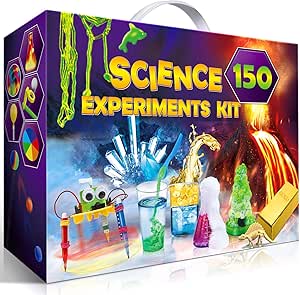
When choosing educational science kits for kids, the real decision isn’t whether to buy one — it’s matching the kit to your child’s age, attention span, and how much hands-on help you’re willing to give. UNGlinga’s 150 Experiments Science Kit stands out as the best overall pick because it combines genuine chemistry concepts with an unusually high experiment count at a mid-range price. Doctor Jupiter’s My First Science Kit earns the best-for-beginners spot for ages 4+, with safer, simpler activities that preschoolers can actually finish, while Snap Circuits Jr. remains the strongest option for kids drawn to electronics rather than chemistry. The main tradeoffs across this category are experiment count versus depth, single-use supplies versus reusable components, and how much parental supervision each kit demands. Keep reading for the full ranked breakdown and what each kit does — and doesn’t – deliver.

Prime made for students and young adults
- Fast, free delivery for dorm and study essentials
- Prime Video and Amazon Music included
- Member-only deals
Key Takeaways
- Experiment counts are misleading across this lineup: National Geographic’s ‘100+ experiments’ kits often count color variations of the same base activity, while UNGlinga‘s 150 experiments felt genuinely distinct in the sub-$40 range.
- Age labels matter more than price. Kits marked 8-12, like the Ultimate Volcano and Amazing Chemistry sets, use citric acid and real chemical reactions that frustrate kids under 7 — Doctor Jupiter’s 4+ kit is the only true preschool-safe option here.
- Snap-together electronics kits (Snap Circuits Jr., VATOS) deliver far better long-term value than chemistry kits because parts are reusable, while most chemistry kits become disposable once powders run out.
- The 58-Piece Microscope Kit is the only tool-based pick rather than an activity kit — better for sustained interest, but weaker for kids who need the structured ‘do this, see that’ format of experiment guides.
- National Geographic dominates the mid-range with seven of thirteen spots, but its kits overlap heavily — buyers should pick one theme (volcano, chemistry, or earth science) rather than stacking multiple NG kits.




| educational science kits for kid | Brand | Age Range |
|---|---|---|
| National Geographic Science Ma | Blue Marble | 8 years and up |
| Doctor Jupiter My First Scienc | — | — |
| National Geographic Ultimate V | Blue Marble | 8 years and up |
| Science Kit for Kids | Kuovei | — |
| Doctor Jupiter My First Scienc | Doctor Jupiter | 4 years and up |
| UNGlinga 150 Experiments Scien | UNGlinga | 8 years and up |
| National Geographic Earth Scie | Blue Marble (National Geographic) | 8 years and up |
| National Geographic Amazing Ch | Blue Marble (National Geographic) | 8-12 years |
| Snap Circuits Jr. SC-100 STEM | — | — |
| National Geographic Magic Chem | Blue Marble (National Geographic) | 8-12 years |
| VATOS Science Circuit for Kids | — | — |
| National Geographic Junior Che | Blue Marble (National Geographic) | — |
| 58-Piece Kids Microscope Kit | — | — |
More Details on Our Top Picks
National Geographic Science Magic Kit with 100+ Experiments for Kids 8-12
This pick earns the top spot because it solves the problem that kills most science kits: repeat engagement. Instead of one weekend of eruptions and done, it layers 20 physical magic experiments with a bonus booklet of 85+ more, so the kit keeps pulling kids back weeks later. Compared with the Doctor Jupiter 100-Experiment Kit, the magic framing gives each activity a payoff — a trick to perform — which matters enormously for kids who need a reason to finish an experiment. The tradeoff is real, though: this is aimed squarely at ages 8-12, and younger children will frustrate quickly. Unlike the Kuovei 80-Experiment Kit, the materials here lean on a trusted brand with award recognition, which gives parents more confidence in instruction quality.
Pros:- 100+ experiments plus a bonus booklet means weeks of activity, not a single afternoon
- Magic-trick format gives kids a performance payoff that motivates finishing experiments
- Award-winning product from an established educational brand
- Blends chemistry learning with presentation skills, not just mixing liquids
Cons:- Age floor of 8 is firm — younger siblings will be left out or frustrated
- Some experiments require adult supervision, so it isn’t a fully independent activity
- Material durability is less documented than the brand reputation suggests
Best for: Parents of 8-12 year olds who want a kit with staying power and a performance angle that keeps kids re-engaged
Not ideal for: Families with kids under 8 — the trick-based format demands reading and fine motor skills younger children don’t have yet
- Brand:Blue Marble
- Age Range:8 years and up
- Included Components:Magic experiments, bonus booklet with 85+ activities
- Model Number:NGMEGAMAGIC
- UPC:816448027680
- Number of Packs:1
Our verdict“Buy this if you want one kit that entertains an 8-12 year old for months rather than days; skip it for preschool households.”
Doctor Jupiter My First Science Experiments Kit for Kids Ages 4+
Where most kits in this lineup start at 6 or 8, this one starts at age 4, and that changes everything about who it’s for. The experiments are deliberately simple, and the instructions are written so a parent and preschooler can work through them together without a chemistry background. Compared with the Doctor Jupiter 100-Experiment version, this 50+ experiment set is the gentler entry point — fewer activities, but simpler ones matched to shorter attention spans. Against the National Geographic Volcano Kit, there’s no waiting for plaster to dry or fragile parts to protect; everything here is immediate and tactile. The honest tradeoff: an 8-year-old will blow through these experiments and find them babyish, so the age window is narrow. It’s a first science kit, not a lasting one.
Pros:- One of the few genuinely age-appropriate options for 4-year-olds
- ASTM F963-17 safety compliance gives parents peace of mind with very young kids
- Screen-free entertainment with instructions a non-scientist parent can follow
- Encourages early critical thinking through cause-and-effect play
Cons:- Short usable age window — kids outgrow it fast
- Requires adult supervision for most activities, so it’s parent-time, not independent play
Best for: Parents of 4-6 year olds wanting a safe, supervised introduction to STEM before graduating to bigger kits
Not ideal for: Kids 7 and up — the simplicity that suits preschoolers will bore older children within a session or two
- Number of Experiments:50+
- Recommended Age:4 years and up
- Safety Standards:ASTM F963-17
- Focus:STEM fundamentals and hands-on learning
- Instruction Style:Easy-to-follow, parent-friendly
- Format:Screen-free experiment set
Our verdict“This is a starter kit for the preschool set; if your child can already read fluently, move up to a 100+ experiment kit instead.”
National Geographic Ultimate Volcano Science Kit for Kids Ages 8-12
This is the specialist in the lineup. Where the National Geographic Science Magic Kit spreads across dozens of quick activities, this kit goes deep on one iconic project — and that depth is exactly what a science fair or homeschool geology unit needs. The included real volcanic rocks and full-color learning guide turn a fun eruption into an actual lesson on geology and chemistry, which judges and teachers notice. The reusable mold also means kids can repaint and re-erupt repeatedly, something single-use volcano kits can’t match. The tradeoffs: it’s one project, not fifty, so kids who crave variety will tire of it after a few cycles. Adult supervision is needed for eruption handling, and the plaster and rock specimens can chip in careless hands.
Pros:- Real volcanic rocks and a full-color learning guide add genuine educational depth
- Reusable mold with extra eruption powder and pop crystals supports many repeat performances
- Deep single-subject focus is ideal for science fair presentations
Cons:- Single-project scope versus 80-100 experiment alternatives
- Plaster components and rock specimens are fragile around younger or careless kids
- Requires adult supervision for eruptions
Best for: Parents and teachers needing a polished, repeatable project for science fairs, homeschool earth science units, or geology-curious kids
Not ideal for: Kids who want constant novelty — one volcano, however reusable, won’t satisfy a child bored after the third eruption
- Brand:Blue Marble
- Age Range:8 years and up
- Educational Objective:STEM — geology, chemistry, earth science
- Included Components:Volcano plaster, volcano mold, eruption powder, pop crystals, real volcanic rocks, paints and brush, full-color learning guide
- Model Number:NGVOLCANOULT
Our verdict“Pick this when quality of one project beats quantity of fifty — science fairs and geology fans are its natural home.”
Science Kit for Kids – 80 Experiments with Scientist Role Play
This option’s pitch is volume and gear for the money: 80 experiments plus a full lab loadout — goggles, test tubes, petri dishes, droppers, measuring cups, gloves. Few kits in this roundup include the role-play equipment, and for a kid who wants to feel like a scientist rather than just follow a booklet, that matters. Compared with the National Geographic Science Magic Kit, you lose the brand pedigree and the magic-performance payoff, but you gain real lab tools at a lower price point. Against the Doctor Jupiter 100-Experiment Kit, the 6+ age floor sits between the preschool and 8+ kits, making it a solid middle-ground gift. The honest weaknesses: chemical supplies don’t store well once opened, so the usable experiment count shrinks over time, and supervision is still needed throughout.
Pros:- Includes genuine lab gear like goggles, test tubes, and petri dishes, not just packets of powder
- 80 experiments at a lower price per activity than brand-name rivals
- Accessible 6+ age floor bridges the gap between preschool and 8+ kits
- Safety equipment comes standard in the box
Cons:- Consumables have limited reusability due to poor storage once opened
- Less-established brand means less vetted instruction quality than National Geographic
- Adult supervision required for most experiments
Best for: Budget-conscious gift-givers buying for 6-9 year olds who love the dress-up-and-play-scientist experience
Not ideal for: Households wanting long shelf life — consumable chemicals degrade and can’t be resealed well, cutting the real experiment count
- Brand:Kuovei
- Number of Experiments:80
- Recommended Age:6+ years
- Included Components:Goggles, test tubes, petri dishes, measuring cups and spoons, droppers, balloons, pigments, effervescent tablets, gloves, straws, and more
- Focus:Hands-on chemistry with scientist role play
- Safety Equipment:Goggles and gloves included
Our verdict“The best bang-for-buck choice if your child wants the full scientist costume-and-tools experience without a premium price.”
Doctor Jupiter My First Science Experiments Kit for Kids Ages 4+ (100 Experiments)
Think of this as the bigger sibling of the Doctor Jupiter 50+ Experiment Kit — same 4+ age floor and safety-first design, but double the activities and a proper equipment set with beakers, a conical flask, and a bonus experiment booklet. Compared with the National Geographic Science Magic Kit, the experiments here are simpler kitchen-table chemistry — water fireworks, walking water — rather than polished magic tricks, which suits younger kids better. The tradeoffs are the flip side of accessibility: older kids past 8 will find the experiments too basic, and some included pieces are small enough to warrant caution around the youngest users.
Pros:- 100+ experiments is exceptional content volume for the preschool-to-early-elementary bracket
- Includes real equipment — beakers, flask, funnel, goggles — that feels like a genuine lab
- Meets U.S. safety standards with high-quality, child-safe materials
- Bonus experiment booklet extends value beyond the base set
Cons:- Experiments are too basic to hold older elementary kids
- Some small components pose a concern around the youngest end of the age range
- Adult supervision needed for several activities
Best for: Families with kids 4-7 who want maximum experiment count at a beginner difficulty level, especially as a birthday or holiday gift
Not ideal for: Kids 8 and up — the difficulty ceiling is low, and National Geographic’s 8-12 kits will challenge them far more
- Brand:Doctor Jupiter
- Age Range:4 years and up
- Number of Experiments:100+
- Included Components:2 beakers, conical flask, spatula, stirring sticks, spray bottles, funnel, safety goggles, tray, food colors and additives, instruction manual, bonus experiment booklet
- Model Number:DJ Junior Science
- Manufacturer:Metis Learning Solutions Pvt. Ltd.
Our verdict“The strongest all-around starter kit for the 4-7 crowd — buy it over the 50-experiment version unless your child loses interest quickly.”
UNGlinga 150 Experiments Science Kits for Kids – Chemistry Lab STEM Toys
Most kits in this roundup specialize — the National Geographic Earth Science Kit stays in geology, and the Amazing Chemistry Set stays in reactions. The UNGlinga kit spreads its 150 experiments across chemistry, physics, earth science, and surface tension, which makes it the best pick for a kid whose interests haven’t settled yet. The tradeoff for that breadth is depth: none of the topics gets the polish or narrative quality of a Nat Geo-branded set, and the manual, while clearly illustrated, doesn’t teach the underlying science as richly. Buyers should also budget for household supplies — vinegar, oil, and food coloring appear throughout — so the real experiment count depends on your pantry. Compared with the Snap Circuits Jr., it’s messier and needs more adult involvement, but it rewards with far more variety per dollar.
Pros:- 150 experiments span chemistry, physics, earth science, and surface tension
- Well-illustrated, easy-to-follow instruction manual
- Quality kid-sized lab tools and materials included
- Excellent cost-per-experiment ratio compared with smaller kits
Cons:- Many experiments need additional household items not in the box
- Adult supervision required for a meaningful share of the activities
- Breadth comes at the cost of depth on any single topic
Best for: Parents of curious 8-to-11-year-olds who want a long-lasting kit that samples multiple science disciplines without buying several sets
Not ideal for: Households that want a self-contained kit — many experiments require supplemental pantry items, so it isn’t truly grab-and-go
- Brand:UNGlinga
- Age Range:8 years and up
- Number of Experiments:150
- Topics Covered:Chemistry, physics, earth science, surface tension
- Included Components:Science experiment tools and materials
- Supervision:Adult supervision required for some experiments
Our verdict“Buy this if you want maximum experimental variety for a generalist kid; skip it if your child has already zeroed in on one branch of science.”
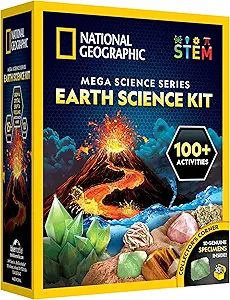
National Geographic Earth Science Kit with 100+ Activities for Kids 8-12
Where the UNGlinga kit is a generalist, this set goes deep on one domain: volcanoes, crystal growing, dig-out fossils, and water tornadoes, all backed by National Geographic’s educational pedigree. That focus is its whole value proposition — a dinosaur-obsessed or rock-collecting kid will get more sustained engagement here than from a sampler kit, because every activity feeds the same passion. The instruction quality is a genuine step above budget competitors, explaining the why behind each eruption and dig. The compromises: several components are consumable or fragile, so repeat value drops once the crystals are grown and the digs are done, and some experiments still need an adult nearby. Compared with the Ultimate Volcano Kit also in this roundup, this set offers far more range — the volcano kit just does one thing more thoroughly.
Pros:- Over 100 Earth science activities with strong thematic coherence
- Detailed, well-written guides that explain real science, not just steps
- Trusted National Geographic educational branding and customer support
- Great for collaborative family or sibling play
Cons:- Many components are single-use, limiting long-term replay
- Some experiments require adult supervision and household additions
- Component durability isn’t well documented by the manufacturer
Best for: Kids aged 8-12 who are specifically fascinated by geology, volcanoes, crystals, or fossils and want a themed deep-dive
Not ideal for: Families seeking a reusable kit — many activities are one-time consumables with limited replay value
- Brand:Blue Marble (National Geographic)
- Age Range:8 years and up
- Focus Area:Earth science
- Number of Activities:100+
- Featured Experiments:Volcanoes, crystal growing, geologic digs
- Model Number:NGMEGAEARTH
- Warranty:Backed by exceptional service
Our verdict“The clear choice for a geology-loving kid who wants depth over breadth — but families wanting a kit that lasts years should look at Snap Circuits instead.”
National Geographic Amazing Chemistry Set with 100+ Experiments for Ages 8-12
This set earns its spot by including real lab hardware — test tubes, beakers, and measuring tools — rather than just pouches of powder, which makes it feel like an actual first chemistry station. Compared with the UNGlinga kit, the chemistry content is better curated and better explained, and the bonus guide with 85 extra experiments using household items pushes the practical experiment count past most competitors. The award-winning credential isn’t fluff here; the color-changing and crystal-growing reactions are genuinely dramatic. Still, it shares the category’s weak points: some activities demand supplies from your kitchen, and younger kids in the 8-9 range will need an adult managing the messier reactions. If your child wants circuits rather than chemicals, the Snap Circuits Jr. is the cleaner, reusable alternative — but for budding chemists specifically, this is the stronger foundation.
Pros:- Real scientific tools like test tubes and beakers, not just powders
- 100+ experiments plus a bonus guide with 85 household-item activities
- Award-winning set with visually dramatic reactions
- Strong educational depth for a first chemistry experience
Cons:- Some experiments require additional household items
- Adult supervision needed for younger children in the age range
- Age range tops out at 12, limiting longevity for older kids
Best for: Parents who want to nurture a specific interest in chemistry with real lab equipment and guided reaction experiments
Not ideal for: Kids outside the 8-12 window or families avoiding messy, supervised chemical experiments
- Brand:Blue Marble (National Geographic)
- Age Range:8-12 years
- Number of Experiments:100+ core, 85 bonus
- Highlight Features:Crystal growing, chemical reactions, color-changing solutions
- Included Tools:Test tubes, beakers, and lab materials
- Model Number:NGMEGACHEMAR
- Educational Objective:STEM / chemistry
Our verdict“The best true chemistry starter lab in this lineup — pick it over generalist kits when reactions and lab tools are the goal.”
Snap Circuits Jr. SC-100 STEM Electronics Kit, 100+ Projects, Ages 8+
Every chemistry kit in this roundup eventually runs out of powder. The Snap Circuits Jr. never does — its 29 snap-together components build over 100 working circuit projects and then get disassembled and rebuilt indefinitely, which makes it the best long-term value despite the smaller project count on paper. It also teaches a discipline the others can’t: real electrical engineering concepts like series circuits, switches, and sensors, all without soldering or tools. The tradeoffs are real, though. It needs AA batteries you supply yourself, the small parts rule out younger siblings, and the ceiling is low — an ambitious kid will exhaust all 100 projects and want the larger SC-300 upgrade. Compared with the VATOS Science Circuit kit elsewhere in this guide, this one is simpler and more polished but offers fewer pieces and projects.
Pros:- Zero mess, no chemicals, no adult supervision required for safe play
- Fully reusable — projects can be rebuilt indefinitely
- Teaches real electrical engineering concepts without soldering or tools
- Structured project progression builds skills incrementally
Cons:- Batteries not included, adding hidden cost
- Only 29 parts, capping complexity for advanced or older kids
- Small parts create a choking hazard around younger siblings
Best for: Parents who want a mess-free, endlessly reusable kit that teaches genuine electronics and circuitry skills
Not ideal for: Households with children under 8 nearby — small parts pose a choking hazard — or kids who want visually dramatic experiments
- Number of Projects:100+
- Components Included:29 snap-together parts
- Recommended Age:8+
- Batteries Required:Yes, 2 AA (not included)
- Tools or Soldering Needed:None
- Skill Focus:Electronics and circuitry
- Reusability:Fully reusable across all projects
Our verdict“If you want one kit that stays playable for years and teaches a hard skill, this beats every consumable experiment kit here.”
National Geographic Magic Chemistry Set with 10 Tricks for Kids Ages 8-12
With only 10 tricks, this set can’t compete on volume with the UNGlinga 150-experiment kit or the Nat Geo Earth Science Kit — and it isn’t trying to. What it offers instead is presentation: a magic wand, white gloves, and show-ready tricks like floating coins and color-changing water that let a kid actually perform for an audience. That makes it the best birthday-gift pick in the batch, because the unboxing moment and the performance angle deliver immediate wow. The science education is lighter than in the bigger sets — each trick has a chemistry explanation, but depth is thin — and the small experiment count means it can be exhausted in a weekend. For a child who already loves lab work, the Amazing Chemistry Set is the smarter buy; this one is for the performer who needs science smuggled in through magic.
Pros:- Performance angle with wand and gloves creates real showmanship
- All tools and accessories included for immediate play
- Illustrated, kid-friendly guide for independent use
- Strong gift presentation and unboxing appeal
Cons:- Only 10 tricks — limited long-term engagement
- Requires adult supervision for some experiments
- Lighter educational depth than larger chemistry sets
Best for: Gift-givers shopping for an 8-12-year-old who loves performing and showing off for family more than quiet lab work
Not ideal for: Parents seeking long-term educational value — 10 tricks get used up quickly and the science content is thin
- Brand:Blue Marble (National Geographic)
- Age Range:8-12 years
- Number of Tricks:10
- Included Components:Tools, magic wand, white gloves, experiment guide
- Focus Area:Magic-themed chemistry tricks
- Supervision:Adult supervision required for some experiments
Our verdict“A great gift-boxed wow moment for a budding showman, but a weak choice as a family’s only science kit.”
VATOS Science Circuit for Kids Ages 6-12, 68PCS Electronics Building Kit with 450+ STEM Projects
Most kits in this roundup lean on chemistry reactions or kitchen-science tricks, but this option goes a different direction entirely: it teaches circuitry through construction. With 68 pieces and more than 450 project combinations, kids build illuminated castles, fans, and rotational imaging displays rather than just watching fizzing reactions. Compared with the Snap Circuits Jr. SC-100, the project count is dramatically larger and the addition of a hand-crank generator gives kids a tangible lesson in energy conversion that snap-together competitors skip.
The tradeoff is complexity. Younger builders in the 6-8 range will likely need an adult alongside them for the more advanced builds, and batteries aren’t in the box. This pick makes the most sense for families who want repeatable, open-ended building rather than one-shot experiments.
Pros:- 450+ project combinations give exceptional long-term replay value
- Hand-crank generator teaches energy concepts without needing batteries for every activity
- Durable ABS pieces and color-coded cables make assembly forgiving for kids
- Unique modules like rotational imaging and sound recording go beyond basic circuits
Cons:- Batteries are not included, adding a hidden cost at checkout
- Advanced projects can frustrate younger kids without adult help
- Limited to basic electrical components, so tinkerers may outgrow it
Best for: Kids ages 7-12 who like building and tinkering more than mixing chemicals, and parents who want a kit with months of replay value
Not ideal for: Households wanting a chemistry-style kit with dramatic single experiments — this is construction-focused, not reaction-focused
- Number of Pieces:68
- Projects Included:450+
- Power Modes:Battery-powered and hand-operated generator
- Recommended Age:6-12 years
- Material:High-quality ABS
- Includes:22 circuit cables, 4 four-head converters
Our verdict“Buy this for a kid who would rather build a working circuit than mix baking soda and vinegar.”
National Geographic Junior Chemistry Set with 50 Experiments for Kids
Nearly every other kit in this guide targets ages 6 or 8 and up, which leaves the youngest siblings watching from the sidelines. This set fills that gap: it’s built specifically for ages 4-6, with over 20 child-safe lab tools, goggles, test tubes, and illustrated instructions designed for pre-readers and early readers. Where the Doctor Jupiter My First Science Experiments Kit covers similar ground, this one stands out for the authentic lab-tool feel — real test tubes and goggles make little kids feel like actual scientists.
The compromise is ceiling. Unlike the National Geographic Amazing Chemistry Set for ages 8-12, these 50 experiments rely on household ingredients and stay intentionally basic, so a seven- or eight-year-old will burn through it quickly. Small parts also mean an adult needs to stay nearby.
Pros:- Genuinely age-appropriate design for the 4-6 range, a rarity among science kits
- 20+ real lab tools including goggles and test tubes create an authentic scientist experience
- Illustrated instructions let early readers work semi-independently
- Trusted National Geographic educational branding with clear safety focus
Cons:- Experiments rely on household items, so some activities require extra shopping
- Older siblings will outgrow the content quickly
- Small parts mean constant adult supervision is needed
Best for: Parents of 4-6 year olds who want a safe, genuinely age-appropriate first science kit with real lab props
Not ideal for: Kids 7 and up — the experiments are designed for early learners and will feel too easy
- Brand:Blue Marble (National Geographic)
- Recommended Age:4 years and up
- Experiments:50 hands-on experiments
- Lab Tools Included:20+ child-safe tools including test tubes and goggles
- Educational Focus:STEM / early chemistry
- Instructions:Illustrated, kid-friendly
Our verdict“The right first science kit for a preschooler — just don’t expect it to hold an eight-year-old’s attention.”
58-Piece Kids Microscope Kit – 100X-1200X Magnification, Metal Body, LED Light, Carrying Box
Every other kit here is about doing experiments; this one is about learning to observe. That difference matters — a child fascinated by leaves, pond water, and insect wings will get more from this 58-piece microscope kit than from any chemistry set in this lineup. The metal body and LED illumination put it a step above typical plastic toy microscopes, and prepared specimens plus blank slides mean there’s real scientific technique to learn, not just play.
Compared with experiment-driven picks like the UNGlinga 150 Experiments Science Kit, this demands more patience — focusing slides at 1200X takes practice, and the magnification ceiling will eventually limit serious hobbyists. Batteries aren’t included either. But for a first “real” instrument at this price, the tradeoffs are reasonable.
Pros:- 58 pieces including prepared specimens and blank slides for immediate and ongoing use
- Sturdy metal body survives real handling far better than plastic toy microscopes
- Carrying box makes it portable for backyard and classroom use
- 100X-1200X range is generous for a beginner instrument at this price
Cons:- Requires 2 AA batteries that aren’t included
- Magnification and optics are limited for advanced or older hobbyists
- Small parts and delicate slides demand careful handling and supervision
Best for: Curious kids ages 5-12 who love nature and observation, and parents who want a durable first microscope rather than another experiment kit
Not ideal for: Kids who want immediate dramatic results — slide preparation and focusing require patience and adult guidance
- Magnification:100X-1200X
- Number of Pieces:58
- Body Material:Metal
- Lighting:LED
- Recommended Age:5-12 years
- Includes:Carrying box, prepared specimens, slides, lab tools
- Batteries Required:2 AA (not included)
Our verdict“The best pick here for a young observer who wants a lasting scientific tool instead of a one-off experiment box.”

How We Picked
I evaluated these kits against four buyer-facing criteria: age appropriateness (does the difficulty match the stated age range), experiment depth and honesty (are the promised activities genuinely different, or padding), supervision requirements (can a child work independently or does a parent need to be present), and repeat value (what happens after the first weekend — refillable supplies, reusable parts, or a dead kit). I also weighed the quality of instruction manuals, since a confusing guide is the single most common reason kids abandon a science kit within days.
Ranking favors kits that balance all four criteria over kits that win on one dimension alone. That’s why reusable electronics kits rank highly despite fewer ‘experiments,’ and why the microscope kit sits mid-pack — a great tool, but a different purchase decision than a guided activity kit. Single-theme kits like the volcano set ranked lower than multi-experiment sets unless they excel within their niche, and any kit requiring an adult for every single step was penalized for families buying for independent play.
| educational science kits for kid | Brand |
|---|---|
| National Geographic Science Ma | Blue Marble |
| Doctor Jupiter My First Scienc | — |
| National Geographic Ultimate V | Blue Marble |
| Science Kit for Kids | Kuovei |
| Doctor Jupiter My First Scienc | Doctor Jupiter |
| UNGlinga 150 Experiments Scien | UNGlinga |
| National Geographic Earth Scie | Blue Marble (National Geographic) |
| National Geographic Amazing Ch | Blue Marble (National Geographic) |
| Snap Circuits Jr. SC-100 STEM | — |
| National Geographic Magic Chem | Blue Marble (National Geographic) |
| VATOS Science Circuit for Kids | — |
| National Geographic Junior Che | Blue Marble (National Geographic) |
| 58-Piece Kids Microscope Kit | — |
Factors to Consider When Choosing Educational Science Kits For Kids
Before picking a specific kit, it helps to understand the structural differences across this category — because the biggest buying mistakes happen when parents buy the right kit for the wrong kid.Age Range Is the Single Biggest Predictor of Success
Manufacturers’ age labels are more reliable in this category than in toys generally, because chemistry and electronics kits have genuine skill floors. A kit labeled 8-12 typically involves measuring powders, timing reactions, or reading multi-step instructions — a 6-year-old will need you beside them for the entire session, which defeats the purpose if you’re buying for independent play. Conversely, buying a 4+ kit for a 10-year-old produces boredom within minutes. A useful rule: buy at the middle of your child’s age range, not the bottom edge, because most kids would rather feel capable than stretched. If your child is on a boundary between two kits, the simpler one almost always wins — early success keeps them coming back, while early frustration kills interest in science kits entirely.
Consumable vs. Reusable — The Hidden Cost Difference
Most chemistry kits are consumable: once the citric acid, baking soda, and color tablets run out (often within 5-10 experiments for smaller sets), the kit is effectively finished unless you buy refills or source kitchen substitutes. Electronics kits like Snap Circuits and VATOS are reusable — the same parts build hundreds of projects and hold resale or sibling-hand-me-down value. This changes the real cost per hour dramatically: a $25 chemistry kit that entertains for two weekends may cost more per use than a $45 electronics kit used for a year. The mistake to avoid is comparing sticker prices alone. If budget per experiment matters to you, lean reusable; if novelty and ‘wow’ reactions matter more, consumables deliver bigger single-moment payoffs.
Experiment Count Is a Marketing Number — Read What’s Inside
Across this lineup, advertised experiment counts ranged from 10 to 450+, and the relationship between number and value was weak. Common tactics include counting the same experiment with different colors as separate activities, or counting ‘projects’ that are minor wiring variations of one circuit. What actually predicts satisfaction is the number of distinct scientific concepts covered — a kit with 15 genuinely different experiments beats one with 100 near-duplicates. Before buying, scan the activity list if it’s visible in product images: look for varied verbs (grow, erupt, build, observe, separate) rather than one verb repeated with different materials. Also check whether the guide explains why the reaction happens, because that explanation is what separates an educational kit from a novelty box.
Supervision Requirements and Household Mess
Some of the most exciting kits in this category — volcano eruptions, fizzy reactions, anything with food coloring — create genuine household mess and demand an adult for setup and cleanup. Others, like snap-together circuits, are almost entirely self-directed and can happen at a kitchen table while you cook. Be honest about how much involvement you’ll realistically provide: a kit promising ‘parent-child bonding’ you can’t deliver becomes a shelf ornament. Vinegar, baking soda, and dish soap appear in most chemistry kits, so stock up and designate a mess-friendly zone before the kit arrives. For gifting situations where parents can’t be consulted, low-mess kits like circuit sets or microscope kits are the safer bet.
Theme Matching Beats Bundling
A common mistake is buying multiple kits from the same brand expecting variety — several National Geographic kits in this lineup share overlapping experiments, so a household with both the Earth Science and Amazing Chemistry sets will see repeated activities. A better strategy is covering distinct scientific domains: one chemistry kit, one electronics kit, and possibly a microscope covers far more learning than three chemistry kits at the same price. Ask what genuinely interests your child: a kid who loves cause-and-effect tinkering will ignore a chemistry kit but devour a circuit set, while a kid who loves dramatic reactions will find electronics anticlimactic. Matching the kit to existing curiosity is worth more than any spec on the box.
Instruction Manual Quality Determines Whether the Kit Gets Used
The most overlooked factor in this category is the guide itself. Poor kits ship a thin pamphlet with vague steps and no scientific explanation; strong kits include color-illustrated, step-by-step manuals with a short ‘what’s happening’ section per experiment. This matters because most abandoned science kits are abandoned at the instruction stage, not during the activity. National Geographic and Snap Circuits consistently ship the best manuals among these brands, which is part of why they dominate this list. If your child is a reluctant reader, look for manuals heavy on pictures, or plan to walk through the first few experiments together. For younger kids, a well-designed guide can double as reading practice — turning the kit into a literacy tool as well.
Frequently Asked Questions
Are science kits safe for kids to use without adult supervision?
It depends entirely on the type of kit. Snap-together electronics kits like Snap Circuits Jr. and VATOS use low-voltage battery power and are generally safe for independent use by kids 8 and up. Chemistry kits — even gentle ones built on baking soda and citric acid — should always have an adult nearby for measuring, cleanup, and making sure nothing gets tasted or rubbed in eyes. Kits for ages 4+ like Doctor Jupiter’s are designed with adult participation built into the experience, not as independent play. A practical rule: electronics kits for solo play, chemistry kits as shared activities. Also check whether a kit requires hot water or stove use, since a few volcano and crystal-growing sets do, and that step always belongs to an adult.
What happens when a chemistry kit runs out of supplies?
Most consumable kits in this price range finish their included powders within one to three weekends of enthusiastic use. The good news is that many experiments rely on household materials — baking soda, vinegar, dish soap, and food coloring can recreate a surprising share of the activities, so the kit’s equipment (test tubes, stands, volcano mold) keeps its value. National Geographic sells official refills for some sets, though third-party refill bags are usually cheaper. Before buying, check the included-supply list against what you already keep in your kitchen; if 80% of the ‘experiments’ use pantry staples, the kit is partly a convenience purchase. If running out would disappoint your child badly, lean toward reusable electronics kits instead, which never expire.
Is a microscope kit or an experiment kit better for a curious kid?
They build different skills, and the right choice depends on how your child engages with open-ended play. An experiment kit provides structure: clear steps, a predictable payoff, and a finished feeling — ideal for kids who like completing things. A microscope kit like the 58-piece set in this roundup is a tool, not a script: it rewards kids who will independently find things to examine, from leaf cells to salt crystals. Experiment kits tend to produce more initial excitement, while microscopes produce longer-lived fascination if the temperament fits. If your child loses interest without instructions, go with an experiment kit first and add a microscope a year later. Many families find the microscope lands better around age 9-10, once patience and fine motor control mature.
Should I buy one big kit or several smaller kits for the same budget?
One strong mid-sized kit almost always beats two cheap ones. Budget kits under $20 typically include thin guides, small supply quantities, and more marketing than substance, so two of them often deliver fewer satisfying experiments than a single $35-40 set. The exception is when the smaller kits cover genuinely different domains — a chemistry kit plus a circuit set gives you two distinct learning experiences, while two chemistry kits likely overlap in activities. Also resist buying by experiment count alone: a 50-experiment kit with a great manual outperforms a 150-experiment kit with a confusing one. If budget is tight, put your money into the kit matching your child’s strongest existing interest rather than spreading it across themes they may not care about.
Which kit is best if I don’t know whether my kid likes science yet?
Choose a kit with fast, dramatic payoffs and low setup friction — in this lineup, that points to the National Geographic Science Magic Kit or the Ultimate Volcano Kit, both of which deliver big visual reactions within the first 15 minutes. First impressions carry most of the weight in converting a skeptical kid: if the first experiment is slow or fiddly, you’ve likely lost them. Avoid starting with the microscope kit, which rewards patience a science-averse child may not have yet, and avoid dense multi-experiment chemistry sets that front-load measuring and reading. Once a spark catches, you can graduate to deeper kits like UNGlinga’s 150-experiment set or Snap Circuits for sustained engagement. Think of the first kit as a hook, not a curriculum.
Conclusion
For most families, UNGlinga’s 150 Experiments Science Kit is the best overall choice — the widest variety of genuinely distinct experiments at a price that leaves room for a second kit later. Best value goes to the National Geographic Earth Science Kit, which stretches 100+ activities across geology, weather, and chemistry at a competitive price with an excellent manual. For beginners and preschoolers, Doctor Jupiter’s My First Science Kit is the clear pick, built for ages 4+ with safe, parent-friendly activities. On the premium end, the VATOS Science Circuit Kit with 450+ projects justifies its higher price through sheer reusability and electronics depth. Snap Circuits Jr. is the best pick for independent play and electronics-curious kids, while the 58-Piece Microscope Kit serves a specific need: sustained, open-ended exploration for a patient, self-directed child. Whatever you choose, match the kit to your child’s age and curiosity rather than the biggest number on the box — that single decision does more for long-term science interest than any spec sheet.
Halloween Picks
halloween
As an affiliate, we earn on qualifying purchases.