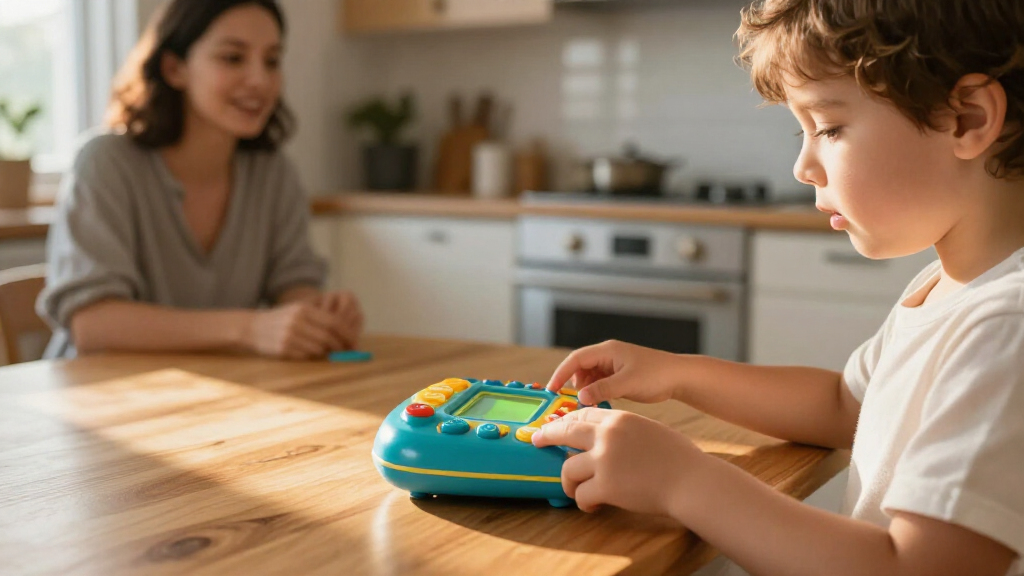

Children’s electronic learning toys range from screen-based tablets to focused tools for letters, writing, languages, and early math. I name the LeapFrog LeapPad Academy my best overall pick for its broader learning range, while the VTech Play Smart Preschool Laptop offers a simpler laptop-style introduction and LeapFrog Mr. Pencil’s Scribble, Write and Read focuses on early writing skills. The main tradeoff is breadth versus focus: a device with many activities may be more versatile, while a single-skill toy can be easier for a young child to use. Age fit, language options, portability, and adult setup also separate these choices. Read on for the full comparison and help matching a toy to a child’s interests and stage.

Prime made for students and young adults
- Fast, free delivery for dorm and study essentials
- Prime Video and Amazon Music included
- Member-only deals
Key Takeaways
- The LeapPad Academy leads for range: It is the broadest pick here, while the writing, word, and math toys serve narrower learning goals.
- Preschool laptops suit children who like pretend play: The VTech Play Smart Preschool Laptop and LeapFrog LeapTop Touch offer a familiar keyboard format, with differences in interaction and design.
- Early writing has a dedicated option: Mr. Pencil’s Scribble, Write and Read and the VTech Write and Learn Creative Center put tracing and letter formation ahead of general activity variety.
- Language choices vary: The Peacurh, hahaland, and VTech Genio bilingual options differ in the number and type of languages offered, so buyers should check which languages and activities matter to their household.
- Several entries share a product line or repeat a model: The pink and green LeapTop Touch entries and duplicate Learning Friends 100 Words Book listing do not represent wholly different learning formats.
| LeapFrog LeapPad Academy Kids’ Learning Tablet, Green |  | Best Overall | Screen: 7-inch shatter-safe | Age range: 3–8 years | Included apps: More than 20 educator-approved learning apps | VIEW LATEST PRICE | See Our Full Breakdown |
| VTech Play Smart Preschool Laptop |  | Best for Early Keyboard Practice | Age range: 3–6 years | Activities: 30 | Keyboard: 26 letter keys and 10 number keys | VIEW LATEST PRICE | See Our Full Breakdown |
| LeapFrog 2-in-1 LeapTop Touch Educational Toy |  | Best for Younger Beginners | Age range: 2–5 years | Learning modes: ABCs, numbers, games, music, messages | Keyboard: Letters A–Z and numbers 1–10 | VIEW LATEST PRICE | See Our Full Breakdown |
| VTech Play Smart Preschool Laptop, Pink |  | Best Personalized Preschool Pick | Age range: 3–6 years | Activities: 30 leveled activities | Keyboard: 26-letter keyboard and 10 number keys | VIEW LATEST PRICE | See Our Full Breakdown |
| Peacurh Trilingual Learning Tablet Toy with Music and Sound |  | Best for Three-Language Vocabulary | Age recommendation: 12 months–8 years | Languages: English, Spanish, French | Play modes: Learning, quiz, music, pretend play | VIEW LATEST PRICE | See Our Full Breakdown |
| GaHoo Interactive Electronic Alphabet and Number Wall Chart for Toddlers, Blue |  | Best for Shared Wall Learning | Age range: 12 months–5 years | Dimensions: 24 × 16 inches | Learning activities: Letters, numbers, shapes, colors, animals, spelling, matching, and counting | VIEW LATEST PRICE | See Our Full Breakdown |
| LeapFrog Mr. Pencil’s Scribble, Write and Read |  | Best for Letter Tracing | Age range: 3+ years | Recommended age: 36 months–5 years | Activities: Letter and number tracing, dotted-line drawings, spelling, counting, and sound-it-out practice | VIEW LATEST PRICE | See Our Full Breakdown |
| VTech Genio Bilingual JuniorBook Learning Laptop for Kids |  | Best for Bilingual Computer Practice | Age range: 5 years and up | Activities: More than 80 | Vocabulary: Over 200 words | VIEW LATEST PRICE | See Our Full Breakdown |
| LeapFrog My First STEAM Laptop | 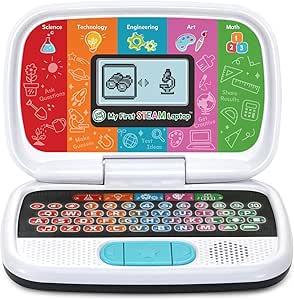 | Best for Guided STEAM Exploration | Recommended age: 3+ years | Educational objectives: Early development, logical thinking, motor skills, STEAM, and shape recognition | Activities: Plant growth, fossils, robot building, shape designs, and counting | VIEW LATEST PRICE | See Our Full Breakdown |
| LeapFrog 2-in-1 LeapTop Touch Learning Toy, Pink |  | Best Convertible Learning Toy | Age range: 2–5 years | Learning modes: ABCs, numbers, games, music, and messages | Keyboard: Letters A–Z and numbers 1–10 | VIEW LATEST PRICE | See Our Full Breakdown |
| LeapFrog Learning Friends 100 Words Book |  | Best for Bilingual Vocabulary | Brand: LeapFrog | Age range: 18 months–4 years | Vocabulary: More than 100 words | VIEW LATEST PRICE | See Our Full Breakdown |
| alilo Portable Math Games Toy for Kids Ages 5–12 |  | Best for Portable Math Practice | Brand: alilo | Model: KS-1 | Recommended age: 36 months–10 years | VIEW LATEST PRICE | See Our Full Breakdown |
| hahaland 5-Language Learning Tablet Toy for Toddlers Ages 1–3 |  | Best for Multilingual First Play | Brand: hahaland | Model: 35847 | Recommended age: 12 months–3 years | VIEW LATEST PRICE | See Our Full Breakdown |
| LeapFrog Learning Friends 100 Words Book |  | Best for Animal-Led Word Learning | Brand: LeapFrog | Age: 18 months and up | Vocabulary: More than 100 words | VIEW LATEST PRICE | See Our Full Breakdown |
| VTech Write and Learn Creative Center |  | Best for Early Handwriting | Brand: VTech | Recommended age: 3–6 years | Educational objective: Creative thinking | VIEW LATEST PRICE | See Our Full Breakdown |
| children’s electronic learning toy | Age range |
|---|---|
| LeapFrog LeapPad Academy Kids’ | 3–8 years |
| VTech Play Smart Preschool Lap | 3–6 years |
| LeapFrog 2-in-1 LeapTop Touch | 2–5 years |
| VTech Play Smart Preschool Lap | 3–6 years |
| Peacurh Trilingual Learning Ta | — |
| GaHoo Interactive Electronic A | 12 months–5 years |
| LeapFrog Mr. Pencil’s Scribble | 3+ years |
| VTech Genio Bilingual JuniorBo | 5 years and up |
| LeapFrog My First STEAM Laptop | — |
| LeapFrog 2-in-1 LeapTop Touch | 2–5 years |
| LeapFrog Learning Friends 100 | 18 months–4 years |
| alilo Portable Math Games Toy | — |
| hahaland 5-Language Learning T | — |
| LeapFrog Learning Friends 100 | — |
| VTech Write and Learn Creative | — |
More Details on Our Top Picks
LeapFrog LeapPad Academy Kids’ Learning Tablet, Green
The LeapPad Academy is the most complete choice here for families who want a screen-based learning toy with room to explore several subjects. Its 20-plus educator-approved apps span reading, math, writing, and coding, while parental controls let caregivers manage apps and screen time. The bumper, kickstand, and stylus make it feel more like a child-ready tablet than the pretend laptops in this lineup. Compared with the VTech Play Smart Preschool Laptop, it offers a broader app experience, but that laptop is simpler to start using and does not depend on Wi-Fi. The tradeoff is ongoing content: extra downloads cost separately, and the Academy subscription trial lasts only three months. Its 7-inch screen and rechargeable battery suit children who are ready for a more involved device.
Pros:- More than 20 learning apps cover several school-readiness subjects.
- Parental controls support app management and screen-time limits.
- Protective bumper includes a kickstand, and a stylus is included.
- Rechargeable battery avoids routine AA battery replacement.
Cons:- Additional games, videos, music, and eBooks are sold separately.
- Continued LeapFrog Academy access requires a subscription after the three-month trial.
- Wi-Fi-dependent tablet use may be more involved than a dedicated activity toy.
Best for: Families seeking a supervised, multi-subject tablet for children ages 3–8 who are ready to use apps and a stylus.
Not ideal for: Caregivers who want a self-contained toy with no Wi-Fi or subscription decisions, or children who do best with simple physical buttons.
- Screen:7-inch shatter-safe
- Age range:3–8 years
- Included apps:More than 20 educator-approved learning apps
- Operating system:Android 10
- Connectivity:Wi-Fi
- Battery:Rechargeable lithium-ion
- Cameras:Rear 2 MP; front 0.3 MP
- Included accessories:Silicone bumper with kickstand, stylus, USB Type-C cable, wall adapter
- Warranty:2-year limited warranty
Our verdict“Choose the LeapPad Academy for a supervised, multi-subject learning tablet, provided you are comfortable managing Wi-Fi and optional paid content.”
VTech Play Smart Preschool Laptop
For preschoolers who are curious about computers, the VTech Play Smart Preschool Laptop turns familiar keys into a straightforward learning toy. Its 30 activities cover letters, numbers, logic, music, and introductory Spanish, with a 26-letter keyboard and number keys that invite hands-on practice. Children can add a name and avatar, giving the activities a personal hook. Compared with the LeapFrog 2-in-1 LeapTop Touch, this VTech model offers more activities and a Spanish introduction, while the LeapTop can switch into tablet mode and suits younger children. This laptop is limited to ages 3–6 and has no rechargeable battery, so caregivers should plan on supplying two AA cells beyond the demo batteries. It suits families who want button-based play without the app and subscription structure of the LeapPad Academy.
Pros:- Thirty activities span early literacy, numbers, logic, music, and other topics.
- Introductory Spanish adds language exposure alongside English activities.
- Name and avatar personalization can help children engage with the activities.
- Letter and number keys provide tactile keyboard familiarity.
Cons:- Two AA batteries are required for regular play; included batteries are for demonstration.
- Its preschool age range gives it less appeal as children move into school-age learning.
- Does not offer the LeapTop Touch’s convertible laptop and tablet modes.
Best for: Families with children ages 3–6 who want varied button-based activities and an introduction to a QWERTY-style keyboard.
Not ideal for: Buyers seeking a rechargeable device, touch-screen play, or activities designed to grow well beyond preschool.
- Age range:3–6 years
- Activities:30
- Keyboard:26 letter keys and 10 number keys
- Battery requirement:2 AA batteries
- Material:Plastic
- Included components:Play Smart Preschool Laptop and Parent’s Guide
- Color:Black
- Warranty:90 days against manufacturer defects
Our verdict“Pick this VTech laptop for preschoolers who want varied activities and keyboard familiarity in a simple, button-based format.”
LeapFrog 2-in-1 LeapTop Touch Educational Toy
The LeapFrog 2-in-1 LeapTop Touch is the gentlest starting point among the keyboard toys in this group: its laptop-to-tablet design gives ages 2–5 two ways to explore without the broader app environment of the LeapPad Academy. Five modes introduce letters, numbers, games, music, and pretend messages, and caregivers can customize spelling activities with a child’s name. The carry handle helps when the toy moves between rooms or travels. Compared with the VTech Play Smart Preschool Laptop, the LeapTop has fewer activities but reaches younger children and changes form; the VTech offers 30 activities and introductory Spanish for preschoolers. The tradeoff is a narrower learning set and a need for three AA batteries, with demo cells included only for setup. This is a focused toy for first keyboard curiosity, not a substitute for a full learning tablet.
Pros:- Switches between laptop and tablet modes to vary the play format.
- Five modes cover early letters, numbers, games, music, and messages.
- Name customization supports simple spelling practice.
- Carry handle makes it easy for small children to take along.
Cons:- Three AA batteries are required for regular use.
- Five modes provide a narrower activity range than the VTech Play Smart Preschool Laptop.
- Its ages 2–5 focus limits its usefulness as children grow.
Best for: Caregivers of children ages 2–5 who want a portable first introduction to letters, numbers, and pretend computer play.
Not ideal for: Families wanting a larger activity library, introductory Spanish, or rechargeable power.
- Age range:2–5 years
- Learning modes:ABCs, numbers, games, music, messages
- Keyboard:Letters A–Z and numbers 1–10
- Battery requirement:3 AA batteries
- Weight:1.3 pounds
- Dimensions:2.05 x 10.08 x 6 inches
- Included components:2-in-1 LeapTop Touch and Parent’s Guide
- Warranty:90 days against manufacturer defects
Our verdict“Choose the LeapTop Touch as a portable first keyboard toy for a young child who benefits from simple modes and a convertible design.”
VTech Play Smart Preschool Laptop, Pink
This pink version of the VTech Play Smart Preschool Laptop earns its place for children who like to see familiar details reflected in their play. Alongside 30 leveled activities in letters, numbers, logic, music, and other topics, children can enter their name and age and choose an avatar. Beginning Spanish and a QWERTY-style keyboard broaden the mix beyond simple letter drills. Compared with the black VTech Play Smart Preschool Laptop, the listed learning range is very similar, so the choice here rests on the pink finish and personalization details rather than a distinct activity advantage. The LeapPad Academy has more room for varied app-based content, but this toy avoids a Wi-Fi setup and subscription trial. Its limits are clear: it is single-player, preschool-focused, and needs two AA batteries for regular use.
Pros:- Thirty leveled activities cover multiple early-learning categories.
- Personalization includes a child’s name, age, and avatar.
- Beginning Spanish and a QWERTY-style keyboard add variety to preschool play.
- Physical keys offer a simple, screen-free alternative to the LeapPad Academy.
Cons:- Designed for one player, limiting shared play.
- Two AA batteries are needed for regular use; included batteries are for demonstration.
- Its preschool focus offers less flexibility than an expandable tablet.
Best for: Families choosing a one-child preschool laptop who value name, age, and avatar personalization and prefer a pink finish.
Not ideal for: Households looking for shared play, rechargeable power, or a learning device that expands through apps.
- Age range:3–6 years
- Activities:30 leveled activities
- Keyboard:26-letter keyboard and 10 number keys
- Battery requirement:2 AA batteries
- Players:1
- Color:Pink
- Model number:80-196335
- Included components:Play Smart Preschool Laptop and Parent’s Guide
Our verdict“Choose the pink VTech laptop for a preschooler who enjoys personalized solo activities and a familiar keyboard layout.”
Peacurh Trilingual Learning Tablet Toy with Music and Sound
The Peacurh Trilingual Learning Tablet has a narrower purpose than the LeapFrog tablet: it puts English, Spanish, and French vocabulary and sounds on a simple set of 39 interactive icons. Learning, quiz, music, and pretend-play modes let a child revisit the themes in different ways, while its lightweight design and rounded edges suit small hands and travel. Compared with the LeapFrog LeapPad Academy, Peacurh offers three listed languages and a simpler toy format, but it does not provide the Academy’s broad app library, parental controls, or rechargeable-battery details. The age recommendation spans 12 months to 8 years, though the fixed icons may hold less appeal as children seek more complex activities. Battery inclusion is unspecified, so caregivers should check the power requirements before relying on it for a trip.
Pros:- Introduces vocabulary in English, Spanish, and French.
- Four modes revisit the same themes through learning, quizzes, music, and pretend play.
- Thirty-nine interactive icons provide clear, touch-based entry points.
- Lightweight plastic design with rounded edges is suited to small hands.
Cons:- The 39 icons set a fixed limit on topics and interactions.
- Battery requirements and whether batteries are included are not specified in the supplied product details.
- It lacks the broader app selection and parental controls of the LeapPad Academy.
Best for: Caregivers seeking a lightweight vocabulary toy that exposes young children to English, Spanish, and French through sound and repetition.
Not ideal for: Families wanting adaptive or expandable lessons, detailed parental controls, or confirmed rechargeable power.
- Age recommendation:12 months–8 years
- Languages:English, Spanish, French
- Play modes:Learning, quiz, music, pretend play
- Interactive icons:39
- Material:Plastic
- BPA-free:Yes
- Model:35847M
- Included components:Learning tablet
Our verdict“Pick Peacurh for simple three-language vocabulary play in a lightweight format, and look elsewhere for expandable lessons or advanced controls.”
GaHoo Interactive Electronic Alphabet and Number Wall Chart for Toddlers, Blue
I’d choose the GaHoo wall chart for families who want early learning visible and easy to revisit without handing a child a laptop-style toy. Touch-activated audio adds spoken prompts and songs to letters, numbers, shapes, colors, and animals, while the quiet visual side gives children a sound-free way to look and practice. Compared with LeapFrog Mr. Pencil’s Scribble, Write and Read, this chart favors broad recognition and shared viewing over tracing and writing feedback. Its 24 × 16-inch format can hang on a wall or travel, but it needs a suitable place to display and three AAA batteries that are sold separately. The reverse side also lacks audio, so the two sides offer different kinds of practice rather than the same activities in two formats.
Pros:- Combines touch-activated audio with a separate sound-free visual side.
- Covers letters, numbers, shapes, colors, animals, spelling, matching, and counting.
- Volume control and automatic shutoff offer practical control during use.
- Lightweight design can be hung or taken along.
Cons:- Three AAA batteries are required and are not included.
- The back side has no audio.
- Wall-chart format offers less writing practice than LeapFrog Mr. Pencil’s Scribble, Write and Read.
Best for: Families with toddlers who want a large, shared visual aid for practicing early concepts at home or on the go.
Not ideal for: Caregivers seeking hands-on letter tracing or audio on both sides; the chart emphasizes recognition, and its reverse is silent.
- Age range:12 months–5 years
- Dimensions:24 × 16 inches
- Learning activities:Letters, numbers, shapes, colors, animals, spelling, matching, and counting
- Audio:Touch-activated audio and songs; back side has no sound
- Controls:11 buttons, including volume control
- Power:3 AAA batteries, not included
- Automatic shutoff:Yes
- Color:Blue
Our verdict“Pick the GaHoo chart for broad, shared early-learning practice, and choose Mr. Pencil instead if tracing and writing are the priority.”
LeapFrog Mr. Pencil’s Scribble, Write and Read
Mr. Pencil’s Scribble, Write and Read is the most focused choice here for children ready to move from recognizing letters to forming them. A stylus guides practice with uppercase and lowercase letters, numbers, and dotted drawings; animated transformations and sound-it-out activities give children feedback as they work. It also supports spelling, counting, and personalized practice with a child’s first, middle, and last name. Compared with the GaHoo wall chart, this LeapFrog toy is more interactive for writing, while the chart covers a wider mix of early concepts in a shared display. That focus suits preschoolers who want to practice with a stylus, but it makes less sense for younger toddlers who need simpler visual exploration. It requires three AA batteries, and the included batteries are for demonstration.
Pros:- Practices uppercase and lowercase letter tracing with a stylus.
- Includes number tracing, dotted drawings, spelling, and counting activities.
- Personalized name writing can make letter practice more relevant to the child.
- Animated results and sound-it-out activities provide interactive feedback.
Cons:- Requires three AA batteries; included batteries are for demonstration only.
- Designed for ages three and up, so it may be too advanced for younger toddlers.
- Its writing focus is narrower than the broad visual and audio topics on the GaHoo wall chart.
Best for: Families with children aged three and up who are beginning letter formation, name writing, and early spelling.
Not ideal for: Families seeking a toy for children under three or a broad, shared wall display covering many early-learning topics.
- Age range:3+ years
- Recommended age:36 months–5 years
- Activities:Letter and number tracing, dotted-line drawings, spelling, counting, and sound-it-out practice
- Personalization:Practice writing first, middle, and last names
- Power:3 AA batteries; included batteries are for demonstration
- Material:Plastic
- Model number:80-617000
- Warranty:90 days against manufacturer defects
Our verdict“Choose Mr. Pencil for preschoolers ready to trace and spell, while the GaHoo chart suits younger children exploring a wider range of concepts.”
VTech Genio Bilingual JuniorBook Learning Laptop for Kids
For older children ready for a wider set of subjects, I’d give the VTech Genio Bilingual JuniorBook a distinct place in this group. Its more than 80 pre-loaded activities span math, science, language arts, and music, with English and Spanish options and over 200 vocabulary words. The full-size QWERTY keyboard and cursor controller make it more computer-like than LeapFrog My First STEAM Laptop, which centers its activities on guided STEAM exploration. This model is better suited to children who want varied practice and bilingual vocabulary, and it works offline, so activities don’t depend on internet access. Its age range starts at five, and the 1.9-pound, battery-powered laptop is a more substantial device than the simpler toys for preschoolers. Four AA batteries are needed; the included set is for demonstration.
Pros:- Offers activities in English and Spanish.
- Includes more than 80 activities across several learning subjects.
- Full-size QWERTY keyboard and cursor controller support computer-skill practice.
- Pre-loaded activities work without internet access.
Cons:- Requires four AA batteries; included batteries are for demonstration purposes.
- At 1.9 pounds, it is heavier than LeapFrog My First STEAM Laptop.
- Its age range starts at five, so it is less suited to preschool learners.
Best for: Families with children aged five and up who want offline English-and-Spanish activities and practice with a computer-style keyboard.
Not ideal for: Families shopping for toddlers or preschoolers, or those who want a lightweight, focused toy for early STEAM activities.
- Age range:5 years and up
- Activities:More than 80
- Vocabulary:Over 200 words
- Languages:English and Spanish
- Keyboard:Full-size QWERTY
- Cursor controller:Suitable for right- or left-hand use
- Internet requirement:No; activities are pre-loaded
- Power:4 AA batteries; included for demonstration purposes
- Dimensions and weight:11.26 × 7.48 × 1.4 inches; 1.9 pounds
Our verdict“Choose the Genio JuniorBook for a school-age child who wants bilingual, offline computer-style learning across multiple subjects.”
LeapFrog My First STEAM Laptop
The LeapFrog My First STEAM Laptop gives preschoolers a guided introduction to ideas that can feel abstract when taught through labels alone. Activities ask children to explore plant growth and fossils, build robots, create designs with shapes, and count, with animations leading them through each task. That makes it a more focused pick than the VTech Genio Bilingual JuniorBook: the VTech offers a much larger mix of subjects and bilingual vocabulary, while this LeapFrog stays centered on early STEAM and problem-solving. Its 9.33 × 6.22-inch body and 1.2-pound weight suit small hands, though it is a single-player toy. Families looking for turn-taking play or keyboard practice may prefer another option. It takes two AA batteries, and the included batteries are intended for demonstration.
Pros:- Introduces science, technology, engineering, art, and math through varied activities.
- Includes robot building, shape matching, creative designs, and counting.
- Animations guide children through each activity.
- Compact size and 1.2-pound weight suit preschoolers.
Cons:- Designed for one player.
- Requires two AA batteries; included batteries are for demonstration use.
- Covers a narrower set of subjects than the VTech Genio Bilingual JuniorBook.
Best for: Families with preschoolers who enjoy guided activities about science, shapes, building, and counting.
Not ideal for: Households seeking a shared multiplayer toy, bilingual activities, or a full-size keyboard for computer practice.
- Recommended age:3+ years
- Educational objectives:Early development, logical thinking, motor skills, STEAM, and shape recognition
- Activities:Plant growth, fossils, robot building, shape designs, and counting
- Dimensions:9.33 × 6.22 × 2.17 inches
- Weight:1.2 pounds
- Power:2 AA batteries; included for demonstration purposes
- Number of players:1
- Material:Plastic
Our verdict“Pick My First STEAM Laptop for a young child who wants guided STEAM play, and choose the Genio JuniorBook for broader bilingual learning.”
LeapFrog 2-in-1 LeapTop Touch Learning Toy, Pink
The LeapTop Touch earns its place through a simple change in form: swivel the screen to move between laptop-style and tablet-style play. Its five modes cover letters, numbers, games, music, and messages, and children can personalize spelling with their name. Compared with LeapFrog My First STEAM Laptop, this toy is less focused on science and design activities but offers a more flexible layout for everyday preschool practice. The carry handle also makes it easier to take along. That versatility comes with a modest subject range, and the toy is designed for one player, so it won’t suit children looking for group activities or a deeper set of guided STEAM challenges. It is intended for ages two to five and needs three AA batteries; the included batteries are for demonstration.
Pros:- Swiveling screen converts between laptop and tablet modes.
- Combines letter and number buttons with a touch screen.
- Five modes cover ABCs, numbers, games, music, and messages.
- Name-spelling customization and a carry handle support personalized, portable play.
Cons:- Designed for a single player.
- Requires three AA batteries; included batteries are for demonstration.
- Its five modes offer less focused STEAM exploration than LeapFrog My First STEAM Laptop.
Best for: Families with children aged two to five who want one portable toy that switches between keyboard-style and touch-screen play.
Not ideal for: Caregivers seeking multiplayer play, an older child’s computer-style keyboard practice, or a focused STEAM activity set.
- Age range:2–5 years
- Learning modes:ABCs, numbers, games, music, and messages
- Keyboard:Letters A–Z and numbers 1–10
- Power:3 AA batteries; included for demonstration
- Dimensions:2.05 × 10.08 × 6.1 inches
- Weight:1.3 pounds
- Included components:2-in-1 LeapTop Touch and Parent’s Guide
- Model number:80-600950
Our verdict“Choose the LeapTop Touch for portable, flexible preschool play, and pick My First STEAM Laptop for more focused science and building activities.”
LeapFrog Learning Friends 100 Words Book
This book earns its place for toddlers who learn best by tapping, listening, and repeating. Its 100-plus words span familiar topics such as animals, food, colors, and opposites, while the English-Spanish switch gives caregivers a simple way to introduce a second language during play. Touching pictures plays vocabulary, facts, and sound effects, so it offers more spoken-language practice than the VTech Write and Learn Creative Center, which focuses on tracing and drawing. The tradeoff is that this book centers on listening and recognition rather than handwriting or open-ended creation. It also needs two AA batteries; the included demo batteries may need replacing for regular use. I’d choose it for early vocabulary practice, especially in a bilingual household, and skip it if a child wants more hands-on drawing activities.
Pros:- Introduces more than 100 age-appropriate words across several familiar categories.
- Offers English and Spanish language options.
- Touching pictures plays words, facts, and sound effects.
- Light-up star adds two songs for a change of pace.
Cons:- Requires two AA batteries, and the included batteries are for demonstration.
- Audio and picture recognition offer less writing practice than the VTech Write and Learn Creative Center.
Best for: Caregivers of toddlers who want everyday English and Spanish vocabulary practice through touch-activated audio.
Not ideal for: Families looking for handwriting instruction or open-ended drawing, since the book focuses on listening and picture-based interaction.
- Brand:LeapFrog
- Age range:18 months–4 years
- Vocabulary:More than 100 words
- Languages:English and Spanish
- Power:2 AA batteries; demonstration batteries included
- Dimensions:9.4 × 9.2 × 1.9 inches
- Weight:1.5 lb
- Educational objectives:Animal recognition, cognitive skills, color recognition, language skills, and reading skills
- Warranty:90 days against manufacturer defects
Our verdict“Choose this book for toddler-friendly bilingual vocabulary play; pick a tracing toy if handwriting practice is the priority.”
alilo Portable Math Games Toy for Kids Ages 5–12
For children ready to practice arithmetic away from a screen, this compact device puts 19 math and logic games into a one-player format. Its voice feedback and mistake corrections can help a child keep working without an adult explaining every answer, while silent mode makes it more suitable for quiet settings than sound-led toys such as the LeapFrog Learning Friends 100 Words Book. The range of operations, from addition through division, gives it a longer practice path than a toddler vocabulary toy. That breadth comes with a tradeoff: it is focused on questions and challenges, not drawing, stories, or shared play. Timed rounds use five- or ten-second limits, which may frustrate children who need more thinking time. I’d pick it for independent math drills, not relaxed collaborative play.
Pros:- Offers 19 games covering logic, number patterns, and four arithmetic operations.
- Voice feedback and mistake review support independent practice.
- Adjustable volume and silent mode suit shared or quiet spaces.
- Portable design includes a lanyard and a lockable battery compartment.
Cons:- Designed for one player at a time.
- Five- and ten-second timed challenges may feel rushed for some children.
- Its math-question format offers less variety than toys with drawing or vocabulary activities.
Best for: Families seeking a portable, one-child practice device for school-age learners working on arithmetic and number patterns.
Not ideal for: Children who dislike timed questions, need a two-player activity, or want creative play alongside learning.
- Brand:alilo
- Model:KS-1
- Recommended age:36 months–10 years
- Games:19
- Math operations:Addition, subtraction, multiplication, and division
- Modes:5
- Players:1
- Size:2.9 inches
- Warranty:1 year
Our verdict“Choose this for portable solo math practice if timed questions suit your child; skip it for shared or creative play.”
hahaland 5-Language Learning Tablet Toy for Toddlers Ages 1–3
This screen-free tablet is aimed at the earliest stage of learning, combining 90-plus activities with animal, shape, letter, number, and color topics. Four modes—learning, quiz, music, and pretend play—give toddlers different ways to revisit its 39 interactive icons. Compared with the LeapFrog Learning Friends 100 Words Book, it offers a broader stated language selection and more play modes, while the LeapFrog book specifies a 100-plus-word vocabulary and a clear English-Spanish switch. One caveat is that the language lists in the product information differ by section, so I would verify which languages are included before buying for a particular language. The tablet is designed for ages one to three and one player, so older children may outgrow its early-learning activities quickly.
Pros:- Lists more than 90 activities across early-learning topics.
- Four modes vary the interaction between learning, quizzes, music, and pretend play.
- No screen, with 39 interactive icons for touch-based play.
- Made from BPA-free ABS plastic.
Cons:- The product information gives inconsistent language lists, so the exact language set is unclear.
- Its toddler age range limits usefulness as children grow.
- One-player design does not support shared electronic play.
Best for: Caregivers of babies and young toddlers who want screen-free activities across several early-learning topics and language options.
Not ideal for: Families buying for older preschoolers or relying on a specific language, since the stated language lists are inconsistent and the age range is narrow.
- Brand:hahaland
- Model:35847
- Recommended age:12 months–3 years
- Languages listed:English, French, Spanish, German, and Italian; product details vary by section
- Learning modules:90+
- Interactive icons:39
- Play modes:Learning, Quiz, Music, and Pretend Play
- Screen:No screen
- Material:BPA-free ABS plastic
Our verdict“Choose it for screen-free, varied toddler activities after confirming the language options; older children need a more advanced toy.”
LeapFrog Learning Friends 100 Words Book
Animal characters Turtle, Tiger, and Monkey give this edition a familiar entry point to 100-plus spoken words. Children tap colorful pages to hear vocabulary, facts, and sound effects, then use the light-up star for songs. Like the other LeapFrog 100 Words Book in this roundup, it offers English and Spanish and suits toddlers who learn through repetition. Its animal-friend framing makes it an appealing alternative to the hahaland 5-Language Learning Tablet Toy, which spans more play modes and topics but has inconsistent language details in its listing. This book’s tradeoff is its narrower format: it emphasizes vocabulary listening over quizzes, drawing, or math practice. The two AA batteries are included for demonstration, so regular use may call for replacements.
Pros:- Introduces more than 100 age-appropriate words.
- Animal friends provide a recognizable frame for vocabulary play.
- English and Spanish content includes words, songs, and instructions.
- Touch-activated pages combine vocabulary, facts, and sound effects.
Cons:- Requires two AA batteries; included batteries are for demonstration, and new ones are recommended.
- Its vocabulary-book format offers fewer activity types than the hahaland learning tablet.
- The stated age is broad, but the content is aimed at early word learning.
Best for: Toddlers drawn to animal characters and caregivers who want an English-Spanish word book with tap-to-hear feedback.
Not ideal for: Buyers seeking varied quizzes, creative drawing, or activities that extend well beyond early vocabulary.
- Brand:LeapFrog
- Age:18 months and up
- Vocabulary:More than 100 words
- Languages:English and Spanish
- Features:Touch-activated words, facts, and sound effects; two songs; light-up star
- Batteries:2 AA; included for demonstration purposes
- Dimensions:9.4 × 9.4 × 1.9 inches
- Model:80-601541
- Warranty:90 days against manufacturer defects
Our verdict“Choose this edition for animal-led bilingual vocabulary practice; choose a multi-mode toy for a wider range of activities.”
VTech Write and Learn Creative Center
Children who are ready to move from listening to making marks get a more direct learning tool here: the magnetic tracing board pairs animated demonstrations with practice on uppercase and lowercase letters, including a child’s name. Activities build from lines and shapes toward drawing 26 objects, while stencils and stamps add room for less structured play. That makes it a stronger fit for early handwriting than either LeapFrog 100 Words Book, whose focus is spoken vocabulary. The tradeoff is a more specific skill set: it does not offer the bilingual word exposure found in those books, and the listed educational objective is creative thinking. It is intended for ages three to six, so younger toddlers may not be ready and older children may want more advanced writing tasks. The demo batteries may also need replacing.
Pros:- Animated demonstrations show letter stroke order and step-by-step name writing.
- Activities progress from basic lines and shapes to 26 objects.
- Stylus, stencils, and stamps support different drawing approaches.
- Magnetic tracing board provides a dedicated surface for writing practice.
Cons:- Designed for ages three to six, limiting its fit for younger toddlers and older learners.
- Requires two AA batteries, and included batteries are for demonstration only.
- Focuses on drawing and handwriting rather than bilingual vocabulary like the LeapFrog 100 Words Books.
Best for: Caregivers of children ages three to six who want guided letter formation and name-writing practice with drawing activities.
Not ideal for: Families seeking bilingual vocabulary for toddlers or a toy that remains challenging beyond early handwriting skills.
- Brand:VTech
- Recommended age:3–6 years
- Educational objective:Creative thinking
- Drawing surface:Magnetic tracing board
- Power:2 AA batteries
- Batteries included:Yes, for demonstration use only
- Included components:Creative center and stylus
- Model:80-169300
- Manufacturer warranty:90 days against manufacturer defects
Our verdict“Choose this for guided early writing and drawing practice; choose a word book for spoken vocabulary and bilingual listening.”
How We Picked
I compared the 15 listed entries by the learning task they support, how a child interacts with them, and how well their format fits the stated age or stage. I gave weight to usability, activity variety, language options, portability, and whether the toy appears focused enough for a child to practice a skill without excess distraction. I also treated duplicate or color-variant listings as a single kind of option when judging how much they expand the lineup.
The ranking favors the LeapPad Academy for its wider learning scope, followed by toys with clear preschool or early-skill roles. Focused products rank well when they suit a specific need, but they sit below broader choices for families seeking one general-purpose toy. The lineup includes limited detail on durability, battery life, parental controls, and content updates, so I avoid making claims on those points; buyers should verify them with the product listing and manual.
Factors to Consider When Choosing Children’s Electronic Learning Toys
Before choosing, I would start with the child’s current interests and the kind of play they return to willingly. A learning toy works best when its format fits the way a child likes to explore, and a longer feature list alone does not predict a better fit.
Match the toy to one learning goal
Decide whether the priority is letter recognition, handwriting, vocabulary, language exposure, math practice, or general activity variety. A broad device can cover several areas, but it may give less sustained practice in any one of them. A focused chart, word book, or writing center can make the target skill immediately clear. A common mistake is choosing the most feature-rich option before identifying what the child actually wants to practice. If the goal may change soon, breadth can help; if a skill needs repetition now, a narrower format may be the better fit.
Check age fit through interaction, not labels alone
Age ranges are a starting point, but the controls and activity steps matter just as much. Consider whether the child can press, trace, turn pages, or follow prompts without frequent adult help. A toy that is too simple may lose appeal quickly, while one with complex menus can turn play into a setup task. When possible, inspect images or a manual for button size, screen navigation, and how activities begin. Think about whether the toy should support independent play or shared practice with an adult.
Choose a screen format deliberately
Electronic learning toys can use a full display, a small screen, audio prompts, or physical pages and buttons. A screen may combine activities in one device, while a physical book or wall chart can make the learning material visible without navigating menus. Families differ in how much screen use they want, so treat format as a household fit question rather than a measure of educational quality. Check whether the screen is central to the activity or simply one way to present prompts. Also confirm any adult controls or content settings if those affect how the toy will be used at home.
Confirm language content before buying
Multilingual labels do not tell the full story: activities may vary by language, and some toys may offer only selected prompts or vocabulary in each one. Identify which language the child should hear most and whether the toy supports switching or uses one language at a time. For bilingual homes, consistency with everyday vocabulary can matter more than the number of languages listed. Check packaging details and the manual for language coverage, pronunciation, and any age restrictions. This small check can prevent a toy from arriving with a language mix that does not fit its intended use.
Think about upkeep and where play happens
Portability, power needs, storage, and cleaning shape whether a toy gets used regularly. A wall chart may need a suitable mounting spot, while a portable math toy is easier to take along but can be misplaced between trips. Look for battery type, whether batteries are included, and whether volume can be adjusted for shared spaces. For toys handled by toddlers, check cleaning guidance and whether small accessories can be lost or pose an age-related concern. The easiest toy to maintain is often the one that fits the home’s routine and storage space.
Decide when a broader device is worth it
A multi-activity tablet or laptop makes sense when a child is likely to explore several subjects and the family values having them in one device. A focused toy can be the more practical choice when a child is just starting a skill or tends to engage with one kind of play. Do not assume that more activities mean more useful practice; the child’s willingness to repeat an activity matters. Consider whether settings, content downloads, or adult setup are required before the toy is ready. Compare those demands with how much flexibility the child will actually use.
Frequently Asked Questions
Should I choose a learning tablet or a focused toy for a preschooler?
I would choose a tablet when the child is ready to explore different activities and an adult can help with setup or settings. A focused toy is often easier to introduce when the goal is specific, such as tracing letters or learning first words. Think about how the child handles menus and whether they enjoy switching between activities. If those details are unknown, a simpler format can make the first learning sessions easier to follow. The right choice depends more on the child’s play habits than on the number of features.
How can I tell whether a multilingual toy will help a bilingual child?
Check which languages are actually spoken in activities, not only which languages appear on the package. Look for whether the same vocabulary is available in both languages and whether the child can switch between them easily. Pronunciation and the kinds of words included may also affect how useful the toy is at home. For a young child, familiar words used in everyday conversation can make practice feel more connected. If the listing does not explain language coverage, consult the manual or ask the manufacturer before choosing.
Are two color versions of the same toy different learning choices?
A color change by itself does not make a toy a different learning option. Compare the model name, included activities, controls, and any age or content differences before treating two listings as separate choices. In this roundup, the pink and green LeapTop Touch entries represent the same general format, and the two Learning Friends 100 Words Book listings repeat the same product name. That means the lineup offers fewer distinct learning approaches than the count of listings suggests. Choose a color that suits the child, but judge learning fit by the model’s functions.
What should I check before buying an electronic toy for a toddler?
Start with the manufacturer’s age guidance and inspect the toy for small parts, detachable pieces, or controls that require fine motor skills. Check how volume is managed and whether the toy can be used comfortably with an adult nearby. For screen-based options, find out whether the child needs help navigating or changing activities. Battery requirements and cleaning instructions matter for toys that see frequent handling. If the child is very young, simple interaction and clear adult supervision may matter more than a large activity selection.
When is a writing toy a better choice than a general learning laptop?
A writing toy is a better fit when the child is beginning to trace, form letters, or practice pencil control and wants repeated guidance with those tasks. A general learning laptop offers more varied play, but its activities may not spend as much time on handwriting. Consider whether the child enjoys drawing or tracing and whether the toy’s prompts match their current ability. Adult involvement can also help a child connect guided tracing with writing on paper. If the main need is broader exploration, a laptop-style toy may hold more range; if it is writing practice, a dedicated center or activity is more direct.
Conclusion
I would choose the LeapFrog LeapPad Academy as best overall for families who want one device with broader learning scope. The VTech Play Smart Preschool Laptop is my best value-style pick for a simpler pretend laptop format, while the LeapPad is the best premium-style choice for buyers prioritizing a wider range of activities; confirm content and setup details before deciding. For beginners, I’d start with a focused option such as the Learning Friends 100 Words Book or GaHoo wall chart, depending on whether the child prefers pages or a wall display. Choose Mr. Pencil’s Scribble, Write and Read or the VTech Write and Learn Creative Center for early writing, alilo for portable math practice, and one of the multilingual tablets or the VTech Genio JuniorBook when language learning is the main need. Match the toy to the child’s age, interests, and preferred way to play before weighing extra activities.