For students who want a broad mix of hands-on activities, I’d choose the National Geographic Mega Science Lab as my best overall pick, while the UNGLINGA 150-Experiment Science Kit stands out for variety and the Thames & Kosmos CHEM C3000 for older learners ready for deeper chemistry. The main tradeoff is breadth versus focus: large kits offer more activities, while circuit, volcano, filtration, and chemistry sets give students a clearer path into one subject. Age guidance, adult involvement, and whether experiments use included or household materials can matter as much as the activity count. My picks span playful entry points and more demanding projects, so students can match a kit to their interests and experience. Read on for the full breakdown and a guide to choosing the right kind of kit.

Prime made for students and young adults
- Fast, free delivery for dorm and study essentials
- Prime Video and Amazon Music included
- Member-only deals
Key Takeaways
- The National Geographic Mega Science Lab is the strongest all-around fit for students who want several science themes in one kit; the focused chemistry and circuit sets suit learners with a clear subject preference.
- Activity counts do not tell the whole story. The 333+ experiment CHEM C3000 is aimed at ages 12+, while a smaller, age-matched kit may be easier for younger students to use independently.
- Circuit kits stand apart from the chemistry-heavy lineup. The EUDAX and STEM circuit options focus on building and troubleshooting, not mixing materials or watching demonstrations.
- National Geographic’s chemistry options serve different purposes. The magic sets emphasize theatrical demonstrations, the Junior Chemistry Set offers a lower-step entry, and the 100+ experiment set supports broader chemistry exploration.
- Practical projects add a different kind of learning. The Innovating Science filtration kit connects experiments to water treatment, while the Seivhat volcano kit centers on one familiar eruption-style activity.
| EUDAX Electricity and Magnetism Experiment Kit |  | Best for Guided Electricity-and-Magnetism Projects | Brand: EUDAX | Kit: Upgrade kit | Educational focus: Electrical and magnetic concepts | VIEW LATEST PRICE | See Our Full Breakdown |
| National Geographic Science Magic Kit for Kids, 8 Years and Up |  | Best for Making Science Performable | Brand: Blue Marble | Age range: 8 years and up | Educational objective: STEM | VIEW LATEST PRICE | See Our Full Breakdown |
| EUDAX Basic Electricity Circuit Learning Kit |  | Best for First Circuit Lessons | Brand: EUDAX | Kit type: Basic electricity circuit kit | Unit count: 17 | VIEW LATEST PRICE | See Our Full Breakdown |
| UNGLINGA 150-Experiment Science Kit for Kids | 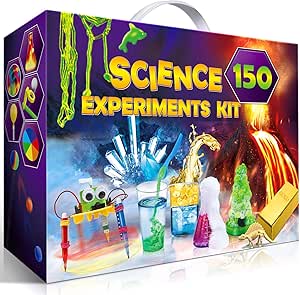 | Best for Broad Topic Exploration | Brand: UNGLINGA | Experiment count: 150 | Age range: 8 years and up | VIEW LATEST PRICE | See Our Full Breakdown |
| EUDAX Electricity and Magnetism Experiment Kit |  | Best for Maximum Electrical Project Variety | Brand: EUDAX | Model number: EUDAX-FC-80PCS | Number of items: 79 | VIEW LATEST PRICE | See Our Full Breakdown |
| STEM Electric Circuit Kit for Kids, 8 Experiments |  | Best for Circuit Beginners | Brand: Forskere | Model: FK1601 | Recommended age: 8 years and up | VIEW LATEST PRICE | See Our Full Breakdown |
| Mysterystone Electricity and Magnetism Science Experiment Kit for Kids |  | Best for Advanced Physics Exploration | Brand: Mysterystone | Model: MYS257SOY | Age range: 13–18 years | VIEW LATEST PRICE | See Our Full Breakdown |
| National Geographic Magic Chemistry Set with 10 Tricks for Kids Ages 8–12 |  | Best for Chemistry-Shy Beginners | Brand: Blue Marble | Model: NGSCIMAGIC | Age range: 8 years and up | VIEW LATEST PRICE | See Our Full Breakdown |
| National Geographic Junior Chemistry Set with 50 Experiments |  | Best for Young Chemistry Learners | Brand: Blue Marble | Model: NGJRCHEMT | Age range: 4 years and up | VIEW LATEST PRICE | See Our Full Breakdown |
| National Geographic Mega Science Lab: 75 Experiments for Kids Ages 8–12 |  | Best Multi-Subject Science Kit | Brand: Blue Marble | Model: NGMEGASCIKIT | Age range: 8 years and up | VIEW LATEST PRICE | See Our Full Breakdown |
| Seivhat Volcano Eruption Science Kit, 30 Pieces |  | Best for a Short, Colorful Classroom Demonstration | Brand: Seivhat | Piece count: 30 | Recommended age: 3 years and up | VIEW LATEST PRICE | See Our Full Breakdown |
| Kids’ Science Kit with 80 Experiments |  | Best for Broad Experiment Variety | Brand: Kuovei | Experiment count: 80 | Age range: 6 years and up; manufacturer range also listed as 36 months–12 years | VIEW LATEST PRICE | See Our Full Breakdown |
| Innovating Science Water Treatment and Filtration Kit | 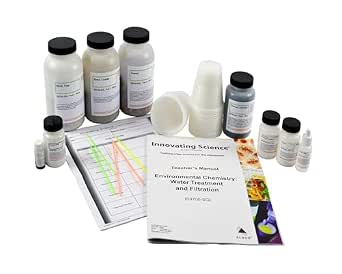 | Best for Group Environmental Science Lessons | Brand: Innovating Science | Manufacturer: Aldon Corporation | Model: IS9700 | VIEW LATEST PRICE | See Our Full Breakdown |
| National Geographic Amazing Chemistry Set with 100+ Experiments |  | Best for Household-Material Follow-Up Activities | Brand: Blue Marble | Set name: Amazing Chemistry Set | Age range: 8 years and up | VIEW LATEST PRICE | See Our Full Breakdown |
| Thames & Kosmos CHEM C3000 Chemistry Set, 333+ Experiments, 103 Pieces, Ages 12+ |  | Best Advanced Chemistry Curriculum | Brand: Thames & Kosmos | Model: CHEM C3000 (640132) | Recommended age: 12 years and up | VIEW LATEST PRICE | See Our Full Breakdown |
| science experiment kits for student | Brand | Age range |
|---|---|---|
| EUDAX Electricity and Magnetis | EUDAX | — |
| National Geographic Science Ma | Blue Marble | 8 years and up |
| EUDAX Basic Electricity Circui | EUDAX | — |
| UNGLINGA 150-Experiment Scienc | UNGLINGA | 8 years and up |
| EUDAX Electricity and Magnetis | EUDAX | — |
| STEM Electric Circuit Kit for | Forskere | — |
| Mysterystone Electricity and M | Mysterystone | 13–18 years |
| National Geographic Magic Chem | Blue Marble | 8 years and up |
| National Geographic Junior Che | Blue Marble | 4 years and up |
| National Geographic Mega Scien | Blue Marble | 8 years and up |
| Seivhat Volcano Eruption Scien | Seivhat | — |
| Kids’ Science Kit with 80 Expe | Kuovei | 6 years and up; manufacturer range also listed as 36 months–12 years |
| Innovating Science Water Treat | Innovating Science | 13 and older; adult supervision required |
| National Geographic Amazing Ch | Blue Marble | 8 years and up |
| Thames & Kosmos CHEM C3000 Che | Thames & Kosmos | — |
More Details on Our Top Picks
EUDAX Electricity and Magnetism Experiment Kit
This kit suits students ready to move beyond simple circuits and try projects that connect electricity with magnetism. Its instructions build from simpler activities toward series and parallel circuits, an electromagnet, a traffic-light model, a hand-cranked generator, and a wind-powered car. That gives it broader project variety than the EUDAX Basic Electricity Circuit Learning Kit, which sticks to fundamental circuits, while its 27 listed items make it less extensive than the 79-item EUDAX Electricity and Magnetism Experiment Kit. The tradeoff is that some models call for assembly and trial-and-error, so students may need adult guidance rather than expecting every activity to work immediately. A transparent storage box helps keep the parts together, but two AA batteries are not included. I’d choose it for a focused introduction to several electrical and magnetic ideas, not for a large collection of advanced components.
Pros:- Covers both basic circuits and introductory magnetism through varied project types
- Instructions progress from simpler experiments to more involved builds
- Includes a hand-cranked generator model, wind-powered car, and electromagnet
- Transparent storage box helps keep the project components organized
Cons:- Two AA batteries are required but not included
- Some projects involve assembly and experimentation rather than straightforward setup
- Its 27 listed items provide fewer components than the 79-item EUDAX kit
Best for: Middle- and high-school students who want guided circuit work plus introductory electromagnetism and generator projects
Not ideal for: Students who need a large, component-heavy kit or a ready-to-run activity set that requires little assembly; batteries must also be supplied separately
- Brand:EUDAX
- Kit:Upgrade kit
- Educational focus:Electrical and magnetic concepts
- Recommended age:14–17 years
- Intended grade range:Grades 7–11
- Unit count:27
- Battery requirement:2 AA batteries, not included
- Instructions:English
Our verdict“Choose this kit for a guided, varied introduction to electricity and magnetism, but pick the larger EUDAX set if component quantity is your priority.”
National Geographic Science Magic Kit for Kids, 8 Years and Up
For students who learn well by demonstrating an idea, this kit turns 20 experiments into magic-trick presentations, complete with a wand, white gloves, and an illustrated guide that explains the science behind each activity. That performance angle sets it apart from the UNGLINGA 150-Experiment Science Kit, which offers much wider topic coverage but does not center its activities on showmanship. The included bonus booklet adds more than 85 experiments using common household items, giving students ways to continue after the supplied materials are used. The tradeoff is that those bonus activities depend on what is available at home, and the core kit is narrower than broad survey sets such as UNGLINGA. Its age guidance starts at eight, so it is not aimed at younger children. I’d pick it for a student who enjoys presenting experiments to family or classmates, rather than someone seeking a deep sequence in one science subject.
Pros:- Frames 20 hands-on experiments as magic tricks that are easy to present
- Illustrated guide explains the science behind the activities
- Bonus booklet supplies more than 85 additional household-item experiments
- Wand and gloves support a performance-oriented activity format
Cons:- Bonus experiments depend on finding the required household items
- The 20 supplied experiments cover a narrower scope than UNGLINGA’s 150-activity set
- Age guidance begins at eight, limiting its fit for younger students
Best for: Students aged eight and up who enjoy performing demonstrations and explaining the science behind them
Not ideal for: Younger children or students seeking extensive materials for one subject; many bonus activities also require household supplies
- Brand:Blue Marble
- Age range:8 years and up
- Educational objective:STEM
- Included experiments:20 magic experiments
- Bonus experiments:More than 85 using common household items
- Included components:Materials for 20 experiments, magic wand, white gloves, experiment guide, and bonus booklet
- Material type:Metal and paper
- Model number:NGMEGAMAGIC
Our verdict“Choose this kit for a student who wants to perform science demonstrations and keep experimenting with household supplies afterward.”
EUDAX Basic Electricity Circuit Learning Kit
This is the most focused choice for learning circuit fundamentals: students use bulbs, holders, a switch, and cables to build series and parallel circuits. That limited scope can be a strength in a classroom or club, where a clear first lesson may be more useful than a box of unrelated activities. Compared with the 27-item EUDAX Electricity and Magnetism Experiment Kit, this set leaves out projects such as an electromagnet, generator, and wind-powered car; compared with the 79-item EUDAX kit, it is a much simpler starting point. Its English instructions and transparent storage box support guided use and cleanup. The main tradeoff is that the activity range is narrow, and two AA batteries are not included. I’d select it for a first hands-on lesson or a basic circuit project, not for students who already want to explore multiple electrical concepts.
Pros:- Directly supports hands-on series and parallel circuit building
- English instructions help guide assembly and activities
- Transparent storage box provides a place for the small parts
- Focused contents make it a straightforward option for introductory circuit lessons
Cons:- Covers basic circuits rather than the wider topics in the other EUDAX kits
- Two AA batteries are required but not included
- Includes fewer activity components than either EUDAX electricity-and-magnetism kit
Best for: Teachers, camp leaders, and beginners introducing series and parallel circuits through a small, focused set of parts
Not ideal for: Students seeking magnetism, generators, or a broad project collection; it also requires separately supplied AA batteries
- Brand:EUDAX
- Kit type:Basic electricity circuit kit
- Unit count:17
- Contents:2 AA battery holders, 2 bulb holders, 5 bulbs, 1 SPST switch, 6 cables, small wrench, and transparent storage box
- Battery requirement:2 AA batteries, not included
- Instructions:English
- Manufacturer part number:EX-XDL-5
- Recommended use:Science projects, camps, fairs, clubs, and STEM education
Our verdict“Pick this compact, focused kit for a student’s first series-and-parallel circuit lessons, not for wider electricity or magnetism projects.”
UNGLINGA 150-Experiment Science Kit for Kids
UNGLINGA is the broadest activity sampler in this group, with 150 experiments spanning chemistry, physics, Earth science, and surface tension. That range makes it a better match than the EUDAX Basic Electricity Circuit Learning Kit for students who want to switch between scientific topics rather than focus on circuit skills. Its illustrated, step-by-step manual and included goggles support guided activities, while the child-friendly tools are aimed at hands-on use. The tradeoff is that breadth does not mean every activity has its own supplied materials: some experiments require household items. The kit’s age guidance starts at eight, and its listed dimensions suggest a box with a defined footprint rather than a tiny take-along set. I’d choose it for variety and guided discovery, but students seeking a sustained progression in electricity or chemistry may prefer a more specialized kit.
Pros:- Offers 150 experiments across chemistry, physics, Earth science, and surface tension
- Illustrated step-by-step manual supports guided activities
- Includes child-friendly experiment tools and goggles
- Broader subject mix than the circuit-focused EUDAX Basic Electricity kit
Cons:- Some activities require household items that are not included
- Its wide topic range may offer less depth in any one area than a specialized kit
- The listed box dimensions may be less convenient for students needing a very compact kit
Best for: Families with students aged eight and up who want a varied, guided introduction across several science topics
Not ideal for: Students seeking a focused, progressive course in circuits or chemistry, or families wanting every experiment’s materials supplied in the box
- Brand:UNGLINGA
- Experiment count:150
- Age range:8 years and up
- Topics:Chemistry, physics, Earth science, and surface tension
- Included components:Science experiment tools and materials
- Educational objective:Creative skills
- Material:Plastic
- Dimensions:11.42 x 8.67 x 3.94 inches
Our verdict“Choose UNGLINGA when variety across science topics matters more than a focused sequence or complete supplies for every experiment.”
EUDAX Electricity and Magnetism Experiment Kit
With 79 items and separate electricity and magnetism components, this EUDAX set is the strongest pick here for students who want many ways to investigate physics. Its listed projects include series and parallel circuits, fruit batteries, electromagnets, electric bells, and hand-crank generators, with a full-color manual to support the work. Compared with the 27-item EUDAX Electricity and Magnetism Experiment Kit, it offers a substantially larger component collection and a wider set of named project examples; the smaller kit may suit students who want a more contained introduction. This set is also listed for ages eight through eighteen, but its suggested grade range is 9–11, so younger students may need adult help. The tradeoff is a heavier 1.43 kg package and three AA batteries that are not included. I’d choose it for students ready to explore multiple electricity and magnetism builds, not for a minimalist first circuit lesson.
Pros:- 79 items include distinct electricity and magnetism components
- Project examples range from fruit batteries and electric bells to electromagnets and hand-crank generators
- Full-color manual and storage bag support guided work and parts storage
- Wider component selection than the 27-item EUDAX electricity-and-magnetism kit
Cons:- Three AA batteries are required but not included
- Listed item weight is 1.43 kg, making it less suited to lightweight transport
- Suggested grade range of 9–11 may be a stretch for younger students without adult help
Best for: Students in grades 9–11 who want a large collection of components for varied electricity and magnetism experiments
Not ideal for: Beginners who need only a simple circuit introduction, or students who need a lightweight kit with batteries supplied
- Brand:EUDAX
- Model number:EUDAX-FC-80PCS
- Number of items:79
- Electricity components:56
- Magnetism components:21
- Additional items:2 repair tools, color-page manual, and storage bag
- Recommended age:8–18 years
- Suggested grade range:Grades 9–11
- Power requirement:3 AA batteries, not included
Our verdict“Choose this larger EUDAX set for varied, component-rich physics projects, but select the basic circuit kit for a simpler first lesson.”
STEM Electric Circuit Kit for Kids, 8 Experiments
For students just starting to connect components and see how electricity behaves, this kit keeps the subject focused: its eight guided experiments cover series and parallel circuits as well as fruit-battery and seawater-power demonstrations. That mix gives learners a chance to compare familiar circuit setups with less conventional ways to light a bulb. The illustrated, step-by-step guide also makes it easier to follow along at home or in a classroom without relying on open-ended project design. Compared with the Mysterystone Electricity and Magnetism kit, this is the simpler entry point: it has fewer activities, but its age recommendation begins at eight rather than 13. The tradeoff is limited breadth, and AA batteries are sold separately, so students cannot start until they have a power source.
Pros:- Eight activities introduce series and parallel circuits alongside fruit and seawater power.
- Illustrated step-by-step instructions support guided learning.
- Seven material packs provide components for multiple circuit setups.
- Suitable for home learning, classroom use, or science projects.
Cons:- Requires AA batteries that are not included.
- Eight experiments offer less variety and replay potential than the Mysterystone kit’s 50-plus activities.
Best for: Students aged eight and up who want a guided first look at circuits for a home or classroom science activity.
Not ideal for: Older students seeking dozens of electricity and magnetism challenges, or families who need a kit with batteries included.
- Brand:Forskere
- Model:FK1601
- Recommended age:8 years and up
- Experiments:8
- Material packs:7
- Set name:Circuit Starter Kits
- Materials:Copper, plastic, and plastic insulation
- Battery requirement:AA batteries required separately
Our verdict“Choose this kit for a younger student’s structured introduction to circuit ideas, provided you have AA batteries on hand.”
Mysterystone Electricity and Magnetism Science Experiment Kit for Kids
Students ready to move beyond a first circuit need more room to experiment, and this kit delivers more than 50 electricity and magnetism activities involving circuits, electromagnets, and light-control LEDs. Its illustrated manual explains the science behind the projects, while the fitted storage case helps keep 55 items organized between sessions. That makes it a stronger choice for sustained physics exploration than the Forskere STEM Electric Circuit Kit, which offers eight more introductory circuit experiments and is recommended from age eight. The Mysterystone kit is aimed at ages 13–18, though, and students must be ready to assemble or design projects rather than simply follow a short sequence of demonstrations. Its scope is also deliberately narrow: unlike the National Geographic Mega Science Lab, it does not mix physics with chemistry and Earth science.
Pros:- More than 50 experiments give students extensive electricity and magnetism practice.
- Projects cover circuits, electromagnets, and light-control LEDs.
- Illustrated manual explains both procedures and underlying science.
- Portable case has a designated place for each of the 55 items.
Cons:- Recommended age range of 13–18 makes it a poor fit for younger students.
- Assembly and project design require more independence than a beginner-focused kit.
- Concentrates on electricity and magnetism rather than offering multiple science subjects.
Best for: Teen students who want a substantial set of electricity and magnetism projects and can work through hands-on assembly.
Not ideal for: Younger beginners or students looking for a broad mix of chemistry, Earth science, and physics activities.
- Brand:Mysterystone
- Model:MYS257SOY
- Age range:13–18 years
- Number of items:55
- Experiments:More than 50
- Theme:Physics
- Materials:Plastic, metal, and silicon
- Item weight:1.89 kg
Our verdict“Pick this for a teen who wants extended physics practice, but choose the Forskere kit for a younger learner needing simpler circuit guidance.”
National Geographic Magic Chemistry Set with 10 Tricks for Kids Ages 8–12
This kit presents chemistry as a set of 10 magic-style experiments, with activities such as floating a coin, changing water color, and making instant snow. The trick format can give a reluctant student a playful reason to engage, while the full-color guide connects each effect to science facts instead of leaving the activity as a performance alone. It comes with the experiment tools, plus a wand and gloves that support the presentation. Compared with the National Geographic Junior Chemistry Set, this is more focused on showmanship and has far fewer activities; the Junior set is better for repeated, broader practice, while this one keeps the experience compact and theatrical. Its main tradeoff is that the magic framing may not suit students who want deeper lab-style exploration or a wider range of chemistry projects.
Pros:- Ten chemistry activities use a magic-trick format to engage beginners.
- Includes tools needed to perform the experiments.
- Full-color illustrated guide pairs instructions with science facts.
- Wand and gloves add a performance element to demonstrations.
Cons:- Ten experiments provide less long-term variety than the Junior Chemistry Set’s 50 activities.
- The magic-show format may be less appealing to students who prefer conventional lab projects.
Best for: Ages eight and up who are drawn to demonstrations and need a playful, guided introduction to chemistry concepts.
Not ideal for: Students seeking a large collection of varied chemistry activities or a more sustained lab-style learning experience.
- Brand:Blue Marble
- Model:NGSCIMAGIC
- Age range:8 years and up
- Experiments:10
- Educational objective:STEM
- Included accessories:Magic wand and gloves
- Guide:Full-color guide with illustrated, kid-friendly instructions
- Set count:1
Our verdict“Choose this for a student who responds to performance and visual effects, not for one who wants a broad chemistry curriculum.”
National Geographic Junior Chemistry Set with 50 Experiments
For young students who want to handle lab-style tools, this set offers 50 chemistry experiments and more than 20 child-safe lab tools, including test tubes and goggles. Its illustrated step-by-step instructions make the activities easier to follow, and many experiments draw on household supplies such as baking soda and vinegar. That gives families more ways to revisit the kit than the National Geographic Magic Chemistry Set, whose 10 activities focus on theatrical demonstrations. The Junior set is also marked for ages four and up, making it the more age-inclusive option. The tradeoff is that “50 experiments” does not mean every ingredient is in the box: some activities depend on household items, so adults may need to gather supplies before a session. It is a chemistry-focused choice, not a multi-subject science lab.
Pros:- Fifty hands-on experiments offer substantial activity variety.
- More than 20 child-safe lab tools include test tubes and goggles.
- Illustrated instructions give young learners clear steps to follow.
- Many experiments use common household items.
Cons:- Some experiments require household supplies that are not included.
- The chemistry-only focus is narrower than the National Geographic Mega Science Lab.
Best for: Families introducing children aged four and up to guided chemistry activities with child-safe tools and adult support.
Not ideal for: Buyers who need every experiment material included or students looking for physics and Earth science alongside chemistry.
- Brand:Blue Marble
- Model:NGJRCHEMT
- Age range:4 years and up
- Experiments:50
- Lab tools:More than 20
- Included components:Chemistry kit with test tubes, goggles, and other lab tools
- Dimensions:11 x 4.22 x 9.64 inches
- Battery requirement:No batteries required
Our verdict“Choose this for a young learner who wants frequent chemistry activities and has an adult available to help gather household materials.”
National Geographic Mega Science Lab: 75 Experiments for Kids Ages 8–12
Students who have not settled on one branch of science get the broadest subject mix here: the kit combines Earth science, chemistry, and science magic in 45 included hands-on experiments, plus a guide to 30 additional activities using household items. Projects such as volcanoes, crystals, fossils, and chemical reactions give learners varied ways to practice observation and critical thinking, while rock, mineral, and crystal specimens add something tangible to examine. Compared with the National Geographic Junior Chemistry Set, this is the better fit for a student who wants several science themes rather than a large chemistry-only collection. Its breadth comes with a tradeoff: not all 75 activities use materials in the box, and some depend on household supplies. It is also recommended for ages eight and up, so the Junior set suits younger children better.
Pros:- Combines Earth science, chemistry, and science magic activities.
- Includes a guide with 30 additional experiments using household items.
- Projects cover volcanoes, crystals, fossils, and chemical reactions.
- Rock, mineral, and crystal specimens support hands-on observation.
Cons:- Some of the additional activities require household supplies.
- Recommended age begins at eight, unlike the Junior Chemistry Set for ages four and up.
- Its wide subject range gives less chemistry-specific focus than a dedicated chemistry kit.
Best for: Students aged eight to twelve who want to sample several science subjects through one varied kit.
Not ideal for: Children under eight or buyers who want every activity to use only materials supplied in the package.
- Brand:Blue Marble
- Model:NGMEGASCIKIT
- Age range:8 years and up
- Experiment count:75
- Experiment categories:Earth science, chemistry, and science magic
- Included components:Earth science kit, chemistry kit, science magic kit, bonus experiment guide, and rock, mineral, and crystal specimens
- Educational objectives:Critical thinking, observation skills, and STEM
- Number of packs:1
Our verdict“Pick this for an eight-to-twelve-year-old who wants variety across science subjects and can use household items for some activities.”
Seivhat Volcano Eruption Science Kit, 30 Pieces
Seivhat’s 30-piece kit is a focused choice for a quick geology activity rather than a broad science course. Its colored materials create two eruptions in six possible colors, with flashing effects described in the product details, giving students a visible event to observe and discuss. Compared with Kuovei’s 80-experiment kit, Seivhat offers much less variety, but its narrow focus can make it easier to fit into a lesson, party activity, or small gift bag. The main limitation is practical: a volcano model is not listed as included, so buyers may need to supply one separately. Setup help is provided on an activity card, though the description notes that a video may be needed if instructions are unclear. Choose it for a brief demonstration, not a self-contained sequence of experiments.
Pros:- Offers eruption materials in six colors, with flashing effects described.
- Includes materials for two eruptions.
- Compact activity-card format suits a short classroom or party demonstration.
- Geology theme gives students a clear starting point for discussing volcanoes.
Cons:- A volcano model is not listed among the included components.
- Only two eruptions are provided, so it has limited repeat activity.
- Setup guidance may be insufficient if the activity card is unclear.
Best for: Teachers or party hosts who already have a volcano model and want a short, visually engaging geology activity for young children.
Not ideal for: Buyers seeking a complete kit with its own volcano structure or enough materials for repeated, varied experiments.
- Brand:Seivhat
- Piece count:30
- Recommended age:3 years and up
- Educational focus:STEM
- Theme:Geology
- Eruptions per kit:2
- Eruption colors:Red, blue, pink, yellow, green, and purple
- Item dimensions:6 x 7 x 4 inches
Our verdict“Choose Seivhat for a colorful, brief volcano demonstration if you already have a model; choose Kuovei for a wider range of activities.”
Kids’ Science Kit with 80 Experiments
Kuovei’s 80-experiment set earns its place for students who want to move between different kinds of activities rather than focus on one branch of science. The examples range from a rainbow fountain and volcano eruption to inflating a balloon with a bottle, while guidance cards explain procedures and scientific principles. That makes it more varied than Seivhat’s two-eruption volcano kit, though the larger activity count does not mean every experiment has its own complete set of materials. The included goggles, cups, test tubes, droppers, and other supplies support hands-on work, but chemical materials mean adult oversight may be appropriate. The listed dimensions are an unusual 1 x 1 x 1 inches for a multi-piece set, so they may not describe the full package. This is a flexible activity collection, not a tightly specialized chemistry course.
Pros:- Lists 80 guided experiments spanning multiple activity types.
- Guidance cards cover both procedures and scientific principles.
- Includes a broad selection of tools and activity materials.
- Activities include examples suited to visual, hands-on learning.
Cons:- Some experiments use chemical materials and may need adult supervision.
- The listed 1 x 1 x 1-inch dimensions may not represent the actual package.
- The broad activity range is less specialized than the Thames & Kosmos CHEM C3000 chemistry curriculum.
Best for: Families or elementary educators seeking a varied set of guided activities for children ages 6 and up, with an adult available to supervise.
Not ideal for: Students who want a focused, advanced chemistry curriculum or buyers relying on the listed dimensions to judge package size.
- Brand:Kuovei
- Experiment count:80
- Age range:6 years and up; manufacturer range also listed as 36 months–12 years
- Material:Plastic
- Item weight:0.75 kg
- Listed dimensions:1 x 1 x 1 inches
- Included guidance:Step-by-step guidance cards
- Included tools and materials:Goggles, chemical materials, petri dishes, measuring cups, test tubes, gloves, droppers, balloons, and additional supplies
Our verdict“Pick Kuovei for variety and guided exploration, but choose the Thames & Kosmos set for a more developed chemistry course.”
Innovating Science Water Treatment and Filtration Kit
Innovating Science’s water treatment kit is built around one substantial classroom question: how can treatment steps change simulated polluted water? It provides sand, gravel, activated charcoal, alum, lime, and other materials for 15 student groups, plus a teacher’s manual, student study-guide copymasters, and safety information. That group-ready design sets it apart from National Geographic’s Amazing Chemistry Set, which is aimed at individual children and offers a broader mix of activities. Here, the tradeoff is specialization: students explore filtration and treatment in depth, not a spread of unrelated experiments. The kit is listed for ages 13 and older with adult supervision, and its 12.52-pound weight makes it less convenient for casual activity stations. It demonstrates water-treatment concepts; it is not equipment for making household water safe.
Pros:- Includes materials for 15 student groups.
- Demonstrates multiple filtration and water-treatment steps with simulated polluted water.
- Provides a teacher’s manual and student study-guide copymasters.
- Includes a material safety data sheet packet.
Cons:- Designed for ages 13 and older with adult supervision.
- Focuses on water treatment rather than a broad range of science subjects.
- The 12.52-pound package is less convenient for moving between casual activity setups.
Best for: Science teachers planning a supervised water-quality or environmental science lesson for several student groups.
Not ideal for: Families looking for a self-directed, all-purpose kit, or anyone expecting materials that treat drinking water for actual use.
- Brand:Innovating Science
- Manufacturer:Aldon Corporation
- Model:IS9700
- Age range:13 and older; adult supervision required
- Group capacity:15 student groups
- Contents:Fine and coarse sand, fine gravel, activated charcoal, alum, lime, kaolin clay powder, green food coloring, and white vinegar
- Classroom supplies:75 plastic cups and 15 stirring sticks
- Package dimensions and weight:10.5 x 10.5 x 10.25 inches; 12.52 pounds
Our verdict“Choose this kit for a supervised group lesson on water treatment, not for general home experiments or drinking-water purification.”
National Geographic Amazing Chemistry Set with 100+ Experiments
National Geographic’s Amazing Chemistry Set pairs a modest supply of kit-based chemistry with a much larger collection of ideas that use common household items. The set includes materials for 15 experiments, such as crystal growing and color-changing reactions, plus instructions for 85 additional activities. That split is the key buying distinction: the headline count signals activity options, but not 100 fully supplied experiments. Its test tubes, beakers, and pipettes give children familiar lab-style tools, while the age recommendation of 8 and up makes it more accessible than the adult-supervised Thames & Kosmos CHEM C3000. In exchange, it offers less depth and fewer supplied chemicals than that advanced set. It fits students who enjoy trying short chemistry activities and can gather household materials, but it is a weaker match for buyers wanting a complete, progressive course.
Pros:- Includes materials for 15 experiments, including crystal growing and color-changing activities.
- Adds 85 further activity ideas using common household items.
- Provides test tubes, beakers, and pipettes for hands-on work.
- Its age guidance makes it more approachable than the CHEM C3000 for younger students.
Cons:- Only 15 experiments include the kit’s materials; the other 85 require household items.
- The activity collection is less in-depth than a structured advanced chemistry set.
- Designed for children ages 8 and up, so it may not suit younger students.
Best for: Children ages 8 and up who want introductory chemistry activities and have an adult available to help find household materials for bonus experiments.
Not ideal for: Students who need every activity’s materials included or want a detailed, advanced curriculum like the Thames & Kosmos CHEM C3000.
- Brand:Blue Marble
- Set name:Amazing Chemistry Set
- Age range:8 years and up
- Kit-based experiments:15
- Bonus activities:85 activities using common household items
- Tools:Test tubes, beakers, and pipettes
- Item dimensions:8.78 x 3.19 x 11.93 inches
- Item weight:1.8 pounds
Our verdict“Choose this set for approachable chemistry and household-material extensions, but select the CHEM C3000 for a more complete advanced course.”
Thames & Kosmos CHEM C3000 Chemistry Set, 333+ Experiments, 103 Pieces, Ages 12+
Thames & Kosmos CHEM C3000 is the most demanding and curriculum-like option in this group. Its 192-page illustrated manual leads through more than 333 experiments across 27 chapters, spanning inorganic, electrochemical, and organic chemistry. Glass labware, circuit components, an alcohol burner, goggles, and 16 or more chemicals give students a broader working setup than National Geographic’s Amazing Chemistry Set, whose 85 bonus activities rely on household supplies. That depth comes with real demands: the recommended age is 12 and up, adult supervision is required throughout, and some procedures need additional household materials. It is also a less casual choice than Kuovei’s broad children’s set; students need time and an adult prepared to guide experiments safely. For a motivated older learner, the structured range is the strongest reason to choose it.
Pros:- Covers more than 333 experiments across 27 chapters and several chemistry fields.
- Includes 103 pieces, laboratory equipment, and 16 or more chemicals.
- The illustrated 192-page manual provides procedures, explanations, and safety guidance.
- Includes safety goggles and is listed as meeting EN 71-4.
Cons:- Adult supervision is required throughout.
- Some experiments need additional common household materials.
- Its scope and equipment call for more time and commitment than introductory sets such as National Geographic’s Amazing Chemistry Set.
Best for: Motivated students age 12 and up who want a structured, broad chemistry course and have an adult available throughout experiments.
Not ideal for: Younger children, unsupervised learners, or families seeking quick activities with minimal setup and no extra household materials.
- Brand:Thames & Kosmos
- Model:CHEM C3000 (640132)
- Recommended age:12 years and up
- Experiments and chapters:More than 333 experiments across 27 chapters
- Pieces:103
- Manual:192-page, full-color illustrated manual
- Chemicals:16 or more
- Equipment and topics:Glass test tubes, beakers, Erlenmeyer flask, alcohol burner, goggles, and other equipment; inorganic, electrochemical, and organic chemistry
- Safety:EN 71-4; adult supervision required
Our verdict“Choose the CHEM C3000 for a supervised older student ready for a sustained chemistry curriculum, not for casual or independent play.”

How We Picked
I compared the kits by the kind of learning they support, how approachable the activities appear for their stated age groups, and whether the kit offers a coherent set of experiments rather than relying on a headline activity count. I also considered subject coverage, the likelihood that students can repeat or extend an activity, and how much adult setup or household-supply support a buyer may need to check before purchase. Safety instructions and clear age guidance matter, particularly for chemistry activities and projects involving small parts.
The ranking favors kits that give students a useful balance of variety, usability, and educational direction. Broad kits rise when their range serves different interests; focused kits can still rank well when they offer a stronger fit for a particular subject or learning goal. I place advanced and single-topic options lower for general use, not because they lack value, but because they suit narrower audiences. The two EUDAX Electricity and Magnetism listings are treated as separate entries as supplied, so buyers should compare their included components before choosing between them.
Factors to Consider When Choosing Science Experiment Kits For Students
Before choosing, I’d match the kit to the student’s interest and the way they prefer to learn, then check the practical details that activity counts cannot show. These points can help avoid a kit that looks exciting on the box but asks for too much support, repeats a narrow type of activity, or does not fit the student’s next step.
Choose a subject before choosing a large activity count
A broad kit can be a good fit when a student is still exploring, but more experiments do not automatically mean more variety in how they learn. Ask whether the activities span different concepts and methods or mainly repeat one kind of demonstration. Students drawn to circuits may get more from repeated building and troubleshooting than from a large collection of unrelated projects. A focused kit can also make it easier to connect each activity to a classroom topic. Avoid paying attention only to the number on the box; the range and depth of the activities matter more to sustained interest.
Match independence to the student’s age and patience
Age labels are a starting point, not a guarantee that a child can complete every activity alone. Look for whether instructions suggest adult supervision, whether steps require careful measuring, and whether students need to interpret results rather than follow a demonstration. A younger student may enjoy a visually dramatic experiment but still need an adult to prepare materials and manage cleanup. Older students may lose interest in activities that offer little room to predict, record, or adjust. Choose a kit that stretches the learner without making every session an adult-led project.
Check what is included and what must be supplied
Some experiment kits provide most of the specialized pieces, while others depend on common household materials or additional consumables. Before buying, check the instructions or product details for supplies that need replenishing, containers that are not included, and tools that must come from home. This affects both convenience and how quickly a student can start. A kit with many activities may still have limited repeat use if key materials run out. If the kit is for a class or shared household, favor activities that can be reset or repeated with accessible supplies.
Treat safety and supervision as part of the learning fit
Consider the student’s ability to follow instructions, handle small components, and keep materials away from food or younger siblings. Chemistry and electrical activities call for different precautions, so read the safety guidance for the specific experiments rather than assuming all kits have the same risk profile. Adult supervision can be a benefit when it turns a project into a shared learning session, but it may frustrate families expecting independent play. Check whether protective equipment or extra safety supplies are required. A kit is a better fit when its supervision demands match the time and support available.
Decide whether demonstrations or open-ended investigation fit better
Magic-style experiments and volcano eruptions can make science immediately engaging through visible results, which is useful for sparking interest. They may offer less room for extended investigation unless the student is encouraged to change one variable, make a prediction, or explain what happened. Circuit kits and filtration projects can prompt more troubleshooting and comparison, though they may take longer to set up. Think about whether the student wants a quick, shareable result or a project that invites several rounds of questions. Neither style is automatically better; the right choice depends on what keeps that learner engaged.
Pay for depth when the student is ready to use it
A larger or more advanced kit makes sense when a student already shows sustained interest and can work through detailed directions. For a beginner, extra components and a high experiment count can create clutter rather than useful learning. Check whether the activities build on one another, introduce new techniques, or simply add more one-off outcomes. A subject-focused set may be a better next step than another general kit if the student has developed a clear interest. Leave room for progression: choose enough challenge to encourage learning, but not so much that every activity needs rescuing by an adult.
Frequently Asked Questions
Which kit should I choose if the student has not picked a science subject yet?
I’d start with the National Geographic Mega Science Lab or the UNGLINGA 150-Experiment Science Kit because their broad activity menus offer more chances to discover an interest. The Mega Science Lab is my overall pick for a multi-topic introduction, while UNGLINGA is a strong alternative for buyers drawn to its high activity count. Before deciding, check the activity descriptions for the actual subjects and materials rather than relying on the total alone. If the student already enjoys building, a circuit kit may hold attention better than a broad set.
Are chemistry experiment kits suitable for a student who wants to work independently?
It depends on the student’s age, habits, and the specific activities; a kit’s age label does not promise fully independent use. Read the safety notes and instructions for supervision requirements, preparation, and cleanup before buying. Magic-oriented sets can be approachable as demonstrations, but an adult may still need to organize materials or monitor steps. The CHEM C3000 is aimed at older students, yet its age guidance should still be matched to the learner’s ability to follow detailed procedures. If independent use is a priority, choose a kit with clear directions and confirm what adult support its activities call for.
Should I buy a general science kit or a subject-specific one?
I’d choose a general kit when the student is exploring or has several interests, and a focused kit when they already ask for a particular kind of project. Broad options such as the Mega Science Lab can expose a learner to multiple themes, while circuit sets and chemistry kits give more attention to a narrower subject. The tradeoff is variety against depth: a wide mix may provide less continuity, while a focused set may not hold interest if the subject is only a passing curiosity. Consider what the student chooses to do in class or for fun, then match the kit to that pattern rather than buying the largest activity list.
How can I tell whether a kit will get used more than once?
Look for activities that invite testing, comparison, or rebuilding, not only one-time demonstrations with a single expected result. Circuit projects can often encourage students to alter a setup and troubleshoot, while a filtration activity can prompt comparisons between materials or methods. Check whether the kit includes reusable components and whether experiment materials need replenishment. A high activity count is helpful only if the student can access the instructions and supplies for those activities. For repeat use, choose a kit that makes it easy to ask a new question after the first experiment.
What should I check before giving a science kit as a gift?
Confirm the recipient’s age, interests, and available adult support before choosing a kit. Then check whether the activities need household supplies, extra safety gear, batteries, or a dedicated workspace. A visually engaging magic or volcano kit may suit a student who wants quick demonstrations, while circuit or chemistry options may fit someone who enjoys careful building or step-by-step investigation. Consider storage and cleanup too, especially for kits with many small components. When those details are uncertain, a broad kit can offer flexibility, but only if its stated age range and activity style fit the recipient.
Conclusion
For most students who want a range of hands-on topics, I recommend the National Geographic Mega Science Lab as the best overall choice. The UNGLINGA 150-Experiment Science Kit is my best value-style pick for buyers prioritizing breadth, while the Thames & Kosmos CHEM C3000 is the best premium-style option for older students ready for a more advanced chemistry focus. For beginners who prefer lively, guided activities, I’d look at the National Geographic Junior Chemistry Set or one of the magic chemistry kits. Students focused on circuits should choose an EUDAX or STEM circuit set; those curious about practical environmental science may prefer the Innovating Science filtration kit, while the Seivhat volcano kit fits a student seeking a single dramatic project. Match the subject, age guidance, and supervision needs to the learner, and the right kit becomes much easier to pick.
Black Friday Picks

Vitamix Propel Series 510 Professional-Grade Blender, Black
As an affiliate, we earn on qualifying purchases.