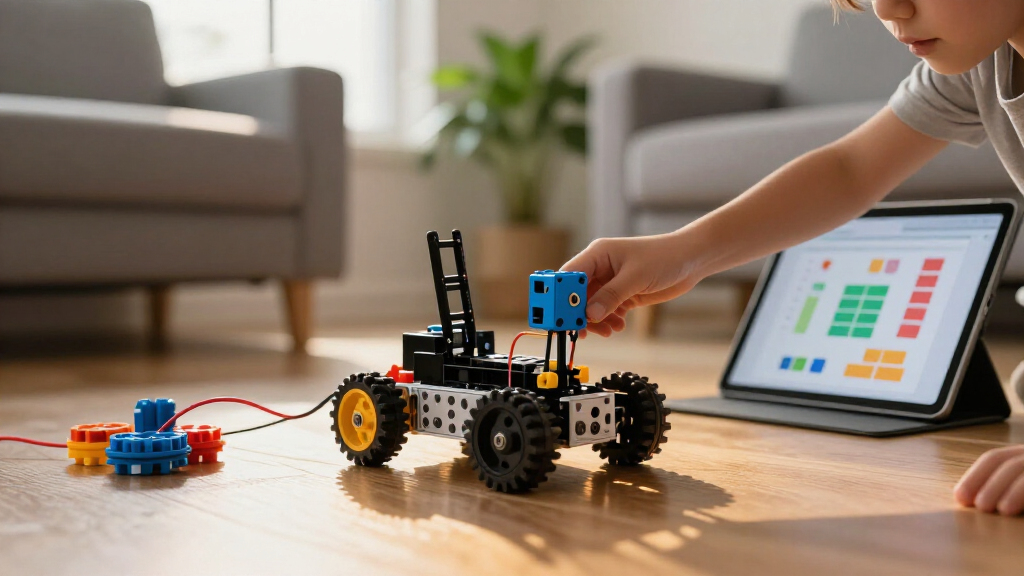

The best STEM toy for an 8 year old is one that matches how they like to learn: building with their hands, solving puzzles, or running real experiments. My best overall pick is the Snap Circuits Jr. SC-100, because it teaches genuine electronics through 100+ working projects without any prior knowledge required. For hands-on builders, the Sillbird 12-in-1 Solar Robot Kit delivers the most repeat build value, while the ThinkFun Gravity Maze is the strongest choice for kids who prefer logic challenges over assembly. The main tradeoff in this category is between one-and-done build kits that produce a great finished toy and replayable systems that stay engaging for months. Keep reading for the full breakdown, including who each pick suits and which ones to skip.

Prime made for students and young adults
- Fast, free delivery for dorm and study essentials
- Prime Video and Amazon Music included
- Member-only deals
Key Takeaways
- Replayability was the biggest differentiator: open-ended systems like Snap Circuits Jr. and Gravity Maze outlasted single-build kits that are completed once and shelved.
- Solar-powered kits (SCAEMO, Sillbird) are temperamental about light conditions — they work best near bright windows or outdoors, which limits indoor winter use.
- Wooden and hydraulic kits from Smartivity offered the most satisfying build quality but demand more adult supervision and longer assembly time than snap-together plastic kits.
- The BMDSAE microscope and National Geographic chemistry set serve kids who prefer discovery and experiments over construction, a learning style most STEM roundups overlook.
- Several kits labeled ‘Ages 4-8’ or ‘Ages 6-12’ skew young; 8 year olds near the top of an age range finish them quickly and lose interest.
| SCAEMO 4-Piece Wooden STEM Science Kit for Kids |  | Best Renewable Energy Starter Set | Brand: SCAEMO | Recommended Age: 8-16 years | Subject: Energy Conversion | VIEW LATEST PRICE | See Our Full Breakdown |
| Sillbird 12-in-1 Solar Robot Building Kit |  | Best Long-Term Replay Value | VIEW LATEST PRICE | See Our Full Breakdown | |||
| BeAndge 5-in-1 STEM Building Kit for Kids |  | Best Variety on a Budget | Brand: BeAndge | Model: BA1011 | Number of Projects: 5 | VIEW LATEST PRICE | See Our Full Breakdown |
| PlayRoute Electronic Brain & Memory Game Cube |  | Best Travel and Fidget Pick | Brand: PlayRoute | Model Number: PR-0115 | Age Range: 6-13 years | VIEW LATEST PRICE | See Our Full Breakdown |
| 10-in-1 STEM Building Toy Set for Kids Ages 4-8 |  | Best for Younger Siblings and Group Play | Piece Count: 167 | Number of Models: 10 | Recommended Age: 4-8+ years | VIEW LATEST PRICE | See Our Full Breakdown |
| BMDSAE 1000X Handheld Digital Microscope for Kids with 2.0-Inch IPS Screen |  | Best for Young Scientists on the Go | Magnification: Up to 1000X | Screen: 2.0-inch IPS | Camera: 2MP photo and video | VIEW LATEST PRICE | See Our Full Breakdown |
| Thames & Kosmos Mega Cyborg Hand STEM Experiment Kit |  | Best Premium Build-It Experience | Power source: Air pressure and hydraulics | Configurations: Right hand, left hand, claw-like | Adjustability: Fits virtually any human hand; adjustable finger joints | VIEW LATEST PRICE | See Our Full Breakdown |
| Laser Maze Reasoning Game – STEM Toy for Ages 8-13 |  | Best Logic Puzzle Pick | Recommended age: 8-13 years | Challenge levels: 60+ graduated puzzles | Safety certification: Class 1 laser product | VIEW LATEST PRICE | See Our Full Breakdown |
| Snap Circuits Jr. SC-100 Electronics Kit, 100+ Projects, Ages 8+ |  | Best Value for Electronics Learning | Model: SC-100 | Projects: 100+ | Recommended age: 8 years and up | VIEW LATEST PRICE | See Our Full Breakdown |
| Smartivity 2-in-1 Hydraulic Aeroplane & Dart Launcher STEM Kit |  | Best Screen-Free Wooden Build | Recommended age: 6-14 years | Material: Engineered wood | Functions: 2-in-1 paper airplane and dart launcher | VIEW LATEST PRICE | See Our Full Breakdown |
| Klutz LEGO Gear Bots STEM Activity Kit, Ages 8-12 |  | Best Premium Build Quality | Brand: Klutz | Product Type: STEM Activity Kit | Age Range: 8-12 years | VIEW LATEST PRICE | See Our Full Breakdown |
| Smartivity DIY Pinball Machine Toy |  | Best Overall | Recommended Age: 8-99 years | Material: Sustainably sourced engineered wood | Included Components: All parts, rubber bands, marbles, illustrated instructions | VIEW LATEST PRICE | See Our Full Breakdown |
| Smartivity Robotic Mechanical Hand STEM Toy for Kids Ages 8-14 |  | Best for Budding Biomechanics Fans | Brand: Smartivity | Model Number: SMRT1135 | Age Range: 8-14 years | VIEW LATEST PRICE | See Our Full Breakdown |
| National Geographic Magic Chemistry Set for Kids Ages 8–12 |  | Best for Reluctant Scientists | Brand: National Geographic | Number of Experiments: 10 | Recommended Age: 8-12 years | VIEW LATEST PRICE | See Our Full Breakdown |
| ThinkFun Gravity Maze Falling Marble Logic Game |  | Best Logic Puzzle Pick | Recommended Age: 8 years and up | Challenges: 60 progressive challenges | Included Components: Game grid, 9 towers, 3 marbles, target piece | VIEW LATEST PRICE | See Our Full Breakdown |
| STEM toys for 8 year old | Recommended Age |
|---|---|
| SCAEMO 4-Piece Wooden STEM Sci | 8-16 years |
| Sillbird 12-in-1 Solar Robot B | — |
| BeAndge 5-in-1 STEM Building K | 6-14 years |
| PlayRoute Electronic Brain & M | — |
| 10-in-1 STEM Building Toy Set | 4-8+ years |
| BMDSAE 1000X Handheld Digital | — |
| Thames & Kosmos Mega Cyborg Ha | — |
| Laser Maze Reasoning Game | 8-13 years |
| Snap Circuits Jr. SC-100 Elect | 8 years and up |
| Smartivity 2-in-1 Hydraulic Ae | 6-14 years |
| Klutz LEGO Gear Bots STEM Acti | — |
| Smartivity DIY Pinball Machine | 8-99 years |
| Smartivity Robotic Mechanical | — |
| National Geographic Magic Chem | 8-12 years |
| ThinkFun Gravity Maze Falling | 8 years and up |
More Details on Our Top Picks
SCAEMO 4-Piece Wooden STEM Science Kit for Kids
This set stands out for teaching energy conversion in a way most building kits skip: instead of just assembling a toy, kids see sunlight and wind turn into motion across four distinct projects. Compared with the Sillbird 12-in-1 Solar Robot, the model count is far lower, but the variety of energy sources — solar and wind — makes each build feel like a small experiment rather than a variation on one theme. The solder-free circuit connections mean an 8-year-old can genuinely do the wiring themselves, which is the whole point at this age. The tradeoff is dependency on conditions: a cloudy day or still room leaves the solar plane and fan sitting inert, which can frustrate a kid expecting instant results.
Pros:- Four distinct builds covering both solar and wind power
- Solder-free circuits kids can connect independently
- Genuinely teaches energy conversion and basic physics
- Gift-ready packaging for birthdays and holidays
Cons:- Solar and wind models need adequate light or airflow to actually work
- Focused on basic energy projects only — advanced kids will outgrow it quickly
- Some 8-year-olds will still need adult help during assembly
Best for: Parents who want their 8-year-old to understand where power comes from, not just snap pieces together
Not ideal for: Households in low-light climates or impatient kids who will lose interest when the sun doesn’t cooperate
- Brand:SCAEMO
- Recommended Age:8-16 years
- Subject:Energy Conversion
- Number of Builds:4
- Included Models:Solar car, solar plane, wind-powered car, electric fan
- Assembly:Solder-free circuit connections
- Model Number:NTW4.1
Our verdict“The right pick if you want a first, concrete lesson in renewable energy — just plan around sunny days.”
Sillbird 12-in-1 Solar Robot Building Kit
With 12 buildable robot configurations and a difficulty curve that ramps up as kids progress, this kit is built for the long haul in a way the SCAEMO four-project set simply isn’t. An 8-year-old can start with a simple walker and work toward more complex designs over months, which makes it a better value per hour of engagement than single-build options like the Thames & Kosmos Mega Cyborg Hand. The 190-piece count keeps assembly feeling like real engineering. That said, the same solar dependency applies: without strong sunlight or a bright lamp, nothing moves, and the smaller pieces demand patience and careful sorting that not every third-grader has.
Pros:- 12 models with increasing difficulty extend play across months
- 190 pieces feel like genuine engineering work
- Runs on sunlight or a strong artificial light source
- Clear step-by-step instructions support independent building
Cons:- Robots are motionless without sufficient light
- Some builds push past what younger 8-year-olds can manage alone
- Many small parts are easy to lose or mishandle
Best for: Kids who finish one project and immediately ask what’s next, and parents who want a kit to last through the year
Not ideal for: Easily frustrated builders or families without reliable access to strong light for powering the robots
Our verdict“Best Long-Term Replay Value — 12 models with increasing difficulty extend play across months”
BeAndge 5-in-1 STEM Building Kit for Kids
This kit earns its place by mixing power types and project styles — solar car, wind car, obstacle-avoiding robot, transmission tank, and glider — so it never feels repetitive. Unlike the SCAEMO set, which is all renewable energy, the battery-powered robot and tank here will work anytime, anywhere, which solves the “cloudy day problem” entirely. The included mini screwdriver is a small touch with big payoff: kids get to use real tools, not just snap-fit plastic. The catch is that AA batteries aren’t in the box, so the two most exciting builds are dead on arrival until you supply them — an annoyance the PlayRoute cube shares.
Pros:- Five genuinely different projects, not variations on one theme
- Battery-powered builds work regardless of sunlight
- Real mini screwdriver gives kids authentic tool experience
- Well suited to family or classroom group activities
Cons:- AA batteries required but not included
- Fewer total builds than the Sillbird 12-in-1 kit
- Instruction clarity can require adult backup for younger kids
Best for: Families who want maximum project variety without worrying about weather conditions for every build
Not ideal for: Gift-givers who need a fully working present straight out of the box — batteries must be bought separately
- Brand:BeAndge
- Model:BA1011
- Number of Projects:5
- Included Builds:Solar car, wind car, obstacle-avoiding robot, transmission tank, glider
- Recommended Age:6-14 years
- Skills Targeted:Concentration, motor skills, problem solving
- Batteries:AA required, not included
- Tools Included:Mini screwdriver
Our verdict“The smart middle ground between variety and reliability — just add batteries before gifting.”
PlayRoute Electronic Brain & Memory Game Cube
Where every other kit in this lineup is a table-and-time commitment, this cube is STEM on the go — a 3-inch handheld that fits in a backpack pocket and works in a car seat. Games like ‘Follow Me’ and ‘Remember Me’ quietly build memory and hand-eye coordination, putting it closer in spirit to the Laser Maze reasoning game than to any building kit, but with zero setup and no pieces to lose. Compared with construction sets like the BeAndge 5-in-1, the depth is shallower — there’s no engineering happening, just cognitive drill — and it needs 3 AAA batteries you’ll have to supply. Think of it as a supplement to a building kit, not a substitute.
Pros:- Five light and memory games that genuinely build concentration
- Pocket-sized 3″ x 3″ format perfect for travel
- Adjustable volume with a full mute option parents will appreciate
- Doubles as a sensory fidget toy with easy-press buttons
Cons:- Requires 3 AAA batteries not included
- Limited educational depth compared with building kits
- Promotional materials are inconsistent on the exact number of games
Best for: Road trips, waiting rooms, and restless kids who need a screen-free fidget that still exercises the brain
Not ideal for: Parents seeking substantive engineering or science learning — this is cognitive practice, not construction
- Brand:PlayRoute
- Model Number:PR-0115
- Age Range:6-13 years
- Number of Games:5 (including Follow Me, Remember Me, Chase Me, Catch Me)
- Dimensions:3″ x 3″
- Battery Requirements:3 AAA batteries (not included)
- Extra Modes:Lightshow mode, adjustable volume with mute
Our verdict“A smart add-on for travel days if you already own a real building kit — not a standalone STEM solution.”
10-in-1 STEM Building Toy Set for Kids Ages 4-8
This set occupies a different slot from the rest of the lineup: it’s a classic snap-together construction kit — no circuits, no solar panels, no electronics. That’s a strength if your 8-year-old has a younger sibling who wants to join in, since the 4-8 age band and colorful, chunky pieces make it genuinely shareable in a way the Sillbird robot’s 190 small parts are not. The sturdy storage box is another practical win most competitors skip. The honest tradeoff: an accomplished 8-year-old who has outgrown snap-fit bricks may find it too easy, and only one model can be built at a time, so sibling harmony depends on taking turns.
Pros:- 10 models deliver long-lasting play variety
- Encourages cooperative play between siblings and families
- Non-toxic, washable pieces with a sturdy storage box
- Builds fine motor skills and creativity at an accessible level
Cons:- Only one model can be built at a time — tricky with two kids
- No electronics or energy concepts for advanced learners
- Younger children in the age band still need adult assembly help
Best for: Families mixing an 8-year-old with younger siblings, and parents who value cleanup-friendly storage
Not ideal for: Advanced 8-year-old builders ready for circuits and real engineering — this stays at snap-together level
- Piece Count:167
- Number of Models:10
- Recommended Age:4-8+ years
- Included Models:Tower crane, crane, forklift, catch car, rocket car, plane, racing car, UTV car, robot, helicopter
- Material Safety:Non-toxic
- Maintenance:Washable pieces
- Storage:Sturdy storage box included
Our verdict“Buy it for shared play with a younger sibling; skip it if your 8-year-old is already wiring circuits.”
BMDSAE 1000X Handheld Digital Microscope for Kids with 2.0-Inch IPS Screen
Most kits in this roundup end with a finished model sitting on a shelf — this one points kids outward at the actual world. With up to 1000X magnification, a built-in 2MP camera, and eight adjustable LEDs, it turns a backyard, a leaf, or a coin into an open-ended science lab, which is a different kind of STEM learning than the fixed builds of the Thames & Kosmos Mega Cyborg Hand. Photos and videos save directly to the device, so kids can document findings like real researchers rather than completing a one-time project. The tradeoff is stamina: about two hours of battery per charge and only 32MB of onboard storage mean heavy users will hit limits fast and need to offload files via USB-C regularly.
Pros:- High 1000X magnification with manual focus control
- Captures photos and AVI videos kids can share or transfer via USB-C
- Eight adjustable LEDs with three brightness modes for clear viewing
- Lightweight 200g design with lanyard for field use
Cons:- Battery tops out around two hours per charge
- 32MB storage fills quickly and requires frequent offloading
Best for: Curious kids who love exploring nature and want a portable science tool that produces shareable photos and videos
Not ideal for: Households wanting a long-session device — the 2-hour battery and 32MB storage will frustrate extended use
- Magnification:Up to 1000X
- Screen:2.0-inch IPS
- Camera:2MP photo and video
- Lighting:8 adjustable LEDs, 3 brightness modes
- Battery:600mAh, up to 2 hours
- Storage:32MB; 200+ photos
- Connectivity:USB-C; Windows and Mac compatible
- Weight:200g
Our verdict“This is the pick for kids whose curiosity runs toward bugs, leaves, and fabric fibers rather than building kits — just plan for regular USB-C file transfers.”
Thames & Kosmos Mega Cyborg Hand STEM Experiment Kit
This award-winning kit — the 2021 STEAM Toy of the Year — delivers something none of the other builds here can: a machine kids actually wear. The hydraulic pistons let fingers grip real objects, and the no-batteries, no-motors design makes the engineering visible in a way the Snap Circuits Jr. SC-100, with its enclosed components, doesn’t. Reconfiguring into right-hand, left-hand, or claw styles extends play well past the first build. Compared with the Smartivity Hydraulic Aeroplane Launcher, the plastic construction feels more durable and the hydraulic system is more precise, but assembly takes real patience, and younger eight-year-olds will likely need an adult nearby. Expect occasional refills of the water-based system as part of ongoing ownership.
Pros:- Powered entirely by air pressure and hydraulics, no batteries or motors
- Three reconfigurable builds: right hand, left hand, and claw
- Adjustable finger joints fit virtually any hand size
- Teaches genuine pneumatic and hydraulic principles used in industrial robotics
Cons:- Assembly is genuinely challenging for younger builders
- Hydraulic system can leak or need refilling over time
Best for: Kids who love long-form building projects and want a dramatic, wearable result that keeps working after assembly
Not ideal for: Families wanting quick open-the-box play — this takes substantial assembly time and ongoing hydraulic maintenance
- Power source:Air pressure and hydraulics
- Configurations:Right hand, left hand, claw-like
- Adjustability:Fits virtually any human hand; adjustable finger joints
- Award:2021 STEAM Toy of the Year
- Batteries required:No
Our verdict“The best choice for a kid who wants a showpiece build they can wear and operate — provided an adult is willing to help with construction.”
Laser Maze Reasoning Game – STEM Toy for Ages 8-13
Where most options here teach engineering through building, this one teaches optics and spatial reasoning through pure puzzle-solving — think of it as a physics-themed sibling to the ThinkFun Gravity Maze marble game, swapping gravity for mirrors and beam diversion. With 60+ graduated challenge levels, it scales from beginner-friendly to genuinely brain-bending, and the Class 1 laser keeps things kid-safe. Setup is instant: no assembly, no batteries hidden in the box, unlike the Snap Circuits Jr. SC-100’s battery dependency. The honest limitation is longevity — once all 60 puzzles are solved, replay value drops off, and harder levels may stall younger players without a hint from an adult. Storage also matters, since the small cubes and bases scatter easily.
Pros:- Teaches optics, mirror reflection, and logical reasoning
- 60+ challenge levels that ramp up in difficulty
- Works for solo play, competition, and classroom use
- Ready to play immediately with no assembly or batteries
Cons:- Replay value declines once all puzzles are completed
- Small pieces require careful storage between sessions
- Hardest levels may frustrate younger eight-year-olds
Best for: Puzzle-loving kids and families who enjoy solo or group brain-teaser sessions with no setup time
Not ideal for: Kids who want open-ended or repeatable play — the fixed puzzle count limits long-term value
- Recommended age:8-13 years
- Challenge levels:60+ graduated puzzles
- Safety certification:Class 1 laser product
- Play modes:Solo, multiplayer, classroom
- Assembly:None required
- Pieces:37 total, including cubes and bases
Our verdict“A strong pick for the puzzle-solver in the family, especially if they’ve already burned through Gravity Maze and want a light-based twist.”
Snap Circuits Jr. SC-100 Electronics Kit, 100+ Projects, Ages 8+
For pure electrical-engineering learning per dollar, nothing else in this lineup matches it. The color-coded, snap-together components require no soldering or tools, so an eight-year-old can move from a simple circuit to over 100 working projects with just the illustrated manual — a far deeper dive into electronics than the hydraulic or mechanical kits like the Smartivity Aeroplane Launcher offer. Compared with the BMDSAE microscope, which is an observation tool, this is a genuine build-and-learn electronics curriculum in disguise. The tradeoffs are modest but real: it needs batteries for most projects, and the component counts listed across product materials are inconsistent, so buyers shouldn’t fixate on an exact part number. It also grows — the system supports expansion kits if interest sticks.
Pros:- Over 100 projects with clear illustrated instructions
- No soldering, tools, or prior knowledge needed
- Color-coded parts make circuit logic visually understandable
- Expandable with additional Snap Circuits sets
Cons:- Requires batteries for most projects
- Inconsistent component counts in product documentation
Best for: Parents who want the deepest electronics education for the money and a kit that can expand over time
Not ideal for: Kids seeking a physical keepsake or toy — finished circuits live on a snap grid, not a playable model
- Model:SC-100
- Projects:100+
- Recommended age:8 years and up
- Assembly:No soldering or extra tools required
- Batteries:Required
- Included:Plastic snap grid and project manual
Our verdict“The smartest buy for a child genuinely curious about how electronics work, with room to grow into bigger kits later.”
Smartivity 2-in-1 Hydraulic Aeroplane & Dart Launcher STEM Kit
This kit stands out in the roundup for two things no competitor offers: sustainable engineered wood construction and a lifetime supply of free replacement parts — a real safety net when a launch-happy eight-year-old stresses the mechanism. Compared with the Thames & Kosmos Mega Cyborg Hand, it trades that kit’s precision hydraulics for a simpler, more playful payoff: launching paper airplanes and darts, which keeps kids coming back after the build is done. STEM.org approval and a 2022 TOTY Finalist nod back up the educational design. The wide 6-14 age range is both a strength and a weakness — younger builders will almost certainly need adult help with assembly, and wood, however well engineered, simply dents and loosens faster than the plastic used in rival kits.
Pros:- Screen-free build with an actively fun payoff after assembly
- Sustainable engineered wood that’s kid-safe
- Lifetime free replacement parts remove breakage worries
- STEM.org approved and 2022 TOTY Finalist, tested over 1000 hours
Cons:- Assembly may be too difficult for younger kids without adult help
- Wooden construction is less durable than plastic alternatives
Best for: Eco-conscious families who want a screen-free build-and-play project with ongoing launching fun
Not ideal for: Rough-and-tumble kids or parents who dislike assembly — wood durability is limited and construction takes adult-supported time
- Recommended age:6-14 years
- Material:Engineered wood
- Functions:2-in-1 paper airplane and dart launcher
- Power source:Mechanical hydraulics, screen-free
- Replacement parts:Lifetime free supply
- Certifications:STEM.org approved; TOTY 2022 Finalist
Our verdict“A great middle-ground pick for families who value sustainable materials and a toy that stays fun long after the glue dries — as long as a parent helps build it.”
Klutz LEGO Gear Bots STEM Activity Kit, Ages 8-12
This option stands out for pairing genuine LEGO Technic bricks with a structured 64-page book, which makes it the most polished build experience in this lineup. Compared with the Smartivity DIY Pinball Machine, which uses engineered wood and demands more assembly patience, the Klutz kit offers tighter tolerances and instructions an 8-year-old can follow more independently. The tradeoff is breadth: there are only eight creature models, and each mixes papercraft with bricks, so kids who dislike cutting and folding paper may stall halfway. Still, the lessons on cams, cranks, and axles land because kids see gears they built themselves actually move. This pick makes the most sense for families who value repeatable, frustration-free building over sheer volume of projects.
Pros:- Genuine LEGO Technic elements with the tight fit and durability LEGO is known for
- All required bricks are included — no scavenging from other sets
- 64-page book blends step-by-step building with real engineering concepts like cams and cranks
- Kinetic creatures move, making the physics lessons visible and memorable
Cons:- Papercraft components add assembly friction and are the least durable part of each model
- Limited to eight builds, so replay value is lower than open-ended kits like Snap Circuits Jr. SC-100
Best for: LEGO-loving 8-year-olds who follow instructions well and want a guided, curriculum-style intro to mechanical engineering
Not ideal for: Kids who want open-ended or long-term play — after eight builds and some papercraft wear, the kit is largely done
- Brand:Klutz
- Product Type:STEM Activity Kit
- Age Range:8-12 years
- Pages:64
- Builds Included:8 kinetic creature models
- Materials:LEGO Technic bricks and papercraft
- Model Number:9781338603453
Our verdict“Buy this for a detail-oriented builder who will treat it as an eight-chapter engineering course rather than a toy box filler.”
Smartivity DIY Pinball Machine Toy
This is the pick I would point most families toward first, because it solves the biggest problem with STEM kits: what happens after the build. Once assembled, it becomes a genuinely playable pinball machine with a spring launcher, flippers, and scoring targets — a payoff the Klutz Gear Bots kit, which ends as a display creature, can’t match. The assembly itself teaches momentum, energy transfer, and mechanical advantage through levers and ramps rather than worksheets. Compared with the Smartivity Robotic Mechanical Hand, this model has broader legs: it works as a family game-night activity across ages, not just solo play. The tradeoffs are real, though — younger 8-year-olds will likely need an adult for assembly, and the rubber band and spring mechanisms will wear with heavy use, though lifetime replacement parts soften that.
Pros:- Playable after building, giving it far more replay value than single-build kits
- Teaches tangible engineering concepts — momentum, energy transfer, mechanical advantage
- Sustainably sourced engineered wood construction
- Free lifetime replacement parts protect the wear-prone mechanisms
Cons:- Assembly is involved enough that most 8-year-olds need adult assistance
- Rubber band and spring parts degrade with rough or heavy use
Best for: Families who want a STEM build that turns into a shared, replayable game instead of a one-time project
Not ideal for: A child expecting instant play out of the box — assembly takes real time and younger kids will need adult help
- Recommended Age:8-99 years
- Material:Sustainably sourced engineered wood
- Included Components:All parts, rubber bands, marbles, illustrated instructions
- Features:Spring launcher, flippers, scoring targets
- Replacement Parts:Free lifetime replacement parts
- Awards:2022 Innovative Toy of the Year (Netherlands), 2022 TOTY Finalist
Our verdict“The strongest all-around choice in this roundup for families who want building and long-term play from one purchase.”
Smartivity Robotic Mechanical Hand STEM Toy for Kids Ages 8-14
Where this kit earns its spot is the “wow” factor of a working mechanical hand kids can operate with their own fingers — a concept that feels more like robotics than craft. Compared with the Thames & Kosmos Mega Cyborg Hand, which covers similar territory, the Smartivity version is the more approachable, lower-cost entry into biomechanics, built from sustainable engineered wood with lifetime replacement parts included. Relative to the Smartivity Pinball Machine, it’s a more focused single-build experience: deeper on one mechanism, lighter on ongoing play. The finger joints teach how tendons and levers translate pull into movement, which is genuinely memorable for an 8-year-old. The drawbacks are that it requires full assembly before any fun happens, and the wooden mechanical parts ask for careful handling — this isn’t a toy that survives being stepped on.
Pros:- Screen-free build with a dramatic payoff kids can puppet with their own hand
- Durable, sustainable engineered wood construction
- Lifetime replacement parts extend usefulness beyond the first breakage
- Accessible entry point to biomechanics compared with more complex cyborg-hand kits
Cons:- No play value until assembly is complete, which can frustrate impatient kids
- Wooden mechanical parts need gentle handling and can jam or snap if forced
Best for: Kids fascinated by robots and how bodies work, who have the patience for a focused single-build project
Not ideal for: Rough-and-tumble players or kids who want variety — it’s one build with no alternate models
- Brand:Smartivity
- Model Number:SMRT1135
- Age Range:8-14 years
- Educational Objective:STEM
- Material:Engineered wood
- Build Type:Single DIY mechanical hand project
- Replacement Parts:Lifetime replacement parts included
Our verdict“A great fit for a curious builder who wants one impressive mechanical project rather than a multi-model kit.”
National Geographic Magic Chemistry Set for Kids Ages 8–12
This kit’s clever move is reframing chemistry as magic tricks kids perform — a floating coin, color-changing water — which pulls in children who wouldn’t choose a science kit on their own. Compared with build-focused options like the Klutz Gear Bots or Smartivity kits, there’s no construction phase at all, so it suits households without the time or patience for assembly. The illustrated guide explains the science behind each trick, which matters: the learning only happens if kids actually read it, and the showmanship is the hook. The tradeoffs are meaningful. With only 10 experiments, it burns through quickly, and most projects need an adult nearby since they involve water, powders, and reactions. Once the consumables are used, unlike the reusable Gravity Maze or pinball machine, this kit is finished.
Pros:- Magic-trick framing motivates kids who resist traditional science kits
- Illustrated guide explains the chemistry behind every trick
- Includes tools plus a magic wand and gloves that make performance feel real
- No assembly required — experiments can start almost immediately
Cons:- Only 10 experiments, so content is exhausted quickly
- Several experiments require adult supervision and kitchen-table cleanup
Best for: Kids who love performing and magic but need a hook to get interested in science
Not ideal for: Families wanting lasting value — consumable experiments run out and the kit has no replay after that
- Brand:National Geographic
- Number of Experiments:10
- Recommended Age:8-12 years
- Included Items:Experiment tools, magic wand, white gloves, illustrated experiment guide
- Format:Experiments performed as magic tricks
- Supervision:Adult supervision recommended for some experiments
Our verdict“Choose this as an engagement tool for a magic-loving kid, not as a long-term STEM investment.”
ThinkFun Gravity Maze Falling Marble Logic Game
Gravity Maze takes a different angle on STEM than everything else here: instead of building a mechanism, players solve 60 progressive spatial-reasoning challenges, arranging towers so a marble reaches a target. That makes it the most replayable option in this batch — unlike the National Geographic chemistry set, nothing is consumed, and unlike the Smartivity kits, nothing needs assembly before play. Compared with the Laser Maze Reasoning Game, its sibling in the logic-puzzle space, Gravity Maze leans more visual and tactile, with satisfying physical marble drops that reward each solve. The tradeoff is temperament: challenges escalate sharply, so a child who melts down when stuck will need a parent playing alongside. It also demands careful tower placement and patience, since a bumped grid means starting the puzzle over.
Pros:- 60 challenges with genuine difficulty progression keep it useful for years
- Builds spatial reasoning and strategic thinking through hands-on play
- Works solo or collaboratively, and needs zero assembly or setup time
- All components — grid, towers, marbles, target — included in one box
Cons:- Difficulty spikes in later challenges can frustrate kids used to instant success
- Bumping the grid mid-puzzle resets progress, demanding patience and a steady surface
Best for: Puzzle-loving kids who enjoy solo challenges and parents who want a screen-free quiet-time activity
- Recommended Age:8 years and up
- Challenges:60 progressive challenges
- Included Components:Game grid, 9 towers, 3 marbles, target piece
- Play Style:Screen-free, single-player or collaborative
- Skills Targeted:Spatial reasoning, strategy, problem-solving
- Assembly Required:None
Our verdict“The best pick here for a self-motivated problem-solver who wants endless challenges rather than a one-off build.”
How We Picked
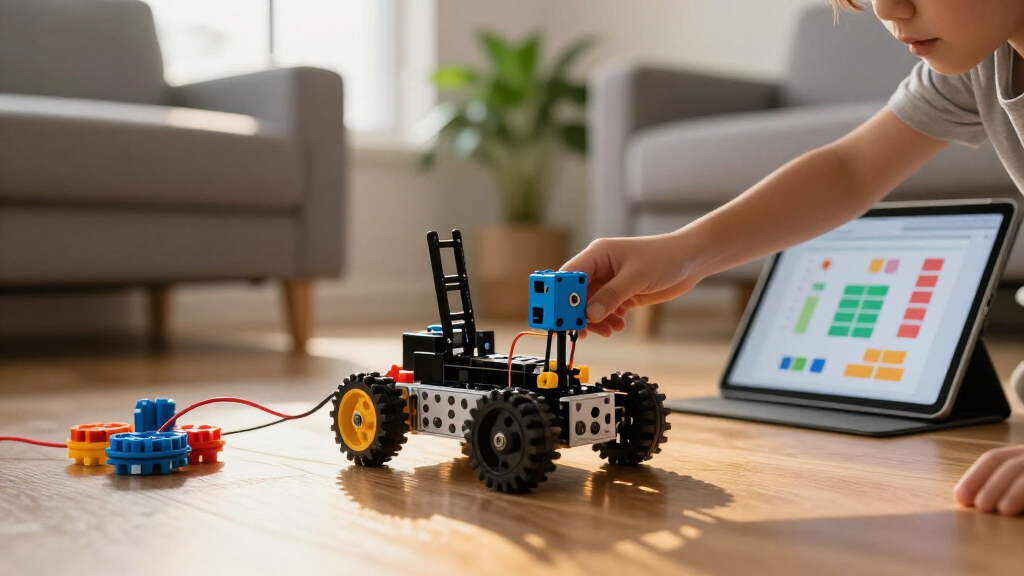
I judged every product through one specific lens: would a typical 8 year old stay engaged with it past the first week? That meant weighing replayability (open-ended projects versus one-time builds), skill fit (whether the fine motor, reading, and spatial demands genuinely match an 8-year-old’s abilities), and independence — how much of the experience a child can drive on their own without a parent hovering. Build quality and instruction clarity also counted heavily, because a kit with confusing diagrams turns into a frustration exercise rather than a learning one.
The ranking favors versatile systems over single-purpose kits, which is why Snap Circuits and the ThinkFun logic games sit near the top while capable but finite build kits rank lower. I also factored in mess, setup time, and whether the finished product actually works as advertised — a hydraulic hand that leaks or a solar robot that stalls in dim light loses educational value fast. Kits that skew too young or too old for the stated age were penalized regardless of quality.
Factors to Consider When Choosing STEM Toys For 8 Year Olds
Before choosing a STEM toy for an 8 year old, it helps to understand what actually drives engagement at this age — and where buyers most often go wrong.Match the Toy to Your Child’s Learning Style, Not Their Age
Age ranges on the box are a rough guide at best, and this comparison made that obvious: a kit marked ‘Ages 8-13’ can be trivial for one 8 year old and overwhelming for another. The better filter is how your child likes to engage. Builders want assembly-heavy kits like the Sillbird robot or Smartivity hydraulic sets. Puzzle-solvers gravitate toward Gravity Maze and Laser Maze. Experimenters prefer the chemistry set or microscope. Buying against a child’s natural inclination is the single most common reason a quality STEM toy ends up ignored.
Replayability Versus the One-Build Problem
Many STEM kits follow the same arc: two hours of assembly, ten minutes of play, then a shelf. That’s not automatically bad — the building process itself is where the learning happens — but you should know what you’re buying. Multi-model kits like the Sillbird 12-in-1 or BeAndge 5-in-1 stretch that build time across weeks. Systems like Snap Circuits or the ThinkFun logic games are effectively indefinite. If budget matters, calculate cost per engaged hour, not cost per box.
How Much Adult Supervision Will It Really Need?
At age 8, independence varies wildly, and manufacturers tend to be optimistic on the box. Wooden kits requiring glue, hydraulic kits with water and syringes, and any chemistry set all benefit from an adult nearby — sometimes for the whole session. If you’re buying for independent play during work calls or quiet time, electronic building systems, logic games, and the memory cube are far more self-directed. Be honest about your availability before choosing a supervision-heavy kit, or the project stalls halfway.
Power Source and Environment Requirements
This is an underrated gotcha. Solar-powered kits need strong, direct light — a cloudy day or dim living room can render them motionless, which confuses kids who think they built it wrong. Hydraulic kits need water and a wipeable surface. Screen-based tools like the handheld microscope need charging. Before buying, think about where the toy will actually live and whether that environment supports it. Battery-powered and purely mechanical options are the most forgiving.
Reading Level and Instruction Quality
Eight-year-olds sit right at the boundary between picture-based and text-heavy instructions, and this lineup spanned both. Kits with visual, step-by-step diagrams (LEGO-style manuals) let kids work solo; experiment manuals with paragraphs of explanation teach more science but often require an adult reading partner. Check whether the instruction style matches your child’s reading comfort, because a great kit with a frustrating manual fails just as surely as a bad kit.
Mess, Small Parts, and Household Fit
Chemistry sets stain, hydraulic kits splash, and anything with tiny gears or marbles becomes a hazard around younger siblings. If the toy will live in a shared space or you have a toddler in the house, favor contained systems like Snap Circuits (parts snap to a base) or self-contained logic games. Families with dedicated play or craft rooms have far more freedom to take on messier, more ambitious kits like the chemistry set or glue-based wooden builds.
Frequently Asked Questions
Are STEM toys for 8 year olds actually educational, or just toys with a label?
The gap between the two is real, and it showed clearly in this comparison. Kits that expose a visible mechanism — circuits carrying real current, hydraulics moving a mechanical hand, gears transferring rotation — teach genuine cause and effect because the child can see the science working. Toys where the ‘STEM’ element is just a theme or app wrapper deliver far less. A good test: can your child explain why the toy works after playing with it? If yes, the learning is sticking; if they only remember that it lit up, it leaned more toy than tool.
Which STEM toy will keep an 8 year old busy the longest?
Systems beat projects for longevity. Snap Circuits Jr. offers a hundred distinct builds plus room to invent your own once a child understands the components, and the ThinkFun logic games scale across 60 difficulty levels, so they grow with the child rather than being solved once. Multi-model robot kits sit in the middle — twelve builds is real value, but eventually the parts get combined and the kit drifts toward retirement. If long-term engagement is the priority, choose the systems; if you want a satisfying weekend project, the build kits deliver that instead.
Should I buy a kit slightly above my child’s age range so it lasts?
Sometimes, but with a caveat. Kits marked 10+ often assume fine motor precision and reading stamina that many 8 year olds haven’t developed, which means the parent ends up doing half the build — defeating the purpose. A safer strategy is buying at the top of the child’s comfortable range and choosing kits with difficulty inside them, like Gravity Maze or Snap Circuits, which a motivated 8 year old can start independently and keep advancing through. Save the genuinely advanced kits for a shared parent-child project rather than expecting solo use.
What’s the best STEM toy if my child isn’t into building things?
Construction kits dominate this category, but they’re not the only path. The National Geographic chemistry set suits kids who like experiments and surprising reactions; the handheld microscope rewards curiosity and outdoor exploration; the PlayRoute memory cube builds sequencing and reflexes through quick games rather than assembly. These discovery-style options also tend to work better for kids with shorter attention spans, since each session is a fresh, self-contained activity instead of a multi-hour build commitment.
Do solar-powered robot kits actually work well?
They work, but with expectations to manage. The solar panels in this price range need direct, strong sunlight — near a bright window on a sunny day or outdoors — and they noticeably underperform under household lighting or overcast skies. Kids can misread a sluggish robot as a build mistake, which causes frustration. If you live somewhere sunny and the toy can live near a window or go outside, solar kits are a fun renewable-energy lesson. If not, a battery-powered or purely mechanical kit will run more reliably year-round.
Conclusion
The right pick comes down to your child’s style and your household. Best overall goes to Snap Circuits Jr. — it offers the strongest combination of real learning, independence, and longevity in the lineup. Best value is the Sillbird 12-in-1 Solar Robot Kit, which stretches a single purchase across many builds. Best premium pick is the Thames & Kosmos Mega Cyborg Hand, with the most sophisticated engineering and a genuinely impressive finished product. For beginners or younger-leaning 8 year olds, the BeAndge 5-in-1 kit is the gentlest entry point, while puzzle-lovers should go straight to ThinkFun Gravity Maze and experimenters to the National Geographic chemistry set. Whatever you choose, prioritize the option that matches how your child actually likes to play — that, more than any feature list, determines whether a STEM toy teaches or gathers dust.
Fall Picks
fall essentials
As an affiliate, we earn on qualifying purchases.