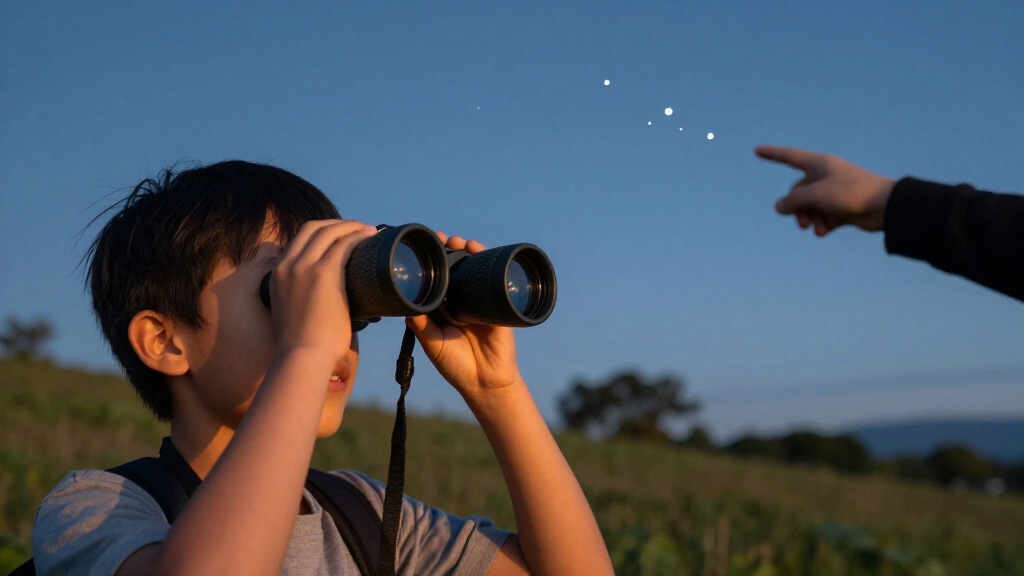
For most beginners, I’d start with the Celestron Cometron 7×50: its lower magnification is easier to hold steady and gives a wide view for learning the night sky. The Celestron SkyMaster 15×70 is a strong step up for seeing more detail, while the SkyMaster 20×80 suits buyers ready to use a tripod for larger views. The main tradeoff is simple: higher magnification can reveal more, but it also makes hand shake more visible and often calls for support. Aperture, weight, and ease of setup matter just as much as magnification. Read on for how the seven options compare and which one fits your observing style.

Get school and study supplies delivered free — and shop member deals
- Fast, free delivery on millions of items
- Access to Prime Big Deal Days deals on October 6–7
- Prime Video, Amazon Music and more included
Key Takeaways
- The Cometron 7×50 is the easiest starting point in this group because its lower magnification is more manageable for handheld skywatching than the larger SkyMaster models.
- The 15×70 is the clearest middle ground for beginners who want more reach than a 7×50 but do not want to begin with the bulk and support needs of an 80mm model.
- Tripod support changes the value of high magnification: the 18×70 bundle includes a tripod, while the 20×80 and 25×70 models call for careful planning around steadiness and handling.
- The 20×50 waterproof binoculars are the outlier among these picks; their compact aperture may suit general outdoor use better than extended stargazing.
- More magnification is not automatically better for beginners. The 25×70 and 20×80 can be harder to aim and hold still, so their added reach pays off most for patient observers with support.
| Celestron SkyMaster 12×60 Binoculars |  | Best Overall for Beginner Stargazers | Magnification: 12x | Objective lens diameter: 60 mm | Prism: Porro prism, BaK-4 | VIEW LATEST PRICE | See Our Full Breakdown |
| 18×70 Astronomy Binoculars with Tripod and Smartphone Adapter |  | Best Accessory Bundle for Supported High-Power Viewing | Magnification: 18x | Objective lens diameter: 70 mm | Prism: Roof prism with BAK-4 glass | VIEW LATEST PRICE | See Our Full Breakdown |
| Celestron Cometron 7×50 Astronomy Binoculars |  | Best for First-Time Sky Scanning | Magnification: 7x | Objective lens diameter: 50 mm | Field of view: 6.8° | VIEW LATEST PRICE | See Our Full Breakdown |
| 20×50 Waterproof Binoculars for Adults |  | Best for Long-Range Viewing, Not Handheld Stargazing | Magnification: 20x | Objective lens diameter: 50 mm | Field of view: 168 yards at 1,000 yards | VIEW LATEST PRICE | See Our Full Breakdown |
| Celestron SkyMaster 15×70 Astronomy Binoculars |  | Best for Serious Beginner Astronomy | Magnification: 15x | Objective lens diameter: 70 mm | Prism and material: Porro prism, BaK-4 | VIEW LATEST PRICE | See Our Full Breakdown |
| Celestron SkyMaster 25×70 Binoculars for Astronomy, Long-Range & Wildlife |  | Best for High-Magnification Viewing | Magnification: 25× | Objective lens diameter: 70 mm | Prism type: Porro prism; BaK-4 prisms listed in product description | VIEW LATEST PRICE | See Our Full Breakdown |
| Celestron SkyMaster 20×80 Binoculars |  | Best for Maximum Light Gathering | Magnification: 20× | Objective lens diameter: 80 mm | Prism type: BaK-4 | VIEW LATEST PRICE | See Our Full Breakdown |
| stargazing binoculars for beginner | Magnification | Objective lens diameter | Exit pupil | Field of view |
|---|---|---|---|---|
| Celestron SkyMaster 12×60 Bino | 12x | 60 mm | 5 mm | 278 feet |
| 18×70 Astronomy Binoculars wit | 18x | 70 mm | 4.7 mm | 231 feet |
| Celestron Cometron 7×50 Astron | 7x | 50 mm | 7.1 mm | 6.8° |
| 20×50 Waterproof Binoculars fo | 20x | 50 mm | 2.5 mm | 168 yards at 1,000 yards |
| Celestron SkyMaster 15×70 Astr | 15x | 70 mm | 4.7 mm | 4.4° |
| Celestron SkyMaster 25×70 Bino | 25× | 70 mm | 2.8 mm | 2.7° |
| Celestron SkyMaster 20×80 Bino | 20× | 80 mm | — | — |
More Details on Our Top Picks
Celestron SkyMaster 12×60 Binoculars
I’d put the Celestron SkyMaster 12×60 first for beginners who want a useful balance of sky reach and manageable magnification. Its 12x view brings lunar detail closer than the Cometron 7×50, while the 60 mm objectives gather more light than many compact binoculars. BaK-4 prisms and multi-coated optics support bright views, and the center focus is straightforward for switching between celestial and distant daytime targets. The tradeoff is steadiness: 12x magnification can reveal hand shake, and the substantial body may tire your arms during a long session. I’d plan for a tripod if you expect extended observing; unlike the SkyMaster 15×70, though, this model asks for less magnification to steady. It is water resistant, not a substitute for fully waterproof gear.
Pros:- 12x magnification offers more lunar and distant-target detail than the Cometron 7×50.
- 60 mm objectives, BaK-4 prisms, and multi-coated optics support bright views.
- Center focus works well for moving between sky and terrestrial viewing.
- Rubber-armored, water-resistant body and included carrying accessories.
Cons:- Size and weight can make extended handheld viewing tiring.
- A tripod is not included, though mounting can help control image shake.
Best for: New stargazers who want more reach than a 7×50 without jumping to 15x or 18x magnification, and who may use binoculars for daytime viewing too.
Not ideal for: Buyers seeking a lightweight pair for long handheld sessions or those who need a tripod included; its size can tire your arms, and the tripod is sold separately.
- Magnification:12x
- Objective lens diameter:60 mm
- Prism:Porro prism, BaK-4
- Optical coating:Multi-coated
- Exit pupil:5 mm
- Eye relief:18 mm
- Field of view:278 feet
- Focus and mount:Center focus; 1/4-20 tripod attachment
Our verdict“Choose this for a versatile first astronomy pair with a useful step up in reach, provided you are prepared to mount it for longer sessions.”
18×70 Astronomy Binoculars with Tripod and Smartphone Adapter
These 18×70 binoculars suit a beginner who already knows they want close views of the Moon and distant terrestrial subjects, and is willing to use a support. Their 70 mm objectives and fully multi-coated optics are geared toward gathering light, while the included tripod adapter and smartphone adapter make setup more complete than the SkyMaster 15×70, which includes a tripod adapter but not a smartphone adapter. High magnification narrows the field to 231 feet and makes handheld shake hard to ignore; at 4.7 lb, these are not a casual neck-and-go choice. IPX7 waterproofing and fogproof construction offer stronger weather protection than the water-resistant SkyMaster models. I’d choose them for planned, stationary observing, not quick sky scans or a first pair intended mainly for handheld use.
Pros:- 18x magnification and 70 mm objectives suit detailed, supported observation.
- Fully multi-coated optics and BAK-4 prisms support bright image transmission.
- IPX7 waterproof and fogproof construction provides robust weather protection.
- Includes tripod and smartphone adapters, plus a carrying case and lens covers.
Cons:- At 4.7 lb, the binoculars are heavy to hold for extended periods.
- High magnification makes image shake more noticeable and a tripod practically necessary.
- The 231-foot field of view is narrower than the Cometron 7×50 for finding and scanning targets.
Best for: Beginners who plan to observe from a fixed spot, want high magnification, and value included adapters for tripod-supported viewing and phone attachment.
Not ideal for: Casual observers wanting lightweight, wide-field handheld scanning; the 4.7 lb body and 18x magnification call for support.
- Magnification:18x
- Objective lens diameter:70 mm
- Prism:Roof prism with BAK-4 glass
- Lens coating:Fully multi-coated
- Exit pupil:4.7 mm
- Eye relief:18 mm
- Field of view:231 feet
- Weight:4.7 lb
- Water resistance and accessories:IPX7 waterproof; tripod adapter and smartphone adapter included
Our verdict“Pick these if you want high magnification and included mounting accessories for stationary observing, but skip them for a light, handheld beginner setup.”
Celestron Cometron 7×50 Astronomy Binoculars
For learning the night sky, I favor the Celestron Cometron 7×50 when a wide, easy-to-steady view matters more than magnifying individual targets. Its 6.8° field of view helps beginners sweep across star fields and locate objects, while 7x magnification is less demanding to hold than the SkyMaster 12×60 or 15×70. The 50 mm objectives and multi-coated optics are suited to bright, broad views, and it can also serve for daytime outings. The compromises are limited reach and individual focus, which is less convenient when rapidly changing subjects than the center-focus SkyMaster 12×60. Eye relief is 13 mm, and the tripod socket does not mean an adapter is supplied. This is the approachable sky-scanning pick, not the choice for close-up lunar detail.
Pros:- Wide 6.8° field of view makes it easier to sweep the sky and find targets.
- Lower 7x magnification is less susceptible to hand shake than the higher-power models here.
- 50 mm objectives and multi-coated optics support bright views.
- Tripod-adaptable design and included case, strap, caps, and lens cloth.
Cons:- Less magnification than the SkyMaster 12×60 and 15×70 limits fine detail on distant targets.
- Individual focus is slower to adjust when changing subjects.
- A tripod adapter is not included, despite the tripod socket.
Best for: First-time observers, families, and learners who want to scan broad star fields with a relatively easy-to-hold pair and use it in daylight as well.
Not ideal for: Buyers prioritizing close lunar detail or fast focus changes; 7x offers less reach, and individual focus takes more adjustment than center focus.
- Magnification:7x
- Objective lens diameter:50 mm
- Field of view:6.8°
- Close focus distance:26.2 ft (8 m)
- Prism and coating:Porro prism; multi-coated
- Exit pupil:7.1 mm
- Eye relief:13 mm
- Weight:774 g
- Focus and mount:Individual focus; tripod mount socket
Our verdict“Choose the Cometron 7×50 to learn the sky with broad, steadier views rather than to maximize magnification or fine detail.”
20×50 Waterproof Binoculars for Adults
The 20×50 Waterproof Binoculars put magnification ahead of beginner-friendly sky scanning. Their 20x power exceeds the SkyMaster 15×70, but the smaller 50 mm objectives and 2.5 mm exit pupil make this a different tradeoff: more apparent enlargement, with less generous light at the eye than the larger-aperture options. The 168-yard field of view at 1,000 yards is also comparatively narrow, so finding stars or sweeping across the sky takes more effort than with the Cometron 7×50. Coated optics and BAK4 Porro prisms are useful features, and center focus is familiar, but 20x magnification makes hand shake conspicuous. The rubberized body is described as waterproof, with a specific warning not to immerse it. I’d consider it for occasional supported long-distance observation, not as my first all-purpose astronomy pair.
Pros:- 20x magnification offers strong enlargement for distant subjects.
- BAK4 Porro prisms and multi-coated, anti-reflective optics support image clarity.
- Center focus is familiar and straightforward to adjust.
- Rubberized body provides a secure grip and impact resistance.
Cons:- The 2.5 mm exit pupil is smaller than those of the SkyMaster 12×60 and Cometron 7×50.
- Narrower field of view makes sky scanning and target acquisition less forgiving.
- High magnification increases image shake; a tripod is useful, and the body must not be immersed.
Best for: Buyers who prioritize high magnification for distant terrestrial viewing and will use a tripod or other stable support for astronomy.
Not ideal for: Beginners seeking bright, wide-field views or easy handheld stargazing; its narrow field, small exit pupil, and 20x magnification make locating and steadying targets harder.
- Magnification:20x
- Objective lens diameter:50 mm
- Field of view:168 yards at 1,000 yards
- Prism:BAK4 Porro prism
- Exit pupil:2.5 mm
- Coating:Full multi-coating, anti-reflective
- Focus:Manual center focus
- Weight:0.89 kg
- Water resistance and mount:Waterproof; do not immerse; tripod mount
Our verdict“Choose this pair for supported long-range viewing if magnification is your priority, but look to the Cometron 7×50 for easier beginner stargazing.”
Celestron SkyMaster 15×70 Astronomy Binoculars
The Celestron SkyMaster 15×70 is the step-up choice for beginners ready to prioritize astronomical reach over easy handheld use. Its 70 mm objectives gather more light than the SkyMaster 12×60’s 60 mm lenses, and 15x magnification gives more enlargement, though both changes make stable support more important. BaK-4 prisms and multi-coated optics support low-light viewing, while the included tripod adapter makes mounting straightforward; the tripod itself is not included. Compared with the 18×70 binoculars in this roundup, the SkyMaster offers less magnification, which can make it a less demanding starting point, but it has water-resistant rather than IPX7 waterproof construction and does not include a smartphone adapter. Its center focus, rubber armor, and carrying accessories round out a capable set for planned sessions.
Pros:- 70 mm objectives provide a larger aperture than the SkyMaster 12×60.
- 15x magnification offers greater reach than the 12×60 without going as high as the 18×70.
- BaK-4 prisms and multi-coated optics support bright, detailed low-light views.
- Tripod adapter and practical carrying accessories are included.
Cons:- Size and weight make tripod support advisable for extended observing.
- Tripod is not included.
- Water-resistant construction offers less protection than the IPX7-rated 18×70 model.
Best for: Beginners who mainly observe from a backyard or fixed location and want a larger aperture and more reach than the SkyMaster 12×60.
Not ideal for: People who need a lightweight handheld pair, want broad low-power sky scanning, or expect a tripod or fully waterproof construction in the box.
- Magnification:15x
- Objective lens diameter:70 mm
- Prism and material:Porro prism, BaK-4
- Optical coating:Multi-coated
- Exit pupil:4.7 mm
- Eye relief:18 mm
- Field of view:4.4°
- Focus and mount:Center focus; tripod mount with 1/4-inch-20 adapter
- Water resistance:Water resistant
Our verdict“Pick the SkyMaster 15×70 for supported astronomy sessions when its larger aperture matters more than handheld comfort or full waterproofing.”
Celestron SkyMaster 25×70 Binoculars for Astronomy, Long-Range & Wildlife
The 25× magnification gives this model more reach than the Celestron SkyMaster 15×70, making it better suited to close views of lunar features and distant targets. Its 70 mm objective lenses, BaK-4 prisms, and multi-coated optics help gather light, but the 2.8 mm exit pupil means it is not automatically the brightest choice in every observing condition. High magnification also narrows the view to 2.7 degrees and makes hand movement conspicuous, so I’d treat the built-in tripod adapter as part of the setup rather than an optional extra. The water-resistant, rubber-armored body suits outdoor sessions, while the 13 mm eye relief may feel limited for some eyeglass wearers. For beginners willing to mount their binoculars, it offers more magnification than the 15×70; for casual handheld sky scanning, that lower-power model is easier to manage.
Pros:- 25× magnification provides more reach than the SkyMaster 15×70.
- 70 mm lenses and multi-coated optics support low-light viewing.
- Built-in tripod adapter helps stabilize the high-magnification view.
- Water-resistant, rubber-armored housing is suited to outdoor use.
Cons:- Heavy, bulky construction makes extended handheld viewing uncomfortable.
- High magnification makes image shake prominent and calls for a sturdy tripod.
- The 2.7-degree field of view is less suited to scanning broad areas of sky.
Best for: Beginning stargazers who have a sturdy tripod and want more magnification for lunar details or distant celestial targets.
Not ideal for: Beginners seeking lightweight, handheld binoculars, or eyeglass wearers who need generous eye relief.
- Magnification:25×
- Objective lens diameter:70 mm
- Prism type:Porro prism; BaK-4 prisms listed in product description
- Optics coating:Multi-coated
- Exit pupil:2.8 mm
- Eye relief:13 mm
- Field of view:2.7°
- Water resistance:Water resistant
- Tripod adapter:Built-in ¼-20 adapter
Our verdict“Choose this model if you’re ready to use a sturdy tripod and want more magnification than the SkyMaster 15×70, but skip it for easy handheld observing.”
Celestron SkyMaster 20×80 Binoculars
For a beginner prioritizing light-gathering aperture, the 80 mm objective lenses set this model apart from the Celestron SkyMaster 25×70. The lower 20× magnification is also less demanding than 25× when aiming at the sky, though it still amplifies hand shake enough that a tripod is advisable for extended sessions. BaK-4 prisms and multi-coated optics support bright, detailed views, while the built-in tripod adapter makes mounting straightforward; the tripod itself is not included. Compared with the 25×70, this pair trades some magnification for larger lenses and a wider stated exit pupil based on its listed specs, a useful balance for viewing star fields. Its water-resistant, rubber-armored body is ready for outdoor use, but its size and weight make it a poor match for anyone who expects a grab-and-go handheld pair.
Pros:- 80 mm objective lenses gather more light than the 70 mm lenses on the SkyMaster 25×70.
- 20× magnification is lower than 25×, making aiming somewhat less demanding.
- BaK-4 prisms and multi-coated optics support bright, detailed views.
- Built-in tripod adapter and included carrying case support mounted storage and use.
Cons:- Large size and weight make extended handheld viewing impractical.
- A tripod is not included, despite being advisable for steady viewing.
- The 20× magnification still makes image shake noticeable without support.
Best for: New stargazers who observe from a fixed location, can provide a tripod, and want large-aperture binoculars for star fields and dimmer targets.
Not ideal for: Travelers or casual observers who need compact binoculars for handheld use, or buyers expecting a tripod in the box.
- Magnification:20×
- Objective lens diameter:80 mm
- Prism type:BaK-4
- Optics coating:Multi-coated
- Tripod adapter:Built-in ¼-20 adapter
- Water resistance:Water-resistant
- Housing:Rubber-armored
- Included accessories:Carrying case, objective lens caps, rainguard, neck strap, lens cloth, instruction manual
Our verdict“Pick the SkyMaster 20×80 if you can mount it and value larger light-gathering lenses over the extra magnification of the 25×70.”
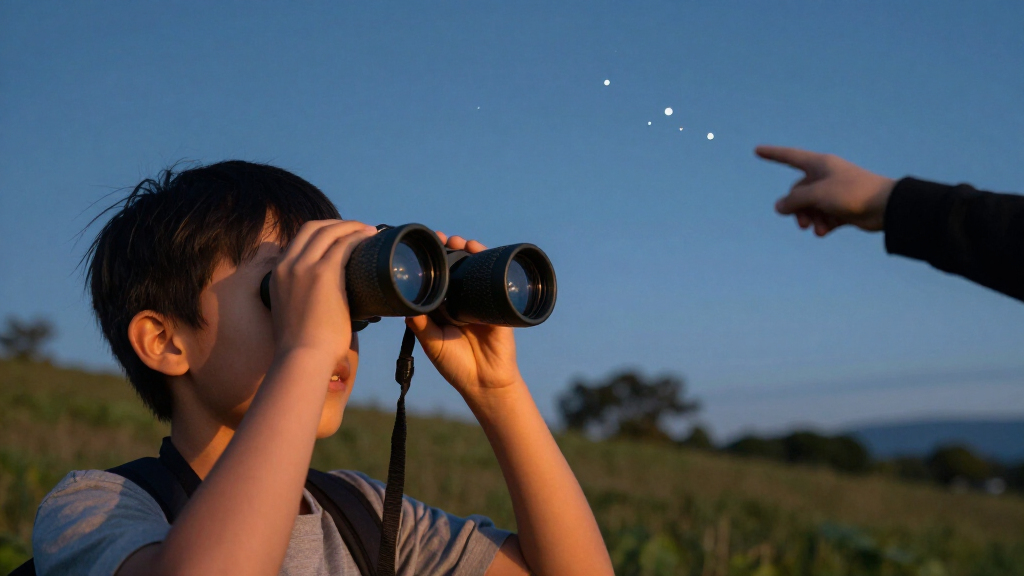
How We Picked
I ranked these binoculars around the needs of a first-time skywatcher: a view that is practical to aim, manageable weight and magnification, useful aperture for nighttime observing, and a realistic path to steady viewing. I also looked at included accessories and stated use cases, since a tripod or smartphone adapter can affect setup but does not replace good optical handling.
The Cometron 7×50 leads because it offers the most approachable handheld format in this lineup. The 15×70 follows as a balanced upgrade, while larger 18×70 and 20×80 options rank for buyers willing to use support. The 12×60 and 25×70 fill more specialized middle and long-reach roles, and the 20×50 waterproof model ranks lower for astronomy because its smaller objective lenses offer less light-gathering area than the astronomy-focused alternatives. I treat every high-magnification model as a less forgiving first purchase unless the buyer has a stable support plan.
Factors to Consider When Choosing Stargazing Binoculars For Beginners
Choosing stargazing binoculars is less about chasing the biggest numbers and more about matching the view to how you’ll observe. I’d think through these practical tradeoffs before deciding, especially if this is your first optical aid for the night sky.
Choose Magnification You Can Hold Steady
Magnification makes objects appear larger, but it also magnifies hand movement. That can turn a promising view into a jittery one, particularly when you are learning to find targets. For casual handheld sessions, lower magnification is usually easier to aim and keep steady. Models around 15x and above are more likely to benefit from a tripod or another firm support. A common mistake is choosing the highest magnification available before deciding how you will stabilize the binoculars. If you want to observe while standing or move between targets often, prioritize control over raw reach.
Understand Aperture and the Whole Viewing Experience
The second number in a binocular specification refers to the diameter of its objective lenses in millimeters. Larger objectives can gather more light, which can help when observing faint night-sky targets, but they usually add bulk and weight. That extra size may make a binocular harder to hold overhead for long periods. Aperture is only part of the experience: a wide, comfortable view and easy aiming can help a beginner locate objects more successfully. Avoid treating a larger lens as a guarantee of a better view in every setting. Choose the largest model you can support comfortably, not simply the largest one you can carry.
Plan for a Tripod Before Buying High-Power Binoculars
A tripod is not just an accessory when magnification gets high; it can determine whether you can use the binoculars for sustained observing. Check whether the product includes a tripod, whether the binoculars have a suitable mounting point, and whether the support can handle their size. An included tripod may make setup easier, but buyers should still consider stability and how easily it adjusts to different viewing angles. A lightweight stand can be inconvenient if it shakes or cannot position the binoculars comfortably. If you expect to observe from a chair or balcony, think about height and angle as well as the mount. Buying support later can add cost and complexity, so plan for it as part of the system.
Match the Binoculars to What You Want to Observe
Wide star fields, the Moon, and brighter clusters do not place identical demands on binoculars. A wider, lower-power view can make it easier to scan and learn constellations, while higher magnification can help bring distant targets closer when the image is steady. Binoculars are not a substitute for every kind of telescope view, so set expectations around broad views rather than extreme planetary detail. If you want one pair for both daytime outdoor use and occasional stargazing, waterproofing and portability may matter more. A model marketed for wildlife can be versatile, but its specifications still need to suit night viewing. Start with the targets you are most likely to seek out, rather than buying for every possible use.
Think About Comfort, Setup, and Where You Observe
Weight matters more during a long session than it does when you first pick up a box. Large binoculars can strain arms and neck when pointed high in the sky, while frequent setup can discourage quick observing sessions. Consider whether you have space to store a tripod and whether you can carry the full setup to a darker observing spot. If you wear glasses, check the stated eye relief and whether the eyecups can be adjusted for comfortable viewing. Do not assume a smartphone adapter will make locating objects effortless; aligning a phone and binoculars can take patience. The best beginner choice is often the one you will set up and use regularly.
Frequently Asked Questions
Can I use high-magnification binoculars without a tripod?
You can, but the view may shake enough to make sustained observation frustrating. Hand steadiness varies, and even small movements are easier to see at higher magnification. For models such as the 20×80 or 25×70, a tripod or another firm support is a sensible part of the purchase plan. Lower-power options are generally easier to point and hold while standing. If you do not want to bring support, choose a model with handling that suits handheld use rather than buying based only on magnification.
Should my first pair be 7×50 or 15×70?
Choose 7×50 if you value a more manageable handheld view and want to learn how to find objects across the sky. Choose 15×70 if you are comfortable with a larger, heavier binocular and are prepared to use support for steadier viewing. The lower-power option is less demanding to aim, while the 15×70 offers a more magnified view but asks more of the observer. Neither choice is universally better; the right one depends on whether ease of use or added reach matters more to you. If you are unsure about tripods, start with the simpler handheld format.
Is a smartphone adapter useful for stargazing?
A smartphone adapter can help you capture or share what appears through the binoculars, but it is not necessary for observing. Aligning a phone camera with an eyepiece can take adjustment, and the result may not match what your eyes see. It also does not solve image shake, so stable support still matters at higher magnification. Beginners who mainly want to learn the sky may get more use from comfortable handling than from a phone accessory. Treat the adapter as an extra feature, not the main reason to choose a binocular.
Are waterproof binoculars a good choice for astronomy?
Waterproofing can be useful if you observe in damp conditions or also plan to use the binoculars outdoors during the day. It does not by itself make a model better for night-sky viewing. Compare the objective size, magnification, weight, and suitability for steady viewing before prioritizing weather protection. In this lineup, the 20×50 waterproof option has smaller objectives than the astronomy-focused 70mm and 80mm models. Choose it for its broader outdoor role only if its viewing format matches your stargazing expectations.
Should I buy the largest aperture I can afford?
Not automatically. A larger aperture can gather more light, but the binoculars may also become heavier and harder to hold or transport. If the extra size means you avoid setting them up, a smaller model may serve you better in practice. Consider the full setup, including a tripod if the magnification calls for one, rather than judging aperture alone. For a beginner, comfort and repeat use can matter more than having the largest objectives in the group. Choose a larger model when you have a realistic plan to support and handle it.
Conclusion
Best overall: I’d choose the Celestron Cometron 7×50 for a first pair when ease of handheld use matters most. Best value: the Celestron SkyMaster 12×60 is a practical middle ground for buyers who want more magnification than a 7×50 without jumping straight to the largest models. Best for beginners: the Cometron remains the most approachable starting point in this group. Best premium: the Celestron SkyMaster 20×80 is the choice for patient observers prepared to use solid support and manage a larger setup. For a bundled support option, look at the 18×70 astronomy binoculars with tripod and smartphone adapter; for long reach, consider the 25×70 only if you can keep it steady. If outdoor versatility and waterproofing matter more than astronomy-specific aperture, the 20×50 waterproof binoculars may suit your mix of uses. Match the binoculars to the way you plan to observe, and the best choice becomes much clearer.
Halloween Picks
halloween
As an affiliate, we earn on qualifying purchases.