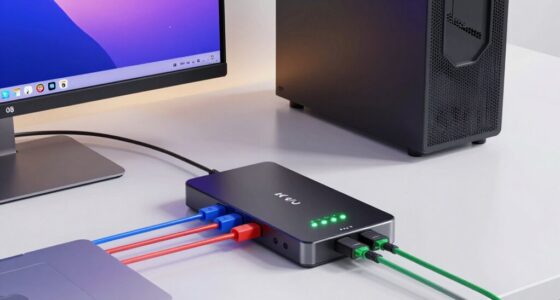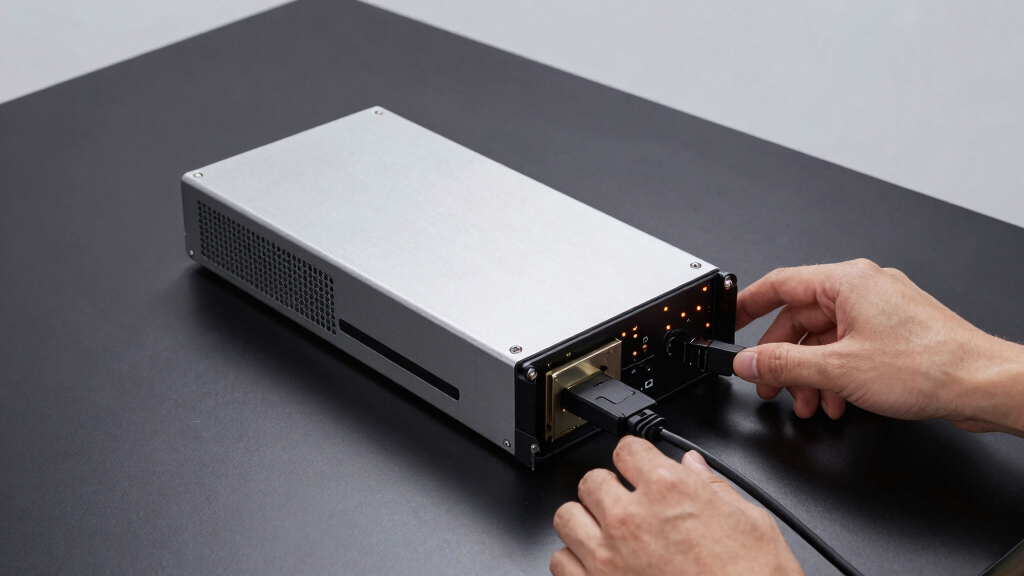
If you’re searching for the best RAID enclosure with hardware RAID, you’re likely balancing performance, ease of use, and expandability. The TERRAMASTER D5-310 stands out for its robust five-bay design and hardware RAID support, making it ideal for demanding workflows. Meanwhile, the QNAP TR-004 offers a sleek, versatile setup suited for professional storage needs. The main tradeoffs in this category often involve balancing cost against features like hot-swappable drives, cooling, and RAID mode variety. Continue reading for a detailed breakdown of each option and how they compare to help you find the best fit for your needs.

Prime made for students and young adults
- Fast, free delivery for dorm and study essentials
- Prime Video and Amazon Music included
- Member-only deals
Key Takeaways
- Top picks balance between number of bays and RAID mode versatility, with the TERRAMASTER D5-310 leading in expandability.
- Build quality and cooling features are critical for long-term reliability, especially in multi-drive setups like the CENMATE 4-Bay models.
- USB-C connections generally offer higher transfer speeds and future-proofing over USB-A options, influencing higher-ranked models.
- Diskless enclosures provide flexibility but require compatible drives and setup knowledge, making them better suited for experienced users.
- More RAID modes and advanced features typically come with a higher price, so consider whether you need enterprise-level options or simpler configurations.
| TERRAMASTER D5-310 HDD Enclosure 5-Bay Hardware RAID (Diskless) |  | Best Overall for Flexibility and High Capacity | RAID Modes: RAID 0, 1, 5, 10, Single | Compatibility: Windows, macOS, Linux | Interface: USB 3.1 Gen 1 | VIEW LATEST PRICE | See Our Full Breakdown |
| TERRAMASTER D2-320 USB RAID Enclosure 2-Bay (Diskless) |  | Best Value for Compact, High-Speed RAID Storage | Hardware Interface: USB 3.2 Gen 2 | Supported Devices: Hard Disk, SSD | Hard Disk Form Factor: 3.5 inches | VIEW LATEST PRICE | See Our Full Breakdown |
| CENMATE Aluminum 2×2 Bay Hard Drive RAID Enclosure with Cooling Fan for 2.5”/3.5” SATA HDD/SSD, USB A/C 3.0, Tool-Free, 4 RAID Modes |  | Best for Reliability with Active Cooling and Multiple RAID Options | Supported Drive Sizes: 2.5”/3.5” SATA HDD/SSD | Max Capacity: 80TB | RAID Modes: RAID 0, RAID 1, Normal, JBOD | VIEW LATEST PRICE | See Our Full Breakdown |
| CENMATE Aluminum 2 Bay Hard Drive RAID Enclosure with Cooling Fan for 2.5“/3.5″ SATA HDD/SSD with USB A/C 3.0, Tool-Free HDD Enclosure, 4 Modes |  | Best for Balanced Performance and Cooling in Dual-Bay Design | Supported Drive Sizes: 2.5”/3.5” SATA HDD/SSD | Max Capacity: 20TB per drive | RAID Modes: RAID 0, RAID 1, Normal, JBOD | VIEW LATEST PRICE | See Our Full Breakdown |
| QNAP TR-004U-US 4-Bay Hard Drive Enclosure |  | Best for NAS Expansion and High-Speed Data Transfer | Number of Bays: 4 | Supported Drive Size: 2.5/3.5 inch SATA | Interface: USB Type-C | VIEW LATEST PRICE | See Our Full Breakdown |
| CENMATE Aluminum 4 Bay Hard Drive RAID Enclosure with Cooling Fan for 2.5/3.5″ SATA HDD/SSD, USB 3.0 & eSATA, Supports 80TB, 8 RAID Modes | | Best Overall for Versatile RAID Management | Supported Drive Sizes: 2.5/3.5 inches | Maximum Capacity: 80TB | Number of Bays: 4 | VIEW LATEST PRICE | See Our Full Breakdown |
| QNAP TR-004 4-Bay USB Type-C Direct Attached Storage with Hardware RAID (Diskless) |  | Best for Cross-Platform Compatibility and Security | Number of Bays: 4 | Interface: USB Type-C | Supported RAID Levels: RAID 0, 1, 5, JBOD | VIEW LATEST PRICE | See Our Full Breakdown |
| Yottamaster 5 Bay RAID Hard Drive Enclosure USB C, Aluminum RAID Enclosure for 3.5 & 2.5 Inch SATA HDD/SSD, Support 110TB(5x22TB) Direct Attached Storage DAS RAID1/5/10/JBOD/CLONE – PS500RC3 |  | Best for Large-Scale Data Storage and Custom RAID Configurations | Supported Drive Sizes: 2.5/3.5 inches | Maximum Capacity: 110TB | Number of Bays: 5 | VIEW LATEST PRICE | See Our Full Breakdown |
| RAID enclosure with hardware RAID | RAID Modes | Interface | Supported Drive Sizes | Material |
|---|---|---|---|---|
| TERRAMASTER D5-310 HDD Enclosu | RAID 0, 1, 5, 10, Single | USB 3.1 Gen 1 | — | — |
| TERRAMASTER D2-320 USB RAID En | — | — | — | — |
| CENMATE Aluminum 2×2 Bay Hard | RAID 0, RAID 1, Normal, JBOD | — | 2.5”/3.5” SATA HDD/SSD | Aluminum alloy |
| CENMATE Aluminum 2 Bay Hard Dr | RAID 0, RAID 1, Normal, JBOD | — | 2.5”/3.5” SATA HDD/SSD | Aluminum alloy |
| QNAP TR-004U-US 4-Bay Hard Dri | — | USB Type-C | — | — |
| CENMATE Aluminum 4 Bay Hard Dr | 8 (RAID 0/1/3/5/10, CLONE, LARGE, NORMAL) | USB 3.0, eSATA | 2.5/3.5 inches | Aluminum-Alloy |
| QNAP TR-004 4-Bay USB Type-C D | — | USB Type-C | — | — |
| Yottamaster 5 Bay RAID Hard Dr | 0/1/3/5/10/JBOD/Clone | USB C | 2.5/3.5 inches | Aluminum alloy |
More Details on Our Top Picks
TERRAMASTER D5-310 HDD Enclosure 5-Bay Hardware RAID (Diskless)
The TERRAMASTER D5-310 stands out for its extensive RAID options—supporting RAID 0, 1, 5, 10, and single disk modes—making it ideal for users who need flexible data management. Compared to the QNAP TR-004U-US, which offers fewer RAID choices, this model provides more granular control over storage configurations, especially for demanding workflows. Its support for up to 120TB and compatibility across Windows, macOS, and Linux adds to its appeal for diverse environments. However, the reliance on USB 3.1 Gen 1 limits transfer speeds to 5Gbps, which might be a bottleneck for large data transfers. The absence of included drives means additional investment, and the physical RAID switch may be less intuitive than software management. This pick makes the most sense for professionals needing large, versatile storage with hardware RAID flexibility and cross-platform support.
Pros:- Supports multiple RAID configurations for flexible data management
- High maximum capacity up to 120TB with easy drive installation
- Compatible with Windows, macOS, and Linux without additional drivers
- Includes hot spare and recovery features
Cons:- No included drives, requiring extra purchase
- Limited to USB 3.1 Gen 1, which may slow large data transfers
- Physical RAID switch less convenient than software management
Best for: IT professionals and small business users seeking a high-capacity, multi-OS compatible RAID enclosure with versatile configurations.
Not ideal for: Casual users or those with limited budget who can’t afford to purchase drives separately or need faster transfer speeds.
- RAID Modes:RAID 0, 1, 5, 10, Single
- Compatibility:Windows, macOS, Linux
- Interface:USB 3.1 Gen 1
- Max Transfer Speed:5Gbps
- Drive Bays:5
- Supported Drives:3.5-inch SATA HDDs, 2.5-inch SATA HDDs, SSDs
Our verdict“Best suited for professionals requiring large, adaptable storage solutions across multiple operating systems.”
TERRAMASTER D2-320 USB RAID Enclosure 2-Bay (Diskless)
The TERRAMASTER D2-320 offers a compact yet high-performance solution with support for RAID 0, 1, JBOD, and single disk modes, making it suitable for users who prioritize speed and simplicity. Its USB 3.2 Gen 2 interface delivers up to 10Gbps, doubling the data transfer speed of many competitors like the CENMATE Aluminum 2×2 Bay. This enclosure supports large drives up to 22TB per bay, totaling up to 44TB, and features tool-free drive installation for quick setup. Its plastic case, however, might be less durable than metal options, and the need for an external power source could be inconvenient for portable use. With no included drives, it remains an affordable choice for those who already own compatible drives. This makes it ideal for users seeking fast, reliable, and budget-friendly external storage, especially for smaller setups.
Pros:- Supports high-speed data transfer up to 10Gbps with USB 3.2 Gen 2
- Supports multiple RAID modes for data security and flexibility
- Tool-free drive installation simplifies setup
- Large capacity up to 44TB
Cons:- Plastic enclosure may be less durable than metal
- Requires external power, impacting portability
- No included drives, additional purchase needed
Best for: Small office or home users needing a fast, space-efficient RAID enclosure for moderate storage demands.
Not ideal for: Heavy-duty enterprise applications or users requiring ultra-durable enclosures, due to its plastic build and limited capacity.
- Hardware Interface:USB 3.2 Gen 2
- Supported Devices:Hard Disk, SSD
- Hard Disk Form Factor:3.5 inches
- Maximum Storage Capacity:22TB per drive
- Total Storage Capacity:up to 44TB
- Supported RAID Modes:RAID 0, RAID 1, JBOD, SINGLE
Our verdict“Excellent for users seeking a budget-friendly, high-speed RAID enclosure for small to medium storage needs.”
CENMATE Aluminum 2×2 Bay Hard Drive RAID Enclosure with Cooling Fan for 2.5”/3.5” SATA HDD/SSD, USB A/C 3.0, Tool-Free, 4 RAID Modes
The CENMATE Aluminum 2×2 Bay RAID Enclosure emphasizes cooling and versatility, supporting RAID 0, 1, Normal, and JBOD modes. Its aluminum body enhances durability and heat dissipation, essential for long-term reliability. The built-in 2-inch fan helps maintain optimal temperatures, though noise levels around 40-50 decibels could be disruptive for sensitive environments. Compared with larger enclosures like the TERRAMASTER D5-310, this unit is more compact but still offers a maximum total capacity of 80TB. The setup is straightforward, but the fan’s noise and the need to reset the RAID manually after configuration may pose minor inconveniences. Overall, this enclosure suits users who want a reliable, cooled external RAID with easy plug-and-play operation for moderate to high workloads.
Pros:- Supports four RAID modes for flexible data management
- Effective cooling with built-in fan to prevent overheating
- Aluminum construction for durability and heat dissipation
- Plug-and-play compatibility across OS
Cons:- Fan noise may be disruptive in quiet settings
- RAID setup can be risky if not configured properly
- Resetting RAID after configuration requires holding the reset button
Best for: Creative professionals or small businesses needing reliable, cooled RAID storage with flexible configurations.
Not ideal for: Quiet office environments or users who require silent operation, due to fan noise.
- Supported Drive Sizes:2.5”/3.5” SATA HDD/SSD
- Max Capacity:80TB
- RAID Modes:RAID 0, RAID 1, Normal, JBOD
- Connectivity:USB 3.0, USB A/C
- Cooling:Built-in 2-inch fan
- Material:Aluminum alloy
Our verdict“A solid choice for users prioritizing active cooling and reliable RAID options in a compact external enclosure.”
CENMATE Aluminum 2 Bay Hard Drive RAID Enclosure with Cooling Fan for 2.5“/3.5″ SATA HDD/SSD with USB A/C 3.0, Tool-Free HDD Enclosure, 4 Modes
The CENMATE Aluminum 2 Bay RAID Enclosure offers a practical balance of performance, cooling, and ease of use, supporting RAID 0, 1, Normal, and JBOD modes. Its aluminum shell provides durability and heat management, with a 2-inch fan to mitigate thermal issues during intensive data transfers. With a maximum capacity of 20TB per drive, it is suitable for moderate storage needs, though less extensive than larger models like the TERRAMASTER D5-310. Setup involves pressing and holding the reset button, which might be less intuitive than software-based configuration. The enclosure’s support for multiple systems and plug-and-play operation makes it accessible for various users. The main tradeoff is fan noise, which could be an issue in quiet environments, but overall, it offers reliable, cooled storage for users who need a compact yet capable RAID system.
Pros:- Supports four RAID modes for versatility
- Effective aluminum construction aids heat dissipation
- Built-in 2-inch fan for thermal management
- Plug-and-play with multiple OS compatibility
Cons:- Fan noise around 40-50 decibels may be disruptive
- RAID configuration requires holding the reset button, risking user error
- Limited to 20TB per drive capacity
Best for: Small business owners or advanced home users requiring a cooled, reliable RAID solution with straightforward setup.
Not ideal for: Very noise-sensitive environments, due to the fan noise, or users needing large storage capacities beyond 20TB per drive.
- Supported Drive Sizes:2.5”/3.5” SATA HDD/SSD
- Max Capacity:20TB per drive
- RAID Modes:RAID 0, RAID 1, Normal, JBOD
- Cooling:Built-in 2-inch fan
- Material:Aluminum alloy
- Connectivity:USB 3.0, USB A/C
Our verdict“Ideal for users seeking a cooled, reliable RAID enclosure with balanced performance and straightforward setup.”
QNAP TR-004U-US 4-Bay Hard Drive Enclosure
The QNAP TR-004U-US provides a robust solution for expanding NAS or computer storage, supporting up to four drives with multiple hardware RAID options including RAID 0, 1, 5, 10, JBOD, and individual disks. Its USB Type-C interface offers a theoretical transfer speed of 3Gbps, sufficient for most backup and storage tasks, although slower than some USB 3.2 options. Compared to the larger 5-bay options, it’s more compact and easier to integrate into existing systems. Its support for different RAID modes makes it adaptable, especially for users who already use QNAP NAS devices. The primary limitation is that it requires compatible SATA drives and lacks built-in RAID management, relying on host system software. This makes it suitable for users who want quick external storage expansion with flexible RAID but don’t need the highest transfer speeds.
Pros:- Supports multiple hardware RAID configurations
- USB Type-C interface for versatile connectivity
- Compatible across Windows, macOS, and Linux
- Expands NAS or desktop storage effectively
Cons:- Limited to 3Gbps transfer speed, slower than newer standards
- No built-in RAID management software
- Requires compatible SATA drives for operation
Best for: Small to medium-sized businesses or advanced home users expanding NAS or desktop storage with flexible RAID needs.
Not ideal for: Users seeking ultra-fast data transfer or those with very large storage needs, due to limited speed and drive bays.
- Number of Bays:4
- Supported Drive Size:2.5/3.5 inch SATA
- Interface:USB Type-C
- Data Transfer Speed:3 Gbps
- Supported RAID:RAID 0, 1, 5, 10, JBOD, and individual disks
- Warranty:2 Year
Our verdict“Best suited for users needing reliable, flexible RAID expansion for NAS or PC with balanced speed and compatibility.”
CENMATE Aluminum 4 Bay Hard Drive RAID Enclosure with Cooling Fan for 2.5/3.5″ SATA HDD/SSD, USB 3.0 & eSATA, Supports 80TB, 8 RAID Modes
This enclosure stands out for offering a broad selection of RAID modes, including 8 options like RAID 5 and 10, which makes it highly versatile for different data protection needs. Compared to the QNAP TR-004, it supports a wider range of RAID configurations, but it relies on eSATA, which may limit compatibility with some modern systems. Its aluminum alloy body and built-in cooling fan ensure effective heat dissipation, essential for maintaining drive longevity during intensive use. However, the eSATA port doesn’t support SATA-to-eSATA adapters, and the fan noise can be noticeable for sensitive environments. Hot-swapping isn’t supported, limiting quick drive replacements. Overall, this model is best suited for users needing flexible RAID options and high-capacity support in a durable enclosure.Pros:- Supports up to 80TB total storage across 4 bays
- Offers 8 different RAID modes for maximum flexibility
- Effective heat dissipation with aluminum alloy and cooling fan
Cons:- eSATA port does not support SATA-to-eSATA adapters
- Fan noise can reach around 50 decibels, which may be disruptive
Best for: Power users and IT professionals managing large datasets who need multiple RAID modes and robust cooling.
Not ideal for: Casual users or those seeking a simple, quiet setup, as fan noise and limited hot-swap support could be disruptive.
- Supported Drive Sizes:2.5/3.5 inches
- Maximum Capacity:80TB
- Number of Bays:4
- RAID Modes:8 (RAID 0/1/3/5/10, CLONE, LARGE, NORMAL)
- Interface:USB 3.0, eSATA
- Cooling Fan:Yes, 2-inch
- Material:Aluminum-Alloy
- Compatibility:Windows 7+, Mac 9.1+, Linux
Our verdict“This enclosure is ideal for professional environments where diverse RAID configurations and high capacity are priorities.”
QNAP TR-004 4-Bay USB Type-C Direct Attached Storage with Hardware RAID (Diskless)
The QNAP TR-004 makes the list for its support of hardware RAID 0, 1, 5, and JBOD, offering reliable data protection across multiple operating systems. Compared to the Yottamaster PS500RC3, it features a lockable drive bay for added security but limits users to a maximum of 3Gb/s SATA drives, which could be a bottleneck for high-speed workflows. Its USB Type-C interface ensures fast connection, but it isn’t compatible with certain NAS systems or applications, restricting its use in network environments. The diskless design allows for custom setup, ideal for those who prefer to select their drives, but it doesn’t support volume expansion within a NAS. This enclosure suits users who need straightforward, secure hardware RAID with cross-platform flexibility.Pros:- Supports hardware RAID 0, 1, 5, and JBOD
- Compatible with Windows, macOS, and Linux
- Lockable drive bays for enhanced security
Cons:- Limited to 3Gb/s SATA drives, reducing maximum throughput
- Not compatible with certain NAS models or applications
Best for: Creative professionals who want a secure, portable RAID solution compatible with multiple operating systems.
Not ideal for: Users requiring NAS integration or extremely high data transfer speeds, as the device is limited to 3Gb/s SATA drives.
- Number of Bays:4
- Interface:USB Type-C
- Supported RAID Levels:RAID 0, 1, 5, JBOD
- Drive Compatibility:3.5-inch SATA
- Diskless:Yes
- Included Cables:USB Type-C to Type-A
Our verdict“This RAID enclosure is well-suited for professionals needing portable, cross-platform data protection with secure drive access.”
Yottamaster 5 Bay RAID Hard Drive Enclosure USB C, Aluminum RAID Enclosure for 3.5 & 2.5 Inch SATA HDD/SSD, Support 110TB(5x22TB) Direct Attached Storage DAS RAID1/5/10/JBOD/CLONE – PS500RC3
The Yottamaster PS500RC3 stands out for its massive capacity, supporting up to 110TB across five drives, making it ideal for professionals handling large media files or extensive backups. Its support for multiple hardware RAID modes, including 5 and 10, allows for tailored data redundancy and performance optimization, unlike the more limited RAID options on the QNAP. The enclosure’s rugged aluminum body and auto-adjusting 80mm fan provide efficient cooling during demanding workloads. Compared to the CENMATE 4-bay, it offers significantly higher capacity but requires a higher power draw and more careful cooling management. This model is perfect for users with intensive storage needs and a preference for flexible RAID configuration in a robust enclosure.Pros:- Supports up to 110TB total storage with five drives
- Flexible hardware RAID modes including 5 and 10
- Robust aluminum shell with automatic temperature control fan
Cons:- Requires external power supply and careful cooling setup
- More expensive and complex to configure than smaller units
Best for: Media professionals and data-intensive users managing massive datasets who need maximum capacity and flexible RAID options.
Not ideal for: Casual users or those with minimal storage needs, as the high capacity and power requirements may be overkill and more complex to set up.
- Supported Drive Sizes:2.5/3.5 inches
- Maximum Capacity:110TB
- Number of Bays:5
- RAID Modes:0/1/3/5/10/JBOD/Clone
- Interface:USB C
- Cooling:80mm silent fan with automatic speed control
- Material:Aluminum alloy
- Transfer Rate:Up to 5Gbps
Our verdict“This enclosure is best for users demanding maximum storage capacity and customizable RAID setups for intensive workflows.”

How We Picked
The products in this roundup were selected based on their ability to support hardware RAID configurations reliably, build quality, expandability, and ease of use. We prioritized enclosures that offer robust RAID mode options, good thermal management, and compatibility with various drive sizes and types. Cost was a factor, but not at the expense of essential features that ensure data safety and performance. The ranking reflects the overall value and suitability for different user needs—from beginners to professional environments—rather than just raw specifications.| RAID enclosure with hardware RAID | Interface | Material |
|---|---|---|
| TERRAMASTER D5-310 HDD Enclosu | USB 3.1 Gen 1 | — |
| TERRAMASTER D2-320 USB RAID En | — | — |
| CENMATE Aluminum 2×2 Bay Hard | — | Aluminum alloy |
| CENMATE Aluminum 2 Bay Hard Dr | — | Aluminum alloy |
| QNAP TR-004U-US 4-Bay Hard Dri | USB Type-C | — |
| CENMATE Aluminum 4 Bay Hard Dr | USB 3.0, eSATA | Aluminum-Alloy |
| QNAP TR-004 4-Bay USB Type-C D | USB Type-C | — |
| Yottamaster 5 Bay RAID Hard Dr | USB C | Aluminum alloy |
Factors to Consider When Choosing Best RAID Enclosure With Hardware RAID
Choosing the best RAID enclosure with hardware RAID involves several key considerations beyond just capacity and RAID modes. Understanding these factors can help you avoid common pitfalls and select a model that truly meets your performance, reliability, and budget requirements.Number of Bays and Expandability
The number of drive bays directly influences your storage capacity and future expandability. Enclosures with more bays, like the TERRAMASTER D5-310, support larger RAID arrays and easier expansion, making them suitable for demanding workflows. However, larger enclosures can be more expensive and complex to manage. For smaller setups or budget-conscious buyers, 2-4 bay models often strike a balance between capacity and simplicity. Consider your long-term needs—if you anticipate significant data growth, investing in a multi-bay enclosure now can save you money and hassle later.
RAID Mode Support and Flexibility
Not all enclosures support the same RAID configurations, and some offer more flexibility than others. Devices like the CENMATE 4-Bay provide multiple RAID modes, including RAID 0, 1, 5, 10, and JBOD, accommodating different redundancy and performance needs. If you require advanced RAID options, verify that the enclosure supports your preferred modes before purchasing. Simpler models may only support basic RAID or JBOD, which could limit your options as your storage needs evolve. Flexibility in RAID modes ensures you can optimize for speed, redundancy, or a balance of both, depending on your priorities.
Build Quality and Cooling
Data integrity and device longevity depend heavily on build quality and thermal management. Aluminum enclosures like the Yottamaster 5-Bay excel at dissipating heat, reducing the risk of overheating during extended use. Cooling fans, as seen on the CENMATE models, help maintain optimal temperatures but can introduce noise. Cheaper plastic enclosures might save costs but often lack sufficient cooling, risking drive failure over time. When choosing a RAID enclosure, consider your environment—cooling features are especially important if you plan to run drives continuously or in a confined space.
Connectivity Options and Transfer Speeds
While USB 3.0 is common, many high-end enclosures now feature USB-C or eSATA connections, which support higher transfer speeds and are more compatible with modern systems. The QNAP TR-004 with USB Type-C offers faster data transfer and easier connectivity, particularly for professional workflows. Also, ensure the enclosure supports your system’s interface—using a device with Thunderbolt or eSATA can significantly improve transfer speeds if your hardware allows. Compatibility and connection type are key to maximizing your storage performance and future-proofing your setup.
Ease of Use and Maintenance
Ease of installation, drive swapping, and maintenance features make a big difference in daily use. Tool-less design, as seen in the CENMATE enclosures, simplifies setup and upgrades. Hot-swappable drives save time and reduce system downtime, especially for those managing large, ongoing projects. Consider also the enclosure’s firmware support and whether it provides management features, like RAID rebuilds and status monitoring, which contribute to smoother operation. For less experienced users, intuitive design and clear user interfaces can prevent mistakes and reduce setup frustration.
Frequently Asked Questions
Can I upgrade drives in a RAID enclosure without losing data?
Upgrading drives in a RAID enclosure depends on the RAID level and the enclosure’s capabilities. Many modern hardware RAID enclosures support online capacity expansion, allowing you to replace smaller drives with larger ones and rebuild the array without losing data. However, this process can take time and carries some risk, so always ensure you have a backup before proceeding. It’s also important to verify that your enclosure explicitly supports hot-swapping and online rebuilds for your RAID level, to avoid accidental data loss during upgrades.
Is it better to choose a diskless enclosure or one with pre-installed drives?
Choosing a diskless enclosure offers maximum flexibility because you can select drives that match your performance and capacity needs, and upgrade or replace drives easily over time. However, it requires more setup effort and compatibility knowledge. Enclosures with pre-installed drives are simpler to deploy but limit your options and can be more costly upfront. For experienced users who want tailored storage solutions, diskless models provide greater control, while beginners might prefer ready-to-go options for convenience.
How important is the RAID mode diversity when selecting an enclosure?
Having multiple RAID modes in an enclosure offers significant flexibility, enabling you to tailor storage for performance, redundancy, or a mix of both. Enclosures supporting RAID 0, 1, 5, 10, and JBOD allow for varied configurations, which is beneficial as your needs evolve. If you plan to use the device for critical data, RAID levels with redundancy like RAID 5 or 10 are advisable. Conversely, simple RAID modes might suffice for less critical storage or backup purposes. The availability of diverse modes often correlates with higher enclosure costs, but it can be a worthwhile investment for adaptable storage management.
What should I look for in terms of thermal management in a RAID enclosure?
Effective thermal management is vital to prevent overheating, which can lead to drive failure and data loss. Aluminum enclosures generally excel at heat dissipation, while built-in cooling fans help maintain optimal temperatures during extended operation. When selecting a device, consider whether it has proper ventilation, quality fans, and temperature monitoring features. In environments with limited airflow or high ambient temperatures, investing in enclosures with active cooling is especially important to protect your drives and ensure reliable operation over time.
Is a hardware RAID enclosure worth the extra cost over software solutions?
Hardware RAID enclosures provide dedicated processing and more reliable RAID management, often resulting in better performance and stability, especially under heavy workloads. They also typically support features like hot-swapping and multiple RAID modes, which can be challenging with software solutions. However, they tend to be more expensive and may require more setup expertise. If you manage critical data or need consistent performance, investing in a hardware RAID enclosure can be justified. For casual or backup storage, software solutions might be sufficient and more budget-friendly.
Conclusion
For those seeking the best overall, the TERRAMASTER D5-310 offers a compelling combination of expandability, robust RAID support, and build quality. Best value goes to more affordable 2- or 4-bay models like the CENMATE Aluminum 4 Bay for their balance of features and cost. If you want a premium setup with sleek design and high-speed connectivity, the QNAP TR-004 is worth considering. Beginners should look at models with simple setup and clear management features, while professionals with high storage demands will benefit from multi-bay, high-performance enclosures like the Yottamaster 5 Bay RAID. Ultimately, your choice depends on your specific storage needs, budget, and technical comfort level.
Fall Picks
fall essentials
As an affiliate, we earn on qualifying purchases.