A 7.2 channel AV receiver is the sweet spot for most home theaters: enough amplification and preamp outputs for a full surround setup with dual subwoofers, without the cost and complexity of 9- or 11-channel flagship models. In this comparison, the Denon AVR-S960H stands out as the best overall pick for its balanced mix of 8K HDMI support, Audyssey room correction, and HEOS multi-room streaming. The Onkyo TX-NR6100 makes a strong case for movie fans with its THX certification, while the Marantz Cinema 70s is the clear choice when shelf space is tight thanks to its slimline chassis. The main tradeoffs in this category come down to amplification power versus price, the quality of room correction software, and how many HDMI 2.1 features you actually need for gaming. Keep reading for the full breakdown of all 14 models.

Prime made for students and young adults
- Fast, free delivery for dorm and study essentials
- Prime Video and Amazon Music included
- Member-only deals
Key Takeaways
- Audyssey MultEQ (Denon, Marantz) and Pioneer‘s MCACC generally delivered more accurate room correction than the simpler calibration in the entry Yamaha models, which matters more for sound quality than raw wattage differences.
- Two of the fourteen models, the Yamaha RX300A (5.2) and Marantz Cinema 70s (slim chassis), trade channel count or power for a smaller footprint — skip them if you plan to add height or Zone 2 speakers later.
- THX certification on the Onkyo TX-NR6100 was the clearest single differentiator for pure home theater use, but it costs you the HEOS ecosystem that makes Denon models more flexible for whole-home audio.
- Within the five Denon/Marantz-family picks, the differences are mostly incremental (wattage, HDMI version, HDMI port count), so choosing between them comes down to price and gaming needs rather than sound character.
- Aventage models (Yamaha RX-A880, RX-A2A) carry a build-quality and longevity premium over the standard RX-V line, which makes sense for long-term installations but is overkill for casual living-room setups.
| Denon AVR-X1700H 7.2 Channel AV Receiver – 80W/Channel, Built-in HEOS |  | Best Overall for Future-Ready Home Theaters | Power Output: 80W per channel | Channels: 7.2 | HDMI Inputs: 6 | VIEW ON AMAZON | See Our Full Breakdown |
| Yamaha RX300A 5.2-Channel Home Theater AV Receiver with Dolby Atmos, 4K120/8K HDMI, Bluetooth Multipoint |  | Best for Easy Setup and Wireless Streaming | Channels: 5.2 | Power: 70W per channel | HDMI Support: 4K120/8K60, HDMI eARC/ARC | VIEW ON AMAZON | See Our Full Breakdown |
| JBL MA7100HP 7.2 Channel 8K AV Receiver |  | Best for Power and Versatile Connectivity | Connectivity Technology: Bluetooth | Number of HDMI Ports: 8 | HDMI Audio Output Mode: Surround | VIEW ON AMAZON | See Our Full Breakdown |
| Denon AVR-S960H 8K Ultra HD 7.2 Channel AV Receiver, Black |  | Best for High-Quality Visuals and User-Friendly Setup | Channels: 7.2 | Power: 90W per channel | Video Support: 8K/60Hz, 4K/120Hz | VIEW ON AMAZON | See Our Full Breakdown |
| Yamaha AVENTAGE RX-A880 7.2-Channel 4K Ultra HD AV Receiver with HDR, Dolby Atmos, Wi-Fi, Phono, and MusicCast |  | Best for Premium Sound and Multi-Room Integration | Channels: 7.2 | HDMI Inputs: 5-in/2-out | Supported Video Formats: 4K Ultra HD, HDR10, Dolby Vision | VIEW ON AMAZON | See Our Full Breakdown |
| Pioneer VSX-935 7.2 Channel Surround Sound Network Receiver with Dolby Atmos |  | Best for Versatility and Modern Connectivity | Connectivity Technology: Bluetooth, Wi-Fi, IR | Controller Type: Remote | Number of HDMI Ports: 8 | VIEW ON AMAZON | See Our Full Breakdown |
| Onkyo TX-NR6100 7.2 Channel THX Certified Network AV Receiver – Black |  | Best for Power and Professional-Grade Sound | Power: 210 W/Ch | Channels: 7.2 | Certification: THX Certified | VIEW ON AMAZON | See Our Full Breakdown |
| Denon AVR-S980H 7.2-Channel Receiver with Bluetooth, Wi-Fi & HEOS |  | Best for Balanced Performance and Streaming Integration | Power Output: 90W per channel | Channels: 7.2 | Video Support: 4K, 8K, Dolby Vision | VIEW ON AMAZON | See Our Full Breakdown |
| Marantz Cinema 70s Slimline 7.2 Channel AV Receiver with HEOS and Dolby Atmos |  | Best for Compact, Stylish Setups with High-Quality Sound | Channels: 7.2 | Power per channel: 50 W | HDMI inputs: 6 | VIEW ON AMAZON | See Our Full Breakdown |
| Yamaha RX-V6A 7.2-Channel AV Receiver with MusicCast | 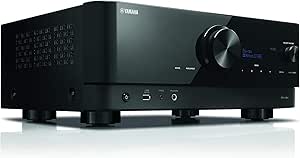 | Best for Multi-Room Integration and Latest HDMI Support | Channels: 7.2 | HDMI Inputs: 7 | Supports: 4K60, 4K120AB, 8K60B HDMI 2.1 | VIEW ON AMAZON | See Our Full Breakdown |
| Yamaha RX-A2A AVENTAGE 7.2-Channel AV Receiver with 8K HDMI, Dolby Atmos, DTS:X, Wi-Fi, Bluetooth, MusicCast | 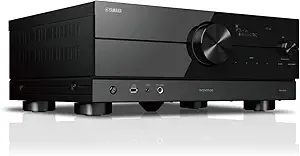 | Best Overall for Premium Home Theater Enthusiasts | Channels: 7.2 | HDMI Inputs: 7-in/1-out | HDMI Support: 8K60B, 4K120AB | VIEW ON AMAZON | See Our Full Breakdown |
| Sony STR-AN1000 7.2ch Home Theater 8K A/V Bluetooth Receiver |  | Best for Versatile Streaming and Multi-Zone Setup | Channels: 7.2 | Connectivity Technology: Ethernet, HDMI, USB | HDMI Ports: 6 | VIEW ON AMAZON | See Our Full Breakdown |
| Onkyo TX–NR5100 7.2-Channel 8K Smart AV Receiver – Black |  | Best for Gaming and Enhanced Connectivity | Channels: 7.2 | Resolution Support: 8K | Connectivity: HDMI 2.1 | VIEW ON AMAZON | See Our Full Breakdown |
| Denon AVR-S970H 7.2 Channel 8K UHD AV Receiver (90W x 7), Wi-Fi, Bluetooth |  | Best for Balanced Home Theater and Gaming in Medium Rooms | Power Output: 90W x 7 | Video Resolution Support: 8K/60Hz | HDMI Ports: 8 (6 In/2 Out) | VIEW ON AMAZON | See Our Full Breakdown |
More Details on Our Top Picks
Denon AVR-X1700H 7.2 Channel AV Receiver – 80W/Channel, Built-in HEOS
This Denon model stands out for supporting the latest 8K and 4K/120Hz standards, making it a strong choice for those planning to upgrade in the near future. Its immersive Dolby Atmos and DTS:X support deliver a compelling audio experience, comparable to the JBL MA7100HP but at a more approachable price point. The built-in HEOS system simplifies multi-room streaming, though setup can be complex for newcomers, and its limited HDMI inputs may require careful device management. Compared with the Yamaha AVENTAGE RX-A880, it offers slightly more advanced video support, but the RX-A880 provides richer multi-room features and better calibration options. This pick makes the most sense for home theater enthusiasts seeking a versatile, future-proof receiver that balances performance and connectivity with a moderate learning curve.
Pros:- Supports 8K/60Hz and 4K/120Hz for future-ready video
- Immersive Dolby Atmos and DTS:X audio formats
- Built-in HEOS for seamless multi-room streaming
- Voice control compatibility with major assistants
Cons:- Setup complexity may overwhelm beginners
- Limited HDMI inputs for extensive device connections
- High price compared to basic models
Best for: Homeowners wanting a high-performance, future-proof system with multi-room capabilities
Not ideal for: Beginners seeking a simple plug-and-play setup or those with many HDMI devices needing more inputs
- Power Output:80W per channel
- Channels:7.2
- HDMI Inputs:6
- Supports:8K/60Hz, 4K/120Hz pass-through, HDR10+, Dolby Vision, eARC
- Built-in:HEOS for wireless streaming
- Voice Control:Alexa, Google Assistant, Siri, Josh.ai
Our verdict“This model is best suited for home theater enthusiasts who value advanced video and audio features with multi-room flexibility.”
Yamaha RX300A 5.2-Channel Home Theater AV Receiver with Dolby Atmos, 4K120/8K HDMI, Bluetooth Multipoint
This Yamaha receiver offers a straightforward experience with Dolby Atmos and DTS Virtual:X, making it ideal for those new to home theater setups. Its support for 4K and 8K pass-through ensures compatibility with modern sources, though it doesn’t include voice control features, unlike the Denon AVR-X1700H or JBL MA7100HP. The room calibration and intuitive on-screen setup make it accessible for users who want quality without extensive configuration. Compared to the Yamaha AVENTAGE RX-A880, the RX300A provides a simpler interface but sacrifices some advanced multi-room features and power. It makes the most sense for casual users or small households prioritizing easy wireless streaming and straightforward Dolby Atmos sound.
Pros:- Supports Dolby Atmos and DTS Virtual:X for immersive sound
- Supports 4K120 and 8K HDMI pass-through
- Bluetooth Multipoint for seamless wireless streaming
- User-friendly setup with calibration features
Cons:- Lacks voice control features for smart home integration
- Limited HDMI inputs for complex device setups
- Potentially less powerful for large rooms
Best for: Beginners or casual users seeking an easy-to-set-up, wireless-ready AV receiver
Not ideal for: Audiophiles or advanced users who need extensive HDMI inputs or sophisticated calibration features
- Channels:5.2
- Power:70W per channel
- HDMI Support:4K120/8K60, HDMI eARC/ARC
- Dolby Atmos:Yes
- DTS Virtual:X:Yes
- Bluetooth:Multipoint
Our verdict“This receiver is ideal for those seeking a simple, wireless-enabled home theater with decent surround sound.”
JBL MA7100HP 7.2 Channel 8K AV Receiver
The JBL MA7100HP excels with its powerful 125W per channel output and comprehensive connectivity options, including Bluetooth, AirPlay 2, and Chromecast, making it suitable for large, demanding home theaters. Its multiple HDMI inputs (eight in total) and support for 8K video deliver high-quality visuals, comparable to the Denon AVR-X1700H but with a focus on power and connectivity flexibility. Its low-noise Class D amplification ensures clear, dynamic sound, though its size and complexity can be challenging for less experienced users. Compared with the Denon AVR-S960H, the JBL offers more HDMI inputs and higher power, but at a higher cost and larger footprint. This model is ideal for those who prioritize robust audio and extensive device compatibility in a high-end setup.
Pros:- 125W per channel for powerful sound
- Supports 8K HDMI video with multiple inputs
- Wireless streaming via Bluetooth, AirPlay 2, Chromecast
- Low-noise Class D amplification for clarity
Cons:- Setup can be complicated due to multiple inputs
- Premium price may be prohibitive for some
- Large size may limit installation options
Best for: Power users with large home theaters needing multiple HDMI inputs and high-volume sound
Not ideal for: Small rooms or users seeking a compact, easy-to-operate receiver with basic features
- Connectivity Technology:Bluetooth
- Number of HDMI Ports:8
- HDMI Audio Output Mode:Surround
- Wattage:125 watts
- Supported Internet Services:Apple AirPlay 2, Google Chromecast
- Control Method:App
Our verdict“This receiver is best suited for audiophiles and power users who need extensive connectivity and high-volume capacity.”
Denon AVR-S960H 8K Ultra HD 7.2 Channel AV Receiver, Black
The Denon AVR-S960H offers a compelling balance of 8K video support and simplified setup, making it a good pick for users upgrading from older models like the Yamaha RX-A880. Its support for Dolby Atmos and DTS:X delivers immersive sound, while its 8 HDMI inputs and 8K/60Hz support ensure compatibility with the latest tech. However, it falls short in some areas, such as pass-through from all 4K/120Hz sources, which could impact high-end gaming or high-frame-rate media. Compared with the Yamaha RX-A880, it emphasizes more straightforward setup and better video processing, but the RX-A880’s multi-room features and premium build might appeal more to audiophiles. This model is suited for users seeking a straightforward, powerful AV receiver with solid future-proofing.
Pros:- Supports 8K/60Hz and 4K/120Hz pass-through
- Dolby Atmos and DTS:X support
- Multi-room wireless streaming with HEOS
- Easy on-screen calibration
Cons:- Limited pass-through from some 4K/120Hz sources
- Lacks detailed specifications on certain features
- Higher price than entry-level models
Best for: Home theater users needing straightforward 8K support with easy setup
Not ideal for: Tech enthusiasts requiring extensive HDMI inputs or advanced calibration options
- Channels:7.2
- Power:90W per channel
- Video Support:8K/60Hz, 4K/120Hz
- HDMI Ports:8 (6 In/2 Out)
- Voice Control:Alexa, Google, Siri
- Wireless Support:Wi-Fi, Bluetooth, AirPlay 2
Our verdict“This receiver is good for users who want reliable 8K support and straightforward setup without extensive customization needs.”
Yamaha AVENTAGE RX-A880 7.2-Channel 4K Ultra HD AV Receiver with HDR, Dolby Atmos, Wi-Fi, Phono, and MusicCast
This Yamaha AVENTAGE model emphasizes audio quality and multi-room capabilities, making it ideal for dedicated audiophiles and larger setups. Its support for Dolby Atmos, DTS:X, and HDR formats offers a very immersive experience, comparable to the JBL MA7100HP’s audio performance but with more refined room calibration via YPAO. Although it’s heavier and more complex to set up compared to the Yamaha RX300A, it provides a more detailed sound profile and richer calibration options. Unlike the Denon AVR-S960H, it doesn’t focus solely on the latest video standards but excels in delivering quality sound across multiple zones. Its premium build and advanced features make it a fitting choice for serious home theater installations where sound quality matters most.
Pros:- Supports Dolby Atmos and DTS:X for immersive audio
- Multiple HDMI inputs supporting 4K HDR formats
- MusicCast for multi-room audio
- Advanced YPAO calibration for optimal sound
Cons:- Heavy and large, requiring sturdy placement
- More complex setup may challenge beginners
- Higher price point
Best for: Audiophiles and home theater enthusiasts who prioritize sound quality and multi-room features
Not ideal for: Casual users or those needing a compact, simple AV receiver with minimal setup
- Channels:7.2
- HDMI Inputs:5-in/2-out
- Supported Video Formats:4K Ultra HD, HDR10, Dolby Vision
- Supported Audio Formats:MP3, WMA, AAC, FLAC, WAV, DSD
- Power Output:115W per channel
- Connectivity:Wi-Fi, Bluetooth, AirPlay, MusicCast
Our verdict“This receiver is best suited for users seeking high-fidelity sound and multi-room flexibility in a premium package.”
Pioneer VSX-935 7.2 Channel Surround Sound Network Receiver with Dolby Atmos
This Pioneer model stands out for its support of Dolby Atmos and HDMI 2.1 with 8K compatibility, making it a strong choice for those who want future-proofing for both gaming and streaming. Compared to the Denon AVR-S980H, it offers more HDMI ports (8 versus 4) but provides less power at 80W per channel, which may be insufficient for large rooms. Its wireless options, including Bluetooth and Wi-Fi, enhance convenience, but setup can be complex for less tech-savvy users. The absence of detailed user reviews leaves some uncertainty about real-world performance, especially in demanding environments.
Pros:- Supports Dolby Atmos for immersive sound experience
- HDMI 2.1 with 8K support suitable for modern gaming and streaming
- Multiple HDMI ports for various devices
- Wireless connectivity options including Bluetooth and Wi-Fi
Cons:- No detailed user reviews available, leaving some performance uncertainty
- Wattage may be insufficient for very large rooms
- Setup can be complex for some users
Best for: Home theater enthusiasts who need multiple HDMI inputs and plan to use modern streaming and gaming features.
Not ideal for: Large rooms requiring very high wattage — its 80W per channel may fall short for large spaces or high-volume listening.
- Connectivity Technology:Bluetooth, Wi-Fi, IR
- Controller Type:Remote
- Number of HDMI Ports:8
- HDMI Version:2.1
- Supported Internet Services:TuneIn
- Total Number of HDMI Ports:8
- Surround Sound Channel Configuration:7.2
- Output Power:80 watts
- Item Dimensions:14.56″D x 17.13″W x 6.81″H
Our verdict“This receiver is ideal for users seeking versatile connectivity and future-proof features in a mid-range component.”
Onkyo TX-NR6100 7.2 Channel THX Certified Network AV Receiver – Black
The Onkyo TX-NR6100 excels in delivering high wattage at 210W per channel, making it a prime choice for large rooms or demanding audio setups. Its THX Certification assures high-quality sound reproduction, positioning it as a premium option compared to the Denon AVR-X980H, which offers similar surround capabilities but with less power. Supported by HDMI 2.1 with 8K at 40Gbps, it’s prepared for the latest video standards, though its setup might challenge beginners due to its advanced features. Lacking detailed user feedback, the real-world performance in complex setups remains somewhat uncertain.
Pros:- High power output at 210W per channel for large spaces
- THX Certification guarantees high-quality sound
- Supports Dolby Atmos and DTS:X for immersive audio
- 8K HDMI 2.1 with 40Gbps for future-proof video
Cons:- Setup can be challenging for those unfamiliar with advanced AV equipment
- Limited details on additional features or customization
- No price information available makes value assessment difficult
Best for: Audiophiles and large-room users who prioritize high power and professional audio standards.
Not ideal for: Casual users seeking straightforward setup and moderate wattage — its complexity and power might be overkill for small spaces or simple setups.
- Power:210 W/Ch
- Channels:7.2
- Certification:THX Certified
- Audio Formats:Dolby Atmos, DTS:X
- HDMI:8K with HDMI 2.1 40Gbps
- Zones:Discrete Zone 2 Audio and Video
Our verdict“This receiver suits users demanding high wattage and professional sound quality in large or acoustically demanding environments.”
Denon AVR-S980H 7.2-Channel Receiver with Bluetooth, Wi-Fi & HEOS
The Denon AVR-S980H offers a well-rounded package with 90W per channel, making it suitable for most home theaters that don’t require extreme power. Its support for 4K and 8K video, along with Dolby Atmos and DTS:X, ensures high-quality visuals and immersive sound—comparable to the Yamaha RX-V6A but with a slight edge in calibration thanks to Audyssey. It excels at whole-home streaming via HEOS, making it ideal for multi-room setups. However, its setup can be complicated for beginners, and with fewer HDMI outputs than the Pioneer, it’s less flexible for larger device arrays.
Pros:- Delivers immersive sound with Dolby Atmos and DTS:X
- Supports high-quality 4K and 8K video with Dolby Vision
- Whole-home audio streaming via HEOS
- Expandable for various speaker configurations
Cons:- Setup can be technically challenging for novices
- Limited number of HDMI outputs may restrict device connections
- Premium features might be more than needed for casual users
Best for: Homeowners seeking reliable, feature-rich audio with seamless streaming and multi-room capabilities.
Not ideal for: Power users with very large rooms or those requiring extensive HDMI connections — its 90W per channel and limited HDMI outputs may fall short.
- Power Output:90W per channel
- Channels:7.2
- Video Support:4K, 8K, Dolby Vision
- Audio Formats:Dolby Atmos, DTS:X
- Connectivity:Bluetooth, Wi-Fi, HEOS
- Upscaling:Supports legacy video upscaling
Our verdict“This model makes the most sense for users wanting a balanced mix of sound quality, streaming, and home theater flexibility.”
Marantz Cinema 70s Slimline 7.2 Channel AV Receiver with HEOS and Dolby Atmos
The Marantz Cinema 70s offers a sleek, space-saving design without sacrificing surround sound quality. Its 50W per channel output is lower than some competitors like the Onkyo TX-NR6100 but still provides immersive Dolby Atmos and DTS:X experiences thanks to advanced processing. The inclusion of 8K pass-through and built-in HEOS makes it suitable for those with limited space but high expectations for audio and video quality. Its slim profile, however, limits its power for large rooms, and setup can be complicated without prior AV experience. The higher price may also be a barrier for budget-conscious buyers.
Pros:- Slim, stylish design fits in small or aesthetic-focused spaces
- Supports Dolby Atmos, DTS:X, and HDR formats
- Multiple HDMI inputs with 8K pass-through
- Built-in HEOS for streaming high-res audio
Cons:- Limited power output for large rooms
- Setup can be complex for beginners
- Higher price point relative to power output
Best for: Users with aesthetic concerns or limited space who still want immersive sound and 8K compatibility.
Not ideal for: Large, open spaces or users needing very high wattage to fill big rooms — its 50W per channel may not suffice.
- Channels:7.2
- Power per channel:50 W
- HDMI inputs:6
- HDMI pass-through:3 8K-compatible
- Supported formats:Dolby Atmos, DTS:X, HDR10+, Dolby Vision
- Connectivity:WiFi, Bluetooth, HEOS
Our verdict“Ideal for space-conscious users who prioritize style and high-quality multimedia features over raw power.”
Yamaha RX-V6A 7.2-Channel AV Receiver with MusicCast
The Yamaha RX-V6A makes a compelling case for users who want the latest HDMI standards and multi-room capabilities. Its support for HDMI 2.1 with 8K/4K 120Hz and Dolby Vision offers cutting-edge video compatibility, while MusicCast adds multi-room streaming flexibility. Compared with the Denon AVR-S980H, it offers slightly fewer HDMI inputs but excels in voice control integration with Alexa, Google, and Siri. Its 7.2 channels at 80W each strike a balance between power and efficiency. Setup complexity can be a hurdle for beginners, and the higher price may deter more budget-focused buyers.
Pros:- Supports latest HDMI 2.1 with 8K and 4K120Hz support
- Multi-room audio with MusicCast and voice control compatibility
- High-quality surround sound with Dolby Atmos and DTS:X
- Supports multiple voice assistants
Cons:- Setup can be complex for beginners
- Limited number of HDMI outputs
- Premium price for feature set
Best for: Tech-savvy users who want advanced video features and seamless multi-room audio integration.
Not ideal for: Casual viewers needing straightforward setup or large wattage for very large spaces — its 80W per channel may be limiting in demanding environments.
- Channels:7.2
- HDMI Inputs:7
- Supports:4K60, 4K120AB, 8K60B HDMI 2.1
- Audio Formats:Dolby Atmos, DTS:X
- Connectivity:Wi-Fi, Bluetooth, MusicCast
- Voice Control:Alexa, Google Assistant, Siri
Our verdict“This receiver caters to tech enthusiasts seeking cutting-edge video support and integrated multi-room audio features.”
Yamaha RX-A2A AVENTAGE 7.2-Channel AV Receiver with 8K HDMI, Dolby Atmos, DTS:X, Wi-Fi, Bluetooth, MusicCast
This Yamaha RX-A2A stands out for its combination of high-end audio and video features, making it an ideal choice for dedicated home theater lovers who want the best experience. Unlike the Sony STR-AN1000, which emphasizes gaming with VRR and eARC, the Yamaha focuses on immersive audio with Dolby Atmos and DTS:X, plus support for 8K/4K120 HDMI, ensuring future-proofing. Its advanced room calibration with YPAO R.S.C. and seamless multi-room integration via MusicCast deliver a refined listening environment. However, the setup can be complex, and its premium price may be prohibitive for casual users. This receiver makes the most sense for those seeking top-tier sound and picture quality with flexible streaming options.
Pros:- Supports Dolby Atmos and DTS:X for immersive surround sound
- Advanced 8K and 4K/120 HDMI video support for future-proofing
- Multiple streaming options including Wi-Fi, Bluetooth, and MusicCast
Cons:- Setup complexity may require technical knowledge
- Premium price can be a barrier for cost-conscious buyers
Best for: Avid home theater fans who prioritize immersive sound and high-quality video in a premium system
Not ideal for: Casual users or those new to AV equipment who prefer simple setups or budget options
- Channels:7.2
- HDMI Inputs:7-in/1-out
- HDMI Support:8K60B, 4K120AB
- Supports:Dolby Atmos, DTS:X, Dolby Vision, HDR10+, HLG
- Connectivity:Wi-Fi, Bluetooth, AirPlay 2, MusicCast
- Voice Control:Amazon Alexa, Siri, Google Assistant
Our verdict“This pick is perfect for those who want a high-end, future-ready receiver with excellent audio and video support.”
Sony STR-AN1000 7.2ch Home Theater 8K A/V Bluetooth Receiver
The Sony STR-AN1000 offers a compelling mix of multi-zone support and extensive connectivity, making it a strong choice for those who want flexible streaming and multi-room audio. Compared to the Denon AVR-S970H, which emphasizes straightforward home theater performance, the Sony adds support for Chromecast, AirPlay, and compatibility with Sonos, broadening integration options. Its HDMI 2.1 support with six ports ensures solid future-proofing for 8K video, while the built-in digital calibration and 360 Spatial Sound Mapping improve room acoustics. The tradeoff is that the setup can be intricate, especially for newcomers, and the power output at 165W might fall short for larger rooms needing more punch. This receiver suits tech-savvy users who value multi-zone audio and seamless streaming.
Pros:- Supports Dolby Atmos and DTS:X for immersive sound
- Versatile connectivity including HDMI 2.1, Chromecast, AirPlay, and Sonos compatibility
- Future-proof with 8K video support and digital calibration tools
Cons:- Setup complexity may challenge less experienced users
- Power output of 165W may be insufficient for large or demanding spaces
Best for: Homeowners wanting multi-zone audio and extensive streaming compatibility in their AV setup
Not ideal for: Beginners or users with large, demanding rooms who need higher power output
- Channels:7.2
- Connectivity Technology:Ethernet, HDMI, USB
- HDMI Ports:6
- Supports Dolby Atmos:Yes
- Supports DTS:X:Yes
- Wireless Technology:Bluetooth, Wi-Fi, Chromecast built-in, AirPlay
Our verdict“Ideal for multi-zone enthusiasts seeking flexible streaming and future-ready video support.”
Onkyo TX–NR5100 7.2-Channel 8K Smart AV Receiver – Black
The Onkyo TX–NR5100 caters well to gamers and tech enthusiasts thanks to its enhanced gaming features like VRR, ALLM, and low latency modes, making it stand out among 8K receivers like the Denon AVR-S970H. Its support for Dolby Atmos and DTS:X ensures immersive audio, while HDMI 2.1 compliance prepares it for high-resolution, high-refresh-rate content. The setup can be somewhat challenging for beginners, and its premium price reflects its advanced features. However, its focus on gaming and smooth connectivity makes it ideal for users who want both cinematic sound and a responsive gaming experience.
Pros:- Supports 8K resolution and HDMI 2.1 features like VRR and ALLM
- Immersive Dolby Atmos and DTS:X sound support
- Enhanced gaming capabilities with low latency modes
Cons:- Setup complexity may be discouraging for beginners
- Price point is relatively high for standard home theater needs
Best for: Gamers and users seeking a high-performance AV receiver with low latency gaming features
Not ideal for: Casual viewers or those primarily focused on straightforward home theater without gaming needs
- Channels:7.2
- Resolution Support:8K
- Connectivity:HDMI 2.1
- Audio Formats:Dolby Atmos, DTS:X, DTS-HD Master Audio
- Features:VRR, ALLM, eARC
Our verdict“Best suited for gamers and power users prioritizing gaming responsiveness alongside immersive audio.”
Denon AVR-S970H 7.2 Channel 8K UHD AV Receiver (90W x 7), Wi-Fi, Bluetooth
The Denon AVR-S970H provides a balanced mix of video and audio quality with support for 8K/60Hz pass-through and Dolby Atmos, making it an excellent choice for medium-sized rooms. Compared to the Yamaha RX-A2A, which caters more to audiophiles with premium calibration, the Denon emphasizes straightforward connectivity and user-friendly features, including Wi-Fi, Bluetooth, and HEOS multi-room streaming. Its 90W power per channel is sufficient for most residential setups but might fall short in larger spaces needing extra punch. The setup process is generally manageable for users familiar with home theater gear. This receiver makes a solid choice for those seeking reliable performance without the highest price tag.
Pros:- Supports 8K/60Hz and Dolby Atmos for immersive visuals and audio
- Multiple HDMI inputs suitable for various devices
- Wireless streaming via Wi-Fi and Bluetooth with HEOS support
Cons:- Power output of 90W may limit performance in large rooms
- Setup may be slightly complex for beginners unfamiliar with AV configurations
Best for: Homeowners wanting a reliable, balanced AV receiver for both movies and gaming in medium-sized rooms
Not ideal for: Large rooms or audiophiles seeking the most refined sound calibration and premium features
- Power Output:90W x 7
- Video Resolution Support:8K/60Hz
- HDMI Ports:8 (6 In/2 Out)
- Supported Technologies:Dolby Atmos, VRR, QFT, ALLM
- Wireless Connectivity:Wi-Fi, Bluetooth
Our verdict“This receiver suits users seeking dependable performance with balanced features for versatile home theater use.”

How We Picked
My ranking logic starts with amplification quality and channel configuration, because that’s the core promise of a 7.2 receiver — clean power to seven speakers plus independent dual subwoofer outputs. I then weighed room correction software heavily, since a well-calibrated budget receiver often outperforms a poorly calibrated expensive one. Next came HDMI connectivity: full 48Gbps HDMI 2.1 ports with 4K120 and 8K pass-through separate future-proof picks from models that will bottleneck a PS5 or Xbox Series X.
Streaming platform support (HEOS, MusicCast, Chromecast, AirPlay) determined versatility, and physical build and thermal design separated the Aventage-tier units from mass-market chassis. Finally, I factored in ecosystem lock-in and upgrade path — a receiver that supports multi-room audio and Zone 2 preouts holds its value longer. Models were ordered by how well they balance these factors at their positioning, not by wattage alone.
Factors to Consider When Choosing 72 Channel Av Receiver
Before settling on a specific model, it helps to understand what actually separates a satisfying 7.2 receiver purchase from an expensive regret. These are the factors that shaped my rankings, plus the mistakes I see buyers make most often.Real Power vs. Rated Power
Wattage ratings are the most misleading spec in this category. Manufacturers measure differently — some quote power into 6 ohms with only one channel driven, others into 8 ohms with two channels driven simultaneously — so a 90W rating on paper can outperform a 110W rating from a different brand. What matters is the power supply: heavier chassis with larger transformers (a hallmark of Yamaha’s Aventage line) sustain output across all seven channels during demanding movie passages. Underpowered receivers strain at reference volume, and audible distortion is where speaker damage actually begins. A common mistake is buying for peak volume you’ll never use; match power to your room size and speaker sensitivity instead. For rooms under 300 square feet with reasonably efficient speakers, any model in this lineup will drive them comfortably.
Room Correction Is the Hidden Differentiator
The single biggest sound-quality variable isn’t the amplifier — it’s how well the receiver corrects for your room’s acoustics. Audyssey MultEQ (Denon and Marantz) measures multiple positions and applies correction across bass frequencies where rooms cause the most damage. Yamaha’s YPAO and Pioneer’s MCACC work well but typically sample fewer measurement points at this tier. If your listening room has hard floors, bare walls, or an awkward layout, prioritizing calibration quality will yield more improvement than spending extra on wattage. One mistake to avoid: running auto-calibration and never checking its results. The microphone placement during setup determines everything, and a badly positioned mic produces worse sound than no correction at all.
HDMI 2.1 and Gaming Future-Proofing
If you own a current-generation console or a modern PC graphics card, HDMI 2.1 bandwidth is non-negotiable. You need ports that pass 4K at 120Hz with VRR and ALLM to get the full experience, and older HDMI 2.0 receivers will force your console into a compatibility mode. Check how many ports support the full 48Gbps specification — some receivers only offer one or two next-gen inputs while the rest are limited. Also confirm support for eARC on the output, which lets your TV’s apps send lossless Atmos back to the receiver. Buyers who skip this step end up running the console directly to the TV and losing surround audio entirely — the most common regret I hear about in this category.
Streaming Ecosystem Lock-In
HEOS, MusicCast, Chromecast built-in, and AirPlay are not interchangeable, and once you build out multi-room audio, switching brands means replacing everything. Denon and Marantz share the HEOS platform, so you can mix soundbars, speakers, and receivers freely. Yamaha’s MusicCast is similarly broad but confined to Yamaha products. If multi-room audio matters, choose the ecosystem that has the accessory speakers you’d actually want in other rooms. If you only listen in the theater room, ecosystem choice matters far less — just confirm the receiver supports the specific services you use, because built-in app support varies even among models from the same brand. A related mistake: assuming Bluetooth presence means full streaming support. Bluetooth is a fallback, not a primary streaming solution for home theater.
Physical Size, Heat, and Ventilation
Receivers are among the largest components in a rack, and the slimline options trade thermal headroom for cabinet-friendly dimensions. A slim chassis like the Marantz Cinema 70s fits where standard units cannot, but its power supply is correspondingly smaller — fine for modest rooms, limiting for large spaces. Full-size receivers need several inches of clearance above them for convection cooling; cramming one into a closed cabinet is the fastest way to trigger protection circuits and shorten its life. Check the depth specification too, because rear-panel cabling adds six inches or more to the listed depth. Before buying, measure your space and be honest about whether a full-height receiver will actually fit with breathing room.
Upgrade Path and Zone 2 Support
A 7.2 receiver can be the end of your system or a stepping stone, and the difference lies in preamp outputs, Zone 2 capability, and expandability. If you might eventually add Atmos height speakers, be aware that a 7.2 receiver processing 7.2 channels of Atmos leaves no amplification spare — some models let you add an external amp, others don’t. Zone 2 outputs let you run audio to another room, which sounds like a luxury until you use it daily. Phono inputs (present on models like the Yamaha AVENTAGE RX-A880) matter if you own a turntable; adding one externally is cheap, but a built-in input keeps the rack tidy. My advice: spend ten minutes sketching where your system might be in three years before clicking buy.
Frequently Asked Questions
Is a 7.2 channel receiver enough for Dolby Atmos?
Yes, but with a limitation you should understand before buying. A 7.2 receiver can process a 5.1.2 Atmos configuration, meaning five ear-level speakers, one subwoofer output pair, and two height channels powered by the remaining two amplifier channels. What it cannot do natively is a 5.1.4 or 7.1.2 layout, because there are simply no spare amplification channels. Some models in this lineup offer preamp outputs that let you add an external amplifier for extra height speakers, which is a legitimate upgrade path. If you know you want four height channels eventually, a 9.2 receiver is the better starting point — but for a single row of seating in a typical room, 5.1.2 Atmos delivers most of the format’s impact.
Why do two subwoofer outputs matter on a .2 receiver?
Dual subwoofer outputs, when independently calibrated, smooth out bass response across multiple seating positions — a single subwoofer creates peaks and nulls depending on where you sit, and some seats can lose entire bass frequencies. With two subs placed at opposite points in the room, those peaks and nulls average out, which is why AV receivers treat .2 as a selling point. There’s a catch: on some budget models, the two outputs carry an identical signal, which is just a convenience splitter rather than true independent calibration. Denon’s Audyssey implementation calibrates each subwoofer separately, giving you genuine benefit from the second output. If you only own one subwoofer, this feature is free future-proofing rather than a reason to pay more.
Should I choose Denon/Marantz HEOS or Yamaha MusicCast?
The answer depends on whether multi-room audio is part of your plan. HEOS spans both Denon and Marantz, giving you the widest hardware range within one app — you can pair a Denon receiver with Marantz speakers and everything behaves as one system. MusicCast is equally capable within Yamaha’s ecosystem and tends to integrate especially well if you’ll add Yamaha soundbars or hi-fi gear in other rooms. Sound quality between the platforms is a wash at this level; the real difference is which accessory speakers you’d actually buy. If the receiver will live only in your theater room with no satellite speakers planned, this decision becomes almost irrelevant and you should prioritize amplification and HDMI features instead.
Do I need 8K pass-through if I don’t have an 8K TV?
Not for resolution, but possibly for gaming bandwidth — and this trips up a lot of buyers. The practical value of HDMI 2.1 ports isn’t 8K content, which barely exists; it’s 4K at 120Hz with variable refresh rate, which consoles and modern graphics cards use. A receiver labeled 8K-compatible typically also passes those gaming features, while an older HDMI 2.0 model will not, regardless of your TV’s resolution. If you game on a console or PC connected through the receiver, treat HDMI 2.1 as a current requirement, not a future one. If your sources are a cable box, streaming stick, and Blu-ray player, an HDMI 2.0 receiver like the Yamaha AVENTAGE RX-A880 remains perfectly viable and often cheaper for equivalent amplification quality.
Is a slimline receiver like the Marantz Cinema 70s a real compromise?
It’s a genuine tradeoff rather than a marketing gimmick, and whether it’s acceptable depends on your room and listening habits. The slim chassis houses a smaller power supply, so sustained output at high volume is lower than full-size rivals — audible in large rooms driven hard, a non-issue in apartments and bedrooms. Thermally, the compact design runs warmer, so ventilation clearance matters more than usual. What you don’t sacrifice is processing: the Cinema 70s carries the same room correction, HDMI features, and HEOS platform as its bigger siblings. For anyone whose alternative is no receiver at all because nothing fits the furniture, it’s the right compromise. For a dedicated theater room with space to spare, a full chassis is the smarter buy.
Conclusion
Mapping these fourteen receivers to buyer types makes the decision straightforward. For the best overall pick, the Denon AVR-S960H earns the top spot with its combination of Audyssey room correction, 8K-ready HDMI, and the HEOS ecosystem — the fewest compromises across the most categories. The best value goes to the Onkyo TX-NR5100, which covers modern HDMI features and solid amplification without premium pricing. If you want the best premium option, the Yamaha RX-A2A justifies its position with Aventage-grade build quality, dual HDMI 2.1 ports, and long-term reliability for dedicated installations.
For beginners, the Pioneer VSX-935 is the easiest path to a working 7.2 Atmos system without intimidating setup menus. Space-constrained buyers should choose the Marantz Cinema 70s, and movie-first enthusiasts will appreciate the THX-certified Onkyo TX-NR6100’s theatrical tuning. Gamers should filter this list down to models with full-bandwidth HDMI 2.1 — the Denon AVR-S980H and Yamaha RX-A2A lead there. Whatever your priority, spending a moment matching the receiver to your room, sources, and expansion plans will matter more than any spec sheet difference between these models.