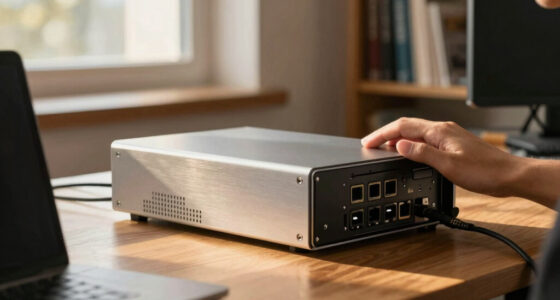
If you’re searching for an AV receiver with eARC, you’re looking for a device that can handle high-quality audio transfer from your TV to your sound system with minimal lag and maximum clarity. The Yamaha RX-V6A stands out as the best overall for its balance of features and user-friendly setup, while the Denon AVR-S960H offers top-tier video support for 8K content. For more affordable options, the Yamaha RX-V4A provides solid performance with eARC at a lower price point. The main tradeoffs in this category usually involve balancing audio quality, video capabilities, and ease of installation. Keep reading to get the full breakdown and find the best fit for your home theater.

Prime made for students and young adults
- Fast, free delivery for dorm and study essentials
- Prime Video and Amazon Music included
- Member-only deals
Key Takeaways
- The top-ranked AV receivers blend strong audio processing with robust eARC support to future-proof your setup.
- Performance varies significantly based on HDMI version support, especially for 8K content and gaming features.
- Ease of setup and user interface differ; models with simpler menus tend to be more beginner-friendly.
- Price often correlates with additional features like multi-room audio, advanced video processing, and build quality.
- Choosing the right receiver depends on your specific needs, whether it’s high-fidelity audio or gaming-focused HDMI performance.
| Yamaha RX-V6A 7.2-Channel AV Receiver with MusicCast | 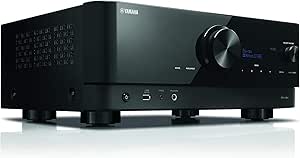 | Best Overall for Versatile Home Theater Setup | HDMI: 7 in / 1 out with HDCP 2.3 and eARC | Video Support: 4K60, 4K120AB, 8K60B, Dolby Vision, Hybrid-Log Gamma, BT.2020 | Connectivity: Wi-Fi, Bluetooth, AirPlay 2, Spotify Connect, Voice Control | VIEW ON AMAZON | See Our Full Breakdown |
| Sony STR-DH790 7.2-channel Surround Sound Home Theater AV Receiver |  | Best for Enthusiasts Wanting Dolby Atmos & DTS:X | Channels: 7.2 | HDR Support: Yes | HDMI Inputs: 4 in/1 out | VIEW ON AMAZON | See Our Full Breakdown |
| Denon AVR-S960H 8K Ultra HD 7.2 Channel AV Receiver, Black |  | Best for 8K and Gaming-Ready Setups | Channels: 7.2 | Power per channel: 90 Watts | Video support: 8K/60Hz, 4K/120Hz | VIEW ON AMAZON | See Our Full Breakdown |
| Sony STRDH590 5.2 Channel Surround Sound Home Theater Receiver |  | Best for Budget-Friendly 5.2 Setup | Channel: 5.2 | Power: 725W | Supported Video: 4K HDR | VIEW ON AMAZON | See Our Full Breakdown |
| Denon AVR-S570BT 5.2 Channel AV Receiver (2022 Model) |  | Best Budget 8K-Ready Receiver | Channels: 5.2 | Supports: 8K Ultra HD, eARC | HDMI Inputs: 4 | VIEW ON AMAZON | See Our Full Breakdown |
| Marantz NR1510 Slimline 5.2 Channel AV Receiver with HEOS |  | Best for Compact Spaces and Simple High-Quality Sound | Power: 50 W per channel | Channels: 5.2 | HDMI Inputs: 6 | VIEW ON AMAZON | See Our Full Breakdown |
| Denon AVR-X1700H 7.2 Channel AV Receiver – 80W/Channel, Built-in HEOS |  | Best for Immersive Home Theater with Future-Proof Features | Channels: 7.2 | Power per channel: 80W | HDMI inputs: 6 | VIEW ON AMAZON | See Our Full Breakdown |
| Yamaha RX-V4A 5.2-Channel AV Receiver with MusicCast |  | Best for Latest HDMI and Multi-Streaming in a User-Friendly Package | Channels: 5.2 | HDMI: 4 in / 1 out with HDCP 2.3 and eARC | Video Support: 4K60, 4K120AB, 8K60, Dolby Vision | VIEW ON AMAZON | See Our Full Breakdown |
| Denon AVR-S570BT 5.2 Channel AV Receiver – 8K Ultra HD Audio & Video | 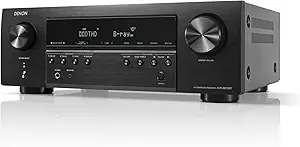 | Best for Simplified 8K Support with Wireless Streaming | Channels: 5.2 | HDMI Inputs: 4 HDMI 2.1 | Power: 70W x 5 | VIEW ON AMAZON | See Our Full Breakdown |
| Yamaha RX300A 5.2-Channel Home Theater AV Receiver with Dolby Atmos, 4K120/8K HDMI, and Bluetooth Multipoint |  | Best for Premium Dolby Atmos Experiences and Flexible Setups | Channels: 5.2 | Power: 70W per channel | HDMI Inputs: 4 | VIEW ON AMAZON | See Our Full Breakdown |
| av receiver with earc | Channels | HDMI Inputs |
|---|---|---|
| Yamaha RX-V6A 7.2-Channel AV R | — | — |
| Sony STR-DH790 7.2-channel Sur | 7.2 | 4 in/1 out |
| Denon AVR-S960H 8K Ultra HD 7. | 7.2 | — |
| Sony STRDH590 5.2 Channel Surr | — | 4 |
| Denon AVR-S570BT 5.2 Channel A | 5.2 | 4 |
| Marantz NR1510 Slimline 5.2 Ch | 5.2 | 6 |
| Denon AVR-X1700H 7.2 Channel A | 7.2 | 6 |
| Yamaha RX-V4A 5.2-Channel AV R | 5.2 | — |
| Denon AVR-S570BT 5.2 Channel A | 5.2 | 4 HDMI 2.1 |
| Yamaha RX300A 5.2-Channel Home | 5.2 | 4 |
More Details on Our Top Picks
Yamaha RX-V6A 7.2-Channel AV Receiver with MusicCast
The Yamaha RX-V6A stands out for its support of HDMI 2.1 features, including eARC, enabling high-quality audio return and 4K/8K video pass-through, making it ideal for users seeking future-proofing. Unlike the Denon AVR-S960H, which emphasizes high-end video processing, the RX-V6A integrates MusicCast multi-room audio and voice control, offering a more flexible entertainment experience. However, its setup can be complex for newcomers, and the detailed specifications are not fully laid out, which might leave some users uncertain about its capabilities. This model suits those who want a feature-rich receiver capable of handling next-gen gaming and advanced home theater needs without sacrificing multi-room audio support.
Pros:- Supports HDMI 2.1 for 4K and 8K video pass-through
- Includes MusicCast multi-room audio and voice control compatibility
- Supports Dolby Atmos and DTS:X for immersive surround sound
Cons:- Setup can be challenging for users unfamiliar with AV receivers
- Lacks comprehensive specifications detail in the product description
Best for: Homeowners who want a versatile, future-proof AV receiver with multi-room capabilities and advanced video features
Not ideal for: Beginners or users seeking a straightforward setup or a simple audio solution without complex features
- HDMI:7 in / 1 out with HDCP 2.3 and eARC
- Video Support:4K60, 4K120AB, 8K60B, Dolby Vision, Hybrid-Log Gamma, BT.2020
- Connectivity:Wi-Fi, Bluetooth, AirPlay 2, Spotify Connect, Voice Control
- Audio Formats:Dolby Atmos, Dolby Atmos with Height Virtualization, DTS:X
Our verdict“This receiver makes most sense for users seeking a highly capable, future-ready system with multi-room features.”
Sony STR-DH790 7.2-channel Surround Sound Home Theater AV Receiver
The Sony STR-DH790 delivers solid 7.2-channel surround sound with support for Dolby Atmos and DTS:X, providing immersive audio at a more accessible price point compared to the Denon AVR-S960H. While it lacks Wi-Fi, which the Denon offers for seamless network streaming, it compensates with auto calibration that simplifies setup and optimizes sound quality, making it appealing for dedicated home theater fans. Its limited to 7.2 channels, unlike higher-channel models, which might restrict expansion in larger setups. This receiver is well-suited for users who prioritize powerful surround sound and easy calibration over extensive network features.
Pros:- Supports Dolby Atmos and DTS:X for immersive audio
- Auto calibration ensures optimal sound with minimal effort
- Multiple HDMI inputs support high-quality 4K HDR pass-through
Cons:- No built-in Wi-Fi limits network streaming options
- Limited to 7.2 channels, not suitable for larger setups
Best for: Home theater enthusiasts seeking immersive sound with Dolby Atmos and DTS:X without complex networking features
Not ideal for: Users wanting built-in Wi-Fi or multi-room streaming capabilities for a connected multi-zone setup
- Channels:7.2
- HDR Support:Yes
- HDMI Inputs:4 in/1 out
- Bluetooth:Yes
- Dimensions:5 1/4 inches tall
Our verdict“Ideal for those who prioritize immersive sound and straightforward calibration over extensive network features.”
Denon AVR-S960H 8K Ultra HD 7.2 Channel AV Receiver, Black
The Denon AVR-S960H excels at supporting 8K/60Hz and 4K/120Hz pass-through, making it a prime choice for gamers and home theater users wanting the latest video standards. It matches the Sony STR-DH790’s surround sound support but adds 8K capability and multi-room streaming via Wi-Fi, AirPlay 2, and Bluetooth. Compared with the Yamaha RX-V6A, the Denon offers more dedicated HDMI ports (8 total), which benefits larger, more complex setups. Its setup can be complex, especially for those unfamiliar with advanced calibration tools like Audyssey MultEQ XT. It is best for tech-savvy users seeking high-quality audio and video in a future-proof package.
Pros:- Supports 8K/60Hz and 4K/120Hz pass-through for gaming and high-refresh-rate content
- Multi-room audio streaming with Wi-Fi, AirPlay 2, and Bluetooth
- Full voice control compatibility with Alexa, Google Assistant, and Siri
Cons:- Setup can be complicated, especially for non-technical users
- Limited pass-through support from some 4K/120Hz media sources
Best for: Gamers and high-end home theater fans needing 8K support and multi-room streaming
Not ideal for: Casual users or those with limited technical knowledge who prefer plug-and-play systems
- Channels:7.2
- Power per channel:90 Watts
- Video support:8K/60Hz, 4K/120Hz
- HDMI ports:8 (6 In / 2 Out)
- Voice control:Amazon Alexa, Google Assistant, Apple Siri
Our verdict“This receiver is perfect for users seeking future-proof video support and high-quality surround sound in a multi-room environment.”
Sony STRDH590 5.2 Channel Surround Sound Home Theater Receiver
The Sony STRDH590 offers solid 5.2 channel surround sound with virtual surround technology, making it a practical choice for budget-conscious users wanting decent cinematic experience. It supports 4K HDR pass-through, but lacks HDMI eARC and Wi-Fi, limiting its network and audio return capabilities compared to higher-end models like the Denon AVR-X1700H. Its limited channels make it unsuitable for larger, more complex systems, but for smaller rooms, it provides reliable sound with Bluetooth streaming and multiple inputs. This receiver works well for users prioritizing affordability over advanced connectivity or expanded channels.
Pros:- Provides virtual surround sound for immersive experience
- Supports 4K HDR pass-through for high-quality video
- Bluetooth streaming adds wireless convenience
Cons:- Limited to 5.2 channels, restricting expansion
- No built-in Wi-Fi limits streaming options
- Requires calibration for optimal sound
Best for: Budget-conscious users setting up a small to medium home theater with basic features
Not ideal for: Audiophiles or users with larger rooms requiring 7.1 or higher-channel configurations
- Channel:5.2
- Power:725W
- Supported Video:4K HDR
- HDMI Inputs:4
- HDMI Outputs:1
Our verdict“Best suited for budget-minded users who need reliable sound in small to medium spaces without extensive connectivity features.”
Denon AVR-S570BT 5.2 Channel AV Receiver (2022 Model)
The Denon AVR-S570BT offers 8K Ultra HD support and eARC at a more affordable price point, making it a compelling choice for those who want the latest video capabilities without a hefty investment. Its four HDMI inputs and Bluetooth streaming provide decent connectivity, but it does not offer detailed specifications or advanced calibration tools like Audyssey. Compared with higher-end models such as the Denon AVR-S960H, this receiver may lack some premium features and has a less comprehensive feature set. It’s best for users seeking 8K support on a budget but who can accept limited advanced features and a refurbished status.
Pros:- Supports 8K Ultra HD video
- Includes four HDMI inputs suitable for flexible setups
- Wireless streaming via Bluetooth
Cons:- Limited detailed specifications and features available
- Refurbished models may have limited warranty or support
Best for: Budget-conscious users wanting 8K video support and simple connectivity
Not ideal for: Power users needing detailed features, calibration, or extensive multi-room audio options
- Channels:5.2
- Supports:8K Ultra HD, eARC
- HDMI Inputs:4
- Wireless Streaming:Bluetooth
- Model Year:2022
Our verdict“This receiver offers a solid entry point into 8K support for users on a tight budget who accept limited advanced features.”
Marantz NR1510 Slimline 5.2 Channel AV Receiver with HEOS
The Marantz NR1510 stands out for its slim profile, making it ideal for installations where space is limited. While it offers a warm, rich sound with support for high-resolution formats like Dolby TrueHD and DTS-HD Master Audio, its 50W per channel power means it’s better suited for smaller rooms rather than large, open areas. Compared with the Yamaha RX-V4A, it lacks HDMI 2.1 and advanced video features but excels in delivering high-quality audio in tight spaces. The integrated HEOS streaming makes it easy to add whole-home audio, but calibration setup is necessary to get the best sound. Tradeoffs include limited power and no voice control features, which might be a drawback for some.
Pros:- Slimline design fits in compact spaces
- Supports high-resolution surround sound formats
- Multiple HDMI inputs for flexible connectivity
- Whole-home streaming via HEOS
Cons:- Limited to 50W per channel, not suitable for large rooms
- No built-in voice control features
- Requires calibration for optimal sound
Best for: Buyers seeking a sleek, high-quality audio solution for small living rooms or media spaces with minimal footprint
Not ideal for: Large rooms or users wanting integrated voice control and multi-channel power for serious home theater setups
- Power:50 W per channel
- Channels:5.2
- HDMI Inputs:6
- Supports:Dolby TrueHD, DTS-HD Master Audio
- Connectivity:Analog, digital, phono inputs
- Streaming:HEOS
Our verdict“This receiver is perfect for those prioritizing style, sound quality, and streaming in smaller spaces without complex features.”
Denon AVR-X1700H 7.2 Channel AV Receiver – 80W/Channel, Built-in HEOS
The Denon AVR-X1700H makes a compelling case for users seeking a versatile, high-performance home theater. Its 80W per channel power surpasses many competitors like the Marantz NR1510, making it suitable for larger rooms or more demanding setups. Supporting 8K and 4K/120Hz pass-through, it offers advanced video capabilities that are ideal for gaming and future-proofing. The built-in HEOS ensures seamless multi-room streaming, and compatibility with voice assistants adds convenience. However, its complex setup may challenge beginners, and some might find the array of features overwhelming. Compared to the Yamaha RX-V4A, it offers more power and multi-channel options but at the expense of increased complexity.
Pros:- Supports 8K and 4K/120Hz for high-quality video
- Powerful 80W per channel for larger spaces
- Built-in HEOS for multi-room streaming
- Supports multiple voice assistants
Cons:- Setup can be complex for novices
- Features may be more than necessary for basic TV watching
Best for: Home theater enthusiasts who want powerful audio, advanced video support, and multi-room streaming
Not ideal for: Casual users or those preferring simple, plug-and-play solutions without extensive setup
- Channels:7.2
- Power per channel:80W
- HDMI inputs:6
- Supports:8K/60Hz, 4K/120Hz, Dolby Vision
- Voice control:Alexa, Google Assistant, Siri, Josh.ai
- Streaming services:Spotify, Pandora, Amazon Music HD, TIDAL, Deezer
Our verdict“This receiver is ideal for users wanting advanced video, powerful audio, and multi-room streaming in a flexible home theater system.”
Yamaha RX-V4A 5.2-Channel AV Receiver with MusicCast
The Yamaha RX-V4A provides a solid balance of cutting-edge features and ease of use, supporting HDMI 2.1, 8K, and 4K/120Hz pass-through, much like the Denon AVR-X1700H. It excels with built-in Wi-Fi, AirPlay 2, and a broad selection of streaming services, making it a strong choice for those seeking versatile multi-media support. Its automatic YPAO room calibration helps optimize sound without complicated setup, making it more accessible for beginners compared to the Denon. However, its lack of built-in Bluetooth and the absence of detailed specifications around power output suggest it’s better suited for moderate use rather than demanding large-room setups. It’s a good fit for users prioritizing ease and modern features over raw power.
Pros:- Supports HDMI 2.1 and 8K video
- Built-in Wi-Fi and multiple streaming options
- Automatic room calibration simplifies setup
- Voice control compatibility
Cons:- No built-in Bluetooth
- Power output details are limited
Best for: Consumers looking for an easy-to-set-up receiver with the latest HDMI standards and multi-streaming options
Not ideal for: Power users or large-room installers who need high wattage or extensive connectivity options
- Channels:5.2
- HDMI:4 in / 1 out with HDCP 2.3 and eARC
- Video Support:4K60, 4K120AB, 8K60, Dolby Vision
- Wi-Fi:Yes
- Streaming:AirPlay 2, Spotify, Pandora, TIDAL, Deezer
- Calibration:YPAO
Our verdict“This model suits users who want modern HDMI features and streaming in an intuitive, straightforward package.”
Denon AVR-S570BT 5.2 Channel AV Receiver – 8K Ultra HD Audio & Video
The Denon AVR-S570BT offers a straightforward approach to 8K Ultra HD support with four HDMI 2.1 inputs, making it suitable for gamers and movie lovers alike. Its 70W per channel output strikes a balance for medium-sized rooms, and the inclusion of Bluetooth streaming adds convenience. Its user-friendly on-screen setup makes it accessible for those less familiar with AV systems, yet it lacks some advanced features like Wi-Fi or integrated multi-room capabilities found in pricier models. Compared with the Yamaha RX-V4A, it emphasizes simplicity over extensive smart features, though it’s somewhat limited in power for larger spaces. This choice makes sense for those who want 8K support without the complexity of high-end AVRs.
Pros:- Supports 8K Ultra HD and HDR formats
- Multiple HDMI 2.1 inputs suitable for gaming
- Built-in Bluetooth for wireless audio
- Easy on-screen setup
Cons:- Limited to 70W per channel, less power for large rooms
- No built-in Wi-Fi or multi-room streaming
Best for: Users seeking an affordable, easy-to-set-up 8K-capable receiver with wireless audio from Bluetooth devices
Not ideal for: Those wanting integrated Wi-Fi or extensive multi-room streaming options
- Channels:5.2
- HDMI Inputs:4 HDMI 2.1
- Power:70W x 5
- Supports:8K Ultra HD, HDR, Dolby Vision
- Streaming:Bluetooth
- Additional Features:Easy on-screen setup
Our verdict“This receiver is best for budget-conscious users who need reliable 8K support and simple wireless streaming in moderate spaces.”
Yamaha RX300A 5.2-Channel Home Theater AV Receiver with Dolby Atmos, 4K120/8K HDMI, and Bluetooth Multipoint
The Yamaha RX300A is tailored for those who want immersive Dolby Atmos sound with flexible speaker configurations, including options for up-firing or in-ceiling heights. Its support for 4K and 8K video with advanced HDR formats aligns it with high-end systems like the Denon AVR-X1700H, but its automatic room correction and Bluetooth Multipoint make it easier for beginners to achieve optimal sound. While it offers impressive audio features, the limited number of HDMI inputs (only 4) could be a constraint for users with multiple devices. Compared to the Marantz NR1510, it prioritizes immersive sound over compact size, making it suitable for dedicated home theaters rather than tight spaces.
Pros:- Immersive Dolby Atmos and DTS Virtual:X sound
- Supports 4K and 8K video with HDR formats
- Automatic room correction simplifies setup
- Bluetooth Multipoint for multiple device streaming
Cons:- Limited HDMI inputs (only 4)
- Complex features may be overwhelming for beginners
Best for: Home theater enthusiasts seeking Dolby Atmos and flexible speaker options with straightforward setup
Not ideal for: Users with minimal space or those who prefer a simple, no-frills setup without Dolby Atmos
- Channels:5.2
- Power:70W per channel
- HDMI Inputs:4
- Video Support:4K120, 8K, Dolby Vision
- Bluetooth:Multipoint
- Room Calibration:Yes
Our verdict“This receiver offers immersive Dolby Atmos sound for dedicated home theaters with easy calibration and flexible speaker options.”

How We Picked
All products were evaluated based on their ability to support eARC effectively, ensuring seamless high-quality audio transfer from modern TVs. We prioritized models with current HDMI standards, especially HDMI 2.1 support for 8K and gaming features. Build quality, user interface, and future-proofing were also key factors, alongside value for price. The ranking reflects a balance between performance, versatility, and ease of use, with special consideration for different user needs such as beginners, audiophiles, or gamers.Factors to Consider When Choosing Av Receiver With Earc
When selecting an AV receiver with eARC, it’s important to consider several factors that go beyond just the HDMI ports. The right receiver should match your existing equipment, support your video and audio quality expectations, and fit within your budget. Making a well-informed choice can prevent costly upgrades or compatibility issues down the line. Here are the key considerations to keep in mind:HDMI and eARC Support
Ensure the receiver fully supports HDMI 2.1 standards if you plan to use 8K video or high-frame-rate gaming. eARC support is essential for transmitting high-bitrate audio formats like Dolby Atmos and DTS:X from your TV to your sound system. Be wary of receivers that only support ARC, which limits bandwidth and audio quality. Confirm that your TV’s HDMI ports are compatible with eARC to avoid connectivity issues.
Power and Channel Count
The power output per channel determines how well your speakers will perform at higher volumes without distortion. For larger rooms or more demanding speakers, look for models with at least 7 channels and higher wattage. Smaller spaces or simpler setups can do well with 5-channel models. Matching your speaker array with the receiver’s specifications is critical to achieving balanced sound.
Video Processing Capabilities
If you own an 8K TV or plan to upgrade soon, prioritize receivers that support 8K passthrough and HDMI bandwidth that can handle high-resolution signals. Some models also offer advanced upscaling or image enhancement features. Remember, more features often come with higher prices, so decide what benefits are necessary for your setup.
Ease of Use and Setup
A user-friendly interface, clear onscreen menus, and reliable calibration tools can make a significant difference, especially for first-time buyers. Some receivers include setup microphones and automatic calibration to simplify installation. Consider your comfort level with technology when choosing a model; more complex systems may require a learning curve.
Additional Features and Compatibility
Think about other features you might need, such as multi-room audio support, built-in streaming services, or compatibility with voice assistants. Some models include HEOS, MusicCast, or Chromecast for multi-room streaming, adding convenience. Be mindful that extra features often increase the price and complexity of the receiver.
Frequently Asked Questions
Is eARC necessary if I only stream content from my smart TV?
eARC is mainly beneficial if you want to transmit high-bitrate audio formats like Dolby Atmos directly from your TV to your sound system. If your streaming services and content are primarily in stereo or basic surround formats, and you don’t plan to use advanced audio features, then eARC may be less critical. However, having eARC future-proofs your setup and ensures compatibility with high-quality audio formats as your content sources evolve.
Can I upgrade my existing AV receiver to support eARC later?
Most AV receivers do not support hardware upgrades for HDMI features like eARC after purchase. To access eARC, it’s best to buy a model that already includes this support. This ensures maximum compatibility and performance, especially as streaming and home theater content continue to demand higher bandwidth and quality. If upgrading, check the manufacturer’s specifications for eARC support before purchasing.
How important is HDMI version support for gaming?
HDMI 2.1 support is crucial for gamers who want features like 4K at 120Hz or 8K gaming, as it provides higher bandwidth and lower latency. A receiver with HDMI 2.1 will better handle the demands of modern gaming consoles and high-resolution, high-refresh-rate content. If gaming is a priority, avoid models limited to HDMI 2.0 or earlier, which may bottleneck your experience.
Should I prioritize sound quality or video features when choosing an AV receiver?
This depends on your main use case. If your primary focus is immersive audio experience, look for models with high-quality DACs, support for Dolby Atmos, and multiple speaker zones. For those with a 4K or 8K TV that also values video quality, prioritize HDMI bandwidth, pass-through, and upscaling capabilities. Often, the best choices balance both, but clarity on your priorities will guide the most relevant features.
Is it worth paying extra for a premium AV receiver?
Investing in a higher-end receiver can offer better build quality, more advanced audio processing, and future-proof features like HDMI 2.1 support. If you have a large room, high-end speakers, or plan to upgrade your home theater over time, the extra cost can translate into a more satisfying experience. However, for basic setups or casual use, more affordable models still deliver excellent sound and video support.
Conclusion
Choosing the right AV receiver with eARC depends heavily on your specific needs and budget. The Yamaha RX-V6A stands out as the overall best due to its balanced feature set and user-friendly design, making it ideal for most users. For those seeking the best value without sacrificing essential features, the Denon AVR-S960H offers robust performance at a reasonable price. Premium buyers should consider models with HDMI 2.1 support for future-proofing, while beginners will benefit from receivers with simple setup processes. Finally, if you need a compact or specialized setup, options like the Yamaha RX-V4A or Marantz NR1510 could fit your space and budget better. This tailored approach helps ensure your home theater upgrade hits the mark.
Halloween Picks
halloween
As an affiliate, we earn on qualifying purchases.