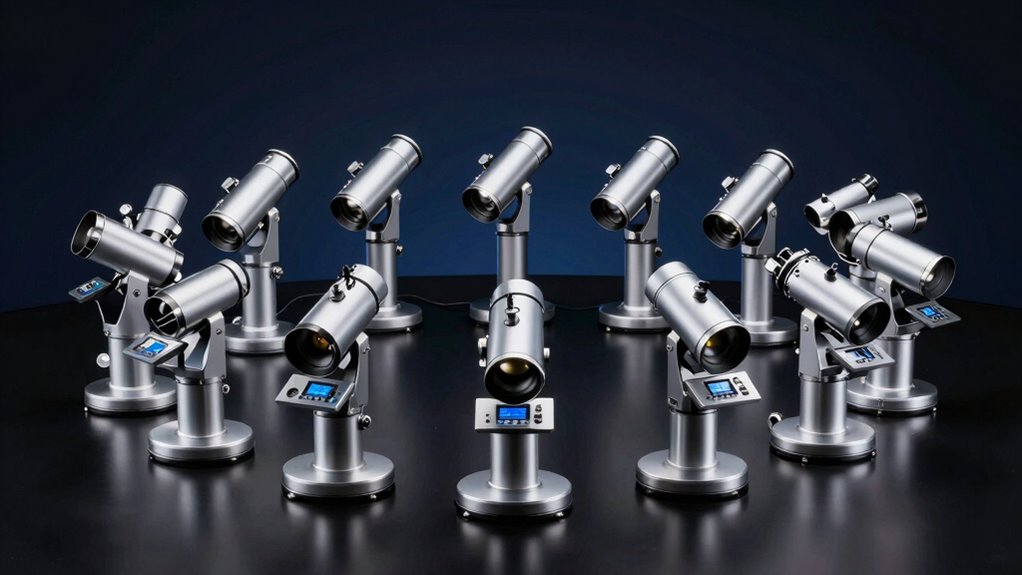

A computerized telescope offers the convenience of automated object locating and tracking, making stargazing more accessible and enjoyable. The best models combine ease of use with powerful features suited for both beginners and experienced astronomers. The Celestron NexStar 8SE stands out as the overall top pick for its balance of performance and value, while the ZWO Seestar S30 Pro excels in astrophotography capabilities. However, buyers often face tradeoffs between affordability, complexity, and feature set. Continue reading to see a detailed breakdown of the best options and what makes each unique.

Prime made for students and young adults
- Fast, free delivery for dorm and study essentials
- Prime Video and Amazon Music included
- Member-only deals
Key Takeaways
- The top models balance ease of use with advanced tracking features for different user levels.
- Larger aperture telescopes generally provide better image quality but tend to be heavier and more expensive.
- Smartphone compatibility simplifies setup but may limit hardware upgrades or advanced control.
- Premium options like Schmidt-Cassegrain designs offer greater versatility but come at a higher price point.
- Beginners should prioritize user-friendly interfaces and comprehensive guides to maximize enjoyment.
| ZWO Seestar S30 Pro Smart Telescope, App-Controlled Astrophotography |  | Best Overall for Urban and Casual Astrophotographers | Weight: 3.64 lbs | Imaging: Dual-camera 4K | Features: Automatic GOTO, AI noise reduction, light pollution filters, anti-dew protection | VIEW ON AMAZON | See Our Full Breakdown |
| Celestron StarSense Explorer DX 130AZ Smartphone Guided Newtonian Telescope | 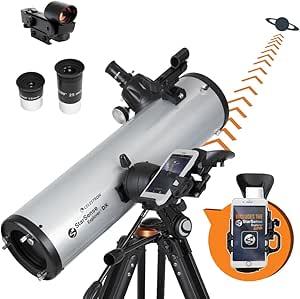 | Best for Beginners Using Smartphone Guidance for Bright Sky Viewing | Aperture: 130mm | Type: Newtonian reflector | Mount: Altazimuth | VIEW ON AMAZON | See Our Full Breakdown |
| Celestron NexStar 4SE Maksutov-Cassegrain GoTo Telescope |  | Best for Beginners Ready for Automated Object Hunting | Aperture: 4 inches | Optics: Maksutov-Cassegrain | Mount: Automated GoTo with NexStar+ | VIEW ON AMAZON | See Our Full Breakdown |
| Celestron NexStar 127SLT Maksutov-Cassegrain Computerized GoTo Telescope |  | Best for Portable All-Rounders with Learning Software | Aperture: 127mm | Optical Design: Maksutov-Cassegrain | Database: 40,000+ objects | VIEW ON AMAZON | See Our Full Breakdown |
| Celestron AstroMaster 130EQ Telescope for Beginners |  | Best for Beginners Seeking Stable Manual Control | Optical Diameter: 130mm | Type: Newtonian reflector | Mount: German equatorial | VIEW ON AMAZON | See Our Full Breakdown |
| Celestron 114LCM Computerized Reflector Telescope for Beginners |  | Best for Entry-Level Stargazing and Learning the Sky | Optics: All glass optics | Mount: Computerized GoTo mount | Objects Located: 4,000+ celestial objects | VIEW ON AMAZON | See Our Full Breakdown |
| Celestron NexStar 8SE Computerized Telescope – Schmidt-Cassegrain |  | Best for Versatile, Powerful Viewing with Compact Design | Aperture: 8 inches | Optics Type: Schmidt-Cassegrain | Mount Type: Computerized GoTo | VIEW ON AMAZON | See Our Full Breakdown |
| Celestron StarSense Explorer LT 114AZ Smartphone Guided Telescope |  | Best for Easy Smartphone-Guided Astronomy for Beginners | Aperture: 114mm | Type: Newtonian reflector | Mount: Altazimuth with manual slow motion | VIEW ON AMAZON | See Our Full Breakdown |
| Celestron NexStar 8SE 8-inch Schmidt-Cassegrain Computerized Telescope with SkyAlign and Accessories |  | Best for Powerful, Fully Featured Viewing with Expandability | Optical Diameter: 8 inches (203mm) | Focal Length: 2032mm | Focal Ratio: f/10 | VIEW ON AMAZON | See Our Full Breakdown |
| Celestron NexStar 6SE Schmidt-Cassegrain Telescope | 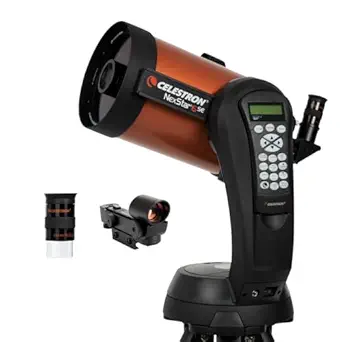 | Best for Compact, Reliable Sky Observation for Beginners and Enthusiasts | Aperture: 6 inches | Optics: Schmidt-Cassegrain | Mount: Automated GoTo | VIEW ON AMAZON | See Our Full Breakdown |
| Celestron NexStar 102SLT Computerized Refractor Telescope |  | Best for Portability and Quick Setup | Aperture: 102mm | Optical Design: Refractor | Technology: SkyAlign | VIEW ON AMAZON | See Our Full Breakdown |
| Celestron NexStar 5SE Schmidt-Cassegrain Computerized Telescope |  | Best for Versatile, Detailed Observations and Beginners Ready for Growth | Aperture: 5 inches | Optics: Schmidt-Cassegrain | Mount: Computerized GoTo with NexStar+ | VIEW ON AMAZON | See Our Full Breakdown |
| computerized telescope | Aperture | Mount | Warranty |
|---|---|---|---|
| ZWO Seestar S30 Pro Smart Tele | — | — | — |
| Celestron StarSense Explorer D | 130mm | Altazimuth | 2-year US warranty |
| Celestron NexStar 4SE Maksutov | 4 inches | Automated GoTo with NexStar+ | 2 years |
| Celestron NexStar 127SLT Maksu | 127mm | — | — |
| Celestron AstroMaster 130EQ Te | — | German equatorial | — |
| Celestron 114LCM Computerized | — | Computerized GoTo mount | 2-year US warranty |
| Celestron NexStar 8SE Computer | 8 inches | — | 2 years |
| Celestron StarSense Explorer L | 114mm | Altazimuth with manual slow motion | 2 years |
| Celestron NexStar 8SE 8-inch S | — | — | — |
| Celestron NexStar 6SE Schmidt- | 6 inches | Automated GoTo | 2 years |
| Celestron NexStar 102SLT Compu | 102mm | — | — |
| Celestron NexStar 5SE Schmidt- | 5 inches | Computerized GoTo with NexStar+ | 2 years |
More Details on Our Top Picks
ZWO Seestar S30 Pro Smart Telescope, App-Controlled Astrophotography
The ZWO Seestar S30 Pro stands out as a highly portable, user-friendly option that combines automatic GOTO targeting with high-resolution 4K imaging, making astrophotography accessible even in light-polluted city settings. Compared with the Celestron NexStar 4SE, it offers a more streamlined and app-centric experience, ideal for beginners who prefer a modern, smartphone-controlled workflow. However, it trades off some advanced features like deep-sky imaging stability, which require manual adjustments and more robust mounts. Its lightweight design (3.64 lbs) and built-in light pollution filters make it perfect for quick outings, but it’s less suited for serious long-exposure astrophotography. This pick makes the most sense for urban dwellers and casual astrophotographers seeking an easy, all-in-one imaging tool without the bulk of larger systems.
Pros:- Simple app-controlled operation with automatic target alignment
- High-res 4K dual-camera for detailed images
- Lightweight and portable for outdoor use
Cons:- Limited to casual and beginner astrophotography
- Requires smartphone connection, which can be a hassle in some environments
- Manual adjustments needed for deep-sky imaging
Best for: Beginners and urban astronomers wanting portable, easy-to-use astrophotography with minimal setup
Not ideal for: Advanced astrophotographers seeking deep-sky imaging or astrophotography requiring long exposures
- Weight:3.64 lbs
- Imaging:Dual-camera 4K
- Features:Automatic GOTO, AI noise reduction, light pollution filters, anti-dew protection
- Connectivity:App-controlled
Our verdict“Perfect for urban explorers and beginners looking for straightforward astrophotography with digital convenience.”
Celestron StarSense Explorer DX 130AZ Smartphone Guided Newtonian Telescope
The Celestron StarSense Explorer DX 130AZ makes stargazing approachable by integrating patented sky recognition technology with smartphone app guidance, simplifying object identification for newcomers. Its 130mm aperture produces bright, detailed views of planets, the Moon, and some deep-sky objects, outperforming smaller or less feature-rich beginner telescopes. Compared to the Celestron AstroMaster 130EQ, it offers easier alignment and targeting thanks to the smartphone app, though it relies heavily on your device’s compatibility and is less adaptable for manual tracking. The package’s included eyepieces and full-height tripod enhance usability, but users will need a compatible phone and patience with manual tracking. This model is well-suited for entry-level users eager to learn and explore with minimal setup hassles.
Pros:- Smartphone app with sky recognition simplifies object finding
- Bright, detailed views of Moon, planets, and brighter deep-sky objects
- Includes two eyepieces and sturdy tripod for stable viewing
Cons:- Dependent on smartphone compatibility and app stability
- Manual tracking can be challenging for beginners
- Limited to devices running specific OS versions
Best for: Beginner astronomers using smartphones to identify objects and preferring an all-in-one guided experience
Not ideal for: Those without a compatible smartphone or seeking purely manual or more advanced telescopes
- Aperture:130mm
- Type:Newtonian reflector
- Mount:Altazimuth
- Included Eyepieces:10mm and 25mm
- Compatibility:Android 12+, iOS 18+
- Warranty:2-year US warranty
Our verdict“Ideal for entry-level users who want guided stargazing with minimal setup and smartphone integration.”
Celestron NexStar 4SE Maksutov-Cassegrain GoTo Telescope
The Celestron NexStar 4SE offers a compact, automated solution with a large database of over 40,000 objects, making it suitable for both novice and intermediate astronomers. Its Maksutov-Cassegrain optics deliver sharp, high-contrast images of planets and the Moon, comparable to larger systems but with less light-gathering power. Compared to the Celestron NexStar 127SLT, it is smaller and more portable, ideal for travel or limited storage space. However, its 4-inch aperture limits its ability to resolve faint deep-sky objects, and it needs an external power source for the GoTo system, which might be inconvenient for some. This telescope is best for those wanting automated object locating in a portable package, especially for planetary and lunar observing.
Pros:- Automated GoTo system with extensive object database
- Compact, easy to transport and store
- High-quality optics with sharp lunar and planetary views
Cons:- Limited aperture restricts deep-sky observation
- Requires power for operation
- Learning curve for initial setup and alignment
Best for: Beginners and casual astronomers seeking automated object tracking in a compact form
Not ideal for: Advanced deep-sky astrophotographers or those needing larger apertures for faint objects
- Aperture:4 inches
- Optics:Maksutov-Cassegrain
- Mount:Automated GoTo with NexStar+
- Alignment Technology:SkyAlign
- Included Accessories:Built-in wedge
- Warranty:2 years
Our verdict“Perfect for beginners wanting a reliable, portable, automated telescope for planetary and lunar viewing.”
Celestron NexStar 127SLT Maksutov-Cassegrain Computerized GoTo Telescope
The Celestron NexStar 127SLT balances portability with advanced features, providing a 127mm Maksutov-Cassegrain system with a database of over 40,000 celestial objects. Its bright, color-corrected optics excel at planetary, lunar, and some deep-sky viewing, making it suitable for beginners and more experienced users alike. Compared with the Celestron NexStar 4SE, it offers a larger aperture for brighter images and includes detailed software like Starry Night to aid learning and planning. Its lightweight design with an adjustable steel tripod enhances transportability, but it still requires a power source and has a learning curve for proper initial setup. This telescope makes a good choice for those who want an all-in-one, portable system with educational software.
Pros:- Portable and lightweight with sturdy steel tripod
- Extensive object database with automated tracking
- Includes astronomy software for education and planning
Cons:- Requires external power source
- Some learning curve for beginners in setup and alignment
- Limited to objects within its optical capabilities
Best for: Amateur astronomers wanting a portable, feature-rich telescope with learning tools
Not ideal for: Those seeking large aperture for deep-sky astrophotography or heavy-duty observing
- Aperture:127mm
- Optical Design:Maksutov-Cassegrain
- Database:40,000+ objects
- Tripod:Adjustable steel
- Alignment Technology:SkyAlign
- Included Software:Starry Night Special Edition
Our verdict“A versatile, educational telescope perfect for portable use and learning celestial navigation.”
Celestron AstroMaster 130EQ Telescope for Beginners
The Celestron AstroMaster 130EQ offers a straightforward, sturdy setup with a 130mm Newtonian reflector and a German equatorial mount, making it suitable for those who prefer manual control over automated systems. Its large aperture provides bright, clear images of planets, lunar features, and brighter deep-sky objects, outperforming smaller, simpler telescopes. Compared to the Celestron StarSense Explorer DX 130AZ, it lacks smartphone-guided automation but allows for more traditional, manual star tracking once properly aligned. Its heavier weight (about 17 lbs) makes it less ideal for frequent transport, but it delivers high-quality optics and smooth controls for users willing to learn manual tracking. Best suited for beginners wanting a reliable, hands-on experience.
Pros:- Easy to assemble without tools
- Robust mount with smooth manual controls
- High-quality coated optics for bright images
Cons:- Heavy and less portable for frequent transport
- Requires some skill to manually track objects
- Limited to beginner and casual use
Best for: Newcomers ready to develop manual stargazing skills with a stable, high-quality instrument
Not ideal for: Those who prefer fully automated tracking or need ultra-portable equipment
- Optical Diameter:130mm
- Type:Newtonian reflector
- Mount:German equatorial
- Eyepieces:20mm, 10mm
- Magnification:33x (20mm), 65x (10mm)
- Weight:17 lbs
Our verdict“A solid choice for beginners who want to learn manual tracking with a durable, high-performance telescope.”
Celestron 114LCM Computerized Reflector Telescope for Beginners
The Celestron 114LCM stands out for its user-friendly computerized GoTo mount that can automatically locate over 4,000 celestial objects, making it an excellent choice for newcomers to astronomy. Compared with the Celestron StarSense Explorer LT 114AZ, it offers more precise object tracking and a more comprehensive software package, though it sacrifices some portability and advanced features. Its all-glass optics and included starry sky software help beginners plan and execute their observations effectively. However, its lightweight build may lead to stability issues during prolonged use, and setup can be somewhat involved for absolute beginners. Best suited for amateur astronomers starting out who want reliable automation and educational tools without the complexity of high-end gear.
Pros:- Automatic object locating with computerized mount
- Includes multiple eyepieces and finderscope
- Free starry sky software enhances planning and learning
- Full-height tripod provides stable viewing height
Cons:- Designed primarily for beginners, limited in advanced features
- Lightweight construction may affect stability during viewing
- Requires setup and alignment which may be challenging for some
Best for: Beginners and casual stargazers looking for an affordable, automated entry point into astronomy
Not ideal for: Advanced astronomers or those seeking a highly stable, portable setup for frequent use
- Optics:All glass optics
- Mount:Computerized GoTo mount
- Objects Located:4,000+ celestial objects
- Eyepieces:25mm & 9mm
- Software:Starry Night software included
- Warranty:2-year US warranty
Our verdict“A solid choice for beginner astronomers who want an intuitive, automated telescope to explore the night sky.”
Celestron NexStar 8SE Computerized Telescope – Schmidt-Cassegrain
The Celestron NexStar 8SE offers an 8-inch Schmidt-Cassegrain optical system that delivers detailed lunar, planetary, and deep-sky views, making it suitable for both hobbyists and semi-serious astronomers. Its compact, portable form factor combined with SkyAlign technology allows quick setup, unlike larger, more cumbersome telescopes. While its powerful aperture surpasses the Celestron NexStar 6SE on the list, it requires initial alignment that might challenge absolute beginners. The included NexStar+ hand control grants access to a database of over 40,000 objects, but advanced features come with a higher price tag and some learning curve. Best for enthusiasts who want high-quality optics, automation, and moderate portability, but are comfortable with some setup complexity.
Pros:- Powerful 8-inch aperture for detailed lunar and deep-sky views
- Automated GoTo with SkyAlign for quick setup
- Compact and portable for its size
- Large object database for easy target selection
Cons:- Requires initial alignment, which may be confusing for some
- Heavier and less portable than smaller telescopes
- Higher price point compared to smaller or manual models
Best for: Intermediate users or beginners ready to upgrade to a more capable, automated telescope
Not ideal for: Complete novices or those prioritizing portability over optical power
- Aperture:8 inches
- Optics Type:Schmidt-Cassegrain
- Mount Type:Computerized GoTo
- Hand Control:NexStar+
- Object Database:40,000+ objects
- Warranty:2 years
Our verdict“An excellent choice for users seeking serious viewing power combined with automated tracking in a manageable size.”
Celestron StarSense Explorer LT 114AZ Smartphone Guided Telescope
The Celestron StarSense Explorer LT 114AZ is designed to make sky navigation straightforward through its smartphone app, which uses StarSense technology to guide users to celestial objects. Its 114mm aperture offers clear views of the Moon, planets, and some deep-sky objects, with simple manual tracking suitable for beginners. Compared to the automated Celestron 114LCM, this model relies on manual movement, which might be less precise but is more affordable and portable. The altazimuth mount is easy to use but not ideal for astrophotography or long observation sessions. It’s a good fit for casual users who want quick, guided access to the night sky without complex setup. Best for beginners or casual stargazers who prefer smartphone guidance and straightforward operation.
Pros:- Smartphone app provides guided sky navigation with StarSense technology
- High-quality 114mm aperture for sharp, detailed views
- Simple setup and intuitive operation for beginners
- Vivid views of planets, Moon, and deep-sky objects
Cons:- Manual tracking can be less stable for prolonged viewing
- Altazimuth mount isn’t suitable for astrophotography or precise tracking
- Limited advanced features for experienced astronomers
Best for: Casual hobbyists or families seeking easy, guided sky observation with minimal setup
Not ideal for: Intermediate or advanced astronomers interested in astrophotography or detailed tracking
- Aperture:114mm
- Type:Newtonian reflector
- Mount:Altazimuth with manual slow motion
- Connectivity:Smartphone app (StarSense Explorer)
- Warranty:2 years
Our verdict“An accessible, guided telescope ideal for casual users and families wanting quick access to celestial sights.”
Celestron NexStar 8SE 8-inch Schmidt-Cassegrain Computerized Telescope with SkyAlign and Accessories
The Celestron NexStar 8SE combines a large 8-inch aperture with advanced computerized features, making it suitable for users who want detailed images and a broad object database. Its SkyAlign technology allows quick setup, while the included accessories—like a StarPointer finderscope and filter kit—expand its capabilities. Compared with the NexStar 6SE, it offers brighter, more detailed views but is heavier and less portable. The 8-inch mirror provides excellent deep-sky imaging, but the setup and initial alignment may be intimidating for complete beginners. Its expandability with additional accessories makes it a versatile choice for users wishing to grow their astronomy skills. Best for dedicated amateurs or semi-serious astronomers who want a powerful, expandable telescope with automation.
Pros:- Large 8-inch aperture for bright, detailed images
- Advanced computerized GoTo with large object database
- Quick SkyAlign setup for easy operation
- Includes useful accessories for enhanced viewing
Cons:- Heavier weight makes transportation more difficult
- Initial setup and alignment can be complex for new users
- Additional accessories cost extra
Best for: Amateur astronomers seeking a high-performance, expandable telescope for serious observing
Not ideal for: Absolute beginners or those with limited space and need for portability
- Optical Diameter:8 inches (203mm)
- Focal Length:2032mm
- Focal Ratio:f/10
- Optical Coatings:StarBright XLT
- Mount Type:Alt-Az
- Included Eyepieces:25mm
Our verdict“A flexible, powerful telescope suited for dedicated hobbyists ready to invest in quality and expand their capabilities.”
Celestron NexStar 6SE Schmidt-Cassegrain Telescope
The NexStar 6SE offers a 6-inch Schmidt-Cassegrain system with a fully automated GoTo mount, providing a good balance of power and portability. Its SkyAlign technology simplifies initial setup, making it accessible to newcomers while still appealing to more experienced users needing a reliable, portable instrument. Compared with the larger 8-inch models, the 6-inch version is easier to transport and quicker to set up, though it sacrifices some light-gathering power for that convenience. Its broad object database and compatibility with various accessories make it a versatile choice, but users unfamiliar with computerized mounts may face a learning curve. Best for amateur astronomers who want a capable, portable telescope that covers a wide range of celestial targets.
Pros:- Automated GoTo system for easy object location
- Large 6-inch aperture for bright, crisp images
- Fast, simple SkyAlign setup process
- Good compatibility with accessories for customization
Cons:- Relatively heavy and less portable than smaller models
- May require some familiarity with computerized systems
- Limited aperture compared to larger scopes for deep-sky imaging
Best for: Beginners and hobbyists seeking a portable yet powerful telescope with automation
Not ideal for: Advanced astrophotographers or those needing maximum light-gathering power
- Aperture:6 inches
- Optics:Schmidt-Cassegrain
- Mount:Automated GoTo
- Object Database:40,000+ objects
- Alignment Technology:SkyAlign
- Warranty:2 years
Our verdict“A practical, reliable choice for beginners and casual observers who want a balance of power and portability.”
Celestron NexStar 102SLT Computerized Refractor Telescope
The Celestron NexStar 102SLT stands out for its compact design and ease of use, making it an excellent choice for those who want to explore the night sky without lugging heavy gear. Compared to the larger NexStar 5SE, it offers less aperture, which means dimmer or more distant deep-sky objects may be harder to see, but its lightweight frame and SkyAlign technology allow for quick, hassle-free setup—ideal for casual stargazers or travelers. The included Starry Night software enhances learning and viewing experience, providing added value. However, its 102mm aperture limits deep-sky viewing, and some assembly is required for optimal alignment. This pick makes the most sense for beginners or outdoor enthusiasts seeking portability without sacrificing basic celestial views.
Pros:- Lightweight and portable, perfect for travel and outdoor use
- Quick and easy to set up with SkyAlign technology
- Includes free astronomy software to enhance the experience
Cons:- Limited aperture restricts detailed deep-sky observations
- Requires assembly and alignment which may frustrate absolute beginners
Best for: Beginners and casual astronomers who prioritize portability and fast setup for short, spontaneous sessions.
Not ideal for: Advanced users or deep-sky hunters needing larger apertures for detailed galaxy viewing, as its 102mm lens may fall short.
- Aperture:102mm
- Optical Design:Refractor
- Technology:SkyAlign
- Included Software:Starry Night
- Mount Type:Altazimuth
- Weight:Approximately 14 lbs
Our verdict“This telescope suits newcomers seeking a simple, portable option for planetary and lunar viewing, but not for serious deep-sky exploration.”
Celestron NexStar 5SE Schmidt-Cassegrain Computerized Telescope
The Celestron NexStar 5SE offers a significant step up in aperture and versatility, making it suitable for users who want detailed lunar, planetary, and even some deep-sky views. Its 5-inch Schmidt-Cassegrain design provides sharper images than the smaller NexStar 102SLT, with a robust computerized GoTo mount that simplifies locating objects. Compared to smaller telescopes, the 5SE’s larger aperture allows for more detailed observations, but it also introduces increased weight and setup complexity, which could challenge complete beginners. The built-in wedge supports astrophotography, extending its capabilities beyond visual observation. However, the setup process, although guided by SkyAlign, may feel intimidating for absolute newcomers, and its weight limits portability. This telescope makes sense for beginners eager to grow into more advanced observations and astrophotography.
Pros:- Powerful 5-inch aperture yields detailed celestial views
- Easy to operate with quick SkyAlign technology
- Includes built-in wedge for astrophotography potential
- Large object database for automated targeting
Cons:- Relatively heavy and less portable than smaller scopes
- More complex setup and operation may overwhelm beginners
- Requires a power source for operation
Best for: Novice astronomers ready to explore more detailed lunar, planetary, and bright deep-sky objects, with an interest in astrophotography.
Not ideal for: Complete beginners or those seeking a lightweight, travel-friendly scope, as its weight and complexity can be a barrier.
- Aperture:5 inches
- Optics:Schmidt-Cassegrain
- Mount:Computerized GoTo with NexStar+
- Alignment Technology:SkyAlign
- Built-in Wedge:Yes
- Warranty:2 years
- Weight:Approximately 20 lbs
Our verdict“This telescope is ideal for beginners ready to expand their observation skills and dip into astrophotography, accepting some initial complexity.”

How We Picked
This roundup evaluates computerized telescopes based on several key factors: ease of setup and operation, tracking accuracy, build quality, compatibility with accessories, and overall value. We prioritized models with intuitive controls and reliable software, as these directly impact user experience. Products were ranked considering their versatility for different skill levels, portability, and long-term usability. Our selection aims to provide options for novices, hobbyists, and serious astronomers alike, highlighting where compromises might be necessary and when spending more offers tangible benefits.Factors to Consider When Choosing Computerized Telescope
Choosing the right computerized telescope involves balancing several important factors beyond just specs. Understanding your primary use—whether casual stargazing, astrophotography, or deep-sky observation—guides your decision. Consider how much space you have available and whether portability matters. Be aware that higher-end models often come with advanced features that can be overwhelming for beginners but invaluable for experienced users. Lastly, think about long-term upgrades and software updates, which can extend your telescope’s lifespan and functionality.Ease of Use and Setup
For most buyers, intuitive controls and straightforward assembly are critical, especially if you’re new to astronomy. Some models, like the Celestron NexStar 4SE, feature automated alignment and simplified interfaces that drastically reduce setup time. Conversely, more complex systems may require a learning curve but offer greater customization for seasoned users. Considering your comfort with technology will help prevent frustration and ensure a more enjoyable experience.
Optical Quality and Aperture Size
The clarity and brightness of images depend heavily on the telescope’s aperture. Larger apertures, such as the 8-inch models, gather more light, revealing fainter objects and sharper details. However, these tend to be heavier and pricier. Smaller apertures, like 4 or 5 inches, are more portable and easier to handle but limit deep-sky viewing. Weigh your primary observing goals against portability and budget to make the best choice.
Tracking and Goto Accuracy
Accurate object tracking is the core feature of a computerized telescope. Some models, such as the Celestron NexStar 8SE, excel with precise Goto systems that quickly locate and follow celestial objects. Less sophisticated systems may struggle with alignment or drift over time. For astrophotography or extended viewing sessions, reliable tracking is non-negotiable, so investing in higher-precision mounts can significantly improve your experience.
Compatibility and Expandability
Most computerized telescopes support additional accessories like cameras, filters, or different eyepieces. Compatibility varies; some brands, like Celestron, offer extensive accessory ecosystems, making upgrades easier. Consider whether you want to add astrophotography gear or other enhancements in the future. A more expandable system might cost more upfront but can grow with your interests, providing better long-term value.
Price and Long-Term Investment
While budget models can satisfy casual stargazers, investing a bit more often unlocks significant performance improvements. High-end telescopes with larger apertures, better mounts, and more advanced software tend to last longer and deliver superior images. Beware of models that cut corners on build quality or software updates—these can lead to frustration. Think about your anticipated level of use and whether the added cost aligns with your goals.
Frequently Asked Questions
Can I use a computerized telescope without prior astronomy experience?
Yes, many computerized telescopes are designed with beginners in mind, featuring automated alignment and friendly controls. Devices like the Celestron AstroMaster 130EQ or StarSense Explorer DX guide you through setup with minimal fuss, making them accessible for newcomers. While some initial learning is inevitable, these models significantly reduce the complexity involved in locating objects, helping new users enjoy observing right away.
Are computerized telescopes suitable for astrophotography?
Many models, especially those with larger apertures and stable mounts, can be used for astrophotography. The ZWO Seestar S30 Pro is explicitly built for astrophotography, offering app-controlled image capture capabilities. However, for serious deep-sky imaging, you’ll want a model with precise tracking, good stability, and support for external cameras. Not all beginner-friendly models will deliver high-quality images without additional upgrades or accessories.
How important is software updates and support for a computerized telescope?
Software support and updates ensure the telescope’s features stay current and improve over time, reducing bugs and adding new functionalities. Brands like Celestron frequently release firmware updates that enhance Goto accuracy and usability. A model with active support and community resources can make troubleshooting easier and extend your telescope’s lifespan. Neglecting software updates may result in compatibility issues or reduced performance after a few years.
Should I prioritize portability over aperture size?
It depends on your observing habits. Portability is vital if you plan to travel frequently or have limited storage space, which favors smaller, lightweight models. Conversely, larger apertures offer better image quality but are bulkier and harder to transport. For casual backyard observing, a mid-sized telescope with a good balance might be ideal. For serious deep-sky exploration, larger, less portable telescopes will provide richer detail, but at the cost of convenience.
Is it worth paying extra for a premium model?
Higher-priced models often feature larger apertures, more accurate tracking, and better build quality, which can significantly enhance your experience. If you’re serious about astrophotography or long-term observation, investing in a premium telescope pays off through greater durability and performance. However, for casual stargazing or beginners, a more affordable model can deliver plenty of enjoyment without the added expense. Assess your goals and budget carefully before opting for the most expensive option.
Conclusion
For most casual observers and newcomers, the Celestron AstroMaster 130EQ offers a reliable entry point with straightforward operation and good optical performance. Serious enthusiasts aiming for astrophotography will find the ZWO Seestar S30 Pro or the NexStar 8SE worth the investment for their advanced features and tracking accuracy. Those seeking the best overall balance of value, ease of use, and expandability should consider the Celestron NexStar 6SE. Ultimately, your ideal choice depends on your skill level, observing goals, and willingness to invest in future upgrades.
As an affiliate, we earn on qualifying purchases.Fall Picks
fall essentials