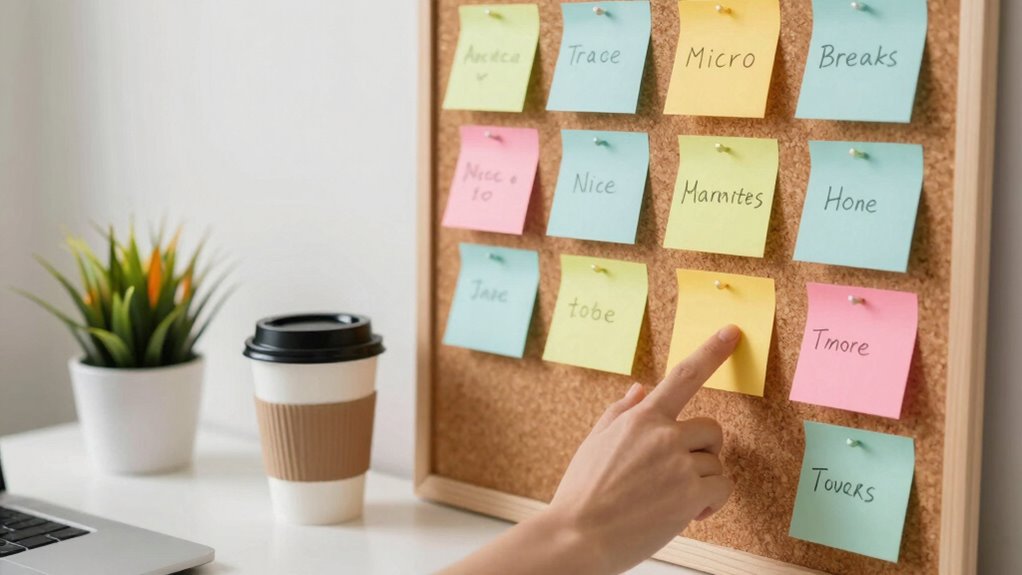

To make micro-breaks that stick, start by building simple routines you can easily fit into your day, like quick stretches, eye exercises, or brief movement. Use alarms or link breaks to natural pauses in your workflow to stay consistent. Focus on quick, effective activities that don’t require much time or equipment, and make them a priority. Keep practicing these habits, and you’ll discover how small, deliberate pauses can boost your productivity and well-being more than you expect.
Key Takeaways
- Schedule regular, short breaks using alarms or timers to build a consistent micro-break routine.
- Incorporate simple stretches and eye exercises into each break to maximize physical and visual relief.
- Link micro-breaks to natural workflow pauses for easier habit integration and routine adherence.
- Keep activities quick and easy—no equipment needed—to encourage frequent, sustainable breaks.
- Use ergonomic workspace adjustments and mindful decision-making to prioritize and reinforce your break habits.
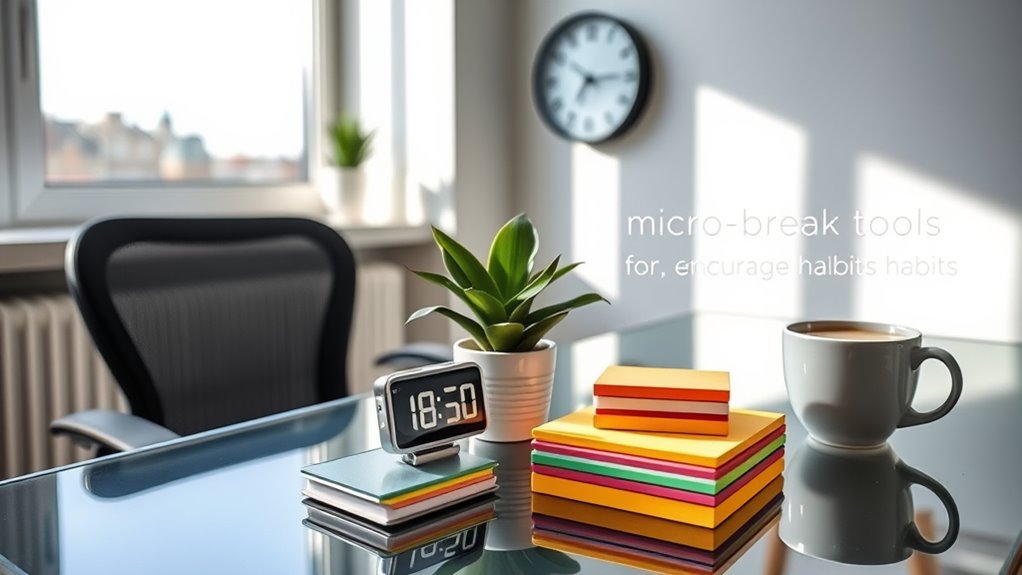
Have you ever wondered how short breaks can boost your productivity and well-being? It might seem counterintuitive—pausing when you have so much to do—but taking regular micro-breaks can actually help you work smarter and feel better throughout your day. The key lies in making these tiny pauses effective and sustainable. One simple way to do that is by incorporating stretching routines and eye exercises into your routine. These quick movements not only relieve physical tension but also refresh your focus, making it easier to stay engaged with your tasks.
When you take a moment to stretch, you loosen up muscles that tighten from sitting or repetitive movements. Think of your body as a machine; regular lubrication and movement prevent stiffness and fatigue. You don’t need lengthy sessions—just a few seconds here and there. Simple stretching routines, like reaching your arms overhead, rolling your shoulders, or stretching your neck, can make a noticeable difference. These routines help increase blood flow, reduce muscle strain, and boost your energy levels, so you’re less likely to feel sluggish or distracted. The trick is to set a timer or use a reminder app to prompt these stretch breaks every hour. Once you get into the habit, it becomes second nature, and you’ll notice how much more comfortable and alert you feel during your work.
Equally important are eye exercises, especially if you spend a lot of time staring at screens. Focusing on a computer or phone for hours can cause eye strain, headaches, and fatigue. Incorporate eye exercises like the 20-20-20 rule—every 20 minutes, look at something 20 feet away for at least 20 seconds. This simple practice relaxes your eye muscles and alleviates strain. You can also do gentle eye rolls, blinking exercises, or focus shifting to refresh your vision. Making these eye exercises part of your micro-break routine ensures you stay comfortable and maintain sharp focus throughout the day. Additionally, understanding ergonomic principles can help optimize your workspace and further reduce physical discomfort.
The beauty of these quick activities is that they’re easy to fit into even the busiest schedules. You don’t need special equipment or a lot of time—just a conscious decision to pause. The challenge is consistency. To truly make micro-breaks stick, schedule them, set alarms, or link them to natural pauses in your workflow. Over time, these small habits become automatic, turning a series of fleeting moments into a powerful system that enhances your productivity and well-being. With deliberate effort, micro-breaks can transform from neglected interruptions into valuable tools for sustained performance and health.
Frequently Asked Questions
How Long Should Each Micro-Break Last for Maximum Benefit?
For maximum benefit, each rest interval should last about 5 to 10 minutes. This ideal duration allows your body and mind to recharge without losing momentum. Short, consistent micro-breaks help reduce fatigue and boost focus. Listen to your body; if you feel refreshed sooner, take a break, but if you need a bit more rest, extend it up to 10 minutes. The key is regularity and tailoring the rest to your needs.
Can Micro-Breaks Improve Long-Term Productivity and Focus?
Yes, micro-breaks can improve your long-term productivity and focus when you establish them as a habit. By consistently taking short breaks, you reinforce behavioral consistency, making it easier to stay attentive and energized over time. These small, regular pauses help reset your mind, reduce fatigue, and boost overall performance. With deliberate habit formation, you’ll find micro-breaks becoming an effortless part of your daily routine, enhancing your sustained productivity.
Are There Specific Activities Recommended During Micro-Breaks?
Think of your micro-break as a pause in a busy symphony. During this moment, you should engage in stretching exercises to loosen tight muscles and practice mindful breathing to reset your mental rhythm. These activities symbolize harmony between body and mind, helping you stay focused and energized. Incorporate simple stretches and deep breaths into each micro-break, turning brief pauses into powerful, restorative moments that boost your long-term productivity.
How Do I Overcome Guilt or Guilt Associated With Taking Breaks?
To overcome guilt or break guilt, practice guilt alleviation by reminding yourself that breaks boost your productivity and well-being. Use break guilt strategies like setting clear boundaries, scheduling breaks ahead, and viewing them as essential rather than indulgent. Recognize that taking time for yourself improves focus and prevents burnout. Embracing these habits helps you feel more justified and comfortable during micro-breaks, making them easier to incorporate into your daily routine.
Can Micro-Breaks Be Effective in Highly Structured or Strict Work Environments?
Ironically, strict work environments often seem to resist micro-breaks, but you can still make them work. By using work environment adaptations and smart break scheduling strategies, you subtly integrate micro-breaks without disrupting flow. Short, intentional pauses can boost focus and productivity, even under tight constraints. So, don’t wait for permission—find discreet moments to refresh, proving even the strictest settings can accommodate well-timed micro-breaks that truly pay off.
Conclusion
By blending brief, purposeful pauses with practical plans, you’ll build a better balance that lasts. Micro-breaks make moments manageable, meaning your momentum doesn’t melt away. With consistent cues and clever cues, you create a cycle of self-care that sticks. Stay steady, skip the slump, and savor small successes. These tiny turns transform your time, turning tiredness into triumph. Remember, small steps sustain success—so start small, stay steady, and see your system stick!