
The “Now / Next / Never” workload triage system helps you manage tasks by categorizing them into three simple groups: immediate (“Now”), upcoming (“Next”), and unnecessary or distracting (“Never”). This approach lets you focus on high-priority tasks, plan ahead efficiently, and eliminate low-impact activities. It transforms chaotic workloads into clear, manageable segments, reducing overwhelm. Keep going, and you’ll discover how to implement this system effectively for a more organized, focused work routine.

Prime made for students and young adults
- Fast, free delivery for dorm and study essentials
- Prime Video and Amazon Music included
- Member-only deals
Key Takeaways
- The “Now / Next / Never” system categorizes tasks into immediate, upcoming, and unnecessary, simplifying workload management.
- Prioritize “Now” tasks for urgent, high-impact actions, while scheduling “Next” tasks for future focus.
- Identify and eliminate or defer “Never” tasks to reduce distractions and free mental resources.
- Regular review and discipline in categorization improve focus, prevent overwhelm, and streamline workflows.
- This system enhances productivity by clarifying priorities, promoting smarter work, and maintaining team alignment.
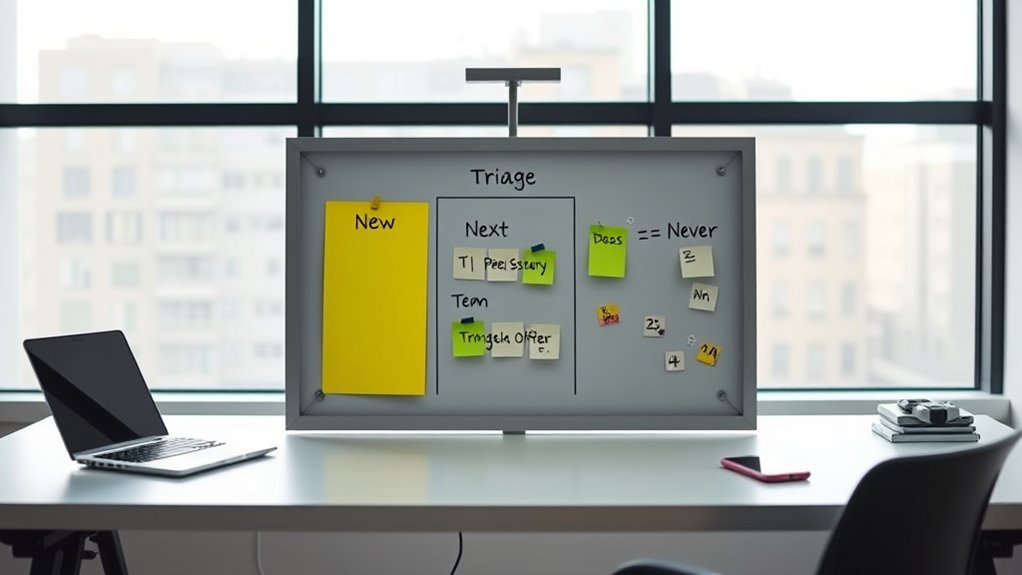
Have you ever wondered how organizations manage overwhelming workloads efficiently? The answer often lies in effective workload triage systems that help teams stay focused and productive. One simple yet powerful approach is the “Now / Next / Never” system, which relies heavily on prioritization techniques and task categorization to streamline work processes. By clearly defining what needs immediate attention, what can wait, and what should be avoided altogether, you can considerably reduce chaos and boost efficiency.
The core idea behind this system is to categorize tasks into three groups: those you’re working on now, those you plan to tackle soon, and those you should discard or defer indefinitely. To do this effectively, you need to employ prioritization techniques that evaluate each task’s importance and urgency. For example, you might ask yourself whether a task aligns with your team’s strategic goals or if it has a looming deadline. Tasks that are urgent and important go into the “Now” category, demanding your immediate focus. Tasks that are important but not urgent fit into the “Next” category, meaning they’re scheduled for future action but aren’t urgent right now. The “Never” category is reserved for tasks that are low-impact, unnecessary, or distractions that don’t contribute to your objectives.
Task categorization becomes a vital step in maintaining clarity. When you routinely sort tasks into these buckets, you create a visual workflow that clearly shows what needs your attention today versus what can be postponed or eliminated. This approach helps prevent you from wasting time on trivial activities or getting sidetracked by less critical tasks. It also provides a mental framework that keeps your team aligned and focused on high-priority work.
Implementing this triage system requires discipline but pays dividends in time management and productivity. Start each day by reviewing your task list and applying your prioritization techniques to categorize each item. If a task belongs in the “Now” category, give it your immediate attention. If it’s “Next,” plan when to address it without losing sight of current priorities. For anything that falls into “Never,” remove it from your active workflow, freeing up mental space and resources. Over time, this simple categorization creates a disciplined work rhythm, reducing overwhelm and increasing your ability to deliver quality results efficiently.
In essence, using the “Now / Next / Never” system transforms an overwhelming workload into manageable segments. It’s not just about working harder but working smarter—focusing on what truly matters, prioritizing effectively, and categorizing tasks to keep your efforts aligned with your goals. This clear, straightforward approach can be a game-changer, helping you regain control over your workload and maintain steady progress without burnout. Incorporating a workload management perspective ensures your team stays organized and responsive to changing priorities.
Popular right now

Dyson Ball Animal Total Clean Upright Vacuum

Breville Barista Pro Espresso Machine with Grinder, Brushed Stainless Steel

Sony WH-1000XM6 Wireless Noise-Canceling Over-Ear Headphones, Blue, Bundle
As an affiliate, we earn on qualifying purchases.
Frequently Asked Questions
How Do I Prioritize Tasks Within Each Category?
You should prioritize tasks within each category by evaluating their urgency and impact. For task categorization, focus on deadlines and importance to decide what needs immediate attention. Regularly reassess priorities to adapt to changes or new information. Keep your “Now” tasks at the top, guarantee “Next” tasks are ready to move forward, and defer “Never” tasks unless circumstances shift. Consistent priority reassessment helps you stay aligned with your goals and deadlines.
What Tools Can I Use for Workload Triage?
You can use digital tools like Trello, Asana, or Todoist to help with workload triage. These platforms allow you to implement task batching, grouping similar tasks together to boost efficiency. Set up columns or lists for Now, Next, and Never, then move tasks accordingly. This way, you stay organized, focus on priority tasks, and easily update your triage system as your workload evolves.
How Often Should I Review and Update My Triage System?
Think of your triage system as a living map that needs regular updates to stay accurate. You should review it weekly or biweekly, ensuring tasks are delegated effectively and team alignment stays strong. Just as a captain checks their compass, updating your system helps you navigate shifting priorities and prevent bottlenecks. Consistent reviews keep everyone on the same page, making task delegation smoother and your workload more manageable.
How to Handle Tasks That Shift Categories Over Time?
When tasks shift categories over time, you should regularly reevaluate their priorities to reflect category evolution. Keep an eye on changing circumstances, and if a task moves from “Now” to “Next” or “Never,” update its status promptly. This ensures your triage system stays accurate and effective. Make it a habit to review and adjust categories during your scheduled reviews so your priorities always align with current needs.
What Are Common Pitfalls When Implementing This System?
Coincidences often reveal pitfalls in your workflow. You risk category confusion if tasks are misclassified, leading to overlooked priorities or wasted effort. Misclassification risks happen when you’re too rigid or inconsistent in categorizing tasks, causing confusion and delays. To avoid this, regularly review and clarify your criteria, ensuring everyone understands the categories. This keeps your triage system effective, maintaining focus on what matters most and preventing tasks from slipping through the cracks.
Conclusion
By embracing the “now, next, never” system, you carve a clear path through chaos, transforming overwhelming tasks into manageable steps. It’s your compass in the storm, guiding you to focus on what truly matters, while gracefully letting go of the rest. Remember, clarity is the lighthouse that keeps you afloat—without it, even the brightest ship risks drifting into uncharted waters. So, trust this triage, and steer with purpose toward your most meaningful work.