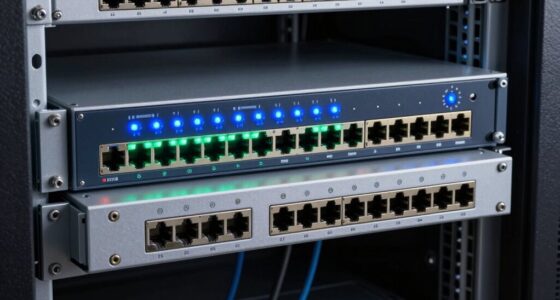
Ethernet backhaul offers the reliable, high-capacity connection you need to make mesh networks truly work. It eliminates interference and provides stable links between access points and the core network, ensuring consistent speeds and low latency. This upgrade helps you avoid the issues caused by wireless interference, improves network performance, and supports higher bandwidth demands. If you want to discover how Ethernet backhaul can transform your mesh setup, keep exploring the benefits it delivers.
Key Takeaways
- Ethernet backhaul provides a reliable, interference-free connection essential for effective mesh network performance.
- It enhances network security and segmentation, preventing issues from affecting the entire mesh system.
- Supports higher bandwidths, ensuring smooth data flow for streaming, cloud, and IoT applications within the mesh.
- Improves scalability and simplifies management by creating dedicated, stable links between access points.
- Ensures consistent low latency and high speeds, making mesh networks more resilient and efficient for modern demands.
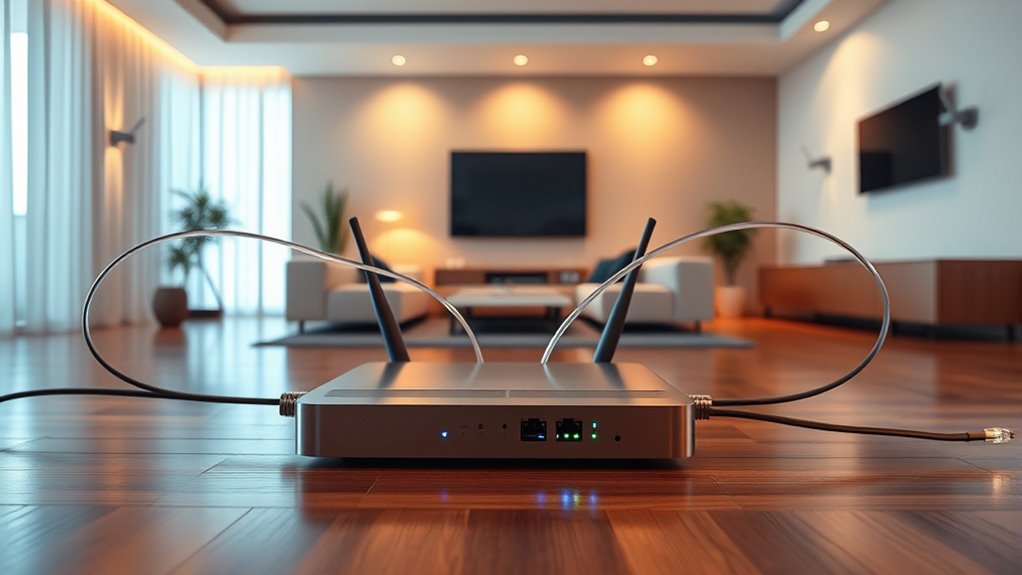
Ethernet backhaul is an essential component in modern network infrastructure, connecting cell towers, small cells, or access points to the core network with high-speed, reliable links. When you choose Ethernet backhaul, you’re guaranteeing a stable connection that’s less susceptible to the common issues faced by wireless links. Wireless interference can drastically degrade network performance, especially in dense urban environments or areas with many competing signals. By opting for Ethernet, you eliminate the unpredictability caused by interference from other wireless devices, microwave links, or physical obstructions. This stability becomes even more crucial when deploying mesh networks, where multiple access points need to communicate seamlessly. Ethernet backhaul provides a dedicated, interference-resistant pathway that keeps your network running smoothly, regardless of nearby wireless traffic.
Beyond interference, network segmentation is another key advantage you gain with Ethernet backhaul. Segmentation allows you to split your network into separate, manageable parts, which enhances security and performance. When your access points and small cells are connected via Ethernet, you can isolate different segments of your network, preventing issues in one area from cascading into others. This means if a segment experiences congestion or a security threat, it won’t affect the entire network. You can also prioritize traffic more effectively, ensuring critical applications like voice or real-time video stay uninterrupted. In a wireless environment, managing such segmentation is often more complex due to interference and signal overlap, but Ethernet makes it straightforward. You get a clear, dedicated pathway that simplifies network management and troubleshooting.
Furthermore, Ethernet backhaul supports higher bandwidths, making it suitable for the increasing data demands of modern users. With the rise of streaming, cloud applications, and IoT devices, your network needs to handle more data than ever. Wireless links, especially in congested areas, can falter under this pressure, but Ethernet backhaul maintains consistent speeds and low latency. This reliability translates into better user experiences, faster data transfer, and more efficient network operations overall. Additionally, Ethernet backhaul aligns with European cloud innovation initiatives, promoting sustainable and secure connectivity solutions that support digital transformation.
In essence, by integrating Ethernet backhaul into your network, you’re building a resilient, efficient, and scalable infrastructure. It minimizes wireless interference, simplifies network segmentation, and provides robust bandwidth capabilities. These features ensure your mesh network doesn’t just exist — it thrives, delivering the fast, reliable connectivity that modern digital demands require. Whether upgrading existing infrastructure or planning a new deployment, Ethernet backhaul is a strategic choice that elevates your network’s performance and reliability.
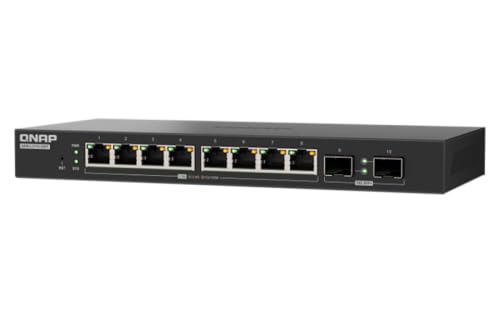
QNAP QSW-L2110-2S8T-US 10-Port Multi-Gigabit Network Switch
- High-Speed Multi-Gig Ports: 8 x 2.5GbE and 2 x 10GbE SFP+
- Quiet, Compact Design: Fanless and space-saving for quiet environments
- User-Friendly Management: Lite-managed Layer 2 switch with web GUI
As an affiliate, we earn on qualifying purchases.
Frequently Asked Questions
Can Ethernet Backhaul Be Integrated With Existing Wi-Fi Systems?
Yes, you can integrate Ethernet backhaul with your existing Wi-Fi system. Doing so reduces wireless interference and improves network stability. Just guarantee your devices support Ethernet connections and meet power requirements for the backhaul setup. This upgrade minimizes signal loss, boosts speeds, and enhances coverage, making your mesh network far more reliable. It’s a straightforward way to optimize your Wi-Fi performance without replacing your entire system.
What Are the Cost Implications of Upgrading to Ethernet Backhaul?
Upgrading to Ethernet backhaul can increase your costs initially, but it’s a smart investment for better mesh network performance. You’ll want to do a thorough cost analysis, considering equipment upgrades and installation expenses. Budget considerations may vary based on your existing infrastructure, but the improved stability and speed often justify the upfront investment. Ultimately, this upgrade can save you money long-term by reducing connectivity issues and enhancing overall network reliability.
How Does Ethernet Backhaul Impact Network Security?
Ethernet backhaul enhances your network security by reducing vulnerabilities linked to wireless connections, making it harder for hackers to intercept data. It also supports data encryption, ensuring your information stays private during transmission. By connecting your mesh nodes with wired links, you lower the risk of security vulnerabilities from wireless interference or hacking attempts, giving you a safer, more reliable network that protects your data effectively.
Is Ethernet Backhaul Compatible With All Mesh Wi-Fi Brands?
Ever wonder if Ethernet backhaul works with all mesh Wi-Fi brands? It doesn’t, unfortunately. Compatibility varies because some brands design their mesh systems to use only their proprietary backhaul methods, which may not support Ethernet connections. If you’re aiming for ideal signal stability and reduced wireless interference, check whether your mesh system explicitly supports Ethernet backhaul. Otherwise, you might not get the performance boost you’re after from this upgrade.
What Are Common Troubleshooting Steps for Ethernet Backhaul Issues?
When troubleshooting Ethernet backhaul issues, start by inspecting your cabling to make certain it’s properly connected and undamaged. Then, check for firmware updates on your mesh devices, as outdated software can cause connectivity problems. Restart your routers and switches, and verify network settings. If issues persist, test the Ethernet cables with a cable tester, and consider replacing any faulty cables to restore stable backhaul communication.

SODOLA 8-Port 2.5Gb Web Managed Switch with 10G SFP+, Aluminum Alloy Cooling & Magnetic Mounting - LACP/QoS/VLAN/IGMP Managed Multi-Gigabit Switch for Homelab
- High-Speed Connectivity: 2.5G and 10G ports for fast data transfer
- Web-Based Management: Easy configuration via user-friendly web interface
- Robust Aluminum Housing: Cooling aluminum alloy reduces heat and noise
As an affiliate, we earn on qualifying purchases.
Conclusion
So, next time your Wi-Fi feels sluggish, remember it’s not just about adding more mesh nodes. The real secret is wired Ethernet backhaul—because, apparently, wireless alone isn’t enough. It’s funny how we chase the latest tech without realizing the simple solution sitting right behind the wall. Sometimes, the upgrade you need isn’t fancy gadgets but a little cable. Who knew? Turns out, wired connections still hold the real power—ironic, isn’t it?

QNAP QSW-L2110-10T-US 10-Port Multi-Gigabit Network Switch
- Hybrid Multi-Gig Design: 8 x 2.5GbE and 2 x 10GbE ports
- Flexible Network Upgrade: Supports Cat 5e/6 cabling
- Lite-Managed Layer 2 Features: VLAN, QoS, IGMP, Link Aggregation
As an affiliate, we earn on qualifying purchases.