
TL;DR

Prime made for students and young adults
- Fast, free delivery for dorm and study essentials
- Prime Video and Amazon Music included
- Member-only deals
ICAR-CIBA in Chennai has successfully demonstrated India’s first blue swimmer crab farming technology. The project uses hatchery-produced seed and specialized feed, promising to transform crab aquaculture in India. This development is a significant milestone for sustainable seafood production.
ICAR-CIBA in Chennai has successfully demonstrated India’s first blue swimmer crab farming technology, utilizing hatchery-produced seed and specially formulated feed. This achievement marks a significant milestone in the country’s aquaculture sector, aiming to boost sustainable seafood production and reduce reliance on wild harvesting. The demonstration was carried out at the ICAR-CIBA research facility, highlighting a new pathway for commercial crab farming in India.
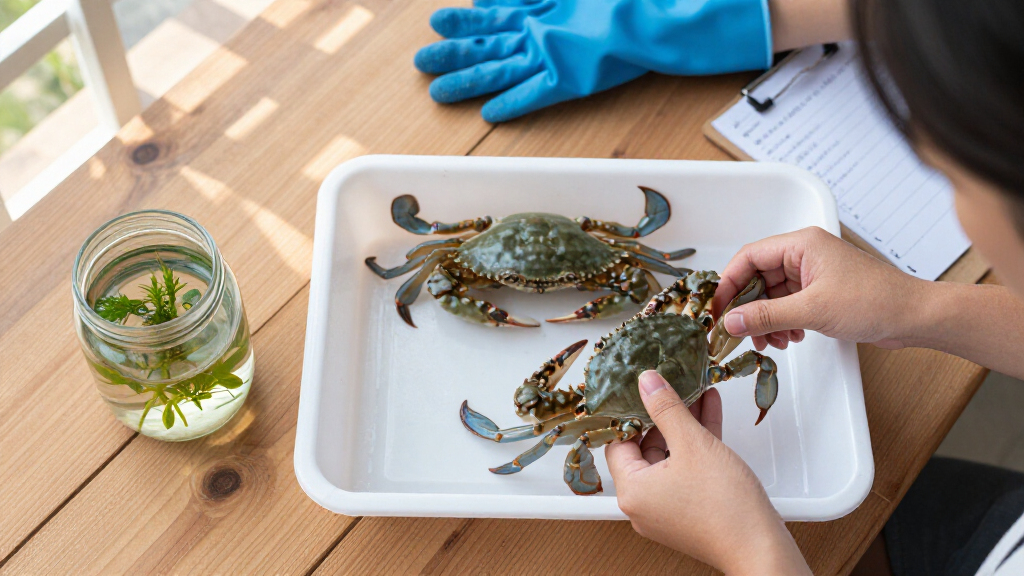
The Indian Council of Agricultural Research’s Central Institute of Brackishwater Aquaculture (ICAR-CIBA) announced that it has developed and demonstrated a comprehensive blue swimmer crab farming technology, specifically targeting the species Portunus pelagicus. The technology involves breeding crabs in hatcheries, rearing juvenile crabs in controlled environments, and feeding them with a specially formulated diet designed to promote growth and health. This is the first time such a system has been successfully implemented in India, using hatchery-raised seed and feed tailored to the species’ nutritional needs.
The demonstration involved a pilot-scale setup at ICAR-CIBA’s facility, where the crabs were monitored for growth, survival rates, and overall health. According to officials, the project aims to establish a sustainable, scalable model for crab aquaculture that can be adopted by farmers across India, especially in coastal states like Tamil Nadu, Andhra Pradesh, and Odisha. The technology is expected to reduce pressure on wild crab populations and provide new livelihood opportunities for coastal communities.
ICAR-CIBA’s Director, Dr. R. S. Prasad, stated, “This is a major breakthrough for Indian aquaculture. Using hatchery-produced seed and formulated feed, we can now cultivate blue swimmer crabs in controlled environments, ensuring better productivity and sustainability. Our goal is to support farmers and promote responsible aquaculture practices.”
Potential Impact on Indian Crab Aquaculture
This development could revolutionize India’s crab farming industry by providing a reliable, domestically-produced seed source and reducing dependence on wild catches. It offers a sustainable alternative that can meet increasing domestic and export demand for blue swimmer crabs, known for their high market value. The technology aligns with government initiatives to promote aquaculture as a means of livelihood for coastal communities, potentially leading to increased income and employment. Additionally, it could help conserve wild crab populations and support marine biodiversity by decreasing overharvesting.
As an affiliate, we earn on qualifying purchases.
Background on Crab Farming in India
Crab aquaculture in India has traditionally relied on wild seed collection, which has raised concerns about overexploitation and environmental impacts. While some small-scale farms exist, large-scale, controlled farming has been limited due to a lack of technology and hatchery infrastructure. Globally, blue swimmer crab farming is well-established in countries like Australia and Southeast Asian nations, but India has lagged behind in adopting such practices. The recent demonstration by ICAR-CIBA represents the first step toward developing a self-sufficient, sustainable crab farming industry in India.
Prior to this, Indian crab farmers faced challenges related to seed availability, disease management, and low survival rates in nurseries. The development of hatchery technology and formulated feeds has been a key focus area for ICAR-CIBA, aiming to overcome these hurdles and establish a viable commercial model.
“This is a major breakthrough for Indian aquaculture. Using hatchery-produced seed and formulated feed, we can now cultivate blue swimmer crabs in controlled environments, ensuring better productivity and sustainability.”
— Dr. R. S. Prasad, Director, ICAR-CIBA
As an affiliate, we earn on qualifying purchases.
Remaining Questions About Commercial Adoption
While the demonstration was successful on a pilot scale, it is not yet clear how quickly and widely the technology can be adopted by farmers. Details about cost, scalability, and training requirements are still being developed. Additionally, long-term sustainability, disease management, and market acceptance remain areas for further research and validation.
crab farming equipment for beginners
As an affiliate, we earn on qualifying purchases.
As an affiliate, we earn on qualifying purchases.
Next Steps Toward Commercial Crab Farming
ICAR-CIBA plans to collaborate with state governments and industry partners to scale up the technology. Pilot programs are expected to be launched in selected coastal districts over the next year, with training and capacity-building initiatives for farmers. Further research will focus on optimizing feed formulations, disease control, and environmental impacts. The goal is to establish a commercially viable model within the next 2-3 years.
As an affiliate, we earn on qualifying purchases.
Key Questions
What is blue swimmer crab farming?
Blue swimmer crab farming involves breeding, rearing, and harvesting crabs in controlled aquaculture systems, aiming to produce seafood sustainably for domestic and export markets.
Why is this development significant for India?
It introduces a sustainable, domestically-controlled method for crab production, reducing reliance on wild harvesting and supporting coastal livelihoods.
When will this technology be available to farmers?
ICAR-CIBA plans to pilot the technology in selected regions within the next year, with broader adoption expected over the next 2-3 years.
What are the challenges ahead for commercial crab farming?
Key challenges include scaling up hatchery operations, managing disease risks, training farmers, and establishing supply chains and markets.
Can this technology help conserve wild crab populations?
Yes, by providing an alternative to wild seed collection, it can reduce pressure on natural populations and promote sustainable harvesting practices.
Source: local
Halloween Picks
halloween
As an affiliate, we earn on qualifying purchases.