
TL;DR

Prime made for students and young adults
- Fast, free delivery for dorm and study essentials
- Prime Video and Amazon Music included
- Member-only deals
A market on Kalshi indicates ongoing speculation about whether the temperature will reach 94-95°F on August 26, 2026. The event’s outcome remains uncertain, with no definitive weather forecast available yet.
Market participants on Kalshi are actively trading on the question of whether the maximum temperature will reach 94-95°F on August 26, 2026.Will The Maximum Temperature Be 93-94° On Aug 11, 2026? While no official weather forecast has been issued for that specific date, the trading volume indicates that this temperature range is a subject of interest among traders and climate observers. Learn more about seasonal climate trends at Will The Maximum Temperature Be 79-80° On Aug 7, 2026?. This activity highlights the growing use of prediction markets to gauge potential weather conditions years in advance, though it remains speculative.
The Kalshi market, which allows users to bet on specific future events, has seen 68 recent trades related to the maximum temperature on August 26, 2026. The question posed is whether the temperature will hit the 94-95°F range, a forecast that has attracted attention due to its timing and the involvement of climate and weather prediction enthusiasts. However, it is important to clarify that no official meteorological forecast or scientific model currently confirms or predicts the temperature on that date.
Weather forecasts typically extend only up to 7-10 days in advance, with seasonal climate predictions offering broader trends but not specific daily temperatures so far in advance. Experts emphasize that predicting precise temperatures nearly four years ahead is highly uncertain, given the variability of climate factors and the limitations of current forecasting models. For more on climate predictions, see Will The Maximum Temperature Be 83-84° On Aug 25, 2026?. The market activity appears to be more speculative than based on scientific data.
Implications of Long-Term Weather Market Predictions
This market activity demonstrates how prediction markets are increasingly used to gauge public sentiment and speculative expectations about future weather conditions. While they can reflect collective beliefs or trends, they do not replace scientific weather forecasting or climate modeling. For the public, understanding that such markets are primarily speculative is crucial, especially when they involve predictions several years into the future. The activity underscores the growing intersection between financial instruments and climate prediction, but also highlights the current limitations of long-term weather forecasts.
As an affiliate, we earn on qualifying purchases.
Background on Weather Prediction Markets and Long-Term Climate Forecasts
Prediction markets like Kalshi enable users to buy and sell contracts based on future events, including weather conditions. These markets have gained popularity for their ability to aggregate collective expectations, but their reliability diminishes as the forecast horizon extends beyond typical weather prediction ranges. Currently, weather forecasts are generally accurate up to 10 days, with seasonal climate outlooks providing broad trends but not specific daily temperatures. The idea of predicting exact temperatures nearly four years ahead remains speculative and not scientifically validated.
Historically, climate models have been used to project long-term trends, such as average temperature increases over decades due to climate change. However, these models do not specify day-to-day temperature outcomes. The use of prediction markets for such long-term forecasts is a recent development, often reflecting public sentiment or betting behavior rather than scientific certainty.
“Predicting specific daily temperatures four years in advance is currently beyond the capabilities of existing climate models. Markets like Kalshi are more about speculation than scientific forecasting.”
— Dr. Emily Carter, Climate Scientist
As an affiliate, we earn on qualifying purchases.
Unconfirmed Nature of Long-Term Temperature Predictions
It is not yet clear whether the temperature will reach the 94-95°F range on August 26, 2026. No scientific forecasts or climate models currently support this specific prediction, and the market activity appears largely speculative. Weather and climate experts warn against overinterpreting such long-term betting markets as reliable indicators of future conditions.
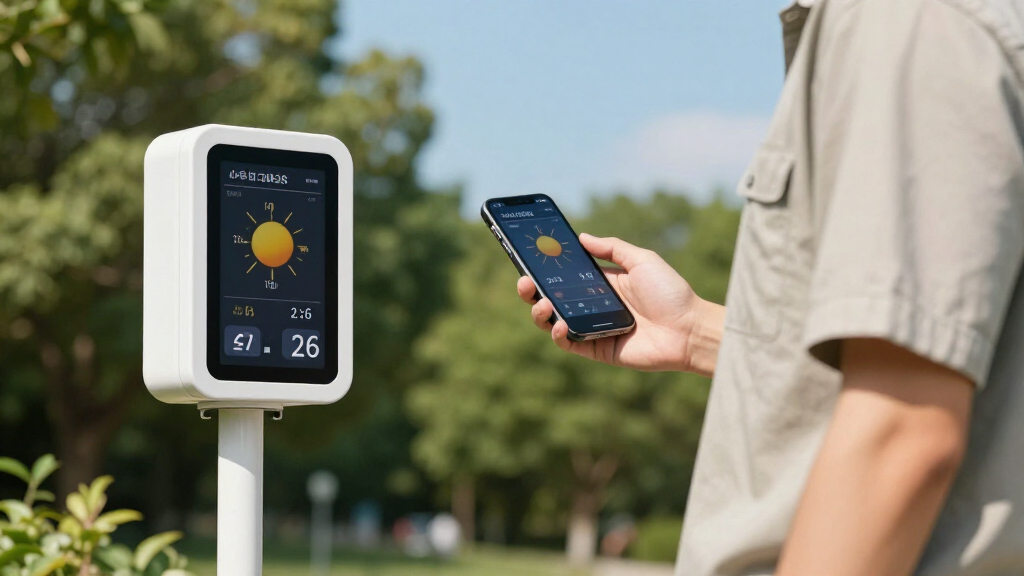
UV and temperature weather station
As an affiliate, we earn on qualifying purchases.
As an affiliate, we earn on qualifying purchases.
Monitoring Scientific Forecasts and Market Trends
In the coming months, official weather agencies and climate models will continue to provide seasonal outlooks, but precise daily temperatures for 2026 remain unavailable. Market activity on Kalshi and similar platforms will likely persist as a reflection of public interest, but the scientific community emphasizes that accurate long-term weather predictions are not feasible at this time. Researchers will also monitor how such prediction markets evolve and whether they influence public perceptions of climate risks.
As an affiliate, we earn on qualifying purchases.
Key Questions
Can the temperature really be predicted so far in advance?
No, current scientific methods do not support accurate predictions of specific daily temperatures nearly four years ahead. Forecasts are reliable only up to about 10 days, with seasonal trends providing general guidance but not exact figures.
What does the Kalshi market activity mean?
The activity reflects public interest and speculative betting on future weather conditions but should not be taken as scientific evidence or a reliable forecast.
Why is there interest in predicting temperatures this far ahead?
Some participants view prediction markets as tools to gauge collective sentiment or as investment opportunities, but the scientific basis for such long-term predictions remains limited.
Are there any official forecasts for August 2026?
No, official weather agencies do not provide specific forecasts for dates several years in advance. They focus on short-term forecasts and seasonal climate outlooks.
What are the limitations of long-term climate predictions?
Long-term climate predictions are based on broad models that project average trends over decades, not specific daily conditions. Variability and unforeseen factors make precise predictions impossible at such a distant horizon.
Source: kalshi
Fall Picks
fall essentials
As an affiliate, we earn on qualifying purchases.






![Terence Tao: Math 2.0 [Pdf]](https://haltmal.com/wp-content/uploads/2026/10/terence-tao-math-2-0-pdf-featured-260x140.jpg)