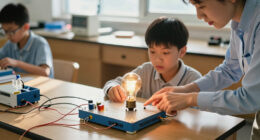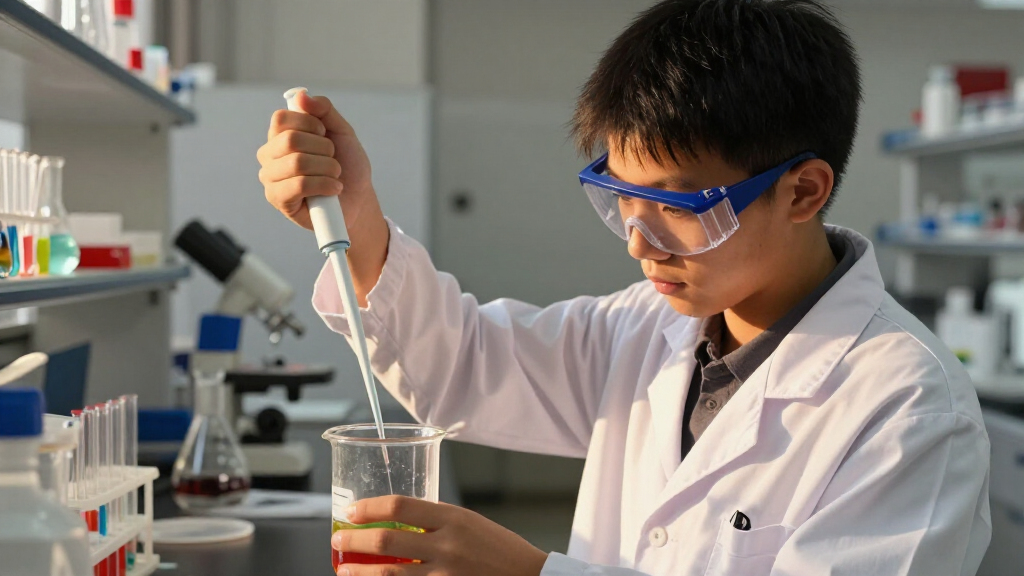

Choosing student science lab equipment comes down to one big tradeoff: guided simplicity versus open-ended versatility. A structured kit like the Thames & Kosmos Ooze Labs Chemistry Station walks beginners through experiments with everything included, which is why it earns my best overall pick — while a standalone glassware and tools setup gives older students the freedom to design their own investigations. For pure value, the EISCO 15 Piece Plastic Lab Kit covers beakers, cylinders, and pipettes at a price that fits most homeschool budgets. The main decision you face is whether your student needs direction (a guided kit) or hardware (durable labware that works with any curriculum). Keep reading for the full breakdown of all 11 options and which one fits your learner.

Prime made for students and young adults
- Fast, free delivery for dorm and study essentials
- Prime Video and Amazon Music included
- Member-only deals
Key Takeaways
- Guided kits like the Ooze Labs Chemistry Station outperform loose hardware sets for younger students because the experiment manual does the teaching; standalone labware assumes a parent or curriculum will supply the direction.
- Plastic labware dominated this roundup for good reason — nearly every glass option, including the Frienda 20 Pc Beaker Set, carries breakage and safety tradeoffs that matter more for students than for professionals.
- Piece count is misleading: the 120-slide biology set and the 42-piece beaker set both offer high counts, but what actually separates top picks is whether the included pieces cover distinct functions or just repeat the same item in different sizes.
- The stainless steel Chemistry Lab Tool Set was the only option with genuinely professional-grade materials, making it the clear upgrade path for high school students heading into AP or college-level work.
- Budget kits under $20 (Teenitor, Moveland, Baderke) are best treated as starter or backup sets — their thinner plastic and less precise graduations are acceptable tradeoffs at the price, but not for measurement-critical experiments.
| Thames & Kosmos Ooze Labs Chemistry Station Science Experiment Kit |  | Best for Beginners | Number of Experiments: 20 | Pieces Included: 57 | Chemicals: Non-hazardous, borax-free | VIEW LATEST PRICE | See Our Full Breakdown |
| EISCO 15 Piece Plastic Lab Kit – Beakers, Cylinders, Pipettes & Brush |  | Best Value Lab Kit | Beakers: 5 (50, 100, 250, 500, 1000ml) | Graduated Cylinders: 4 (10, 25, 50, 100ml) | Pipettes: 5 disposable (3ml each) | VIEW LATEST PRICE | See Our Full Breakdown |
| 120 Microscope Slides with Specimens for Biological Science Education |  | Best Biology Companion | Number of Slides: 30 | Slide Size: 25mm x 75mm (standard) | Material: Glass, polished with rounded edges | VIEW LATEST PRICE | See Our Full Breakdown |
| Physics Mechanics Lab Kit with Balance Scale and Pulley |  | Best for Classroom Demonstrations | Experiments Supported: 30+ | Key Components: Balance scale, weights, pulleys, lever ruler, spring scale, pressure gauge, trolley, ramp, graduated cylinder, syringe | Material: Eco-friendly plastic and premium metal | VIEW LATEST PRICE | See Our Full Breakdown |
| Teenitor Graduated Cylinder Plastic Beaker Set, 10 Pieces (5 Cylinders and 5 Beakers) |  | Best Budget Measurement Set | Total Pieces: 10 (5 cylinders, 5 beakers) | Cylinder Sizes: 10, 25, 50, 100, 250ml | Beaker Sizes: 50, 100, 250, 500, 1000ml | VIEW LATEST PRICE | See Our Full Breakdown |
| 42pcs Plastic Clear Beakers Test Tubes Set Max 1000ml with Rack |  | Most Complete Starter Lab in Plastic | Number of pieces: 42 | Max volume: 1000ml | Material: Food-grade plastic | VIEW LATEST PRICE | See Our Full Breakdown |
| Steve Spangler Science Large Plastic Test Tubes & Rack |  | Best for Elementary Ages | Material: Plastic | Construction: Thick, unbreakable plastic | Use: Science experiments for kids | VIEW LATEST PRICE | See Our Full Breakdown |
| Chemistry Lab Tool Set, Stainless Steel, 17-in-1 |  | Best Lab Accessories Pick | Number of items: 17 | Material: Stainless steel | Includes: Breaker tong, crucible tong, test tube clamp, pointed forceps, forceps, spoons, spatulas, scoops, U-shape spoons | VIEW LATEST PRICE | See Our Full Breakdown |
| Moveland Plastic Graduated Cylinders and Beakers Set |  | Best Value for Precise Measurement | Material: Food-grade plastic | Cylinder sizes: 10-1000ml | Beaker sizes: 50-1000ml | VIEW LATEST PRICE | See Our Full Breakdown |
| Frienda 20 Pcs Lab Glassware Beaker Set |  | Best Glass Upgrade | Material: Borosilicate glass | Measuring cups: 50ml, 100ml, 250ml, 500ml, 1000ml | Graduated cylinders: 10ml, 25ml, 50ml, 100ml | VIEW LATEST PRICE | See Our Full Breakdown |
| Baderke 28 Pcs Plastic Beakers Test Tubes with Graduated Cylinder Flask |  | Most Complete Starter Lab Set | Total Pieces: 28 | Test Tubes: 6, with 1 rack | Graduated Cylinders: 3 (10ml, 25ml, 50ml) | VIEW LATEST PRICE | See Our Full Breakdown |
| student science lab equipment | Material |
|---|---|
| Thames & Kosmos Ooze Labs Chem | — |
| EISCO 15 Piece Plastic Lab Kit | Chemical-resistant polypropylene |
| 120 Microscope Slides with Spe | Glass, polished with rounded edges |
| Physics Mechanics Lab Kit with | Eco-friendly plastic and premium metal |
| Teenitor Graduated Cylinder Pl | Food-grade plastic, acid and alkali resistant |
| 42pcs Plastic Clear Beakers Te | Food-grade plastic |
| Steve Spangler Science Large P | Plastic |
| Chemistry Lab Tool Set | Stainless steel |
| Moveland Plastic Graduated Cyl | Food-grade plastic |
| Frienda 20 Pcs Lab Glassware B | Borosilicate glass |
| Baderke 28 Pcs Plastic Beakers | Chemical-resistant plastic |
More Details on Our Top Picks
Thames & Kosmos Ooze Labs Chemistry Station Science Experiment Kit
For a younger student taking their first steps into chemistry, this kit makes the most sense for building confidence before committing to real glassware. The 20 non-hazardous experiments — slime, fizzing reactions, chromatography — are self-contained, and the 57 pieces include actual beakers and test tubes that feel like the real thing without the risk. Compared with buying loose equipment like the EISCO 15 Piece Plastic Lab Kit, the Ooze Labs trades flexibility for guided structure: everything is scripted, which is exactly what a beginner needs but what an independent experimenter will quickly outgrow. The absence of borax is a genuine plus for safety-conscious parents. The tradeoff is real, though — once the experiment cards run out, the chemicals are done, and the equipment is too basic to support open-ended work.
Pros:- 20 varied experiments with clear, guided instructions
- Safe non-hazardous, borax-free chemistry
- Includes 57 pieces of real-looking lab equipment and station
- Self-contained — no need to source additional supplies
Cons:- Requires adult supervision for some experiments
- Strictly limited to non-hazardous chemicals
- Equipment and curriculum are quickly outgrown by motivated students
Best for: Parents of children ages 6-10 who want a safe, structured introduction to chemistry with zero hazardous materials
Not ideal for: Middle schoolers and up doing independent lab work — the sealed curriculum and non-hazardous-only chemicals cap how far it can go
- Number of Experiments:20
- Pieces Included:57
- Chemicals:Non-hazardous, borax-free
- Format:Experiment cards and instruction manual
- Focus:Introductory chemistry (slime, reactions, chromatography)
- Supervision:Adult supervision required for some experiments
Our verdict“A starter kit for young first-time chemists who need structure and safety more than advanced capability.”
EISCO 15 Piece Plastic Lab Kit – Beakers, Cylinders, Pipettes & Brush
Where the Ooze Labs kit is a curriculum, this is a toolkit — and that distinction matters for students who already know what they want to measure. The EISCO set covers an unusually wide volume range, from a 10ml cylinder up to a 1000ml beaker, so a single purchase handles everything from titrations to large-batch mixing. The autoclavable polypropylene construction is the real differentiator: compared with the Teenitor beaker set, which is food-grade plastic aimed at DIY and light classroom use, EISCO’s lab-grade material stands up to solvents and sterilization. Against the Baderke 28-piece set, you get fewer pieces but better quality control and a cleaning brush that extends the set’s life. The honest tradeoff: plastic simply can’t replace glassware for heat-based experiments, and serious chemistry students will hit that wall.
Pros:- True lab-grade polypropylene that resists common chemicals
- Full measurement range from 10ml to 1000ml in one set
- Microwavable and autoclavable for proper sterilization
- Includes a nylon cleaning brush for maintenance
Cons:- No glassware, ruling out direct-heat experiments
- Pipettes are disposable, not precision instruments
- Measurement-only set — no experiments or curriculum included
Best for: Homeschool families and classroom teachers who need durable, chemical-resistant measurement tools at a low per-piece cost
Not ideal for: Students doing heat-driven or high-precision chemistry — plastic tolerances and temperature limits rule those experiments out
- Beakers:5 (50, 100, 250, 500, 1000ml)
- Graduated Cylinders:4 (10, 25, 50, 100ml)
- Pipettes:5 disposable (3ml each)
- Cleaning Brush:Nylon bristle
- Material:Chemical-resistant polypropylene
- Sterilization:Microwavable and autoclavable
- Total Pieces:15
Our verdict“The best dollar-for-dollar equipment set for students who need real measuring tools, not a guided kit.”
120 Microscope Slides with Specimens for Biological Science Education
Every other product in this roundup is about doing experiments; this one is about seeing. The 30 prepared slides — plant sections, algae, mammalian tissues, insect parts — instantly give a student a biology curriculum the moment a microscope is focused, which is why this makes sense as a companion purchase rather than a standalone. Compared with a chemistry kit like the Ooze Labs station, the learning is observational rather than experimental: there’s nothing to mix or measure, but there’s also nothing to spill or supervise. The rounded, polished edges make the glass slides safer for younger handlers than typical research slides. The obvious limitation is that everything is pre-prepared, so a student never learns slide-mounting skills, and an advanced biology student will find the specimen selection basic.
Pros:- 30 slides spanning plants, algae, tissues, cells, and insects
- Polished glass with rounded edges for safer handling
- Standard 25mm x 75mm size fits virtually any microscope
- Zero preparation needed — ready for immediate study
Cons:- Prepared-only specimens teach no mounting technique
- Specimen variety is basic, not research-grade
- No accessories or blank slides included
Best for: Students with a microscope who need ready-to-view specimens for biology study at home or in class
Not ideal for: Advanced or research-track biology students — the basic specimen selection and lack of blank slides for custom mounting won’t support that level
- Number of Slides:30
- Slide Size:25mm x 75mm (standard)
- Material:Glass, polished with rounded edges
- Specimens:Plants, algae, mammalian tissues, cells, insect parts
- Compatibility:Standard compound microscopes
- Experience Level:Beginner and children
Our verdict“A ready-made biology specimen library for microscope owners who want instant, guided observation.”
Physics Mechanics Lab Kit with Balance Scale and Pulley
Most student lab gear in this roundup covers chemistry or measurement; this kit fills the physics gap, and it does so with unusual breadth. Over 30 experiments across a balance scale, pulleys, levers, a spring scale, a trolley and ramp — that’s a semester of mechanics demonstrations in one box. For teachers, this model is better suited to classroom use than the EISCO plastic lab kit, because it supports full experiments rather than just measurement, and the included manual explains the concepts behind each activity. Compared with the Ooze Labs station, the learning here is quantitative and conceptual rather than reaction-driven, which suits junior-high students studying forces and motion. The compromises: setup needs table space, the small parts demand careful handling around younger kids, and it’s strictly mechanics-only — no electricity, no optics, no chemistry.
Pros:- Supports over 30 classic mechanics experiments
- Detailed manual with step-by-step instructions and concept explanations
- Durable eco-friendly plastic and metal construction
- Portable and easy to store between lessons
Cons:- Requires significant table space for full setups
- Small parts need careful handling and organization
- Limited strictly to mechanics — no other physics topics
Best for: Junior high science teachers and homeschooling parents covering mechanics with hands-on demonstrations
Not ideal for: Students wanting broad science coverage — this covers mechanics only, and small parts make it poor for very young children
- Experiments Supported:30+
- Key Components:Balance scale, weights, pulleys, lever ruler, spring scale, pressure gauge, trolley, ramp, graduated cylinder, syringe
- Material:Eco-friendly plastic and premium metal
- Target Users:Junior school students, teachers, classroom and home labs
- Focus Area:Physics mechanics
- Portability:Portable, easy storage
Our verdict“The go-to kit for teaching forces, levers, and pulleys through demonstration rather than textbook diagrams.”
Teenitor Graduated Cylinder Plastic Beaker Set, 10 Pieces (5 Cylinders and 5 Beakers)
This is the set to grab when the budget is tight and the need is simple: accurate volumes, low cost, nothing fragile. Ten pieces spanning 10ml to 1000ml with clear double-sided graduations cover the measuring needs of most middle-school experiments, and the hexagonal bases genuinely reduce tipping — a small design choice that saves a lot of spilled solutions. Compared with the EISCO 15-piece kit, Teenitor trades lab-grade chemical resistance and autoclavability for a lower price, making it the smarter pick for light classroom or kitchen-adjacent science, but the weaker choice for solvent-heavy chemistry. It also out-specs the Moveland cylinders-and-beakers set with its thicker 2mm walls. Skip it if you need heat resistance or harsh-chemical compatibility; plastic at this price point simply doesn’t provide either.
Pros:- Very low cost per piece across 10 items from 10ml to 1000ml
- Clear double-sided measurement scales for easy reading
- Hexagonal bases and 2mm walls resist tipping and cracking
- Food-grade, acid and alkali resistant plastic
Cons:- Cannot handle high-temperature procedures
- Not suitable for aggressive chemical environments
- No lids or covers included
Best for: Budget-conscious buyers — homeschoolers, DIY slime makers, light classroom use — who need accurate volume measurement cheaply
Not ideal for: Chemistry involving heat or aggressive solvents — the food-grade plastic and lack of lids make it unsuitable for those conditions
- Total Pieces:10 (5 cylinders, 5 beakers)
- Cylinder Sizes:10, 25, 50, 100, 250ml
- Beaker Sizes:50, 100, 250, 500, 1000ml
- Material:Food-grade plastic, acid and alkali resistant
- Wall Thickness:2mm
- Base Design:Hexagonal for stability
- Measurement Scale:Double-sided graduations
Our verdict“A dependable, inexpensive measuring set for light-duty science where precision beats durability requirements.”
42pcs Plastic Clear Beakers Test Tubes Set Max 1000ml with Rack
This 42-piece set stands out for sheer breadth: beakers, cylinders, flasks, funnels, stirring rods, droppers, colorimetric tubes, and a rack all in one box. For a student setting up a first lab station on a budget, that variety matters more than material prestige. Compared with the Moveland cylinder-and-beaker set, you get test tubes, racks, and funnels here — pieces Moveland omits — though the plastic construction means no open-flame or high-temperature work. The food-grade, acid-and-alkali-resistant plastic handles most middle-school and homeschool chemistry safely, and the clear graduated scales keep measurements honest. The tradeoff versus the Frienda borosilicate glass set is durability versus realism: nothing here will shatter, but a student who needs authentic glassware behavior for advanced coursework should look elsewhere.
Pros:- 42 pieces cover nearly every basic lab function in one purchase
- Food-grade, chemical-resistant plastic survives drops and rough handling
- Clear graduated scales on every piece keep measurements consistent
- Doubles for non-lab uses like themed parties and kitchen projects
Cons:- Cannot handle any high-temperature or direct-heat experiments
- Plastic scratches and clouds over time, degrading scale readability
Best for: Homeschool parents and middle-school teachers stocking a full lab station cheaply without breakage worries
Not ideal for: High school or college students needing real glassware — plastic can’t take heat and won’t replicate proper lab conditions
- Number of pieces:42
- Max volume:1000ml
- Material:Food-grade plastic
- Includes:Measuring cups, cylinders, funnels, flasks, stirring rods, droppers, colorimetric tubes, test tube rack
- Measurement scales:Yes
- Suitable for:Laboratory, educational, home use, themed parties
Our verdict“The smartest single purchase for a young or accident-prone scientist who needs everything at once and can live without heat-based experiments.”
Steve Spangler Science Large Plastic Test Tubes & Rack
Where the 42-piece plastic set tries to be a whole lab, this one does a single job extremely well: big, genuinely unbreakable test tubes sized for small hands. The thick-walled plastic shrugs off drops that would end a glass set, and the soda-bottle-cap threading is a clever touch — kids can seal, shake, and transport reactions without spills. An included activity guide gives it an edge over the bare hardware of the stainless steel tool set, since elementary students need project ideas more than precision instruments. Dishwasher-safe construction also means reuse across classroom after classroom. The obvious limitations: no graduation marks for measurement, no heat tolerance, and older students will outgrow the simplified format quickly. This is a first-experiences product, not a curriculum backbone.
Pros:- Practically indestructible thick plastic built for young kids
- Dishwasher safe for easy cleanup between classes or experiments
- Soda-bottle-cap compatibility lets kids seal and shake mixtures
- Includes an activity guide with ready-made project ideas
Cons:- No measurement graduations, limiting quantitative experiments
- Only useful for a narrow age range before students need real labware
Best for: Parents and elementary teachers running hands-on demonstrations with kids under 10
Not ideal for: Students who need graduated measurements — these tubes have no volume markings at all
- Material:Plastic
- Construction:Thick, unbreakable plastic
- Use:Science experiments for kids
- Includes:Activity guide with project ideas
- Cleaning:Dishwasher safe
- Cap compatibility:Standard soda bottle caps
Our verdict“If the scientist in your house is under ten, this is the safest and most engaging tube set on the list — just expect to graduate to something else within a couple of years.”
Chemistry Lab Tool Set, Stainless Steel, 17-in-1
Every kit on this list contains containers — this is the only one that lets you handle what’s inside them. Seventeen stainless steel tools, from beaker tongs and crucible tongs to spatulas, scoops, and forceps, cover the manipulation side of lab work that plastic sets like the 42-piece kit completely ignore. The metal construction is the point: these tongs and spatulas can go near heat sources that would warp any plasticware in this roundup, making the set a natural companion for melting, casting, or refining projects. Compared with the Frienda glass set, the two are complements rather than rivals — glass holds, steel handles. The drawbacks are real, though: this is a basic toolkit with no instructions and no advanced instruments, so a beginner will need outside guidance on safe technique, and a serious chemistry student will eventually want purpose-built gear.
Pros:- Stainless steel tolerates heat that no plastic labware in this roundup can handle
- 17 tools cover tongs, spatulas, scoops, and forceps for varied tasks
- Rust-resistant metal outlasts plastic equivalents by years
- Well suited to melting, casting, and small-scale refining projects
Cons:- No detailed safety or usage instructions included
- Lacks specialized tools for advanced or analytical experiments
Best for: Hobbyists and high-school students doing heat work who already own glassware or plasticware and need safe handling tools
Not ideal for: Younger kids or complete beginners — no safety or usage guidance is included, and tongs and forceps require practiced technique
- Number of items:17
- Material:Stainless steel
- Includes:Breaker tong, crucible tong, test tube clamp, pointed forceps, forceps, spoons, spatulas, scoops, U-shape spoons
- Suitable for:Melting, casting, refining, handling small lab materials
- Skill level:Students and hobbyists
Our verdict“A smart add-on rather than a starter kit — buy it alongside containers if your experiments involve heat or careful material handling.”
Moveland Plastic Graduated Cylinders and Beakers Set
This set narrows its focus to measurement accuracy, and that discipline pays off. With five cylinder sizes from 10 to 1000ml, five matching beakers, and five 3ml pipettes, it covers the volume-measurement tasks that dominate school science far better than the jack-of-all-trades 42-piece kit. The hexagonal bases are a small design choice with a real outcome — cylinders stay upright on a wobbly classroom table instead of tipping and spilling. Clear metric scale lines across every size make this the strongest option for labs where recording accurate volumes is the actual lesson. Tradeoffs follow from the narrow scope: no test tubes, no flasks, no funnels, so it can’t serve as a standalone lab. And like all plastic here, it’s off-limits for heated experiments — the Frienda borosilicate set is the upgrade path when accuracy plus heat matter.
Pros:- Five graduated cylinder sizes from 10ml to 1000ml for serious measurement range
- Hexagonal bases keep cylinders stable on uneven surfaces
- Includes five 3ml pipettes for precise small-volume transfers
- Food-grade, eco-friendly plastic is safe for kitchen-adjacent projects
Cons:- Measurement-focused only — missing test tubes, flasks, and racks
- Cannot be used for any high-temperature application
Best for: Students and DIYers whose experiments center on measuring and mixing liquids accurately on a budget
Not ideal for: Anyone wanting a complete lab in one box — there are no test tubes, flasks, or funnels here
- Material:Food-grade plastic
- Cylinder sizes:10-1000ml
- Beaker sizes:50-1000ml
- Number of pipettes:5
- Pipette volume:3ml
- Base design:Hexagonal
Our verdict“The best cost-per-accuracy pick for liquid-measurement work, provided you buy other pieces separately for a full lab setup.”
Frienda 20 Pcs Lab Glassware Beaker Set
For the student who has outgrown plastic, this is the closest thing to a real lab on this list. Twenty pieces of borosilicate glass — beakers, graduated cylinders, measuring cups, stirring rods, and droppers in graduated sizes — behave the way actual labware behaves, and the material tolerates heat and chemical exposure that rules out every plastic option here, including the 42-piece set and the Moveland cylinders. The acid-and-alkali resistance makes it suitable for genuine chemistry coursework, not just kitchen-table demos. The price of authenticity is fragility: glass breaks, and a dropped 1000ml measuring cup is a hazard and a replacement cost. There’s also no dishwasher-safety claim, so hand-washing is the safe assumption. Compared with the Steve Spangler tubes, this is the opposite philosophy — realistic and delicate instead of simplified and indestructible.
Pros:- Borosilicate glass withstands heat and thermal shock unlike any plastic option here
- 20 pieces across graduated sizes handle serious, varied coursework
- Acid and alkali resistance supports real chemistry reactions
- Clear measurement markings across beakers, cylinders, and cups
Cons:- Glass is inherently fragile and hazardous when dropped
- No dishwasher-safety guarantee means careful hand-washing
Best for: High-school and early-college students ready for authentic borosilicate glassware and proper lab technique
Not ideal for: Younger kids or busy elementary classrooms — broken glass and curious hands are a bad combination
- Material:Borosilicate glass
- Measuring cups:50ml, 100ml, 250ml, 500ml, 1000ml
- Graduated cylinders:10ml, 25ml, 50ml, 100ml
- Lab beakers:50ml, 100ml, 150ml, 200ml
- Glass droppers:90mm, 120mm, 200mm
- Glass stirring rods:7.87 inches / 20 cm
- Chemical resistance:Acid and alkali resistant
Our verdict“The right buy when authenticity matters more than survivability — a genuine step up for older students, and a liability for the youngest ones.”
Baderke 28 Pcs Plastic Beakers Test Tubes with Graduated Cylinder Flask
Most plastic lab kits make you choose between beakers or test tubes or cylinders — the EISCO 15 Piece kit and the Teenitor 10-piece set each cover only part of the bench. This Baderke set stands out for bundling everything a student needs in one box: six test tubes with a rack, three graduated cylinders spanning 10ml to 50ml, five beakers (including handled sizes up to 1000ml), three Erlenmeyer flasks, and ten droppers. That range means a student can move from mixing small reagent samples to measuring larger volumes without buying anything extra. Compared with the 42-piece beaker set, the selection here is more balanced — flasks and pipettes included rather than just vessels.
The tradeoff is fundamental: it is all plastic. Anyone needing heat-resistant glassware or autoclave sterilization should look at the Frienda glass beaker set instead. For classroom durability and safety, though, plastic wins — this pick makes the most sense for middle and high schoolers building a home or classroom lab on a budget.
Pros:- Widest variety in one purchase — flasks, cylinders, beakers, tubes, and droppers cover nearly any school experiment
- Three graduated cylinder sizes (10ml, 25ml, 50ml) allow appropriately precise measurement for small and medium volumes
- Shatterproof, chemical-resistant plastic is safer than glass around younger students
- Hexagonal base on the flasks and included rack reduce spills and tipping during experiments
Cons:- Plastic cannot withstand high-temperature sterilization, ruling out sterile or microbiology applications
- Measurement markings on plastic are typically less precise than etched glass, limiting quantitative accuracy
Best for: Students and homeschool families who want a full range of lab glassware-equivalents in one affordable, shatterproof purchase
Not ideal for: Chemistry students doing heat-based experiments or sterile technique work — the plastic cannot be autoclaved and will deform near heat sources
- Total Pieces:28
- Test Tubes:6, with 1 rack
- Graduated Cylinders:3 (10ml, 25ml, 50ml)
- Beakers:3 with handles (250ml, 500ml, 1000ml), 2 without (50ml, 100ml)
- Erlenmeyer Flasks:3 (50ml, 100ml, 500ml)
- Dropper Pipettes:10 (3ml each)
- Material:Chemical-resistant plastic
- Key Features:Clear measurement markings, hexagonal base for stability
Our verdict“Buy this if you want the most versatile single-box lab setup for school-level science; skip it if your coursework requires heat-resistant glassware or sterilization.”
How We Picked
I evaluated each product through the lens of a real student lab: safety, durability, curriculum compatibility, and age-appropriate independence. Plastic labware scored higher than glass for most student contexts because broken glass ends an experiment — and sometimes a semester — while scratch-resistant plastic survives being dropped on a kitchen table. I also weighed whether each set supports actual science learning: precise graduations, functional tools, and clear specimen quality mattered more than raw piece counts.
Ranking also reflected versatility and growth room. Kits that work across chemistry, physics, and biology placed higher than single-purpose sets, and options that a student can grow into over several years beat those they outgrow in a semester. Price was judged on value delivered, not just cost — a $50 kit that replaces three cheaper purchases ranks above a $15 set you will need to supplement within months.
Factors to Consider When Choosing Student Science Lab Equipment
Before buying any student lab equipment, it helps to understand the category’s structural tradeoffs. The biggest mistake buyers make is purchasing the largest kit on the shelf without matching it to the student’s age, subject focus, and the amount of adult supervision available.
Guided Kits vs. Open Labware
The single most important decision is structural: does the student need a self-contained experiment kit or a collection of lab hardware? Guided kits include reagents, instructions, and a narrative — ideal for elementary and middle school students who would otherwise stare at an empty beaker wondering what to do. Open labware assumes a curriculum, textbook, or engaged adult will supply the experiments. Many families buy a 40-piece labware set for an eight-year-old and end up with unused equipment; conversely, a high schooler given a preschool-level kit will find it patronizing. Match the format to who is actually directing the learning.
Plastic vs. Glass: The Safety Reality
Professional labs use glass because it resists chemicals and heat; student labs usually should not. Borosilicate glass tolerates open flames and harsh solvents, but it shatters — and a shatter incident during a home experiment can mean burns, cuts, and a student who never wants to do science again. Quality plastic labware handles the dilute solutions, water-based reactions, and room-temperature measurements that make up 95% of student coursework. The exception is older students doing genuine chemistry with heat or solvents, where heat-safe glass becomes necessary. If you do buy glass, check that it is genuine borosilicate and plan for adult supervision during every use.
Graduation Accuracy and Measurement Quality
Not all printed measurement markings are equal, and this is where cheap sets quietly fail. Budget beaker sets often have vague or inaccurate graduations, which teaches students bad habits when their “50 ml” is actually 43 ml. For measurement-focused lessons — density calculations, molarity basics, titration demonstrations — graduated cylinders matter more than beakers because their narrow shape reduces reading error. Look for sets that include at least one tall, narrow cylinder with fine increments. If a product listing does not mention tolerance or calibration, assume the markings are decorative rather than precise, and budget accordingly.
Subject Coverage and Curriculum Fit
A common and expensive mistake is buying equipment that does not match the science being studied. Chemistry needs beakers, cylinders, and stirring tools; biology needs slides, magnification, and staining supplies; physics needs measurement apparatus like balances and pulleys. Before purchasing, list the actual experiments in your curriculum for the next semester and buy against that list. Broad kits with cross-subject hardware offer better long-term value than specialized sets unless the student has a committed interest in one field. The physics kit in this roundup, for example, is excellent — but only if mechanics is actually on the syllabus this year.
Age Appropriateness and Supervision Requirements
Every product in this category carries an implicit supervision level, and ignoring it is where safety problems start. Elementary students need no-heat, non-toxic setups with large, easy-grip pieces; middle schoolers can handle pipettes and mild solutions with a nearby adult; high schoolers can work with glass, heat sources, and more reactive chemicals under periodic checks. Small parts like pipette tips and slide covers also present choking hazards for younger siblings who inevitably wander into the room. When a kit says “ages 8+”, treat that as the minimum with supervision, not an independence rating.
Growth Room and Replacement Costs
The best purchases last through several science years, which changes the value math considerably. A stainless steel tool set costs more upfront but never needs replacing, while disposable-ish plastic kits may need reordering after cracks and scratches accumulate. Consider whether consumables — reagents, slides, test chemicals — are refillable or whether the kit becomes dead weight once supplies run out. Kits built around proprietary refill systems lock you into one vendor’s pricing. Modular, standards-based labware (standard beaker sizes, standard slide dimensions) lets you replace and expand piece by piece instead of repurchasing an entire kit.
Frequently Asked Questions
Should I buy a guided experiment kit or separate labware for my student?
It depends on who will direct the learning. If your student is elementary or middle school age and no adult can consistently lead experiments, a guided kit delivers far more educational value because the manual IS the teacher. If you are following a structured curriculum that already includes experiment instructions, buying standalone labware is cheaper and more flexible — you get exactly the tools the curriculum calls for. Many families start with a guided kit around ages 8–11, then transition to open labware by high school. Buying a large labware set for a young child without a plan for it is the most common waste of money in this category.
Is plastic labware good enough for real science learning?
For the vast majority of student coursework, yes. Most middle school and introductory high school experiments involve water-based solutions, dilute acids like vinegar, and room-temperature reactions — all of which plastic handles without issue. Glass becomes necessary when heat sources, organic solvents, or concentrated chemicals enter the picture, typically in advanced high school chemistry. The tradeoff is measurement: premium plastic cylinders read accurately, but the cheapest sets have sloppy graduations that can skew quantitative results. If precision matters for a specific lesson, buy one quality glass or calibrated cylinder and keep the rest plastic for safety.
What age is appropriate for microscope slides with prepared specimens?
Prepared slide sets work surprisingly young — motivated kids as early as 6 or 7 enjoy viewing insect legs and plant cross-sections — but the value peaks in upper elementary and middle school when students can connect slides to biology concepts. A large set like the 120-slide collection is best for a student with sustained interest, because a casual learner will examine ten slides and ignore the rest. Check whether the set requires a microscope you already own; slides without magnification are just glass rectangles. Also verify the specimens are permanently mounted rather than dry-mounted, since poorly sealed slides fade and fog over time.
How much should I expect to spend on a solid student lab setup?
You can build a functional home lab in three tiers. A basic plastic labware set runs $15–30 and covers measurement, mixing, and observation for most elementary science. A mid-tier setup at $40–80 adds a guided chemistry kit or a prepared slide collection plus sturdier tools, which suits most middle schoolers. A serious high school setup — quality glass cylinder, stainless tools, and subject-specific apparatus — lands in the $80–150 range but lasts through graduation. The mistake to avoid is buying mid-tier pieces twice: families who buy cheap, break or outgrow it, and rebuy often spend more than going straight to durable gear.
Are big piece-count sets actually a better value?
Only sometimes, and the listing rarely tells you. A 42-piece set that is mostly identical test tubes delivers less learning value than a 15-piece set containing beakers, cylinders, pipettes, and a brush — because variety of function, not quantity, determines what experiments you can run. Ask yourself what each piece does: five beakers in different sizes enable serial dilutions; five identical test tubes mostly add convenience. High counts also sometimes hide thin walls and fragile plastic. Judge sets by whether every piece earns its place in a real experiment, and you will usually find mid-count, multi-function sets beat the giant kits.
Conclusion
Matching the product to the student is easier than it looks once you sort by buyer type. For best overall, the Thames & Kosmos Ooze Labs Chemistry Station delivers the most complete learning experience because it combines hardware with guided experiments — ideal for elementary and middle school students. The best value pick is the EISCO 15 Piece Plastic Lab Kit, which covers the core labware functions at a price that leaves room in the budget for consumables. For best premium, the Chemistry Lab Tool Set in stainless steel is the investment choice for high schoolers who need gear that survives serious coursework and carries into college prep.
For beginners and younger kids, the Steve Spangler Large Test Tubes & Rack offers safe, forgiving hardware with big visual experiments. Specific needs round out the list: the 120 Microscope Slide Set for biology students, the Physics Mechanics Kit for a mechanics unit, the Teenitor Graduated Cylinder Set for measurement-heavy lessons on a tight budget, the Moveland and Baderke sets as starter or backup collections, and the Frienda Glass Beaker Set for heat-based chemistry under adult supervision. Whichever you choose, prioritize safety and curriculum fit over piece count — that is the difference between equipment that gets used all year and equipment that sits in a closet.
Halloween Picks
halloween
As an affiliate, we earn on qualifying purchases.


![Terence Tao: Math 2.0 [Pdf]](https://haltmal.com/wp-content/uploads/2026/10/terence-tao-math-2-0-pdf-featured-260x140.jpg)