
TL;DR
Listen free for 30 days with Audible
Thousands of audiobooks and originals — cancel anytime.
Start your free trialAs an affiliate, we earn on qualifying purchases.
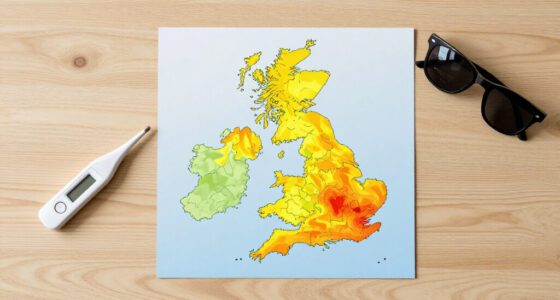
The United Nations has announced that global warming is expected to surpass the critical 1.5-degree Celsius limit, marking a significant escalation in climate change risks. This projection emphasizes the urgency for immediate action to curb emissions.
The United Nations has officially stated that global warming is projected to exceed the 1.5-degree Celsius threshold, a key limit set in the Paris Agreement. This warning highlights the accelerating pace of climate change driven by rising greenhouse gas emissions, underscoring the urgent need for global mitigation efforts. The UN’s assessment is based on current climate data and emission trajectories, and it signals a significant shift in the climate outlook for the coming decades.
The UN Climate Change Secretariat released a report indicating that, if current trends continue, the global temperature increase will surpass 1.5°C above pre-industrial levels within the next two decades. The report states that global emissions have remained high despite international commitments to reduce them, and that efforts so far have been insufficient to keep warming below the critical threshold. The assessment draws on the latest climate models and observational data, reflecting the cumulative impact of decades of fossil fuel use, deforestation, and other human activities.
While the report emphasizes that surpassing 1.5°C is likely, it also notes that the exact timing depends on future emissions pathways and policy actions. Some regions, particularly vulnerable nations and low-lying island states, are already experiencing the adverse effects of climate change, including more frequent heatwaves, intense storms, and rising sea levels. The UN urges immediate and sustained efforts to drastically cut greenhouse gas emissions to prevent the worst impacts of climate change.
Implications of Exceeding the 1.5°C Climate Threshold
This development is significant because crossing the 1.5°C limit is associated with more severe climate impacts, including increased frequency of extreme weather events, greater risks to ecosystems and biodiversity, and heightened threats to human health and food security. The UN’s warning underscores that current global efforts are insufficient, and that urgent action is needed to prevent irreversible damage. For policymakers, this signals a need to accelerate climate mitigation strategies, enhance international cooperation, and implement more aggressive emission reduction targets.
As an affiliate, we earn on qualifying purchases.
Recent Climate Trends and Policy Challenges
Over the past decade, global temperatures have steadily risen, with the past few years among the hottest on record. Despite international commitments such as the Paris Agreement, global emissions have continued to grow, driven largely by fossil fuel consumption, industrial activity, and deforestation. Climate scientists have long warned that limiting warming to 1.5°C requires rapid, large-scale reductions in greenhouse gases, but progress has been uneven and often insufficient.
Recent climate reports have shown that many countries are not on track to meet their pledged targets, and emissions reductions are falling short of what’s needed. The UN’s latest assessment reflects these ongoing challenges and emphasizes that the window to prevent crossing the 1.5°C threshold is closing rapidly.
As an affiliate, we earn on qualifying purchases.
Timing and Impact of Crossing the Threshold
While the UN states that exceeding 1.5°C is likely within the next two decades, the exact timing remains uncertain due to variables such as future policy actions, technological developments, and natural climate variability. Additionally, regional impacts and the severity of consequences are still being studied, and some experts caution that the timeline could shift based on global responses.
As an affiliate, we earn on qualifying purchases.
Global Policy and Emission Reduction Efforts Moving Forward
In response to this warning, international climate negotiations are expected to intensify, with countries urged to strengthen their commitments under the Paris Agreement. Policymakers are likely to explore more aggressive targets for reducing greenhouse gases, investing in renewable energy, and implementing adaptation measures. The UN also emphasizes the importance of immediate action, including phasing out fossil fuels and increasing climate finance for vulnerable nations, to slow or reverse current emission trends.
reusable eco-friendly water bottles
As an affiliate, we earn on qualifying purchases.
As an affiliate, we earn on qualifying purchases.
Key Questions
What does exceeding 1.5°C mean for the planet?
Exceeding 1.5°C is associated with more frequent and severe heatwaves, storms, rising sea levels, and greater risks to ecosystems and human health. It increases the likelihood of irreversible climate impacts.
How certain is the UN about crossing the 1.5°C threshold?
The UN states that, based on current data and emission trends, crossing the threshold within the next two decades is highly probable, but exact timing depends on future actions.
What actions can prevent surpassing 1.5°C?
Rapid, large-scale reductions in greenhouse gas emissions, transitioning to renewable energy, and implementing strong international climate policies are critical to preventing crossing the limit.
What are the consequences if the limit is exceeded?
Beyond increased climate disasters, exceeding 1.5°C could lead to irreversible damage to ecosystems, loss of biodiversity, and heightened risks to vulnerable populations worldwide.
Is there still hope to stay below 1.5°C?
Yes, but only if global emissions are reduced drastically and immediately. The window for effective action is closing, making urgent policy and behavioral shifts essential.
Source: hn
Grilling season Picks
grills
As an affiliate, we earn on qualifying purchases.