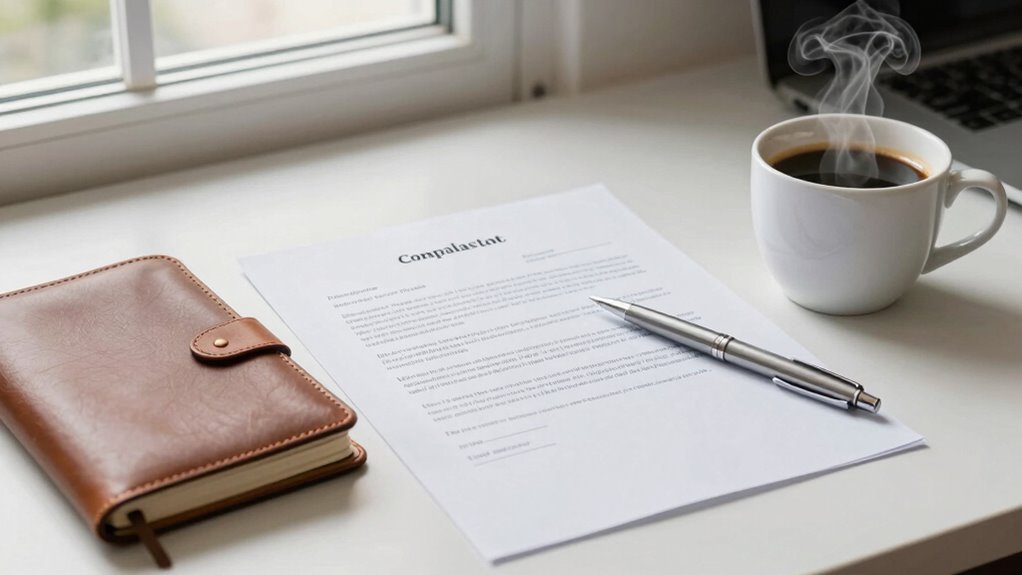

To craft complaint letters that truly work, focus on a clear purpose and include specific details like dates, locations, and product info. Organize your letter logically by describing the problem, its impact, and your desired resolution, all while maintaining a respectful tone. Avoid emotional language and concentrate on factual, concise statements. Proper structure and professionalism increase your chances of a swift response. If you’re ready to improve your approach further, continue exploring these effective strategies.

Prime made for students and young adults
- Fast, free delivery for dorm and study essentials
- Prime Video and Amazon Music included
- Member-only deals
Key Takeaways
- Prioritize a clear, focused purpose and include specific details like dates and product info.
- Organize content logically: describe the issue, its impact, and the desired resolution.
- Maintain a professional, respectful tone, avoiding emotional language and personal attacks.
- Focus on presenting factual information and evidence to support your claims.
- End with a courteous call to action, clearly stating what you seek and providing contact details.

When you need to address a problem with a product or service, a well-written complaint letter can make all the difference. It’s your opportunity to communicate clearly and assertively, ensuring your concerns are understood and acted upon. The key to crafting a complaint letter that gets results lies in focusing on structure over emotion. Instead of venting frustrations, you should aim for effective communication that highlights the issue logically and politely. This approach not only increases the chances of a positive resolution but also demonstrates professionalism, which can influence how customer service representatives handle your case.
Start by clearly stating the purpose of your letter in the opening paragraph. Be specific about what went wrong, including relevant details like dates, locations, and product or service descriptions. This sets a factual tone from the outset, making it easier for the recipient to understand the core issue without sifting through emotional complaints. When you maintain a professional tone, it shows you value constructive dialogue over emotional outbursts. Remember, effective communication is about clarity, so avoid vague statements or assumptions that might cloud the issue.
Begin with a clear, factual statement of your issue, including specific details like dates and descriptions.
Organize your letter logically. Follow a straightforward structure: describe the problem, explain its impact, and then state what resolution you seek. Keep your sentences concise and focused. For example, instead of saying, “I was extremely disappointed with the terrible customer service,” you might write, “I experienced unsatisfactory customer service on [date], which caused inconvenience.” This approach emphasizes facts and avoids the pitfalls of emotional language that can detract from your credibility. Clear, well-organized content helps the reader process your complaint efficiently, increasing the likelihood of a favorable response.
It’s equally important to be polite and respectful throughout your letter. Even if you’re upset, avoid aggressive language or personal attacks. Instead, express your concerns calmly, providing evidence when possible, like receipts or photos. This not only reinforces your credibility but also encourages the customer service team to approach your complaint with seriousness and professionalism. Remember, your goal is to resolve the matter, and a respectful tone can facilitate cooperation. Being aware of toilet maintenance and repair issues can also help you present more specific concerns if relevant to the problem.
Finally, close your letter with a courteous call to action. Clearly state what you expect as a resolution—be it a refund, replacement, or apology—and include your contact information. A polite, structured complaint letter that emphasizes effective communication over emotion stands a much better chance of prompting swift and positive action. When you focus on the facts and present your case professionally, you’re more likely to turn a frustrating situation into a satisfactory resolution.
complaint letter template for customer service
As an affiliate, we earn on qualifying purchases.
As an affiliate, we earn on qualifying purchases.
Frequently Asked Questions
How Can I Ensure My Complaint Letter Reaches the Right Person?
To guarantee your complaint letter reaches the right person, follow escalation procedures and research the company’s contact methods. Start by identifying the appropriate department or individual, often through the company’s website or customer service. Use direct contact methods like email or phone, and specify your concern clearly. If needed, escalate your complaint by reaching out to supervisors or higher management, ensuring your message gets the attention it deserves.
What Tone Should I Use to Maintain Professionalism?
You should use a formal language and a respectful tone to maintain professionalism. Keep your language clear, concise, and polite, avoiding emotional or confrontational words. Address the recipient properly and use courteous phrases like “I appreciate your attention” or “I look forward to your response.” This approach demonstrates respect and helps guarantee your complaint is taken seriously, increasing the chances of a positive resolution.
How Long Should a Complaint Letter Ideally Be?
Like a well-tuned pocket watch, your complaint letter should be concise, ideally one page with clear formatting. Aim for about 200-300 words, using concise wording to stay focused. This length guarantees your message is thorough yet respectful of the reader’s time. Keep it brief but impactful, covering key points without unnecessary details, so your complaint is understood and addressed efficiently.
Should I Include Supporting Documents With My Letter?
Yes, you should include supporting evidence with your complaint letter. Attach relevant documents like receipts, photos, or emails to strengthen your case. Follow attachment guidelines by clearly referencing each document in your letter and keeping copies for your records. This helps substantiate your claims and makes your complaint more credible, increasing the chances of a positive resolution. Proper supporting evidence can considerably impact the effectiveness of your complaint.
How Soon Can I Expect a Response After Sending My Complaint?
Think of your complaint email as a seed planted in a garden; it usually takes about a week to see signs of growth. Typically, you can expect a response within 3-7 business days, but remember, good email etiquette includes a polite follow-up if you haven’t heard back. Giving them that window respects their process while keeping your issue top of mind, like a gentle nudge in the right direction.
professional complaint letter writing guide
As an affiliate, we earn on qualifying purchases.
As an affiliate, we earn on qualifying purchases.
Conclusion
Remember, your complaint is a seed waiting to grow. When you structure your letter thoughtfully, you’re planting hope for change. Your words become the sunlight that awakens awareness, and your clarity acts as water, nourishing understanding. With patience and persistence, your message can bloom into resolution. So, keep your letter focused and sincere—because even the smallest seed of your voice can blossom into the change you seek.
As an affiliate, we earn on qualifying purchases.
formal complaint letter stationery
As an affiliate, we earn on qualifying purchases.
As an affiliate, we earn on qualifying purchases.
Columbus Day / Indigenous Peoples' Day Picks
long weekend sales
As an affiliate, we earn on qualifying purchases.