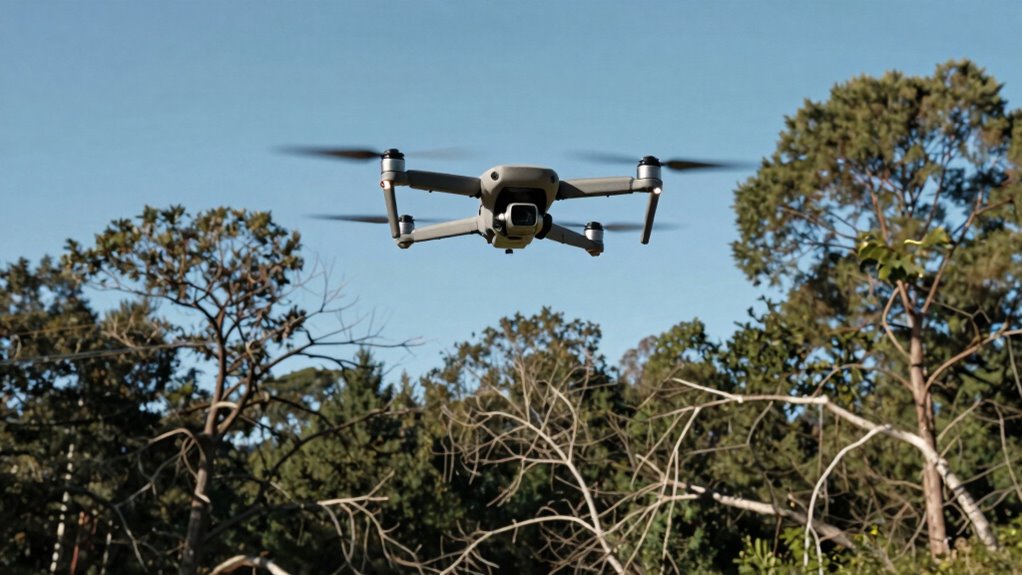

Drone sensors have limitations that can leave certain obstacles unseen, increasing collision risks. Blind spots occur due to sensor placement, environmental obstructions, and poor lighting, while range limits mean distant objects may go undetected until too late. Software sometimes struggles to interpret rapid changes or unusual shapes, and adverse weather like fog or rain can impair sensor accuracy. To stay safe, understanding these restrictions and how they impact your drone’s navigation is essential — there’s more to uncover below.
Listen free for 30 days with Audible
Thousands of audiobooks and originals — cancel anytime.
As an affiliate, we earn on qualifying purchases.
Key Takeaways
- Sensor blind spots caused by placement, obstructions, or environmental factors can prevent obstacle detection.
- Software limitations may lead to missed or delayed obstacle recognition, especially with rapid or unusual movements.
- Poor lighting, fog, rain, or dust reduce sensor effectiveness, creating incomplete or inaccurate obstacle data.
- Limited sensor range means obstacles beyond detection distance remain unseen until too close to avoid.
- Environmental conditions and sensor placement increase the risk of undetected hazards during drone navigation.
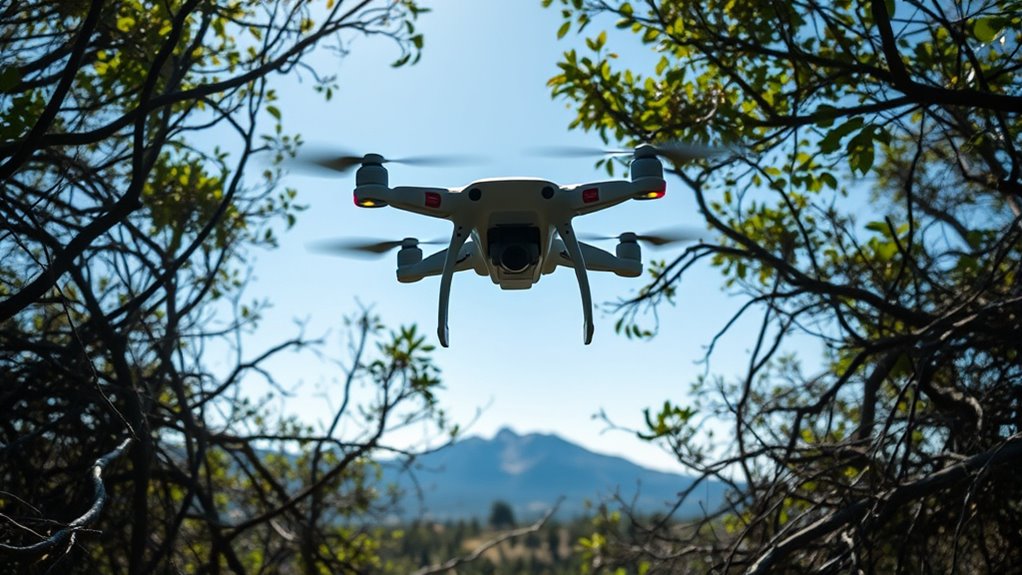
Obstacle avoidance systems are essential for ensuring safety and efficiency in autonomous vehicles and robotics, but their capabilities are not unlimited. One critical challenge you face is sensor blind spots, which are areas where sensors cannot detect obstacles. These blind spots can occur because of sensor placement, physical obstructions, or the nature of the environment. For example, a drone flying close to structures or maneuvering through tight spaces might find its sensors unable to see everything around it. This means that despite advanced technology, some obstacles might go unnoticed, increasing the risk of collisions.
Beyond blind spots, software limitations further restrict what drone sensors can achieve. Your obstacle avoidance system depends heavily on algorithms that interpret sensor data, but these algorithms aren’t perfect. They can struggle with rapid changes in the environment or unusual obstacle shapes. For instance, if a new object suddenly appears in your drone’s path, the software might not recognize it quickly enough or might misjudge its size and speed. This delay or misinterpretation is a direct result of software limitations, which can cause the drone to react too late or not at all, especially in complex or cluttered environments.
Lighting conditions and environmental factors also exacerbate these limitations. Sensors like cameras and lidar are highly sensitive to poor lighting, fog, rain, or dust, which can obscure obstacles or distort sensor readings. When visibility drops, your drone’s sensors might produce incomplete or inaccurate data, making it harder for the software to distinguish between safe space and potential hazards. As a result, even the most sophisticated systems can be caught off guard, unable to reliably detect obstacles in adverse conditions.
Furthermore, the range of sensors plays a significant role. Many sensors have limited detection distances, which means obstacles beyond a certain point remain unseen until they are dangerously close. You might think your drone can navigate smoothly at all times, but in reality, it might only see what’s immediately around it. This limited range can lead to situations where obstacles suddenly appear within the blind spots or outside the sensor’s reach, forcing the drone to make last-minute evasive maneuvers or, worse, collide. Additionally, understanding the limitations of sensor range is crucial for designing safer navigation systems.
drone obstacle avoidance sensors
As an affiliate, we earn on qualifying purchases.
As an affiliate, we earn on qualifying purchases.
Frequently Asked Questions
Can Obstacle Avoidance Systems Be Upgraded on Existing Drones?
Yes, you can upgrade obstacle avoidance systems on your existing drone, but sensor limitations pose challenges. You might find it difficult to enhance sensors like ultrasonic or infrared, which have limited range and resolution. Upgrading sensors often involves compatibility issues and high costs, making it a complex process. Before attempting upgrades, consider your drone’s design and verify that new sensors integrate properly to improve obstacle detection effectively.
How Do Weather Conditions Affect Drone Sensor Performance?
Think of your drone’s sensors as a brave knight facing a storm. Weather conditions like rain, fog, or strong winds cause sensor interference, making it harder for your drone to see and react. This tests its weather resilience, risking misjudging obstacles or losing control. To keep your drone safe, avoid flying in extreme weather, and consider sensors with better weather resistance, ensuring your aerial adventures stay smooth and secure.
Are There Legal Restrictions on Drone Obstacle Avoidance Capabilities?
You should know that legal restrictions can limit your drone’s obstacle avoidance features, especially in certain areas or for specific drone types. Privacy concerns often lead to regulations that restrict how close you can get to people or private property, affecting sensor use. Always check local laws before flying to avoid fines or penalties. These restrictions aim to safeguard privacy and ensure safe, responsible drone operation.
What Are the Latest Advancements in Drone Obstacle Sensing Technology?
Think of drone sensors as vigilant eyes, always evolving. Recent advancements include LiDAR and multispectral cameras, which improve obstacle detection in complex environments. These sensors reduce limitations and false positives, but they still can’t see through glass or detect tiny objects like wires. You benefit from smarter, more reliable obstacle sensing, yet remain aware that some sensor limitations persist, requiring you to maintain visual awareness and cautious flying.
How Do Drones Handle Obstacles Beyond Sensor Range?
You need to know that drones handle obstacles beyond sensor range by relying on supplementary systems like GPS, visual cameras, and advanced algorithms. These tools help mitigate sensor blind spots and reduce false obstacle detection. When sensors miss an obstacle, your drone’s AI processes data from multiple sources, adapting its flight path. This multi-layered approach improves obstacle avoidance, but always stay cautious, as some risks still persist beyond the sensors’ capabilities.
drone lidar sensors for obstacle detection
As an affiliate, we earn on qualifying purchases.
As an affiliate, we earn on qualifying purchases.
Conclusion
While drone sensors serve as vigilant vigilant guardians, they aren’t foolproof. You must understand their limits—blind spots and boundary breaches—that can cause costly collisions. By being aware of these obstacles and always exercising caution, you stay safer and smarter. Remember, sensors are simply tools; your eyes and expertise are essential. Stay savvy, stay safe, and never underestimate the unseen—because what sensors can’t see, you must always be prepared to perceive.
drone collision avoidance camera
As an affiliate, we earn on qualifying purchases.
As an affiliate, we earn on qualifying purchases.
As an affiliate, we earn on qualifying purchases.
Fall Picks
fall essentials
As an affiliate, we earn on qualifying purchases.