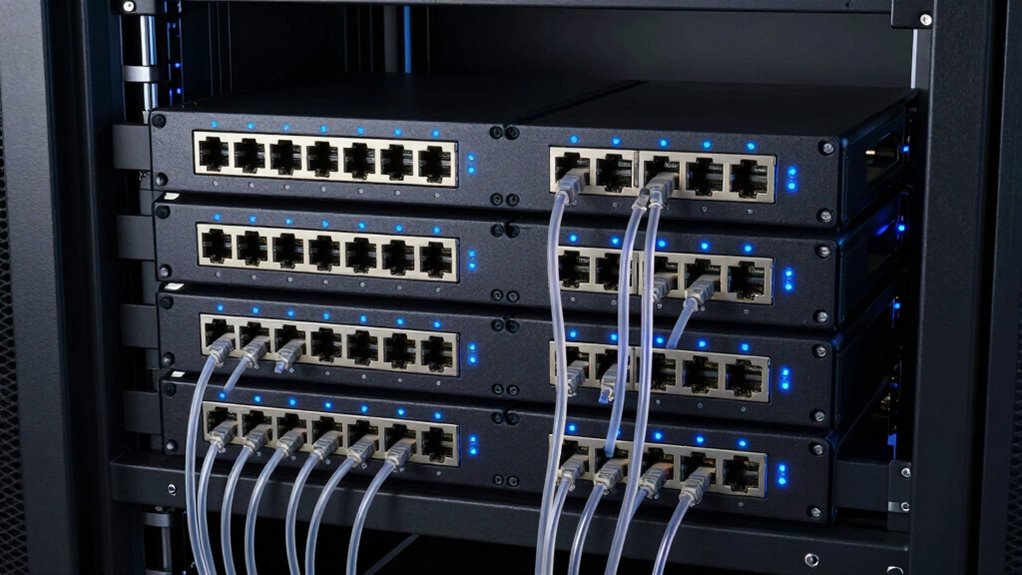
When searching for a fanless managed switch 25Gb, the goal is to combine high-speed connectivity with silent operation and reliable management features. The best overall pick in this category is the SODOLA 6 Port 2.5Gb Managed Switch, offering a balanced mix of ports and performance. For those on a budget, the Cudy 5 Port 2.5G Easy Smart Switch provides simplicity and affordability with reliable features. The main tradeoffs in this segment include balancing port density, management complexity, and build quality, especially since fanless options tend to have limited thermal capacity. Keep reading to see how these choices compare and which model suits your specific needs.

Prime made for students and young adults
- Fast, free delivery for dorm and study essentials
- Prime Video and Amazon Music included
- Member-only deals
Key Takeaways
- The most versatile options combine multiple 2.5G ports with 10G uplinks, supporting future-proof networks.
- Fanless design favors silent operation but can limit thermal performance, making build quality and heat dissipation critical.
- Managed features vary from simple web interfaces to advanced CLI, affecting ease of use for different user levels.
- Price differences often reflect port count, management complexity, and build quality — higher price doesn’t always mean better value.
- Compact, USB-C powered switches are ideal for small setups but may lack extensive port options or advanced management features.
| SODOLA 6 Port 2.5Gb Managed Switch with 10G SFP+ Ports |  | Best Overall for Versatile High-Speed Home and Small Business Networks | Ports: 4x 2.5G RJ-45, 2x 10G SFP+ | Management: Web-based configuration, VLANs, QoS, IGMP snooping | Housing Material: Aluminum alloy | VIEW ON AMAZON | See Our Full Breakdown |
| 6-Port 2.5Gb Managed Switch: 4 x 2.5G RJ45 + 2 x 10G SFP+ Metal Housing |  | Best Value for Small Office or Home Use with Flexible Fiber Support | Ports: 4 x 2.5G RJ45, 2 x 10G SFP+ | Power Consumption: 12W | Idle Power: 1.3W | VIEW ON AMAZON | See Our Full Breakdown |
| 8 Port 2.5G Managed Switch with 10G SFP+ Uplink – Fanless, Metal Case |  | Best for High-Performance Small Networks with Advanced Features | Ports: 8 x 2.5Gbps Ethernet, 1 x 10G SFP+ | Bandwidth: 60Gbps | Supported Features: VLAN, QoS, LACP | VIEW ON AMAZON | See Our Full Breakdown |
| MokerLink 8 Port 2.5 Gigabit Managed Switch with 10G SFP+ Slot |  | Best Compact for High-Speed Data in Home or Office | Ports: 8 x 2.5GbE ports | SFP+ Slot: 1 x 10G | Backplane Bandwidth: 60Gbps | VIEW ON AMAZON | See Our Full Breakdown |
| Cudy 5 Port 2.5G Easy Smart Switch, HS105 |  | Best Budget-Friendly Entry-Level Managed Switch | Number of Ports: 5 | Data Transfer Rate: 2500 Mbps | Interface: RJ45 | VIEW ON AMAZON | See Our Full Breakdown |
| Cudy 5 Port 2.5G Easy Smart Switch, USB-C Powered, Compact, HS105U |  | Best for Space-Constrained and Mobile Setups | Ports: 5x 2.5GbE RJ45 | Switching Capacity: 25Gbps | Forwarding Rate: 18.6Mpps | VIEW ON AMAZON | See Our Full Breakdown |
| SODOLA 8-Port 2.5Gb Web Managed Switch, 8 x 2.5G Base-T & 1 x 10G SFP+ |  | Best for High-Performance, Versatile Networking | Number of Ports: 8 x 2.5G Ethernet, 1 x 10G SFP+ | Connectivity: 2.5Gbps Base-T, 10Gbps SFP+ | Management: Web-based interface, supports LACP, VLANs, QoS, IGMP snooping | VIEW ON AMAZON | See Our Full Breakdown |
| fanless managed switch 25gbe | Ports |
|---|---|
| SODOLA 6 Port 2.5Gb Managed Sw | 4x 2.5G RJ-45, 2x 10G SFP+ |
| 6-Port 2.5Gb Managed Switch: 4 | 4 x 2.5G RJ45, 2 x 10G SFP+ |
| 8 Port 2.5G Managed Switch wit | 8 x 2.5Gbps Ethernet, 1 x 10G SFP+ |
| MokerLink 8 Port 2.5 Gigabit M | 8 x 2.5GbE ports |
| Cudy 5 Port 2.5G Easy Smart Sw | — |
| Cudy 5 Port 2.5G Easy Smart Sw | 5x 2.5GbE RJ45 |
| SODOLA 8-Port 2.5Gb Web Manage | — |
More Details on Our Top Picks
SODOLA 6 Port 2.5Gb Managed Switch with 10G SFP+ Ports
This switch excels by combining multiple high-speed connections in a compact, fanless design, making it an excellent choice for users who need both 2.5GbE and 10G SFP+ ports. Compared to the Cudy HS105, it offers more ports and higher flexibility, though it sacrifices some expandability with only 6 ports. The fanless aluminum housing guarantees silent operation, and web management simplifies setup for non-technical users. However, its limited port count and lack of advanced security features mean it’s less suitable for larger, security-sensitive networks. Overall, this model suits those seeking a reliable, quiet, and versatile switch without complex configuration.
Pros:- High-speed 2.5GbE and 10G SFP+ ports for flexible connectivity
- Fanless aluminum housing ensures silent operation and durability
- Easy web-based management suitable for non-experts
Cons:- Limited to 6 ports, restricting network scalability
- No advanced security features beyond basic VLANs
Best for: Small office or prosumer home users needing a compact, high-speed, multi-protocol switch with quiet operation
Not ideal for: Larger networks or environments demanding advanced security features and extensive port expansion
- Ports:4x 2.5G RJ-45, 2x 10G SFP+
- Management:Web-based configuration, VLANs, QoS, IGMP snooping
- Housing Material:Aluminum alloy
- Cooling:Fanless, heat reduction 40%
- Placement:Magnetic pads, rubber feet
- Compatibility:Backward compatible with 1G/100M devices
Our verdict“This switch is ideal for users seeking a compact, silent, and versatile high-speed network solution for small setups.”
6-Port 2.5Gb Managed Switch: 4 x 2.5G RJ45 + 2 x 10G SFP+ Metal Housing
This compact, metal-encased switch strikes a balance between affordability and high-speed performance, supporting both copper and fiber modules. Unlike the MokerLink 8 Port 2.5G, it offers fewer ports but remains a solid choice for small setups. Its fanless design guarantees silent operation, and web management provides essential features like VLAN and QoS. However, the limited port count and absence of supporting GPON/XGSPON modules restrict its use in larger or more complex networks. It’s a well-rounded option for users who need reliable 2.5G connectivity without extra frills.
Pros:- Supports both copper and fiber modules for flexible deployment
- Fanless design for silent operation
- Compact, metal construction suitable for various environments
Cons:- Limited to 6 ports, restricting scalability
- Requires initial IPv4 configuration, which may be challenging for some users
Best for: Small business or advanced home network users prioritizing fiber options and straightforward management
Not ideal for: Growing networks requiring more than six ports or advanced security features
- Ports:4 x 2.5G RJ45, 2 x 10G SFP+
- Power Consumption:12W
- Idle Power:1.3W
- Temperature Range:0~40°C
- Housing:Metal, fanless
- Mounting:Desk, wall, or other surfaces
Our verdict“This switch provides a reliable, space-efficient solution for small networks needing fiber flexibility at a good price point.”
8 Port 2.5G Managed Switch with 10G SFP+ Uplink – Fanless, Metal Case
This 8-port switch offers excellent throughput and management capabilities, especially with its 10G uplink supporting demanding environments like NAS, gaming, or WiFi 6 access points. Compared to the MokerLink 8 Port 2.5G, it adds VLAN, QoS, and LACP support to handle more complex traffic scenarios. Its fanless metal design ensures silent operation, but its reliance on web management might intimidate users unfamiliar with networking configurations. The absence of a power supply detail and its potentially complex feature set make it less ideal for beginners. It’s best for those who need high throughput and detailed control in a compact form.
Pros:- Supports high-speed 2.5GbE and 10G uplink for demanding tasks
- Fanless, durable metal case for silent operation
- Advanced management features including VLAN, QoS, and LACP
Cons:- Requires web management for full configuration, which can be complex
- No power supply details may cause uncertainty
Best for: Tech-savvy small office or enthusiast users requiring high-speed, manageable, and durable switches
Not ideal for: Users seeking plug-and-play simplicity or with limited technical knowledge
- Ports:8 x 2.5Gbps Ethernet, 1 x 10G SFP+
- Bandwidth:60Gbps
- Supported Features:VLAN, QoS, LACP
- Auto-Negotiation:Yes
- Design:Fanless, metal casing
- Use Cases:Home entertainment, office, NAS
Our verdict“This switch suits users demanding high throughput and detailed network control in a silent, durable package.”
MokerLink 8 Port 2.5 Gigabit Managed Switch with 10G SFP+ Slot
The MokerLink 8-port switch provides a compact, fanless solution ideal for those who need robust 2.5G performance without taking up much space. Its 10G SFP+ slot offers future-proofing, but unlike the SODOLA 6 Port, it has a slightly larger footprint and fewer ports. The device’s web GUI supports advanced features, but the absence of an included SFP+ module and a higher port count limits scalability. It’s a fitting choice for users who want a small, quiet switch with high-speed fiber options, though it may require some technical know-how for setup.
Pros:- Supports high-speed 2.5GbE and 10G SFP+ connections
- Fanless, compact design for quiet operation
- Supports advanced features via web GUI
Cons:- SFP+ module not included, adding extra cost
- Limited to 8 ports, restricting future expansion
Best for: Users seeking a small, high-performance switch with fiber uplinks for home or small office
Not ideal for: Larger networks or those needing extensive port counts or PoE support
- Ports:8 x 2.5GbE ports
- SFP+ Slot:1 x 10G
- Backplane Bandwidth:60Gbps
- Standard:IEEE802.3bz (2.5G)
- Design:Fanless, metal
- Size:Mini, desktop/wall-mountable
Our verdict“This switch offers a space-efficient, silent high-speed solution suitable for users with fiber uplink needs in small environments.”
Cudy 5 Port 2.5G Easy Smart Switch, HS105
The Cudy HS105 provides essential high-speed Ethernet connections in a simple, fanless metal case, making it ideal for basic network upgrades. Unlike larger switches such as the SODOLA 6 Port, it offers fewer ports, which limits expansion but keeps setup straightforward. Its plug-and-play nature means no software is necessary, appealing to less technical users. However, the limited port count and absence of advanced features like PoE or VLAN segmentation restrict its use in more demanding setups. This switch makes sense for users wanting a reliable, silent upgrade without complexity or high cost.
Pros:- Supports high-speed 2.5GbE connections on all ports
- Fanless design for silent operation
- Simple setup with no software configuration required
Cons:- Limited to 5 ports, restricting network growth
- No advanced features like PoE or Layer 3 management
Best for: Home users or small offices needing a simple, quiet, high-speed switch without advanced features
Not ideal for: Larger networks or environments requiring extensive port options or PoE functionality
- Number of Ports:5
- Data Transfer Rate:2500 Mbps
- Interface:RJ45
- Case Material:Metal
- Voltage:12V DC
- Switch Type:Managed
Our verdict“This switch is perfect for users seeking a straightforward, silent, high-speed upgrade for small-scale networks.”
Cudy 5 Port 2.5G Easy Smart Switch, USB-C Powered, Compact, HS105U
The Cudy HS105U stands out for its ultra-compact size and USB-C power support, making it perfect for travelers, small home offices, or environments where space is at a premium. Compared with the SODOLA 8-Port 2.5Gb Web Managed Switch, it offers fewer ports but excels in portability and ease of use in tight spaces. Its fanless design ensures silent operation, and web management features like VLAN and QoS add flexibility for basic network control. However, being limited to just five ports and lacking PoE support means it’s unsuitable for larger or power-dependent setups. This pick is ideal for users who prioritize portability and simple management over extensive port count or advanced features.
Pros:- Extremely compact and lightweight design for portability
- Supports advanced web management features like VLAN, QoS, and LAG
- USB-C powered, compatible with many power sources and laptops
- Fanless operation and low power consumption
Cons:- Limited to only 5 ports, not suitable for larger networks
- Requires USB-C power source, which may need adapters
- No PoE support for powering devices
Best for: Travelers, remote workers, or small home offices needing reliable 2.5G connectivity in tight spaces.
Not ideal for: Small businesses or advanced users requiring larger port counts or PoE capabilities.
- Ports:5x 2.5GbE RJ45
- Switching Capacity:25Gbps
- Forwarding Rate:18.6Mpps
- Power Input:USB-C (4.8-18V DC)
- Dimensions:3.94 x 3.62 x 1.28 inches
- Weight:1.41 ounces
- Enclosure:Plastic, compact, fanless
Our verdict“This switch is best for users needing a portable, space-saving 2.5G solution with basic management features.”
SODOLA 8-Port 2.5Gb Web Managed Switch, 8 x 2.5G Base-T & 1 x 10G SFP+
The SODOLA 8-Port 2.5Gb Managed Switch offers a compelling balance of high port density and flexible connectivity, making it suitable for demanding environments like media streaming, NAS access, or small office networks. Its 8 Ethernet ports support 2.5Gb speeds, comparable to the SODOLA 6 Port 2.5Gb Switch, but with the added advantage of a 10G SFP+ uplink for connecting to higher-speed backbone networks. Its fanless aluminum housing guarantees silent operation, and web management features such as VLAN, QoS, and IGMP snooping facilitate complex network configurations. Compared to the Cudy HS105U, this switch supports significantly more devices and higher bandwidth but requires more network expertise to optimize. No PoE support limits its use to data-only setups, and some users may find its configuration interface slightly intimidating.
Pros:- Eight 2.5Gb Ethernet ports ideal for bandwidth-heavy applications
- Includes a 10G SFP+ uplink for high-capacity backbone connections
- Fanless aluminum housing ensures silent operation
- Easy web management for VLANs, QoS, and LACP
Cons:- Limited to Ethernet devices, no PoE support
- Requires some networking knowledge to fully utilize advanced features
- May need device upgrades for full 2.5G compatibility on all endpoints
Best for: Tech-savvy users or small businesses seeking a high-performance switch with flexible uplink options.
Not ideal for: Home users or those with simple network needs who don’t require multiple high-speed ports or professional management.
- Number of Ports:8 x 2.5G Ethernet, 1 x 10G SFP+
- Connectivity:2.5Gbps Base-T, 10Gbps SFP+
- Management:Web-based interface, supports LACP, VLANs, QoS, IGMP snooping
- Cooling:Aluminum alloy housing
- Power:Energy-efficient, auto-negotiation, backward compatible with 1G/100M
- Dimensions:Size varies depending on model, compact enough for desktop placement
Our verdict“This switch is best suited for users who need high port density and flexible uplink options for demanding network environments.”

How We Picked
These products were evaluated based on several criteria: performance at 25Gbps, fanless thermal design, build quality, management features, and overall value. We prioritized switches that balance high-speed capabilities with quiet, fanless operation suitable for office or home environments. Ease of setup and durability were also considered, along with the breadth of management options. The ranking reflects how well each model meets these needs while offering a clear tradeoff between cost and features, ensuring each option appeals to different types of buyers from small office users to IT professionals.Factors to Consider When Choosing Fanless Managed Switch 25gbe
Choosing the right fanless managed switch 25Gb involves understanding key factors that impact performance, usability, and longevity. Beyond basic port count, buyers should consider management complexity, thermal management, and build quality. Additional features such as uplink options and power options can influence future-proofing and integration into existing networks. Carefully weighing these factors helps avoid common pitfalls like underpowered thermal design or overly complex management interfaces that can hinder daily use.Thermal Design and Fanless Operation
Fanless switches rely entirely on passive cooling, making the build quality and heat dissipation design crucial. Poor thermal management can lead to overheating, reduced performance, or even hardware failure over time. When selecting a switch, check for sturdy metal cases and effective heat sinks. Remember, compact designs might look appealing but can limit airflow, so evaluate whether the device’s thermal design matches your environment’s cooling capabilities.
Port Configuration and Uplink Options
Assess your network’s current and future needs by examining port options. Switches with multiple 2.5G ports plus 10G SFP+ uplinks offer flexibility for expanding data throughput. Be cautious of models with limited uplinks, which could bottleneck your network as demands grow. While higher port counts provide more connections, they often come with increased cost and complexity. Balance your port requirements with your budget and planned expansion.
Management Features and User Interface
Managed switches range from simple web interfaces to more advanced CLI options. A straightforward interface benefits small teams or users new to network management, while advanced features suit IT pros who need granular control. Consider your comfort level with network management and the complexity of features offered. Overly complex interfaces can hinder setup and troubleshooting, so choose a switch with an intuitive UI that matches your technical skills.
Build Quality and Longevity
Since fanless switches operate without active cooling, durability becomes even more important. Metal cases generally provide better heat dissipation and robustness than plastic ones. Check for solid construction, reliable power supplies, and positive reviews on longevity. Investing in a well-built switch can save money long-term, especially in environments where constant operation is expected.
Price and Overall Value
Price often correlates with port density, management features, and build quality, but not always. It’s wise to compare what each model offers relative to its cost. For instance, a slightly higher-priced switch with better thermal design and management capabilities might deliver more value over time. Avoid sacrificing essential features for a lower price if it compromises performance or reliability—sometimes paying a bit more ensures better ROI and fewer headaches.
Frequently Asked Questions
Can I add a fanless 25Gb switch to an existing network?
Yes, most fanless 25Gb switches are designed to integrate smoothly into existing networks, especially if they support standard management protocols and uplink options. Ensure your current infrastructure supports the switch’s port types and speeds, and verify compatibility with your network hardware. It’s also important to consider the switch’s management interface for seamless configuration alongside your current setup.
What is the main limitation of fanless switches compared to those with fans?
Fanless switches typically have lower thermal capacity, which can limit sustained performance during heavy data loads. They rely entirely on passive cooling, making heat dissipation a critical factor. While they operate silently and are suitable for quiet environments, their performance can degrade if thermal management isn’t adequate, especially under continuous high throughput conditions.
Are fanless switches suitable for enterprise environments?
Fanless switches can be suitable for small to medium enterprise deployments where noise and reliability are priorities, and network loads are predictable. However, in high-demand data centers or environments with extensive traffic, switches with active cooling might be necessary to sustain performance and prevent overheating. Carefully assess your network’s size and traffic patterns before choosing a fanless model for enterprise use.
How important are management features in a fanless switch?
Management features are vital for configuring, monitoring, and troubleshooting your network effectively. Even in smaller setups, a managed switch provides control over traffic prioritization, VLANs, and security settings. For larger or more complex networks, advanced management capabilities become essential to maintain performance and security. Choose a switch whose management interface matches your expertise and operational needs.
Should I prioritize port count over build quality?
While having enough ports is important, neglecting build quality can lead to long-term issues such as overheating or hardware failure. A well-constructed switch with proper thermal design ensures longevity and consistent performance. Consider your current port needs but also anticipate future growth, and select a model that balances both port density and robustness to avoid costly replacements or downtime.
Conclusion
For buyers seeking the absolute best overall performance and feature set, the SODOLA 6 Port 2.5Gb Managed Switch makes a compelling choice thanks to its versatile port configuration and durable build. Those on a tighter budget or new to managed networking will find the Cudy 5 Port 2.5G Easy Smart Switch offers straightforward setup and reliable performance at a lower price point. If premium quality and advanced management are priorities, the 8 Port 2.5G Managed Switch with 10G SFP+ from one of the higher-end brands provides excellent value, especially for professional environments. Your selection should match your current network size, future expansion plans, and comfort with management complexity—these recommendations aim to guide you to the best fit for your specific needs.
Evergreen bestsellers Picks

Dyson V8 Cyclone Cordless Vacuum

Jura E6 Automatic Espresso Machine, Piano Black (15622)

Ninja CREAMi 7-in-1 Ice Cream Maker, NC301
As an affiliate, we earn on qualifying purchases.