

AI can analyze vast data sets, recognize patterns, and perform tasks like image recognition, language translation, and diagnostics quickly and efficiently. However, it only mimics understanding through pattern-matching, not genuine comprehension or reasoning. It lacks emotions, consciousness, and true insight. While AI may seem insightful, it’s often just simulating understanding. To see how you can distinguish real skills from pretend, keep exploring these differences in detail.
Open a free Amazon Business account
Business pricing, bulk buying and tax-exempt orders.
As an affiliate, we earn on qualifying purchases.
Key Takeaways
- AI can analyze large datasets and identify patterns, but it does not truly understand the meaning behind the data.
- AI performs tasks like language translation and image recognition by pattern matching, not genuine comprehension.
- AI can mimic reasoning and emotional responses but lacks consciousness, genuine understanding, and moral judgment.
- AI’s decisions are based on algorithms and correlations, not actual reasoning or awareness of context.
- Transparency and explainability are essential to distinguish AI’s true capabilities from superficial illusions.

Encyclopedia of Science
- Condition: Used Book in Good Condition
As an affiliate, we earn on qualifying purchases.
What Can AI Actually Do?
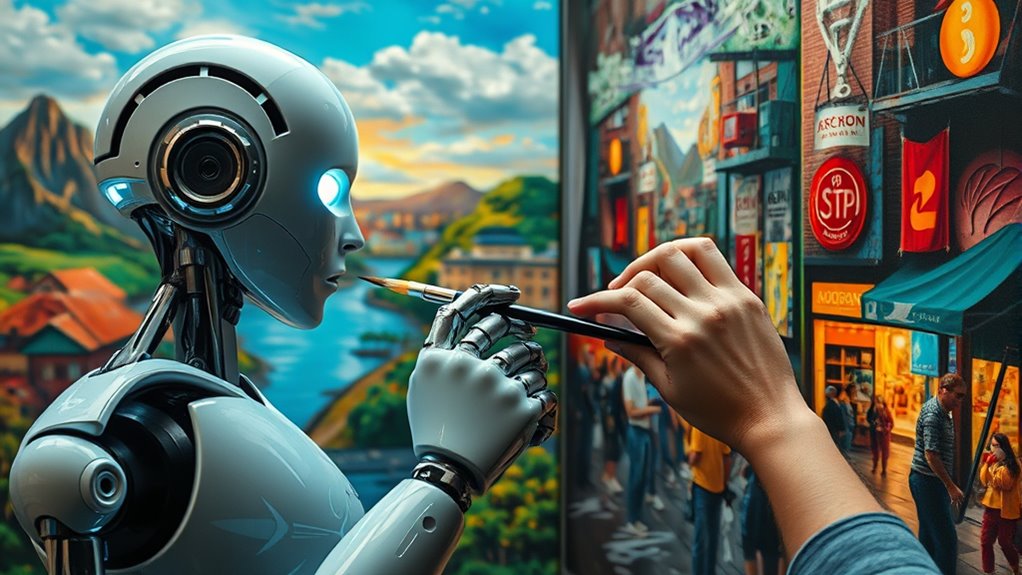
What can AI actually do? At its core, AI leverages machine learning and neural networks to analyze data and identify patterns. You might have seen AI systems excel at recognizing images, translating languages, or recommending products. These capabilities come from training algorithms on vast datasets, allowing AI to improve over time. Neural networks mimic the structure of the human brain, helping AI models understand complex relationships within data. Unlike mere rule-based systems, AI learns from experience, adapting its responses to new information. While AI performs remarkable tasks efficiently, it doesn’t possess genuine understanding or consciousness. Its abilities are rooted in data processing and pattern recognition, making it powerful for specific applications but not truly intelligent in a human sense. Additionally, advances in AI-powered virtual reality are increasing engagement in e-learning environments. Recognizing the importance of explainability helps users understand how AI reaches its conclusions, fostering greater trust and transparency in AI systems. Understanding the limitations of AI is crucial to appreciating its role in both current and future technological landscapes. Moreover, ongoing research aims to improve contextual understanding, enabling AI to better interpret complex scenarios beyond simple pattern matching. Recent developments in explainability and transparency are also helping demystify AI decision-making processes for users.
The Way Things Work: Newly Revised Edition: The Ultimate Guide to How Things Work
As an affiliate, we earn on qualifying purchases.
How Does AI Mimic Human Reasoning and Behavior?
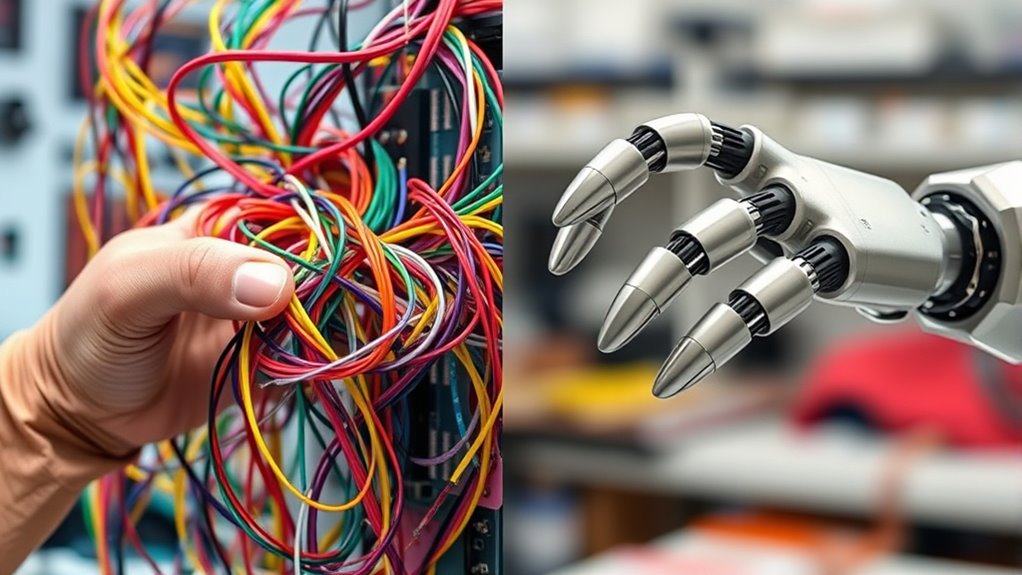
AI mimics human reasoning and behavior by simulating the processes our brains use to interpret and respond to information. It analyzes data patterns, learns from previous interactions, and applies algorithms to make decisions. To appear more human-like, AI systems incorporate aspects like emotional intelligence, enabling them to recognize and respond to emotional cues. They also attempt to replicate ethical reasoning, weighing moral considerations when making choices. You might notice AI demonstrating this through empathetic responses or adhering to ethical guidelines. Key elements include:
AI simulates human reasoning, emotional intelligence, and ethical decision-making to appear more human-like.
- Recognizing emotions through tone and context
- Responding appropriately based on emotional cues
- Applying ethical principles to decision-making
- Adjusting behavior to social norms
- Continuous learning allows AI to refine responses and better adapt to complex social interactions.
While AI can imitate these traits convincingly, it doesn’t truly understand feelings or morality but models them based on data. Additionally, as AI systems become more sophisticated, they increasingly utilize machine learning techniques to refine their responses and adapt to complex social interactions. A crucial aspect is the incorporation of behavioral modeling, which helps AI generate more human-like responses in diverse situations.

Knowledge Encyclopedia Science!, 2nd Edition
As an affiliate, we earn on qualifying purchases.
Are AI Systems Truly Understanding or Just Pattern-Matching?
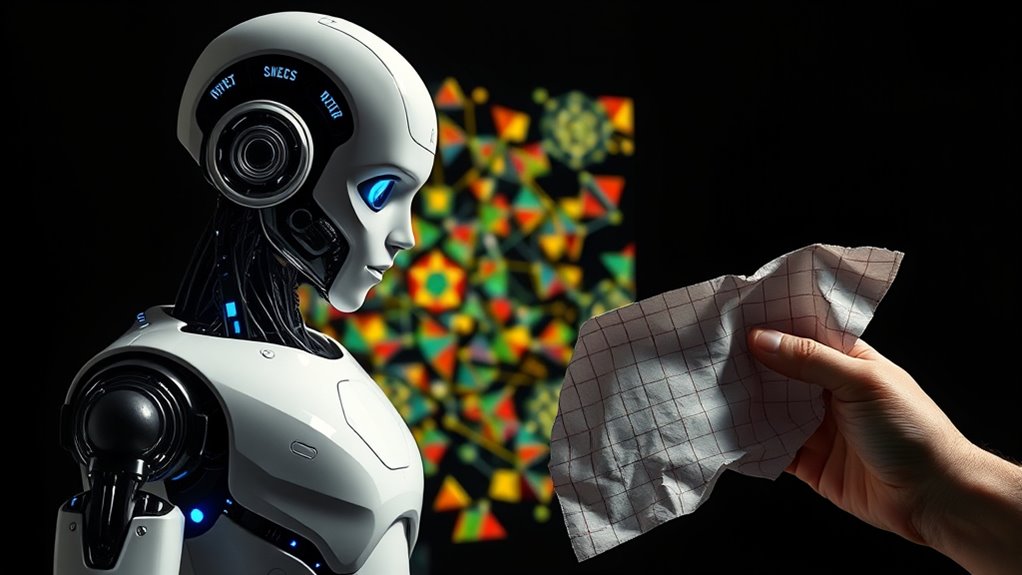
Many experts argue that AI systems don’t truly understand the information they process but instead excel at pattern-matching based on vast amounts of data. They can recognize semantic understanding within specific contexts, but this isn’t the same as genuine comprehension. AI can identify patterns in language, images, and behaviors, giving the illusion of understanding. However, emotional intelligence remains limited; AI struggles to grasp feelings or intentions behind human expressions. It may simulate empathy or sentiment, but it doesn’t experience emotions or truly understand their significance. This distinction is vital: while AI can mimic certain aspects of human cognition, it doesn’t possess the conscious awareness or semantic depth that true understanding requires. Instead, it relies on algorithms that find correlations, not meanings.

Science Book, The: Everything You Need to Know About the World and How It Works
As an affiliate, we earn on qualifying purchases.
How Can You Tell if AI Skills Are Real or Just Pretending?
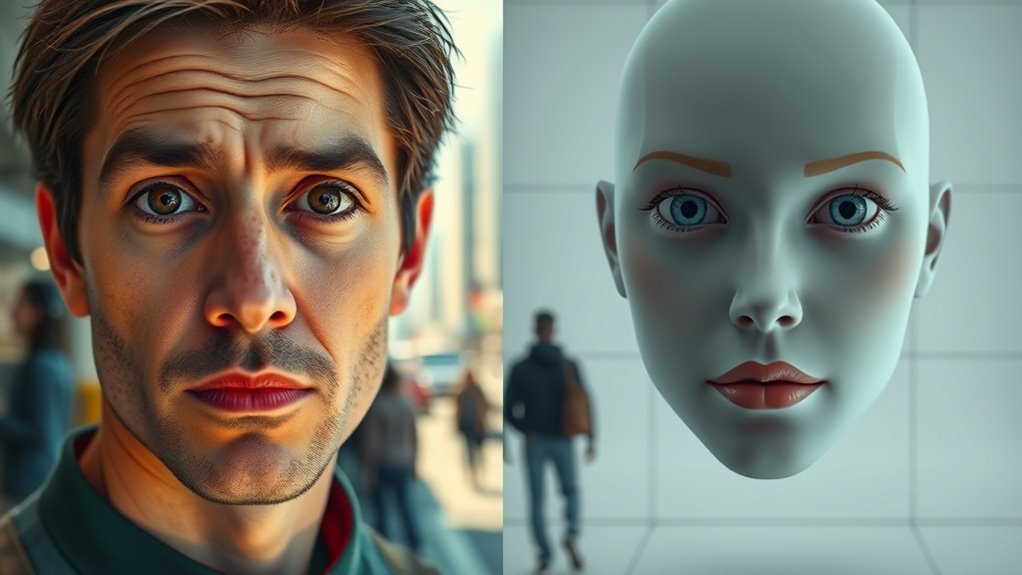
Determining whether AI skills are genuinely intelligent or merely sophisticated mimicking can be challenging. To assess authenticity, consider how the AI handles complex, unpredictable tasks rather than scripted responses. Look for signs of AI ethics in its decision-making processes, ensuring it aligns with moral standards. Transparency in the algorithms used offers insight into whether the AI’s reasoning is genuine or superficial.
You should also evaluate:
- Algorithm transparency: Can you see how decisions are made?
- Context awareness: Does the AI adapt beyond predefined patterns?
- Consistency: Are responses reliable across varied scenarios?
- Explainability: Can the AI justify its actions clearly?
These aspects help you differentiate between true AI skills and those that are merely pretending.
Examples Where AI Excels: Diagnosis, Translation, and More

Have you noticed how AI-driven tools now outperform humans in critical areas like medical diagnosis and language translation? In medical diagnostics, AI analyzes vast datasets rapidly, detecting patterns that help identify diseases early and accurately. It reduces errors and supports doctors in making informed decisions. Similarly, in language translation, AI models like neural networks deliver quick, precise translations across multiple languages, breaking down communication barriers worldwide. These applications showcase AI’s strength in processing complex information and providing reliable results. Unlike tasks that require human intuition or emotional understanding, AI excels at data-driven functions. You can rely on it to improve healthcare outcomes, facilitate global communication, and streamline multilingual interactions, demonstrating concrete examples where AI truly shines. Additionally, AI can analyze individual data profiles to tailor health recommendations and optimize treatment plans, further exemplifying its capacity for personalized data analysis. This ability to interpret large amounts of information makes AI a vital tool in advancing medical research and personalized medicine.
Common AI Illusions That Can Mislead Users

You might think AI can do more than it actually can, leading you to overestimate its true abilities. It’s easy to mistake pattern recognition for genuine understanding, which can be misleading. Remember, AI often mimics reasoning without truly thinking like a human. For example, AI’s recent breakthroughs in fields like quantum manipulation and nanotechnology showcase impressive capabilities, but they still rely heavily on predefined algorithms rather than true cognition or consciousness. These advancements highlight the importance of understanding the limitations of AI and not overestimating what it can achieve. Recognizing the difference between simulated intelligence and real understanding can help set realistic expectations about AI’s potential. Additionally, understanding the difference between true cognition and simulation is crucial for appreciating AI’s actual capabilities.
Overestimating AI Capabilities
Many users tend to overestimate what AI systems can actually do, often believing they possess human-like understanding or reasoning. This overconfidence can lead to misjudging AI’s true capabilities, especially in areas like AI ethics and AI creativity. You might assume AI can grasp context fully or make moral decisions, but it merely follows programmed patterns. Recognizing these illusions helps you avoid misplaced trust.
- AI models generate responses based on statistical patterns, not comprehension
- AI creativity mimics human ideas without genuine understanding
- Ethical decisions are still guided by human oversight, not autonomous judgment
- A false sense of understanding can lead to overreliance on AI outputs
Understanding these illusions prevents you from overestimating AI’s true capabilities, fostering more responsible use.
Mistaking Pattern Recognition for Understanding
It’s common to mistake AI’s ability to recognize patterns for genuine understanding, but this can be misleading. Neural networks excel at pattern recognition, analyzing vast data to find correlations and structures. However, recognizing patterns doesn’t mean the AI comprehends meaning or context. It’s simply matching inputs to learned associations without any awareness or reasoning. When an AI produces convincing responses, you might think it understands, but it’s really just applying statistical models to generate plausible text. This illusion can lead you to overestimate AI’s intelligence or interpret its outputs as evidence of comprehension. Remember, pattern recognition is a powerful tool, but it doesn’t equate to understanding. AI’s proficiency lies in detecting patterns—not truly grasping the information it processes.
Assuming Human-Like Reasoning
Because AI systems often produce responses that seem thoughtful and intentional, it’s easy to assume they reason like humans do. However, this is a cognitive simulation, not genuine reasoning. AI lacks the reasoning limitations humans face, such as understanding context or applying common sense. You might think the AI “knows” things, but it’s simply matching patterns based on training data. Its responses are generated through complex algorithms that mimic thought processes without true comprehension. Be aware that:
- AI doesn’t possess genuine understanding or consciousness
- Its reasoning is limited to pattern recognition, not logic
- It can’t adapt flexibly like humans in novel situations
- Apparent reasoning is often a surface illusion, not actual cognition
- Pattern recognition is a core aspect of how AI generates responses but does not equate to true understanding
Recognizing these differences helps prevent overestimating what AI can truly do versus what it only pretends to do. Moreover, understanding the limitations of pattern recognition can help users maintain realistic expectations of AI capabilities. Additionally, the absence of genuine consciousness means AI cannot experience or truly comprehend human emotions or intentions.
How to Evaluate AI Performance and Trust Its Capabilities

Evaluating AI performance requires a clear understanding of its capabilities and limitations. To do this effectively, you must consider factors like heuristic biases that can skew results and the importance of algorithmic transparency. Transparency helps you see how decisions are made, revealing hidden biases or flaws. Use the table below to guide your assessment:
| Aspect | What to Check | Why It Matters |
|---|---|---|
| Heuristic Biases | Are shortcuts influencing outputs? | Can distort accuracy |
| Algorithm Transparency | Is the decision process understandable? | Builds trust and reliability |
| Performance Metrics | Are metrics aligned with real-world goals? | Ensures relevant evaluation |
This approach ensures you evaluate AI with clarity, trust, and awareness of its true capabilities.
Additionally, understanding the inner wisdom behind AI systems allows you to differentiate between genuine intelligence and superficial mimicry.
The Future of AI: Building Trust Through Transparency and Clarity

Building trust in AI systems relies heavily on transparency and clarity about how these models make decisions. To address ethical implications, you need effective transparency strategies that clarify AI processes and limitations. By doing so, you help users understand AI’s reasoning, reducing suspicion and misuse. Consider these approaches:
- Providing clear explanations of decision-making processes
- Disclosing data sources and training methods
- Regularly auditing models for biases and errors
- Engaging stakeholders in transparency initiatives
These strategies foster accountability and trust, ensuring AI development aligns with ethical standards. As AI evolves, prioritizing transparency becomes essential for building confidence, encouraging responsible use, and mitigating risks associated with pretenses. Moving forward, transparent AI will be vital for societal acceptance and ethical integration.
Frequently Asked Questions
Can AI Develop Genuine Emotions or Consciousness?
AI can’t develop genuine emotions or consciousness. It can perform emotional simulation, mimicking feelings based on data patterns, but it doesn’t truly experience them. The consciousness debate remains unresolved, as AI lacks self-awareness and subjective experience. You might see AI responding empathetically, but it’s just programmed responses, not real emotions. So, while AI can imitate feelings convincingly, genuine consciousness and emotional depth remain beyond its capabilities.
How Does AI Handle Ambiguous or Incomplete Data?
When faced with fuzzy, fragmented data, AI actively analyzes ambiguity and incomplete information to make the best possible guess. It employs pattern recognition and probabilistic models to fill in gaps and clarify confusion. While it doesn’t truly understand, it processes partial inputs patiently and persistently, producing plausible responses. You can rely on AI to handle data dilemmas deftly, diminishing doubt and delivering decisive, data-driven decisions despite uncertainties.
Are There Ethical Concerns With AI Pretending to Understand?
Yes, there are ethical concerns when AI pretends to understand. You might think it shows authentic empathy, but it’s just mimicking responses. This raises moral implications, like misleading people or replacing genuine human connection. You should be cautious, ensuring AI doesn’t deceive users into believing it truly understands emotions. Transparency is key to maintaining trust and avoiding ethical pitfalls in AI development and deployment.
What Are the Limitations of AI in Creative Tasks?
You might think AI’s creativity knows no bounds, but it’s actually stuck within limits. It struggles with true emotional boundaries, missing the nuance and depth that genuine human experience brings. Creative limitations mean AI can mimic styles or generate ideas, but it lacks authentic intuition, empathy, and spontaneity. So, while it can impress, it can’t fully replace the messy, beautiful chaos of human creativity—leaving some things forever out of reach.
How Can Users Distinguish Between Real AI and Simulated Responses?
You can distinguish real AI from simulated responses by looking for authenticity cues like inconsistencies or vague details, which often signal fake responses. Trust responses that are specific, well-structured, and demonstrate understanding. Be cautious of overly generic answers or ones that avoid answering directly. Asking clarifying questions or cross-referencing information with trusted sources also helps you verify whether you’re engaging with genuine AI or a simulated reply.
Conclusion
Ultimately, understanding AI’s true abilities helps you avoid being fooled by illusions. For example, if an AI claims to understand complex emotions in therapy sessions, question whether it’s genuinely empathetic or just pattern-matching. By staying informed and demanding transparency, you guarantee you’re trusting AI for what it can reliably do, not what it merely appears to do. This awareness keeps you empowered in a world increasingly driven by artificial intelligence.
Fall Picks
fall essentials
As an affiliate, we earn on qualifying purchases.