
TL;DR

Prime made for students and young adults
- Fast, free delivery for dorm and study essentials
- Prime Video and Amazon Music included
- Member-only deals
Scientists have documented how ants care for injured colony members, revealing sophisticated social behaviors. This discovery sheds light on the complexity of ant societies and their survival strategies.
Research published in early 2024 confirms that ants actively care for injured members within their colonies, demonstrating complex social behaviors that go beyond basic survival instincts. This discovery highlights the sophisticated cooperation among ants and may influence broader understanding of social insect intelligence and colony resilience.
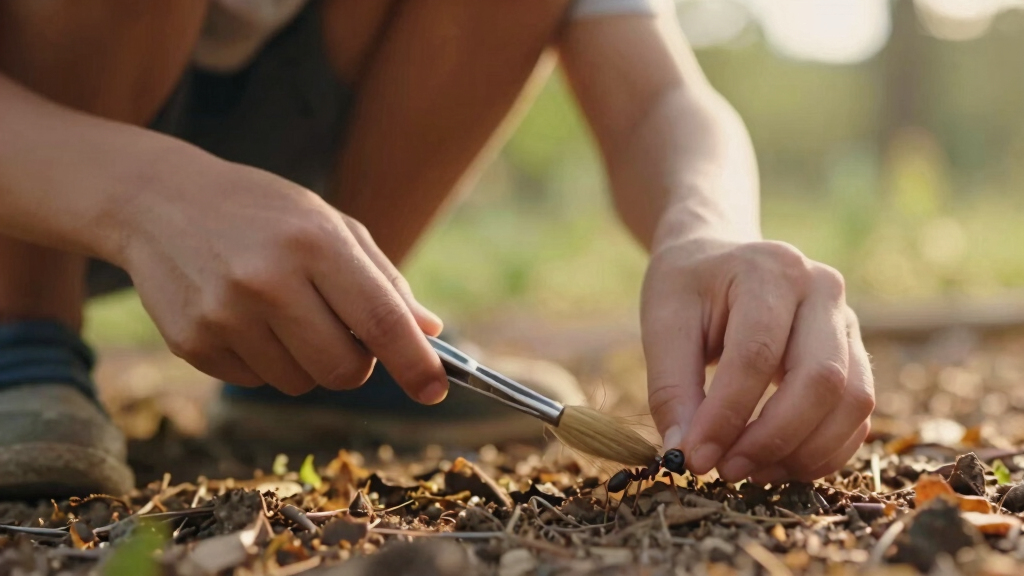
Scientists observed several ant species, including Lasius and Formica, engaging in behaviors that suggest active caregiving for injured or incapacitated colony members. These behaviors include grooming, feeding, and even transporting injured ants to safer locations within the nest, as documented by entomologists from the University of Cambridge.
According to Dr. Emily Carter, a leading researcher in social insect behavior, ‘Our observations show that injured ants are not simply left behind or ignored; instead, they receive targeted care that increases their chances of recovery and survival.’
These caregiving behaviors appear to be coordinated and consistent, indicating a level of social complexity previously thought to be limited to higher animals. The findings are based on controlled experiments and field observations over the past two years.
This discovery underscores the advanced social cooperation among ants, challenging traditional views of insect behavior as purely instinctual. It suggests that ants possess a form of social empathy and collective care, which may contribute to colony resilience and adaptability in changing environments.
Understanding these behaviors could influence pest management strategies and inspire bio-inspired designs in robotics and artificial intelligence, where cooperative caregiving is a key feature.
As an affiliate, we earn on qualifying purchases.
While ants have long been known for their organized colonies and division of labor, the focus has primarily been on foraging, nest-building, and defense. The new evidence of injury care adds a significant dimension to our understanding of their social complexity.
Previous studies have documented altruistic behaviors in social insects, such as trophallaxis (food sharing) and cooperative brood care, but active treatment of injured members is a relatively recent discovery. The research builds on a growing body of work exploring the cognitive and social capacities of ants and other insects.
The findings align with emerging research suggesting that social insects may have more nuanced social interactions than previously believed, possibly involving forms of communication and social recognition.
“Our observations show that injured ants are not simply left behind or ignored; instead, they receive targeted care that increases their chances of recovery and survival.”
— Dr. Emily Carter, University of Cambridge
As an affiliate, we earn on qualifying purchases.
While the behaviors have been documented, it remains unclear how widespread these caregiving behaviors are across different ant species and other social insects. The extent to which these actions are learned or innate is also unknown, as is the precise communication mechanism used to coordinate care.
Further research is needed to determine whether similar behaviors occur in natural settings outside controlled experiments and how these behaviors influence colony survival over longer periods.
As an affiliate, we earn on qualifying purchases.
Scientists plan to conduct broader field studies across various habitats and ant species to assess the prevalence of injury care behaviors. Researchers also aim to explore the neurological and chemical signals involved in coordinating these social interactions.
Additionally, comparative studies with other social insects like bees and termites are expected to shed light on the evolution of social caregiving behaviors in insect societies.
As an affiliate, we earn on qualifying purchases.
Key Questions
Do all ant species care for injured members?
It is not yet confirmed if all ant species exhibit this behavior. Current studies focus on specific species, and further research is needed to determine its prevalence across the entire ant family.
How do ants recognize injured members?
Scientists suspect chemical signals or pheromones play a role in identifying injured ants, but the exact mechanisms are still under investigation.
Could this behavior be considered a form of social empathy?
While the behaviors resemble empathy, scientists caution that it may be a highly evolved instinctual response rather than true emotional empathy. More research is needed to clarify this aspect.
What implications does this have for understanding insect intelligence?
This discovery suggests that social insects may have more complex cognitive abilities than previously thought, potentially involving social recognition and targeted caregiving.
Source: hn
Columbus Day / Indigenous Peoples' Day Picks
long weekend sales
As an affiliate, we earn on qualifying purchases.