

Start by evaluating your current workspace to identify what’s working and what’s not. Take stock of all equipment, noting condition and functionality, and decide what’s essential. Check your setup for ergonomic issues, adjusting chair height, monitor position, and workspace organization to improve comfort and efficiency. Remove redundancies and consider simple tweaks before investing in upgrades. If you want to learn all the key steps to optimize your workspace effectively, keep exploring the details ahead.
Key Takeaways
- Conduct a comprehensive inventory to assess existing equipment’s condition, functionality, and ergonomic support.
- Evaluate workspace organization to identify clutter, redundant items, and areas needing improvement.
- Perform an ergonomic assessment focusing on chair, desk, monitor, and keyboard positioning for comfort and posture.
- Identify discomfort or fatigue signs that indicate adjustments or upgrades are necessary.
- Prioritize simple modifications and adjustments before investing in new equipment or furniture.

Auditing your workspace is an essential step to boost productivity and create a more comfortable environment. Before you jump into upgrades or purchase new equipment, taking stock of what you already have is vital. An effective way to do this is through a thorough ergonomic assessment combined with a detailed equipment inventory. This helps you identify what’s working, what needs improvement, and what can be repurposed or discarded. Incorporating workspace organization into your evaluation can further streamline your setup and enhance overall efficiency.
Start by examining your current setup with an ergonomic assessment. Pay attention to how your workspace supports your body during work. Are your chair and desk at the right height? Do your monitor and keyboard position reduce strain on your neck, shoulders, and wrists? Are you experiencing discomfort or fatigue after long hours? These clues reveal whether your current arrangement promotes good posture and comfort. An ergonomic assessment isn’t just about comfort; it’s about preventing injury and increasing efficiency. It’s worth spending time adjusting your chair height, monitor position, and desk setup to see if you can improve your posture before considering any upgrades.
Evaluate your workspace for proper chair, desk, and monitor positioning to enhance comfort and reduce strain.
Next, create an equipment inventory. List every piece of equipment you use regularly, such as your computer, monitor, keyboard, mouse, desk accessories, and lighting. Note their condition, functionality, and how well they support your work. For example, if your monitor is outdated or not adjustable, it might be causing unnecessary neck strain. If your keyboard or mouse is uncomfortable, replacing them could make a big difference. This inventory helps you determine what’s essential and what’s redundant. It also provides clarity on whether your current equipment meets ergonomic standards or if upgrades are necessary. Keeping a detailed record ensures you don’t overlook small but impactful items like supportive cushions, footrests, or proper lighting, which can greatly enhance your workspace comfort. Recognizing ergonomic standards can guide your decisions and improve your overall setup. Additionally, understanding ergonomic principles can help you make more informed choices about your workspace adjustments. Sometimes, simple workspace adjustments can resolve ergonomic issues without needing costly replacements.
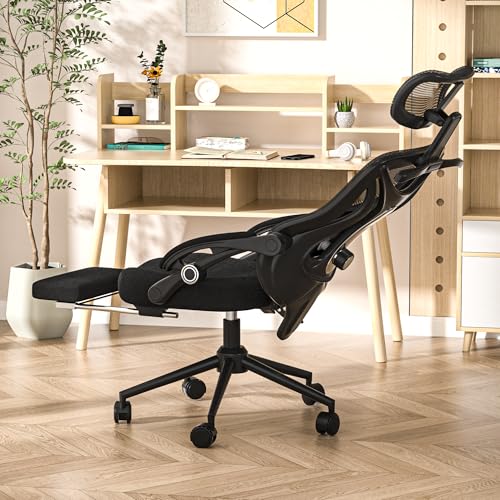
Ergonomic Office Chair with Footrest – Adjustable Lumbar Support & Headrest, 90-160° Reclining Mesh Back Computer Chair – Home Office/Gaming, 350lbs Capacity
This is more than a chair; it's a personalized comfort zone for work, rest, and play. We've meticulously…
As an affiliate, we earn on qualifying purchases.
As an affiliate, we earn on qualifying purchases.
Frequently Asked Questions
What Tools Are Best for Workspace Auditing?
You should consider tools like ergonomic assessment software and space utilization sensors for workspace auditing. Ergonomic assessments help identify ergonomic risks, ensuring comfort and safety. Space utilization tools measure how effectively your workspace is used, revealing underused areas or overcrowding. Combining these tools gives you a clear picture of your workspace’s current state, enabling you to make informed decisions before upgrading or redesigning, ultimately boosting productivity and employee well-being.
How Often Should I Perform a Workspace Audit?
You should perform a workspace audit every 6 to 12 months to maintain *best* efficiency and ergonomic improvements. Regular checks help identify areas where workspace efficiency can be boosted and ergonomic setups can be enhanced, preventing discomfort and increasing productivity. By consistently reviewing your workspace, you *guarantee* it stays aligned with your needs, adapts to any changes, and promotes a healthier, more efficient environment.
Can I Automate the Workspace Audit Process?
Did you know that 78% of companies find automation boosts workspace organization? You can definitely automate the workspace audit process by using software that tracks equipment, space utilization, and employee feedback. Automated tools save time, provide real-time insights, and help identify areas needing improvement. Incorporate employee feedback to guarantee your workspace remains efficient and comfortable. Automation streamlines your audit, making upgrades more strategic and less stressful.
What Signs Indicate It’s Time to Upgrade My Workspace?
You should consider upgrading your workspace when ergonomic comfort starts to decline, causing discomfort or pain during long work hours. If your setup no longer supports good posture or causes frequent fatigue, it’s a clear sign. Additionally, a lack of aesthetic appeal can impact motivation and productivity. When your environment feels outdated or uninspiring, upgrading can boost both comfort and visual appeal, making your workspace more inviting and efficient.
How Do I Prioritize Upgrades After Auditing?
After auditing, you should prioritize upgrades based on your workspace layout and employee feedback. Focus on areas that hinder productivity or cause discomfort first, like cramped spaces or poor lighting. Gather insights from your team to identify their needs and frustrations. Address the most impactful issues early on, ensuring your upgrades improve efficiency and morale. This approach helps you allocate resources effectively and creates a more functional, comfortable workspace.

WALI Computer Monitor Stand for Desk, Adjustable Laptop Riser, Desk Monitor Stand Underneath Storage for Office, Home, School Supplies (STT003), 1 Pack, Black
Design: The monitor stand for the desk has a large 14.6 x 9.3 inches metal shelf that fits…
As an affiliate, we earn on qualifying purchases.
As an affiliate, we earn on qualifying purchases.
Conclusion
By thoroughly auditing your workspace before upgrading, you guarantee your environment is optimized and ready for the future. Think of it as pruning a mighty oak—removing the dead branches to let the strongest grow. Don’t skip this essential step; otherwise, you risk launching into upgrades blindfolded, like trying to navigate a labyrinth in the dark. With a clear, organized workspace, you’ll release productivity’s true potential and set the stage for seamless, successful upgrades that stand the test of time.

SUPEASY Mesh Desk Organizer, Desk Accessories & Workspace Organizers with Drawers, Pencil Holder for Desk with 9 Compartments for Office Supplies, 8.6 x 4.3 x 4.1 Inch, Black
[ 𝐂𝐨𝐦𝐩𝐚𝐜𝐭 𝐃𝐞𝐬𝐢𝐠𝐧 ] Its compact size makes this type desk organizers and accessories suitable for placement on…
As an affiliate, we earn on qualifying purchases.
As an affiliate, we earn on qualifying purchases.

Wireless Keyboard and Mouse Combo, 2.4G Full Size Wave Keys Ergonomic Keyboard with Wrist Rest and 3-Level DPI Adjustable Wireless Ergonomic Mouse for Windows, Mac OS Desktop/Laptop/PC(Black)
【Wave Ergonomic Wireless Keyboard and Mouse Combo】The wireless keyboard features a wave key and wrist rest design that…
As an affiliate, we earn on qualifying purchases.
As an affiliate, we earn on qualifying purchases.